Questions & answers
the guide answersShowing 25 of 25
The story of the painting
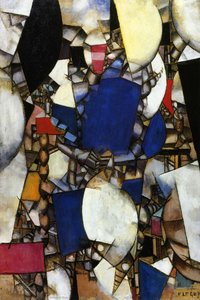
Explore Fernand Léger’s ‘Study Nuts,’ a striking monochrome cubist study of a walnut. Detailed hatching & cross-hatching create depth. A unique, vintage art piece – perfect for collectors!
The Anatomy of Nature: A Botanical Revelation
In the quiet, focused realm of Fernand Léger’s 1931 masterpiece, Study Nuts, the boundaries between the organic world and scientific inquiry dissolve into a singular, breathtaking vision. At first glance, one might expect a traditional botanical illustration—a celebratory tribute to the bounty of nature. Instead, Léger presents us with a profound, cross-sectional exploration of a walnut half, stripped of its shell and laid bare before our eyes. The composition is intensely intimate, utilizing a tight crop that forces the viewer into an almost voyeuristic encounter with the nut's internal architecture. There is no surrounding landscape to provide context, only the labyrinthine network of fibers, cavities, and shadows that constitute the heart of the subject. This focused approach transforms a simple piece of fruit into a complex, topographical map of life itself.
The technique employed in this work is nothing short of a masterclass in monochrome precision. Eschewing the vibrant, primary colors often associated with his later "Tubism" style, Léger turns to the disciplined medium of black ink to achieve a sense of structural depth. Through an exquisite application of hatching and cross-hatching, he builds layers of darkness and light that simulate the rugged, intricate textures of the walnut's interior. Each stroke of the pen serves a dual purpose: to define the physical boundaries of the organic matter and to create a rhythmic, almost mechanical texture that vibrates with energy. The result is an image that feels both ancient, reminiscent of 18th-century anatomical sketches, and strikingly modern in its graphic intensity.
A Convergence of Biology and the Machine Age
To understand Study Nuts, one must look toward the historical pulse of the early 20th century. Created during a period of immense industrial transformation, Léger’s work reflects a fascination with the underlying geometry found within all things. While he is celebrated for capturing the metallic rhythm of factories and urban landscapes, this study reveals his ability to find that same structural logic within the natural world. There is a subtle, brilliant tension here between the biological subject and the mechanical execution; the way the fibers are rendered suggests the precision of an engineered component, bridging the gap between the pastoral roots of his youth in Normandy and the high-voltage hum of the modern era.
For the discerning collector or interior designer, this piece offers a unique emotional resonance. It does not demand attention through loud colors or dramatic narratives; rather, it commands respect through its quiet, intellectual rigor. The artwork possesses an understated elegance that makes it a versatile cornerstone for sophisticated spaces. Whether placed in a minimalist gallery setting or used to add a layer of textured depth to a contemporary study, Study Nuts provides a sense of groundedness and contemplative stillness. It is an ode to form and function, inviting the viewer to pause and appreciate the magnificent, hidden complexities that exist within even the most humble fragments of our world.
The painting 5
Fra hvilken periode er "Study nuts" av Fernand Léger?
"Study nuts" tilhører Modern-epoken.
Hvilken orientering har "Study nuts" av Fernand Léger?
"Study nuts" av Fernand Léger har et Landscape-format. Formatet beskriver komposisjonens proporsjoner.
Hvilken kunstner kan "Study nuts" tilskrives?
"Study nuts" tilskrives Fernand Léger.
Hvilken plass har "Study nuts" av Fernand Léger i kunsthistorien?
Den kunsthistoriske klassifiseringen av "Study nuts" av Fernand Léger er Cubism, fra Modern-perioden.
Hvem er opphavspersonen til "Study nuts", og hvilket år ble det laget?
"Study nuts" ble skapt av Fernand Léger i 1931.
The painter 4
Hvor gammel var Fernand Léger da hen laget "Study nuts"?
Fernand Léger var 50 år gammel da Study nuts ble skapt i 1931. Alderen er beregnet ut fra kunstnerens fødselsår, 1881.
Hvilken kunstretning og hvilken epoke tilhører "Study nuts" av Fernand Léger?
"Study nuts" av Fernand Léger tilhører Cubism-retningen, innenfor skaperens Moderne tid-epoke.
Hvor plasserer "Study nuts" seg i Fernand Léger sitt samlede kunstnerskap?
"Study nuts" er et verk fra Fernand Léger sin periode innen Cubism, der de dokumenterte temaene inkluderer early cubist exploration, detailed monochrome style, focus on form & texture, anatomical illustration, scientific drawings, 18th-century prints, cubist abstraction, botanical observation.
Hvor plasserer "Study nuts" seg blant Fernand Léger sine gjentakende motiver?
Fernand Léger sine tilbakevendende temaer inkluderer early cubist exploration, detailed monochrome style, focus on form & texture, anatomical illustration, scientific drawings, 18th-century prints, cubist abstraction, botanical observation; "Study nuts" fokuserer på botanical study, walnut illustration, monochrome drawing, cubist composition, hatching technique, vintage art print, scientific study.
Colours 7
Hvilken lysstyrke har "Study nuts" av Fernand Léger?
"Study nuts" av Fernand Léger har en luminans på Bright Balance. Luminans beskriver hvor mye lys fargene ser ut til å reflektere.
Har "Study nuts" sterke lys-mørke-kontraster?
Lys-mørke-kontrasten i "Study nuts" er registrert som Statement. Kontrast beskriver hvor sterkt lyse og mørke områder skiller seg fra hverandre.
Hvor harmoniske er fargene i "Study nuts" av Fernand Léger?
"Study nuts" av Fernand Léger viser en Strong Color Unity fargeharmoni.
Er fargene i "Study nuts" sterke eller dempede?
"Study nuts" av Fernand Léger er gjengitt med en Muted metning og en Balanced intensitet.
Hvordan er fargekomposisjonen i "Study nuts" av Fernand Léger bygget opp?
I "Study nuts" blir en Statement kontrast parret med en Strong Color Unity harmoni.
Hvordan beskrives fargepaletten i "Study nuts" av Fernand Léger?
Fargene i "Study nuts" utgjør en Neutrals palett. Denne klassifiseringen beskriver de dominerende fargefamiliene.
Hvilken følelse skaper fargene i "Study nuts" av Fernand Léger?
"Study nuts" av Fernand Léger kombinerer en Neutrals fargepalett med en Reflective stemning.
Museum & rights 1
Hvorfor er den opphavsrettslige statusen til "Study nuts" slik den er?
Opphavsrettslig status for "Study nuts" – fritt tilgjengelig – opphavsretten har utløpt – følger av kunstnerens dødsår, 1955.
At home & gifts 4
Hvilket rom anbefales for "Study nuts" av Fernand Léger?
En reproduksjon av "Study nuts" passer godt i et Living Room.
Hvor og til hvilket formål anbefales "Study nuts"?
Anbefalt bruk (Accent) og plass (Living Room) er de to anbefalingene som er oppgitt for "Study nuts" av Fernand Léger.
Hvilken stemning uttrykker "Study nuts" av Fernand Léger innenfor Cubism?
Innenfor Cubism-retningen er "Study nuts" preget av en Reflective tone.
Hvilken følelse formidler "Study nuts" av Fernand Léger?
"Study nuts" av Fernand Léger formidler en Reflective følelse innenfor en overordnet Elegant stemning.
On this site 4
Hvor kan jeg se en forhåndsvisning av "Study nuts"?
En forhåndsvisning av "Study nuts" av Fernand Léger er tilgjengelig på kunstverkets Se kunstverket i et rom-side.
Er en høyoppløselig nedlasting av "Study nuts" tilgjengelig?
For å få en digital fil av "Study nuts" av Fernand Léger, kan du bestille nedlasting av et digitalt bilde i høy oppløsning på siden Digitalt kunstverk.
Hvor kan jeg finne en guide til "Study nuts"?
Guiden til "Study nuts" er kunstverkets Faktablad for studenter-side – et utskrivbart faktablad som viser kunstverket med bildetekst, kreditering og informasjonstabell (kunstner, datoer, medium, original størrelse, samling).
Hvordan kan jeg kjøpe et trykk av "Study nuts" av Fernand Léger?
For å bestille et trykk av "Study nuts" av Fernand Léger, kan du enkelt gjøre det på siden for Kunsttrykk i høy kvalitet: et kunsttrykk på bomullslerret eller arkivbestandig lerretspapir.
No written answer matches. Ask the Concierge just below.