Neoclassical · 1760
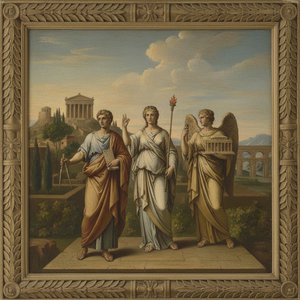
Parnassus (study) (Anton Raphael Mengs, 1760)
Anton Raphael Mengs (1728–1779) har skapt Parnassus (study). Den er fra 1760. Det tilhører Neoclassical-bevegelsen. Laget i Acrylic On Canvas. Verket er bevart ved Eremitasjen i St. Petersburg, Russland.
- 1760
- Acrylic On Canvas
- Eremitasjen, St. Petersburg

 Forhåndsvisning

 Håndmalt oljemaleri
 Send
 Del
 Faktablad for elever


 Last ned bilde
 Liknende objekter
 Røntgenundersøkelse
 Lysbildefremvisning
 Spørsmål og svar

 Statistikk
Parnassus (study), kort fortalt
- Tittel
- Parnassus (study)
- Kunstner
- Anton Raphael Mengs (1728–1779)
- Kunstner født i
- Ústí nad Labem, Tsjekkia
- Dato
- 1760
- Materiale
- Acrylic On Canvas
- Utstillingssted
- Eremitasjen, St. Petersburg, Russland
- Bevegelse
- Neoclassical
- Motiv
- mythology, apollo, muses, parnassus, study, figures
Hva forestiller Parnassus (study)?
A Glimpse of Enlightenment: Anton Raphael Mengs’ “Parnassus (Study)”
Anton Raphael Mengs' "Parnassus (Study)," painted in 1760, isn’t merely a depiction of a classical scene; it’s a carefully constructed meditation on knowledge, aspiration, and the burgeoning spirit of Neoclassicism. This intimate study, far removed from the grand scale of his later frescoes, offers an unparalleled intimacy with Mengs' artistic process – a rare opportunity to witness the genesis of a masterpiece. The painting captures a gathering around a statue of Apollo, the mythical patron of the arts and sciences, surrounded by figures engaged in various intellectual pursuits. It’s a tableau vivant, brimming with quiet contemplation and subtle gestures that speak volumes about the era’s fascination with reviving classical ideals.
The Neoclassical Composition: Harmony and Restraint
Mengs' style here is distinctly Neoclassical, reflecting the artistic currents of 18th-century Europe. He meticulously adheres to the principles established by artists like Raphael and Michelangelo – a commitment to clarity, balance, and idealized forms. The composition is remarkably ordered; figures are arranged with deliberate precision, creating a sense of harmonious equilibrium. Note the careful use of light and shadow, which sculpts the forms and directs the viewer’s eye across the scene. The muted palette—dominated by earthy tones of ochre, brown, and grey—further enhances the painting's sense of restraint and intellectual seriousness. The background is deliberately vague, emphasizing the figures themselves and drawing attention to their interactions.
- Apollo’s Centrality: The statue of Apollo serves as the undeniable focal point, radiating an aura of authority and wisdom.
- The Muses' Presence: Flanking Apollo are the nine Muses, each embodying a different artistic discipline – poetry, music, dance, etc. Their graceful poses and attentive gazes suggest their role as guides and inspiration for the assembled scholars.
- Diverse Figures: The gathering includes philosophers, poets, musicians, and artists, representing the breadth of intellectual pursuits valued during this period.
Symbolism Woven into Detail: Bananas and Beyond
Beyond the obvious references to classical mythology and philosophy, “Parnassus (Study)” is rich in subtle symbolism. The inclusion of two bananas – a rather unexpected detail – has sparked considerable debate among art historians. Some interpret them as representing the fruits of knowledge, while others see them as a playful nod to contemporary trends or even a commentary on the fleeting nature of beauty and pleasure. The bowl on the table, filled with fruit, reinforces this theme of abundance and nourishment for the mind. The careful placement of each object contributes to the painting’s layered meaning, inviting viewers to engage in a deeper interpretation.
A Window into Mengs' Process: Intimacy and Reflection
What truly distinguishes “Parnassus (Study)” is its intimate scale and evident preparatory nature. It’s not a finished masterpiece but rather a study, a glimpse into Mengs’ creative process. The brushstrokes are visible, revealing the artist's hand at work – a testament to his dedication and meticulous attention to detail. The painting exudes a sense of quiet reflection, suggesting that Mengs was not simply documenting a scene but grappling with fundamental questions about art, knowledge, and the role of the individual within society. It’s a poignant reminder that even in grand artistic endeavors, the most profound insights often emerge from moments of focused contemplation.
Reproductions of “Parnassus (Study)” offer a remarkable opportunity to bring this captivating artwork into your home or office. Each carefully crafted reproduction captures the painting's nuanced details and evocative atmosphere, allowing you to appreciate Mengs’ genius for generations to come.
Hvilket museum har Parnassus (study)?
Eremitasjen
St. Petersburg, Russland
Eremitasjens opprinnelse og historie Eremitasjen har sine røtter helt tilbake til 1764, da museets fundament ble lagt gjennom anskaffelsen av en samling på 225 malerier fra kjøpmannen Johann Ernst Gotzkowsky i Berlin. Det var Katarina den store som satte i gang denne samleprosessen, og hennes visjon etablerte museets tilstedeværelse i St. Petersburg, Russland.


Høyoppløselige bilder av Parnassus (study)

Fritlig eiendom: kunstneren døde i 1779.
Andre størrelser, beskjæringer og siteringer →Anton Raphael Mengs, Parnassus (study) (1760), Eremitasjen. Fri tilgjengelighet
Spørsmål om Parnassus (study), besvart
Hvor kan jeg se originalen av "Parnassus (study)" av Anton Raphael Mengs?
"Parnassus (study)" av Anton Raphael Mengs er utstilt på Eremitasjen, St. Petersburg, Russland. Museumsoppføringen refererer til originalverket, ikke til reproduksjoner.
Når ble "Parnassus (study)" laget?
"Parnassus (study)" dateres til 1760. Denne datoen plasserer verket innenfor Anton Raphael Mengs sin karriere og sin epoke.
Hvilket medium er "Parnassus (study)" av Anton Raphael Mengs utført i?
"Parnassus (study)" av Anton Raphael Mengs er utført i Acrylic On Canvas. Reproduksjonene har som mål å gjengi utseendet til denne teknikken.
Hva forestiller "Parnassus (study)"?
Motivene i "Parnassus (study)" er mythology, apollo, muses, parnassus, study, figures, composition.
Er "Parnassus (study)" av Anton Raphael Mengs i det frie domene?
"Parnassus (study)" av Anton Raphael Mengs er fritt tilgjengelig – opphavsretten har utløpt. Denne statusen avgjør hvordan bildet av verket kan reproduseres.
Hvem er kunstneren bak "Parnassus (study)"?
Kunstneren bak "Parnassus (study)" er Anton Raphael Mengs. Verket er katalogisert under Anton Raphael Mengs sitt navn.
Hvilken stilart tilhører "Parnassus (study)"?
"Parnassus (study)" er et verk innenfor Neoclassical. Retningen angir den kunstneriske tradisjonen verket er en del av.
Hvilken periode i Anton Raphael Mengs sin karriere tilhører "Parnassus (study)"?
"Parnassus (study)" representerer Anton Raphael Mengs sin Mature Period.
Hvor gammel var Anton Raphael Mengs da hen laget "Parnassus (study)"?
Da "Parnassus (study)" ble skapt i 1760, var Anton Raphael Mengs – født i 1728 – 32 år gammel.
Om kunstneren, Anton Raphael Mengs

1728–1779, Tsjekkia
Anton Raphael Mengs
En bro mellom verdener: Livet og kunsten til Anton Raphael Mengs Anton Raphael Mengs trådte frem i en fascinerende periode i europeisk kunsthistorie, en tid da rokokkoens overdådige detaljer begynte å vike for en fornyet verdsettelse av klassiske idealer. Han ble født i 1728 i Ústí nad Labme i Böhmen – en region som i dag er en del av Tsjekkia – og hans kunstneriske reise ble dypt preget av både hans slekt og opplysningstidens intellektuelle strømninger. Hans far, Ismael Mengs, en dansk maler som fant beskyttelse ved hoffet i Dresden, gjenkjente tidlig den unge Antons eksepsjonelle talent. Denne anerkjennelsen førte til en avgjørende vending i 1741: en flytting til Roma, hvor den spirende kunstneren ble fordypet i studiet av antikke mesterverk og verkene til renessansemestere som Rafael.
Om Anton Raphael Mengs Fremtredende verk av Anton Raphael Mengs
Andre verk av Anton Raphael Mengs
 Johann Joachim Winckelmann (1717–1768)1777
 Perseus and Andromeda1774
 Maria Luisa of Parma1765
 Self Portrait1774

Essays om Parnassus (study)
 Mastering Antiquity: The Top 25 Greatest Artworks by Andrea MantegnaJourney through the Renaissance with our curated guide to the top 25 Andrea Mantegna masterpieces. Explore his mastery of perspective, clas…
 The Elegance of Neoclassicism: Rediscovering Order, Balance, and Timeless Beauty in Fine ArtExplore the timeless elegance of Neoclassicism. Discover how order, balance, and classical ideals shaped art history through masterful scul…
 Nicolas Poussin: Classicism, Allegory & Order in 17th-Century French PaintingExplore the life & work of Nicolas Poussin, a master of French Classicism. Discover his allegorical paintings, Roman influences, and enduri…