Art Nouveau Art Nouveau
(41) (Alphonse Mucha)
Alphonse Mucha (1860–1939) har laget (41). Det tilhører Art Nouveau Art Nouveau-bevegelsen. Den er laget i Acrylic On Canvas.
- Acrylic On Canvas

 Forhåndsvisning

 Håndmalt oljemaleri
 Send
 Del
 Faktablad


 Last ned bilde
 Liknende objekter
 Røntgenundersøkelse
 Lysbildefremvisning
 Spørsmål og svar

 Statistikk
(41), kort fortalt
- Tittel
- (41)
- Kunstner
- Alphonse Mucha (1860–1939)
- Kunstner født i
- Brno, Tsjekkia
- Medium
- Acrylic On Canvas
- Bevegelse
- Art Nouveau Art Nouveau
- Motiv
- woman, hair, dress, baby, floral, organic
Hva forestiller (41)?
Alphonse Mucha: The Enchanting Symbolism of Art Nouveau
Alphonse Maria Mucha stands as one of the most recognizable figures of Art Nouveau, an artistic movement that flourished between 1890 and 1910 across Europe. Born in Brno, Czech Republic, in 1860, Mucha rejected the rigid academic traditions of his time, forging a path toward a uniquely expressive style that captivated audiences and continues to inspire artists today.
Much’s artistic vision centered around capturing ethereal beauty—primarily through idealized depictions of women—often presented in flowing robes adorned with intricate floral motifs. Influenced by Impressionism and Symbolism, he skillfully blended these influences into his distinctive Art Nouveau aesthetic. Unlike the prevailing stylistic trends of his era, Mucha prioritized organic forms and graceful curves, mirroring the natural world’s rhythms and conveying a sense of movement.
His breakthrough came with collaborations on decorative posters for Parisian theaters and exhibitions. These commissions demanded meticulous attention to detail—particularly in the rendering of textures and colors—resulting in stunning visual experiences that cemented Mucha's reputation as a master craftsman. He employed techniques such as cloisonné enamel, gilding, and lithography to achieve unparalleled luminosity and vibrancy, pushing the boundaries of printmaking.
The Slavonic Uprising: A Fusion of Tradition and Innovation
Perhaps Mucha’s most ambitious project was “The Slavonic Uprising,” a monumental mural commissioned for Prague’s National Theatre. This artwork exemplifies Mucha's ability to synthesize disparate elements into a cohesive narrative—combining traditional Czech folklore with the dynamism of Art Nouveau principles.
The mural depicts a stylized battle scene, featuring figures draped in flowing robes reminiscent of Slavic princesses and warriors. Mucha skillfully utilized bold colors and sweeping lines to convey the urgency and grandeur of the uprising, capturing both its heroic spirit and its underlying melancholy. The intricate floral ornamentation—particularly around the central figures—underscores the movement’s preoccupation with nature and symbolizes resilience amidst adversity.
Symbolism Rooted in Myth and Folklore
Throughout Mucha's oeuvre, symbolism played a crucial role in conveying deeper meanings beyond mere visual representation. Recurring motifs—such as lilies, roses, and peacocks—carried associations rooted in Slavic mythology and Christian iconography. These symbols served to elevate the artwork’s emotional impact, inviting viewers to contemplate themes of heroism, sacrifice, and spiritual transcendence.
Consider “La Ribambelle des Gobelins,” a collaborative project with Piero Dorazio that explored the concept of collective creativity. Mucha's contribution—a stylized depiction of women—embodied the movement’s belief in the transformative power of art to inspire social change and celebrate human beauty.
A Legacy Enduring Through Reproduction
Today, Alphonse Mucha’s artwork continues to resonate with audiences worldwide. High-quality reproductions offer a captivating glimpse into his artistic genius—allowing collectors and interior designers alike to experience the enchantment of Art Nouveau firsthand. His enduring influence testifies to the power of visionary art to transcend time and inspire generations of artists.
Høyoppløselige bilder av (41)
Fritlig eiendom: kunstneren døde i 1939.
Alphonse Mucha, (41). Felleseie
Spørsmål om (41), besvart
Hvilket medium er "(41)" av Alphonse Mucha utført i?
"(41)" av Alphonse Mucha er utført i Acrylic On Canvas. Reproduksjonene har som mål å gjengi utseendet til denne teknikken.
Hva forestiller "(41)" av Alphonse Mucha?
"(41)" av Alphonse Mucha avbilder: woman, hair, dress, baby, floral, organic, flowing lines, symmetry.
Er "(41)" fri for opphavsrett?
Opphavsrettslig status for "(41)" av Alphonse Mucha: verket er fritt tilgjengelig – opphavsretten har utløpt. Dette avgjør om det er tillatt å lage frie reproduksjoner av bildet.
Hvem har skapt "(41)"?
Kunstneren bak "(41)" er Alphonse Mucha. Verket er katalogisert under Alphonse Mucha sitt navn.
Hvilken stilart tilhører "(41)"?
"(41)" er et verk innenfor Art Nouveau Art Nouveau. Retningen angir den kunstneriske tradisjonen verket er en del av.
Hvilken periode i Alphonse Mucha sin karriere tilhører "(41)"?
"(41)" representerer Alphonse Mucha sin Mature Period.
Hvorfor er den opphavsrettslige statusen til "(41)" slik den er?
"(41)" av Alphonse Mucha er fritt tilgjengelig – opphavsretten har utløpt. Opphavsretten beregnes fra kunstnerens dødsår, og Alphonse Mucha døde i 1939.
Hva har "(41)" til felles med resten av Alphonse Mucha sin produksjon?
"(41)" er et verk fra Alphonse Mucha sin periode innen Art Nouveau Art Nouveau, der de dokumenterte temaene inkluderer renoir, moreau, czech motifs, modern art nouveau, idealized femininity.
Hvordan relaterer motivet i "(41)" seg til Alphonse Mucha sine vanlige temaer?
"(41)" skildrer woman, hair, dress, baby, floral, organic, flowing lines, symmetry, mens de dokumenterte temaene til Alphonse Mucha er renoir, moreau, czech motifs, modern art nouveau, idealized femininity. En sammenligning av disse viser hvordan verket relaterer seg til kunstnerens faste motiver.
Om kunstneren, Alphonse Mucha

1860–1939, Tsjekkia
Alphonse Mucha
Early Life and Artistic Beginnings Alphonse Maria Mucha, født den 24. juli 1860 i den lille by Ivančice i Moravia – nå en del av Tsjekkia – var et barn av en kunstnerisk familie. Hans far, Ondřej Mucha, var en hoffsekretær, og hans mor, Amalie (født Mala), var en møllers datter. Familien levde et beskjeden liv, men allerede i ung alder viste Alphonse en tydelig talent for tegning.
Også av Alphonse Mucha
 The Moon
 Nude
 The Apotheosis of the Slavs1926
 Stained-Glass Window in St. Vitus Cathedral
Essays om (41)
 Resilience and Heritage: A Curated Journey Through the Soul of Ukrainian Art HistoryExplore the profound legacy of Ukrainian art from Baroque grandeur to Repin's realism. Discover this rich cultural journey now.
 Utover Trykket: Hvorfor Eksklusive Rom Velger Håndmalte Reproduksjoner – Tekstur, Dybde og Kunstnerisk Verdi i en Luksuriøs KontekstUtforsk håndmalte reproduksjoner av museumskvalitet hos OriginalUniqueArt. Eksklusive kunstverk, skreddersydd tilpassning og ekspertise for…
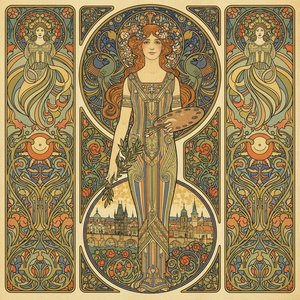 Alphonse Mucha: A Comprehensive Exploration of Art Nouveau's Master of Decorative SymbolismExplore the life & art of Alphonse Mucha, master of Art Nouveau! Discover his iconic posters, stunning illustrations, and the monumental Sl…