Portrett av Josef Kriehuber

Josef Kriehubers malerier: De 100 mest kjente, sett gjennom et galleris øyne

Oppdatert November 2026 · rangert etter vår popularitetsscore (søk, besøk og bestillinger for hvert verk) · 134 verk av Josef Kriehuber i vår katalog

Kort fortalt

I galleriets øyne er Josef Kriehubers mest kjente maleri Karoline Auguste. Fanny Elssler, Austrian ballerina (1830) og Prince Friedrich of Schwarzenberg (1847) fullfører trioen som alle kjenner igjen. Av de 134 verkene til Josef Kriehuber i vår katalog, presenterer galleriet de 100 mest kjente nedenfor; hvert originalverk med årstall, museum og hva som gjør det unikt.

1800 – 1876, Wien Biedermeier Flest verk: National Portrait Gallery of Sweden

Galleriets 10 beste malerier av Josef Kriehuber

1
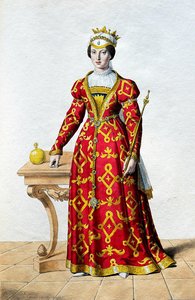
Karoline Auguste av Josef Kriehuber

Karoline Auguste

Lithograph

In this portrait of Karoline Auguste, we encounter a formal depiction of a woman whose attire and crown suggest a position of significant status. Josef Kriehuber, an Austrian lithographer and painter, captured the subject with a focus on the dignity inherent in her pose. The work presents a quiet, composed presence, emphasizing the details of her clothing and the subtle features of her face. It is a study of character…

2
Fanny Elssler, Austrian ballerina (1830) av Josef Kriehuber

Fanny Elssler, Austrian ballerina

1830 · Lithography

The lithograph captures a moment of stillness in a life of movement. Fanny Elssler sits in a three-quarter view, her gaze drifting slightly away from the viewer toward an unseen point. She is an Austrian ballerina, frozen in a monochromatic world of silver and charcoal. Her posture is upright, a column of poise that suggests the quiet discipline behind the public spectacle of dance. The light is diffused, washing over…

3
Prince Friedrich of Schwarzenberg (1847) av Josef Kriehuber

Prince Friedrich of Schwarzenberg

1847 · Lithograph · Metropolitan Museum of Art, New York

This striking portrait captures Prince Friedrich of Schwarzenberg in the charged atmosphere of 1847. The subject is presented not merely as an individual, but as an embodiment of military bearing and societal importance during a pivotal era in European history. Clad in the formal accoutrements of his station—the crisp lines of his uniform, the authoritative gleam of the sword held at hand—he commands attention. The monochrome quality of the piece…

4
Josef Lanner, Austrian Composer (1825) av Josef Kriehuber

Josef Lanner, Austrian Composer

1825 · Lithograph

This monochrome portrait, titled Josef Lanner, Austrian Composer, was created by the artist Josef Kriehuber. The work depicts the Austrian composer Josef Lanner in a bust-length composition. The subject is presented as a gentleman of the era, shown from the chest up and facing slightly toward the viewer's left. The image is rendered in grayscale, utilizing varying shades of gray to define the form of the figure against a simple,…

5
Anton Bernhard Fürstenau, German flutist and composer (1830) av Josef Kriehuber

Anton Bernhard Fürstenau, German flutist and composer

1830 · Engraving

This monochrome engraving presents a bust-length portrait of Johann Baptist Forster, identified as the First Royal Magistrate of Saxony. The subject is positioned centrally against a dark, undifferentiated background, which focuses attention on the facial features and the formal attire. The composition follows a Neoclassical structure, emphasizing a realistic depiction of the man's physical presence. Light originates from above and slightly in front, casting highlights onto the forehead and the…

6
Ernst and Eduard Eichhorn, violin prodigies (1831) av Josef Kriehuber

Ernst and Eduard Eichhorn, violin prodigies

1831 · Lithograph

Josef Kriehuber produced Ernst and Eduard Eichhorn, violin prodigies, a black and white lithograph portrait. The work dates to about 1831. It captures the likeness of the two young musicians, Ernst and Eduard Eichhorn, who are identified as violin prodigies.

7
Karl von Rothkirch-Panthen, Bohemian-Austrian politician (1828) av Josef Kriehuber

Karl von Rothkirch-Panthen, Bohemian-Austrian politician

1828 · Lithography

The gaze of Karl von Rothkirch-Panthen, Bohemian-Austrian politician, meets the viewer through this striking lithograph. Josef Kriehuber captures the man in a moment of quiet dignity, presenting a figure of significant social and political weight. This portrait offers a window into the life of a man who navigated the complex corridors of power, eventually serving as a member of the Chamber of Deputies of the Imperial Council of Austria. Even…

8
Joseph Böhm, Hungarian Violinist and a director of the Vienna Conservatory (1830) av Josef Kriehuber

Joseph Böhm, Hungarian Violinist and a director of the Vienna Conservatory

1830 · Lithograph

This lithograph, titled "Joseph Böhm, Hungarian Violinist and a director of the Vienna Conservatory" by Josef Kriehuber, depicts the subject in a formal bust-length view. The portrait captures Joseph Böhm, a Hungarian violinist who held the position of professor at the Vienna Conservatory from 1819 to 1848. The image is rendered in a monochrome grayscale palette, utilizing fine lines to define the contours of the subject's face and attire. He…

9
Bulcs (1828) av Josef Kriehuber

Bulcs

1828 · Lithograph

A man stands centered against a muted, mountainous landscape, his gaze fixed and stern. He is a figure of history, or perhaps a memory of one, draped in the heavy textures of a warrior's attire. The light falls evenly across his face, revealing the fine, etched lines of his features and the sharp edges of his weaponry. He holds an axe, a bow, and arrows, tools of a life defined…

10
Ferdinand III (1828) av Josef Kriehuber

Ferdinand III

1828 · Lithograph

This portrait of Ferdinand III, executed by Josef Kriehuber, offers a quiet study of authority from the early nineteenth century. Created in 1828, the work captures the subject in a moment of formal repose. Kriehuber focuses on the dignity of the sitter, presenting him in full regal attire that signals his high status. The portrait provides a clear, direct encounter with a figure of historical significance.

Josef Kriehuber sine malerier, rangert fra 11 til 100

11Vladislav II (1828) av Josef KriehuberVladislav II1828 12Leopold I (1828) av Josef KriehuberLeopold I1828 13Joseph II (1828) av Josef KriehuberJoseph II1828 14Karl VI (1828) av Josef KriehuberKarl VI1828 15Koloman (1828) av Josef KriehuberKoloman1828 16Ferdinand I of Austria (1828) av Josef KriehuberFerdinand I of Austria1828 17Taksony (1828) av Josef KriehuberTaksony1828 18Lehel (1828) av Josef KriehuberLehel1828 19Bela III (1828) av Josef KriehuberBela III1828 20Ludwig I (1828) av Josef KriehuberLudwig I1828 21Geza (1828) av Josef KriehuberGeza1828 22Franz II (1828) av Josef KriehuberFranz II1828 23Johann Zapolya (1828) av Josef KriehuberJohann Zapolya1828 24Keve, legendary Hungarian military leader (1828) av Josef KriehuberKeve, legendary Hungarian military leader1828 25Geza I (1828) av Josef KriehuberGeza I1828 26Austrian Family, The Mother (1827) av Josef KriehuberAustrian Family, The Mother1827 27Austrian Family, the Father (1827) av Josef KriehuberAustrian Family, the Father1827 28Stephan V (1828) av Josef KriehuberStephan V1828 29Ladislaus IV (1828) av Josef KriehuberLadislaus IV1828 30Stephan II (1828) av Josef KriehuberStephan II1828 31Matthias Corvinus (1828) av Josef KriehuberMatthias Corvinus1828 32Ladislaus (1828) av Josef KriehuberLadislaus1828 33Austrian Family, The Son (1827) av Josef KriehuberAustrian Family, The Son1827 34Stephan IV (1828) av Josef KriehuberStephan IV1828 35Emmerich (1828) av Josef KriehuberEmmerich1828 36Stephan III (1828) av Josef KriehuberStephan III1828 37Ladislaus V (1828) av Josef KriehuberLadislaus V1828 38Ladislaus III (1828) av Josef KriehuberLadislaus III1828 39Karl I (1828) av Josef KriehuberKarl I1828 40Austrian Family, The Daughters (1827) av Josef KriehuberAustrian Family, The Daughters1827 41Ladislaus II (1828) av Josef KriehuberLadislaus II1828 42Andreas II (c.1177-1235), King on Hungary from 1205 to 1235 (1828) av Josef KriehuberAndreas II (c.1177-1235), King on Hungary from 1205 to 12351828 43Keme, legendary Hungarian military leader (1828) av Josef KriehuberKeme, legendary Hungarian military leader1828 44Attila, King of the Huns (1828) av Josef KriehuberAttila, King of the Huns1828 45Wenzel III (1828) av Josef KriehuberWenzel III1828 46Sabolch, legendary Hungarian military leader (1828) av Josef KriehuberSabolch, legendary Hungarian military leader1828 47Kadicha, legendary Hungarian military leader (1828) av Josef KriehuberKadicha, legendary Hungarian military leader1828 48Andreas I (c.1015-1060), King on Hungary from 1046 to 1060 (1828) av Josef KriehuberAndreas I (c.1015-1060), King on Hungary from 1046 to 10601828 49Wladislaw I (1828) av Josef KriehuberWladislaw I1828 50Elizabeth of Luxembourg (1828) av Josef KriehuberElizabeth of Luxembourg1828 51Samuel Aba (1828) av Josef KriehuberSamuel Aba1828 52Buda, legendary Hungarian military leader, namesake of Budapest (1828) av Josef KriehuberBuda, legendary Hungarian military leader, namesake of Budapest1828 53Andreas III (c.1265-1301), King on Hungary from 1290 to 1301 (1828) av Josef KriehuberAndreas III (c.1265-1301), King on Hungary from 1290 to 13011828 54Maria I (1828) av Josef KriehuberMaria I1828 55Arpad, Grand Prince of the Hungarians (1828) av Josef KriehuberArpad, Grand Prince of the Hungarians1828 56Karl Gustav Löwenhielm (1790-1858), count, lieutenant general, governor, married to 1. countess Gustava Charlotta Jacobina Aurora Gyldenstolpe 2. countess Natalie Alexandra von Buxhoeweden (1836) av Josef KriehuberKarl Gustav Löwenhielm (1790-1858), count, lieutenant general, governor, married to 1. countess Gustava Charlotta Jacobina Aurora Gyldenstolpe 2. countess Natalie Alexandra von Buxhoeweden1836 · National Portrait Gallery of Sweden 57Natalie Alexandra von Buxhoeweden (1814-1867), countess, maid of honour of Alexandra Fjodorovna of Russia, married to count Karl Gustav Löwenhielm (1839) av Josef KriehuberNatalie Alexandra von Buxhoeweden (1814-1867), countess, maid of honour of Alexandra Fjodorovna of Russia, married to count Karl Gustav Löwenhielm1839 · National Portrait Gallery of Sweden 58Josef Zinner Forstmeister, Matthias Zinner Hofjäger, Ferdinand Zinner Hofjäger (1835) av Josef KriehuberJosef Zinner Forstmeister, Matthias Zinner Hofjäger, Ferdinand Zinner Hofjäger1835 59Robert Schumann, Austrian Composer (1839) av Josef KriehuberRobert Schumann, Austrian Composer1839 60Christoph Graf Cavriani with his son Franz (1836) av Josef KriehuberChristoph Graf Cavriani with his son Franz1836 61Karl Josef Lipinsky, Polish music composer and virtuoso violinist (1837) av Josef KriehuberKarl Josef Lipinsky, Polish music composer and virtuoso violinist1837 62Countess Ludmilla Csaky, née Lazansky Von Bukowa with her son Ladislaus Csaky Graf Von Körösszegh U. Adorjan, politician (1839) av Josef KriehuberCountess Ludmilla Csaky, née Lazansky Von Bukowa with her son Ladislaus Csaky Graf Von Körösszegh U. Adorjan, politician1839 63Le Comte Guillaume Isidore De Montbel (1836) av Josef KriehuberLe Comte Guillaume Isidore De Montbel1836 64Children (1836) av Josef KriehuberChildren1836 65Gentleman in riding costume (1838) av Josef KriehuberGentleman in riding costume1838 66A Morning with Liszt (Hungarian Composer) (1846) av Josef KriehuberA Morning with Liszt (Hungarian Composer)1846 67Giorgio Ronconi, Italian Baritone (1840) av Josef KriehuberGiorgio Ronconi, Italian Baritone1840 68Thomas Lederer, Doctor and homeopath (1846) av Josef KriehuberThomas Lederer, Doctor and homeopath1846 69Filippo Coletti, Italian Baritone (1841) av Josef KriehuberFilippo Coletti, Italian Baritone1841 70Aloius Rubana, civil servant and councilor (1841) av Josef KriehuberAloius Rubana, civil servant and councilor1841 71Aloisia Eleonore Schönburg-Hartstein With children (1841) av Josef KriehuberAloisia Eleonore Schönburg-Hartstein With children1841 72Maria, née Czernin, and her daughter Wilhelmine Kinsky. Countess. (1844) av Josef KriehuberMaria, née Czernin, and her daughter Wilhelmine Kinsky. Countess.1844 73The Counts Jaromir, Rudolf, Herrmann and Humbert Czernin (1847) av Josef KriehuberThe Counts Jaromir, Rudolf, Herrmann and Humbert Czernin1847 74Eduard Woyna (1840) av Josef KriehuberEduard Woyna1840 75Franz Schubert, Austrian Composer (Posthumous Lithography) (1846) av Josef KriehuberFranz Schubert, Austrian Composer (Posthumous Lithography)1846 76Count Georg Esterházy Von Galántha (1840) av Josef KriehuberCount Georg Esterházy Von Galántha1840 77The Archdukes Franz Joseph, Ferdinand Max and Carl Ludwig (1844) av Josef KriehuberThe Archdukes Franz Joseph, Ferdinand Max and Carl Ludwig1844 78Portrait of Emperor Franz Joseph I at 23 Years of Age (1853) av Josef KriehuberPortrait of Emperor Franz Joseph I at 23 Years of Age1853 79Baron Heinrich von Hess, Austrian General (Field Marshal) (1854) av Josef KriehuberBaron Heinrich von Hess, Austrian General (Field Marshal)1854 80Brothers Kleins (1849) av Josef KriehuberBrothers Kleins1849 81Baron Carl von Ghega, Austrian railway engineer (1851) av Josef KriehuberBaron Carl von Ghega, Austrian railway engineer1851 82Antonie Countess Batthyany, bourn Zichy. Wife of Ludwig Graf Batthyany (1849) av Josef KriehuberAntonie Countess Batthyany, bourn Zichy. Wife of Ludwig Graf Batthyany1849 83Josef Kriehuber, Austrian Lithographer and Artist (Self-Portrait) (1852) av Josef KriehuberJosef Kriehuber, Austrian Lithographer and Artist (Self-Portrait)1852 84Karl Von Giskra, Austrian Politician (1861) av Josef KriehuberKarl Von Giskra, Austrian Politician1861 85Ludwig Gabillon, German actor of the Burgtheater and theatre director (1860) av Josef KriehuberLudwig Gabillon, German actor of the Burgtheater and theatre director1860 86Josef Unger, Austrian jurist and statesman (1861) av Josef KriehuberJosef Unger, Austrian jurist and statesman1861 87Franz Joseph I of Austria, Emperor of Austria (1860) av Josef KriehuberFranz Joseph I of Austria, Emperor of Austria1860 88Max Von Gomperz, Austrian industrialist and banker (1860) av Josef KriehuberMax Von Gomperz, Austrian industrialist and banker1860 89Josef Kriehuber, Austrian Lithographer (Self-portrait) (1860) av Josef KriehuberJosef Kriehuber, Austrian Lithographer (Self-portrait)1860 90Gabriele Saaint-Genois, b. Countess Stolberg with her daughter Anna (1858) av Josef KriehuberGabriele Saaint-Genois, b. Countess Stolberg with her daughter Anna1858 91Sir Julius Benedict, German-born composer and conductor (1861) av Josef KriehuberSir Julius Benedict, German-born composer and conductor1861 92Duchess Elisabeth of Bavaria, Empress of Austria (Sisi / Sissi) (1863) av Josef KriehuberDuchess Elisabeth of Bavaria, Empress of Austria (Sisi / Sissi)1863 93August Förster, German actor and theatre director (1863) av Josef KriehuberAugust Förster, German actor and theatre director1863 94Johann Emanuel Veith, Bohemian, Roman Catholic preacher (1860) av Josef KriehuberJohann Emanuel Veith, Bohemian, Roman Catholic preacher1860 95Portrait of a young woman with a rose (1859) av Josef KriehuberPortrait of a young woman with a rose1859 96Empress Elisabeth of Austria with her children Rudolf and Gisela (1858) av Josef KriehuberEmpress Elisabeth of Austria with her children Rudolf and Gisela1858 97Portrait of a gentleman with a top hat (1863) av Josef KriehuberPortrait of a gentleman with a top hat1863 98Portrait of a lady in a blue dress (1856) av Josef KriehuberPortrait of a lady in a blue dress1856 99Portrait of a country lady in a brown dress (1862) av Josef KriehuberPortrait of a country lady in a brown dress1862 100Vuk Karadžić, Serbian philologist, linguist and one of the most important reformers of the modern Serbian language (1865) av Josef KriehuberVuk Karadžić, Serbian philologist, linguist and one of the most important reformers of the modern Serbian language1865

Josef Kriehubers berømte malerier, periode for periode

Motivene som fanget Josef Kriehubers blikk

De fire motivene som går igjen hyppigst i disse originalverkene, hver med sitt fremste eksempel.

Museene som har Josef Kriehubers originalverk

De 2 museene som innehar flest av maleriene på denne siden.

Museum By Verker av Josef Kriehuber Malerier fra denne listen
National Portrait Gallery of Sweden, SträngnäsNational Portrait Gallery of Sweden Strängnäs 2 Karl Gustav Löwenhielm (1790-1858), count, lieutenant general, governor, married to 1. countess Gustava Charlotta Jacobina Aurora Gyldenstolpe 2. countess Natalie Alexandra von Buxhoeweden, Natalie Alexandra von Buxhoeweden (1814-1867), countess, maid of honour of Alexandra Fjodorovna of Russia, married to count Karl Gustav Löwenhielm
Metropolitan Museum of Art, New YorkMetropolitan Museum of Art New York 1 Prince Friedrich of Schwarzenberg

Josef Kriehuber, ett signaturmaleri per tiår

Verk per tiår

Velg et tiår for å se originalverket som definerer det.

Josef Kriehubers malerier: galleriets svar

Hvilket maleri av Josef Kriehuber er det mest kjente av alle?Avslør svaret

Karoline Auguste. Deretter følger Fanny Elssler, Austrian ballerina (1830) og Prince Friedrich of Schwarzenberg (1847).

Hvilke er de 10 beste maleriene til Josef Kriehuber?Avslør svaret

Karoline Auguste, Fanny Elssler, Austrian ballerina, Prince Friedrich of Schwarzenberg, Josef Lanner, Austrian Composer, Anton Bernhard Fürstenau, German flutist and composer, Ernst and Eduard Eichhorn, violin prodigies, Karl von Rothkirch-Panthen, Bohemian-Austrian politician, Joseph Böhm, Hungarian Violinist and a director of the Vienna Conservatory, Bulcs og Ferdinand III. Rangeringen ovenfor viser årstall og museum for hvert verk.

Hvor mange verk skapte Josef Kriehuber?Avslør svaret

Vår katalog inneholder 134 verk av Josef Kriehuber, datert fra 1825 til 1865.

Hvor henger de mest kjente originalverkene til Josef Kriehuber?Avslør svaret

Hovedsakelig i National Portrait Gallery of Sweden (Strängnäs) og Metropolitan Museum of Art (New York). Museumslisten ovenfor viser alle.

Når malte Josef Kriehuber sine mest kjente malerier?Avslør svaret

I 1820s: 49 av de 100 verkene på denne siden ble laget da, Josef Lanner, Austrian Composer av dem.

Hvilke er Josef Kriehubers tidligste og nyeste berømte verk?Avslør svaret

På denne siden er det eldste Josef Lanner, Austrian Composer (1825) og det nyeste Vuk Karadžić, Serbian philologist, linguist and one of the most important reformers of the modern Serbian language (1865).

Hvilke motiver vendte Josef Kriehuber oftest tilbake til?Avslør svaret

Man (62), Portrait (31) og Crown (25), fordelt på 100 verk på denne siden.

Hvilket medium arbeidet Josef Kriehuber mest med?Avslør svaret

Lithograph, for 56 av de 100 verkene på denne siden.

Hvilken kunstretning er Josef Kriehuber tilknyttet?Avslør svaret

Biedermeier, basert på originalene på denne siden.

Hvilke originalverk av Josef Kriehuber har National Portrait Gallery of Sweden i sin samling?Avslør svaret

Karl Gustav Löwenhielm (1790-1858), count, lieutenant general, governor, married to 1. countess Gustava Charlotta Jacobina Aurora Gyldenstolpe 2. countess Natalie Alexandra von Buxhoeweden og Natalie Alexandra von Buxhoeweden (1814-1867), countess, maid of honour of Alexandra Fjodorovna of Russia, married to count Karl Gustav Löwenhielm: National Portrait Gallery of Sweden, Strängnäs har 2 av verkene på denne siden.

Josef Kriehuber: kunstneren

A Chronicler of Viennese Society: The Life and Art of Josef Kriehuber

Born in Vienna on December 14th, 1800, Josef Kriehuber occupies a unique position within Austrian art history. He wasn’t striving for grand historical narratives or mythological allegories; instead, his artistic vision focused intently on the intimate details of everyday life, making him an unparalleled chronicler of 19th-century Viennese society through the burgeoning medium of lithography. Kriehuber's journey began with formal training at the Vienna Academy under Hubert Maurer, but it was his embrace of lithography that truly defined his career and legacy. This innovative technique allowed for the relatively rapid and affordable reproduction of images, democratizing portraiture and making it accessible to a wider audience than ever before – an audience Kriehuber served with unwavering dedication. He wasn’t simply reproducing likenesses; he was crafting visual records of status, personality, and the very spirit of an era. His work stands as a remarkable testament to his ability to capture not just appearances but also the subtle nuances of human character.

The Biedermeier Portraitist: A Window into an Era

Kriehuber’s artistic development flourished within the context of the Biedermeier period (roughly 1815-1848). This era, born from the aftermath of Napoleonic upheaval, fostered a focus on domesticity, simplicity, and the everyday. These values resonated deeply with Kriehuber’s sensibilities. He sought to depict the world as he saw it – not through idealized romanticism or grand historical pronouncements, but through the quiet realities of daily life in Vienna. While he initially explored landscape lithography, it was portraiture where his talent truly shone. He became extraordinarily prolific, creating over 3000 lithographs throughout his career – an astonishing number that speaks to both his skill and the immense demand for his work. His clientele spanned the spectrum of Viennese society: nobility, government officials, prominent personalities, and those simply seeking a lasting image of themselves or their loved ones. Kriehuber’s portraits weren't idealized fantasies; they were remarkably accurate representations, imbued with a sense of character and social standing. He possessed an uncanny ability to capture not just physical likeness but also the inner life of his subjects, making each portrait a unique psychological study. His meticulous attention to detail, combined with a subtle understanding of human expression, allowed him to create portraits that felt both intimate and revealing.

Beyond Likeness: Documenting Vienna’s Cultural Landscape

While celebrated for his portraits, Kriehuber's artistic vision extended beyond individual representation. He recognized the importance of documenting the urban landscape itself, particularly the vibrant atmosphere of Vienna’s Prater park. His lithographs depicting scenes from the Prater offer invaluable insights into 19th-century Viennese life and culture. These weren’t simply picturesque views; they were snapshots of a society at leisure, revealing details about fashion, social interactions, and the recreational habits of the time. He captured the energy and excitement of the Prater, showcasing its diverse attractions and the people who flocked to enjoy them. This dedication to capturing the essence of Vienna cemented his place as an important observer of Austrian society. His work provides a vivid window into a world that is often overlooked in traditional historical accounts.

Technique and Style: The Master of Lithography

Kriehuber’s mastery of lithography was central to his success. He wasn't merely a portraitist; he was a skilled technician who understood the unique possibilities of this printing process. Lithography allowed for rapid reproduction, making portraits affordable for a wider audience than traditional painting. More importantly, it enabled Kriehuber to achieve remarkable detail and tonal range – qualities that were essential to his ability to capture the nuances of human expression. His portraits are characterized by meticulous draftsmanship, precise lines, and a subtle use of shading. He wasn’t interested in bold brushstrokes or dramatic contrasts; instead, he favored a more restrained approach, focusing on capturing the delicate details of clothing, hair, and facial features. This understated style, combined with his technical skill, made his portraits highly sought after by those seeking a flattering yet truthful representation of themselves. The process itself demanded patience and precision, reflecting Kriehuber’s meticulous nature as an artist.

Legacy and Recognition: A Lasting Impression

Kriehuber’s influence extended beyond his prolific output. He served as a teacher at the Theresianum Academy in Vienna, nurturing future generations of artists and passing on his technical expertise. In 1860, he received significant recognition with the Franz Joseph Order, acknowledging his contributions to Austrian art. However, the rise of photography towards the end of his life presented a challenge to his profession. As photographic portraiture became more accessible and affordable, demand for lithographic portraits declined, leading to financial hardship in his later years. Despite this, Kriehuber continued to work until his death on May 30th, 1876, leaving behind an extraordinary body of work that continues to captivate and inform us today. His legacy lies not only in the sheer number of portraits he created but also in their historical significance as a visual record of 19th-century Central European society. Collections of his works are held at the Albertina museum and the Austrian National Library, ensuring his art will continue to be appreciated for generations to come. His work remains a testament to the power of observation and the enduring appeal of capturing the human spirit.