Portrett av Johann Carl Loth

De 46 mest kjente Johann Carl Loth-maleriene, hvert og ett unikt

Oppdatert November 2026 · rangert etter vår popularitetsscore (søk, besøk og bestillinger for hvert verk) · 47 verk av Johann Carl Loth i vår katalog

Kort fortalt

Selene and Endymion (1670) er maleriet av Johann Carl Loth som vekker mest oppmerksomhet; originalen befinner seg i Rijksmuseum, Amsterdam. Deretter går blikket til Jacob Blesses Ephraim and Manasseh (1692) og Old Peasant Lighting a Pipe (1660). Blant de 47 verkene til Johann Carl Loth i vår katalog, er disse 46 de mest kjente – hver og en et unikt originalverk presentert med sitt årstall, sitt museum og årsaken til at det består.

1632 – 1698, München Baroque Flest verk: Bavarian State Painting Collections

Topp 10 malerier av Johann Carl Loth, sett gjennom galleriets øyne

1
Selene and Endymion (1670) av Johann Carl Loth

Selene and Endymion

1670 · Oil On Canvas · Rijksmuseum, Amsterdam

In this dramatic oil painting, we find ourselves witnessing a moment of profound stillness and longing. The scene captures the mythological meeting between Selene, the personification of the Moon, and the sleeping Endymion. The composition moves with a heavy, diagonal energy, pulling the eye from the upper left down toward the lower right, following the curve of the figures. Endymion lies in a deep, earthly slumber, his muscular form rendered…

2
Jacob Blesses Ephraim and Manasseh (1692) av Johann Carl Loth

Jacob Blesses Ephraim and Manasseh

1692 · Oil On Canvas · Kunsthistorisches Museum, Wien

In this 1692 oil on canvas, an aged, semi-nude patriarch leans forward to bestow a blessing upon two young boys, Ephraim and Manasseh. The composition is tightly packed, utilizing a dynamic, triangular formation that directs the viewer's eye toward the central elderly figure. The scene captures a moment of profound interpersonal drama, where the physical presence of the figures is emphasized through heavy drapery and muscular contours. Light falls theatrically…

3
Old Peasant Lighting a Pipe (1660) av Johann Carl Loth

Old Peasant Lighting a Pipe

1660 · Oil On Canvas · Art Institute of Chicago, Chicago

A single, focused light source pierces a heavy darkness, illuminating a weathered face in a moment of profound concentration. This profile view captures an elderly man as he attends to a clay pipe, the thin stem acting as a visual guide through the composition. The scene is defined by a stark chiaroscuro, where deep shadows recede into an indeterminate background, pushing the subject into the immediate foreground. Every wrinkle in…

4
Music Lesson (1650) av Johann Carl Loth

Music Lesson

1650 · Oil On Canvas · Muzeum Palacu Króla Jana Iii w Wilanowie, Warszawa

In the oil painting Music Lesson by Johann Carl Loth, the artist employs an oval composition to frame a tightly cropped scene. The figures are arranged in a triangular formation, a structural choice that directs the viewer's eye toward the central action. A muscular male figure plays a pan flute, or syrinx, while an older man wearing a laurel wreath observes or instructs a younger woman. This arrangement creates a…

5
Diogenes (1650) av Johann Carl Loth

Diogenes

1650 · Oil On Canvas · Minneapolis Institute of Art, Minneapolis

A muscular, bearded man emerges from a dark, near-black background in this 1650 oil painting. He is positioned in a tight, close-up composition that focuses on his upper torso and head. His skin is rendered with detailed musculature, particularly across the shoulder, chest, and arm. A single light source, a lit candle contained within a handheld lantern, casts sharp highlights onto his anatomy. This light creates a strong chiaroscuro effect,…

6
Susannah and the Elders (1650) av Johann Carl Loth

Susannah and the Elders

1650 · Oil On Canvas · J. Paul Getty Museum, Los Angeles

In Susannah and the Elders, Johann Carl Loth brings a heavy, dramatic tension to the canvas. The scene unfolds from a narrative found within the Old Testament, capturing a moment of profound intrusion. Susannah finds herself cornered by two men, their presence a sudden and unsettling weight in her private space. The air feels thick with the gravity of this confrontation, as the figures press into a tight, triangular arrangement…

7
The Exposure of the Infant Moses (1665) av Johann Carl Loth

The Exposure of the Infant Moses

1665 · Oil · Bavarian State Painting Collections, München

In The Exposure of the Infant Moses, Johann Carl Loth captures a heavy moment from the Book of Exodus. The scene centers on a small infant resting in a vessel upon the ground. A muscular man reaches toward the child, his body taut with effort. To the side, a woman collapses in grief, her hand pressed against her forehead as she faces a moment of profound despair. The weight of…

8
Christ Appears to Saint Anthony (1665) av Johann Carl Loth

Christ Appears to Saint Anthony

1665 · Oil · Bavarian State Painting Collections, München

In this dramatic Baroque oil painting, titled Christ Appears to Saint Anthony, Johann Carl Loth captures a profound mystical encounter. Created about 1665, the work focuses on the intimate connection between the Christ Child and the saint. The composition centers on the upper bodies of these two figures, drawing the viewer into a private moment of spiritual presence. The Christ Child is depicted as a plump, nude infant leaning forward…

9
The Penitent Mary Magdalene (1665) av Johann Carl Loth

The Penitent Mary Magdalene

1665 · Oil · Bavarian State Painting Collections, München

The Penitent Mary Magdalene emerges from the shadows as a profound oil painting by Johann Carl Loth. Created about 1665, the work captures a singular moment of spiritual intensity. The subject gazes upward, caught in a state of deep devotion that feels immediate and alive. Every brushstroke contributes to the weight of her presence within the frame.

10
John the Baptist (1665) av Johann Carl Loth

John the Baptist

1665 · Oil · Bavarian State Painting Collections, München

This oil painting, titled John the Baptist, was executed by the German Baroque painter Johann Carl Loth. The work dates to about 1665. It presents a vertical portrait that focuses on the head and the upper torso of the subject. The figure is a muscular man characterized by a beard and a gaze directed upward and to his right. He is depicted in a state of intense spiritual or emotional…

Johann Carl Loths berømte malerier, nummer 11 til 46

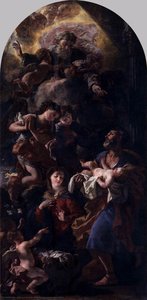
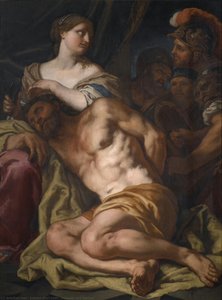
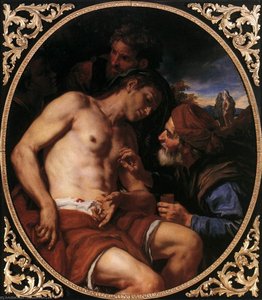
11Christ on the Cross (1665) av Johann Carl LothChrist on the Cross1665 · Bavarian State Painting Collections 12Adoration of the Shepherds (1665) av Johann Carl LothAdoration of the Shepherds1665 · Bavarian State Painting Collections 13David with the Head of Goliath (1665) av Johann Carl LothDavid with the Head of Goliath1665 · Bavarian State Painting Collections 14Mockery of Christ (1665) av Johann Carl LothMockery of Christ1665 · Bavarian State Painting Collections 15Isaac Blesses Jacob (1665) av Johann Carl LothIsaac Blesses Jacob1665 · Bavarian State Painting Collections 16The Shame of Noah (1674) av Johann Carl LothThe Shame of Noah1674 · Bavarian State Painting Collections 17The Dying Seneca (1665) av Johann Carl LothThe Dying Seneca1665 · Bavarian State Painting Collections 18The Rescue of Agrippina, Mother of Nero (1665) av Johann Carl LothThe Rescue of Agrippina, Mother of Nero1665 · Bavarian State Painting Collections 19Boy in Armor (1665) av Johann Carl LothBoy in Armor1665 20Cato the Younger's Death (1672) av Johann Carl LothCato the Younger's Death1672 · Statens Museum for Kunst 21Saint Joseph with the Christ Child (1680) av Johann Carl LothSaint Joseph with the Christ Child1680 · Bavarian State Painting Collections 22Holy Family with the Christ Child John (1680) av Johann Carl LothHoly Family with the Christ Child John1680 · Bavarian State Painting Collections 23Saint John the Baptist (1680) av Johann Carl LothSaint John the Baptist1680 · Slovak National Gallery 24Saint Paul (1675) av Johann Carl LothSaint Paul1675 · Nasjonalmuseet i Warszawa 25Faun playing the flute. (1675) av Johann Carl LothFaun playing the flute.1675 · Nasjonalmuseet i Warszawa 26Martyrdom of Gerard of Csanád (1677) av Johann Carl LothMartyrdom of Gerard of Csanád1677 · Musée des Beaux-Arts de Strasbourg 27Holy Family and God the Father (1681) av Johann Carl LothHoly Family and God the Father1681 · San Silvestro 28The Guardian Angel and Archangel Michael (1691) av Johann Carl LothThe Guardian Angel and Archangel Michael1691 · Bavarian State Painting Collections 29Saint Dominic Receives the Rosary (1691) av Johann Carl LothSaint Dominic Receives the Rosary1691 · Bavarian State Painting Collections 30The Death of Cato. (1700) av Johann Carl LothThe Death of Cato.1700 · Nasjonalmuseet i Warszawa 31Abraham Visited by the Angels av Johann Carl LothAbraham Visited by the Angels 32Death of St Peter Martyr (1691) av Johann Carl LothDeath of St Peter Martyr1691 · Basilica dei Santi Giovanni e Paolo 33Lowering of Moses into the Nile (Amram and Jochebed lowering their son Moses in a basket into the Nile) (1700) av Johann Carl LothLowering of Moses into the Nile (Amram and Jochebed lowering their son Moses in a basket into the Nile)1700 · Ernest Zmeták Art Gallery 34Apollo, Pan, and Marsyas av Johann Carl LothApollo, Pan, and MarsyasStaatliche Museen zu Berlin 35Eliezer og Rebekka ved Brønnet (1670) av Johann Carl LothEliezer og Rebekka ved Brønnet1670 · Eremitasjen 36Self-Portrait av Johann Carl LothSelf-PortraitBavarian State Painting Collections 37The Crowning with thorns av Johann Carl LothThe Crowning with thornsFinnish National Gallery 38Saint Sebastian av Johann Carl LothSaint SebastianNational Gallery Prague 39Kampf des Jakob mit d. Engel ? av Johann Carl LothKampf des Jakob mit d. Engel ? 40Adam and Eve av Johann Carl LothAdam and EveKedleston Hall 41Lot and His Daughters av Johann Carl LothLot and His Daughters 42Samson and Delilah av Johann Carl LothSamson and DelilahFondazione Brescia Musei 43Mercury Piping to Argus av Johann Carl LothMercury Piping to ArgusNational Gallery 44Jupiter and Mercury at Philemon and Baucis av Johann Carl LothJupiter and Mercury at Philemon and BaucisKunsthistorisches Museum 45The Good Samaritan av Johann Carl LothThe Good SamaritanKunsthistorisches Museum 46The Good Samaritane (1676) av Johann Carl LothThe Good Samaritane1676 · Kunstsammlungen Graf von Schönborn

Motivene som fanget Johann Carl Loths blikk

De fire motivene som går igjen hyppigst i disse originalverkene, hver med sitt fremste eksempel.

Museene som har Johann Carl Loths originalverk

De 8 museene som innehar flest av maleriene på denne siden.

Museum By Verker av Johann Carl Loth Malerier fra denne listen
Bavarian State Painting Collections, MünchenBavarian State Painting Collections München 17 The Exposure of the Infant Moses, Christ Appears to Saint Anthony, The Penitent Mary Magdalene
Kunsthistorisches Museum, WienKunsthistorisches Museum Wien 3 Jacob Blesses Ephraim and Manasseh, Jupiter and Mercury at Philemon and Baucis, The Good Samaritan
Nasjonalmuseet i Warszawa, WarszawaNasjonalmuseet i Warszawa Warszawa 3 Saint Paul, Faun playing the flute., The Death of Cato.
Rijksmuseum, AmsterdamRijksmuseum Amsterdam 1 Selene and Endymion
Art Institute of Chicago, ChicagoArt Institute of Chicago Chicago 1 Old Peasant Lighting a Pipe
Muzeum Palacu Króla Jana Iii w Wilanowie, WarszawaMuzeum Palacu Króla Jana Iii w Wilanowie Warszawa 1 Music Lesson
Minneapolis Institute of Art, MinneapolisMinneapolis Institute of Art Minneapolis 1 Diogenes
J. Paul Getty Museum, Los AngelesJ. Paul Getty Museum Los Angeles 1 Susannah and the Elders

Johann Carl Loth gjennom tiårene: ett unikt originalverk for hvert tiår

Verk per tiår

Velg et tiår for å se originalverket som definerer det.

Johann Carl Loths malerier: spørsmål til galleriet

Hva er det mest kjente verket til Johann Carl Loth?Avslør svaret

Selene and Endymion (1670), Rijksmuseum, Amsterdam. Deretter følger Jacob Blesses Ephraim and Manasseh (1692) og Old Peasant Lighting a Pipe (1660).

Hvor gammel var Johann Carl Loth da Selene and Endymion ble skapt?Avslør svaret

38 år gammel: Selene and Endymion er fra 1670, og Johann Carl Loth ble født i 1632.

Hvilke ti malerier av Johann Carl Loth er de mest kjente?Avslør svaret

Selene and Endymion, Jacob Blesses Ephraim and Manasseh, Old Peasant Lighting a Pipe, Music Lesson, Diogenes, Susannah and the Elders, The Exposure of the Infant Moses, Christ Appears to Saint Anthony, The Penitent Mary Magdalene og John the Baptist. Rangeringen ovenfor viser årstall og museum for hvert verk.

Hvor mange verk av Johann Carl Loth er kjent?Avslør svaret

Vår katalog inneholder 47 verk av Johann Carl Loth, datert fra 1650 til 1692.

Hvor kan de mest kjente originalverkene til Johann Carl Loth ses?Avslør svaret

Hovedsakelig i Bavarian State Painting Collections (München), Kunsthistorisches Museum (Wien) og Nasjonalmuseet i Warszawa (Warszawa). Museumslisten ovenfor viser alle.

I hvilken periode malte Johann Carl Loth sine mest kjente malerier?Avslør svaret

I 1660s: 13 av de 46 verkene på denne siden ble laget da, Old Peasant Lighting a Pipe av dem.

Hvilket kjent maleri av Johann Carl Loth er det eldste, og hvilket er det nyeste?Avslør svaret

På denne siden er det eldste Music Lesson (1650) og det nyeste Jacob Blesses Ephraim and Manasseh (1692).

Hvilke motiver foretrakk Johann Carl Loth?Avslør svaret

Man (28), Drapery (15) og Skin (11), fordelt på 46 verk på denne siden.

Hvilke materialer brukte Johann Carl Loth mest av?Avslør svaret

Oil On Canvas, for 22 av de 46 verkene på denne siden.

Hvilken kunstretning tilhører verkene til Johann Carl Loth?Avslør svaret

Baroque, basert på originalene på denne siden.

Hvilke originalverk av Johann Carl Loth kan jeg se på Bavarian State Painting Collections?Avslør svaret

The Exposure of the Infant Moses, Christ Appears to Saint Anthony og The Penitent Mary Magdalene: Bavarian State Painting Collections, München har 17 av verkene på denne siden.

Johann Carl Loth: et portrett av kunstneren

Den venetianske dramatikens mester: Livet og arven etter Johann Carl Loth

I det solfylte, teatralske miljøet i 1600-tallets Venezia var det få kunstnere som fanget den dype spenningen mellom det guddommelige og det jordiske like mesterlig som Johann Carl Loth. Han ble født rundt 1632 i München, i kurfyrstedømmet Bayern, og var en maler hvis identitet brobygget mellom de robuste tradisjonene i tysk kunst og den lysende, emosjonelle praktfullheten i den italienske barokken. Selv om navnet hans kanskje ikke har den umiddelbare gjenkjennelsen til en Titian, var hans tilstedeværelse i det venetianske landskapet monumental. Han ble berømt hyllet av biografen Arnold Houbraken som en av de tre store mesterne i kunsten som bar navnet "Karel" – en prestisjefylt utmerkelse som plasserte ham side om side med lysende skikkelser som Karel Duijardin og Carlo Maratta, noe som signaliserte hans ankomst blant eliten i europeisk malerkunst.

Loths kunstneriske reise begynte under det våkne øyet til sin far, Johann Ulrich Loth, en maler som ga ham den grunnleggende tekniske strengheten som senere gjorde det mulig for sønnen å eksperimentere med et så storslått omfang. Denne tidlige opplæringen i München innprentet en disiplinert tilnærming til komposisjon, men det var flyttingen til Venezia som virkelig tente hans kreative ånd. I det livlige venetianske miljøet absorberte Loth innflytelsen fra Giovan Battista Langetti, og adopterte en stil definert av chiaroscuro – det dramatiske samspillet mellom lys og skygge – og en forkjærlighet for tenebrisme. Denne teknikken gjorde det mulig for ham å forme figurer ut av mørket, og fylte lerretene med en følelse av tyngde, mystikk og åndelig hastverk som ble hans umistakelege signatur.

En vev av myte og skrift

Den sanne genialiteten i Loths virke ligger i hans evne til å forvandle lerretet til en scene for menneskehetens mest episke fortellinger. Han spesialiserte seg på historiemaleri i stor skala, ofte preget av tettpakkede og overfylte gruppescener som krevde enorme komposisjonelle ferdigheter. Motivene hans var hentet fra kildene i klassisk mytologi og de dype lagene i Det gamle testamentet, behandlet ikke bare som illustrasjoner, men som levende, pustende dramaer. Enten han skildret guddommelig inngripen eller de heroiske prøvelsene til bibelske patriarker, benyttet Loth en palett av levende farger og løse, ekspressive penselstrøk for å fremkalle intens emosjon.

Man kan se denne mestringen i verk som Jupiter og Merkur hos Filemon og Baucis, hvor den guddommelige tilstedeværelsen føles gjennom et plutselig, opplysende lys som trenger gjennom de beskjedne omgivelsene i en dødelig hytte. På samme måte viser hans religiøse komposisjoner, som Den hellige familie og Gud Fader, en dyp kontroll over atmosfærisk dybde og hellig intimitet. Hans evne til å veve komplekse menneskelige følelser – hengivenhet, frykt, ærefrykt og familiær kjærlighet – inn i disse storslåtte narrativene, sørget for at hans arbeid resonnerte langt utenfor Italias grenser og tiltrakk seg oppmerksomheten til prestisjetunge mæcener, inkludert Keiser Leopold I ved det habsburgske hoffet i Wien.

Innflytelse, samarbeid og varig betydning

Loths karriere var ikke et ensomt prosjekt, men preget av betydelig kunstnerisk synergi. I Venezia inngikk han fruktbare samarbeid med andre mestere som Pietro Liberi, hvor de sammen utførte ambisiøse oppdrag som hevet standarden for historisk historiefortelling. Hans atelier ble et fyrtårn for aspirerende talenter; han mentorerte en generasjon malere, inkludert Michael Wenzel Halbax og Johann Michael Rottmayr, og sikret at hans stilistiske kjennetegn – den dramatiske lyssettingen og de teatralske komposisjonene – ville prege de påfølgende tiårene av barokkunst. Selv utenfor malerkunsten tiltrakk Loths rykte seg velstående reisende og kunstnere, som Cornelis de Bruijn, noe som gjorde atelieret hans til et viktig knutepunkt i det europeiske kunstneriske nettverket.

Da han nærmet seg slutten av sitt liv, bosatt i Venezia frem til sin død i 1698, hadde Loth sikret seg en arv som overskred hans tyske opphav. Han var en maler som kunne mestre både de intime skyggene i en enkelt figur og den kaotiske energien i en folkemengde. I dag befinner hans verk seg i noen av verdens mest anerkjente institusjoner, fra Kunsthistorisches Museum i Wien til Ermitasjen i St. Petersburg. Gjennom sin evne til å forene ungdommens strukturelle disiplin med den emosjonelle flyten i den venetianske skolen, forblir Johann Carl Loth en definerende stemme fra barokken, som minner oss om en tid da kunsten var en storslått, teatralsk søken etter det sublime.