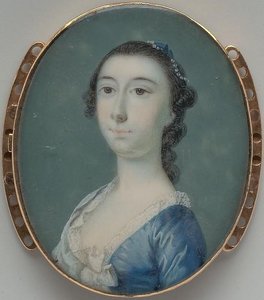
Portrett av Jeremiah Theus

Jeremiah Theuss malerier: De 28 mest kjente, sett gjennom et galleris øyne

Oppdatert October 2026 · rangert etter vår popularitetsscore (søk, besøk og bestillinger for hvert verk) · 29 verk av Jeremiah Theus i vår katalog

Kort fortalt

Etter galleriets vurdering er Jeremiah Theuss mest kjente maleri Captain William Richardson (1743-1786) (1757), hvis original henger i Yale University Art Gallery, New Haven. William Wragg (1750) og Portrait of Amarinthia Elliott (1748) fullfører trioen som alle kjenner igjen. Av de 29 verkene til Jeremiah Theus i vår katalog, presenterer galleriet de 28 mest kjente nedenfor; hvert originalverk med årstall, museum og hva som gjør det unikt.

1716 – 1774, Chur Rococo Flest verk: Metropolitan Museum of Art

Galleriets 10 beste malerier av Jeremiah Theus

1
Captain William Richardson (1743-1786) (1757) av Jeremiah Theus

Captain William Richardson (1743-1786)

1757 · Oil On Canvas · Yale University Art Gallery, New Haven

A formal 18th-century portrait of a young man, presented within an oval vignette against a dark, monochromatic background. Captain William Richardson is depicted from the waist up, positioned at a slight angle while looking toward the viewer. The composition relies on a restrained color palette, dominated by the creamy white of his waistcoat and jacket, which contrasts sharply against a deep blue trim. This trim features intricate silver or gold…

Jeremiah Theus sine malerier, rangert fra 11 til 28

Motivene som fanget Jeremiah Theuss blikk

De fire motivene som går igjen hyppigst i disse originalverkene, hver med sitt fremste eksempel.

Museene som har Jeremiah Theuss originalverk

De 8 museene som innehar flest av maleriene på denne siden.

Museum By Verker av Jeremiah Theus Malerier fra denne listen
Metropolitan Museum of Art, New YorkMetropolitan Museum of Art New York 4 Mrs. Jacob Motte (Rebecca Brewton), Mrs. John Dart, Gabriel Manigault
National Gallery of Art, WashingtonNational Gallery of Art Washington 3 James Cuthbert (?), Mr. Motte, Mrs. Cuthbert
Gibbes Museum of Art, CharlestonGibbes Museum of Art Charleston 3 Benjamin Smith, Kolonel Barnard Elliott Jr., Mrs. Barnard Elliott, Jr. (Mary Elizabeth Bellinger Elliott)
Detroit Institute of Arts, DetroitDetroit Institute of Arts Detroit 2 William Wragg, Portrait of Amarinthia Elliott
Museum of Fine Arts, BostonMuseum of Fine Arts Boston 2 Mrs. Lionel Chalmers (Martha Logan), Dr. Lionel Chalmers
New York Historical Society, New York CityNew York Historical Society New York City 2 Mrs. Samuel Carne (1740-1805), Samuel Carne, MD (1725-1780)
Yale University Art Gallery, New HavenYale University Art Gallery New Haven 1 Captain William Richardson (1743-1786)
John and Mable Ringling Museum of Art, SarasotaJohn and Mable Ringling Museum of Art Sarasota 1 Portrait of John Faucheraud Grimké

Jeremiah Theus, ett signaturmaleri per tiår

Verk per tiår

Velg et tiår for å se originalverket som definerer det.

Jeremiah Theuss malerier: galleriets svar

Hvilket maleri av Jeremiah Theus er det mest kjente av alle?Avslør svaret

Captain William Richardson (1743-1786) (1757), Yale University Art Gallery, New Haven. Deretter følger William Wragg (1750) og Portrait of Amarinthia Elliott (1748).

Hvor gammel var Jeremiah Theus da Captain William Richardson (1743-1786) ble ferdigstilt?Avslør svaret

41 år gammel: Captain William Richardson (1743-1786) er fra 1757, og Jeremiah Theus ble født i 1716.

Hvilke er de 10 beste maleriene til Jeremiah Theus?Avslør svaret

Captain William Richardson (1743-1786), William Wragg, Portrait of Amarinthia Elliott, Mrs. Thomas Lynch (Elizabeh Allston Lynch), Mrs. Peter Manigault, Portrait of John Faucheraud Grimké, Portrait of Mrs. John Champneys (Anne Livingston, born 1746), Mrs. Lionel Chalmers (Martha Logan), Dr. Lionel Chalmers og Mrs. Samuel Carne (1740-1805). Rangeringen ovenfor viser årstall og museum for hvert verk.

Hvor mange verk skapte Jeremiah Theus?Avslør svaret

Vår katalog inneholder 29 verk av Jeremiah Theus, datert fra 1748 til 1772.

Hvor henger de mest kjente originalverkene til Jeremiah Theus?Avslør svaret

Hovedsakelig i Metropolitan Museum of Art (New York), National Gallery of Art (Washington) og Gibbes Museum of Art (Charleston). Museumslisten ovenfor viser alle.

Når malte Jeremiah Theus sine mest kjente malerier?Avslør svaret

I 1760s: 13 av de 28 verkene på denne siden ble laget da, Portrait of John Faucheraud Grimké av dem.

Hvilke er Jeremiah Theuss tidligste og nyeste berømte verk?Avslør svaret

På denne siden er det eldste Portrait of Amarinthia Elliott (1748) og det nyeste Mrs. John Dart (1772).

Hvilke motiver vendte Jeremiah Theus oftest tilbake til?Avslør svaret

18th century (4), Portraiture (3) og Colonial era (2), fordelt på 28 verk på denne siden.

Hvilket medium arbeidet Jeremiah Theus mest med?Avslør svaret

Oil On Canvas, for 2 av de 28 verkene på denne siden.

Hvilken kunstretning er Jeremiah Theus tilknyttet?Avslør svaret

Rococo, basert på originalene på denne siden.

Hvilke originalverk av Jeremiah Theus har Metropolitan Museum of Art i sin samling?Avslør svaret

Mrs. Jacob Motte (Rebecca Brewton), Mrs. John Dart og Gabriel Manigault: Metropolitan Museum of Art, New York har 4 av verkene på denne siden.

Jeremiah Theus: kunstneren

Jeremiah Theus: Charleston’s Quintessential Portraitist

Jeremiah Theus (1716 – 1774) stands as a singular figure in the artistic landscape of colonial South Carolina, recognized primarily for his masterful portraits that captured the spirit and grandeur of the era's elite. Born in Chur, Switzerland—the eldest son of Simeon Walser Theüs—his early life was marked by Huguenot heritage and familial migration to America in 1735, driven by religious persecution. This journey established him firmly within Charleston’s burgeoning merchant class, where he swiftly ascended to prominence as the city's foremost limner (portrait painter).
  • Early Training & Arrival in Charleston: Theus’s artistic education remains somewhat elusive, likely honed through independent study rather than formal institutions. Nevertheless, his astute observation of prevailing stylistic trends—particularly those emanating from England—demonstrates a keen understanding of artistic conventions. Upon arriving in Charleston in 1740, he immediately established himself as a respected artist, advertising his services with considerable flair and attracting commissions from prominent families.
  • A Singular Career: What distinguishes Theus from his contemporaries is not merely skill but exclusivity; for much of his career, he was the sole portraitist in Charleston possessing significant reputation. This circumstance fostered an unparalleled level of artistic innovation and allowed him to cultivate a distinctive visual language—characterized by meticulous detail and subtle psychological insight.

Style & Technique: Embracing Rococo Influence
  • Theus’s portraits are predominantly bust-length compositions, meticulously rendered in oil on canvas. He skillfully adopted elements of Rococo art—a style originating in France—incorporating graceful poses, delicate drapery folds, and opulent embellishments like lace and ermine to convey status and refinement. His meticulous attention to detail—particularly in capturing facial expressions and subtle nuances of gesture—elevated his work beyond mere likenesses, transforming them into evocative representations of character.
  • English Inspiration: Like many artists of the time, Theus drew inspiration from English mezzotint prints depicting aristocratic subjects. He meticulously copied poses and compositional elements from these engravings, demonstrating a profound awareness of artistic precedents and signaling his commitment to upholding standards of elegance and sophistication.

Notable Commissions & Artistic Achievements
  • Among Theus’s most celebrated achievements was his depiction of Colonel Barnard Elliott and his wife—a commission that cemented his reputation as Charleston's premier portraitist. This artwork exemplifies his mastery of Rococo style, skillfully capturing the dignity and grace of its subjects while simultaneously reflecting the broader cultural milieu of the era.
  • Furthermore, Theus’s involvement in decorating St. Michael’s Episcopal Church—including the steeple and weather vane—underscores his versatility as an artist and his dedication to serving the community. His contribution to the building fund exemplifies his generosity and reinforces his standing as a respected citizen of Charleston.

Legacy & Historical Significance
  • Jeremiah Theus’s oeuvre constitutes a crucial document of colonial South Carolina society, offering invaluable insights into the tastes, aspirations, and social dynamics of the period. His portraits—characterized by their meticulous detail and psychological depth—continue to fascinate scholars and art enthusiasts alike, serving as enduring emblems of Charleston's artistic heritage.
  • Recent research has illuminated a fascinating aspect of Theus’s artistic practice: his appropriation of English mezzotint prints for stylistic inspiration. This demonstrates not only his awareness of contemporary artistic trends but also his willingness to engage in dialogue with European artistic traditions—a hallmark of Charleston's cosmopolitan culture.

Concluding Remarks Jeremiah Theus’s enduring influence on American art stems from his unwavering commitment to excellence and his ability to capture the essence of his subjects. His portraits stand as testament to a bygone era—a period defined by aristocratic grandeur, artistic innovation, and a profound engagement with European cultural currents.