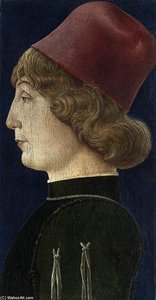
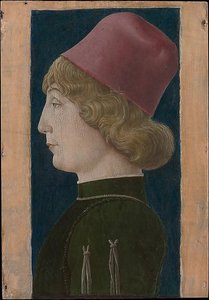
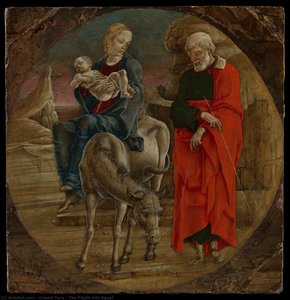
Portrett av Cosimo Tura

De 93 mest kjente maleriene av Cosimo Tura, et gallerivalg

Oppdatert October 2026 · rangert etter vår popularitetsscore (søk, besøk og bestillinger for hvert verk) · 97 verk av Cosimo Tura i vår katalog

Kort fortalt

Av alle originalverkene Cosimo Tura etterlot seg, er det mest kjente Annunciation (1469), som er en del av samlingen til Museo del Duomo i Ferrara. Like bak følger The Madonna of the Zodiac (detail) (1459) og The Madonna of the Zodiac (1459). Vår katalog inneholder 97 verk av Cosimo Tura; galleriet har bevart de 93 verkene som verden beundrer mest, hver vist med sin dato, sitt museum og sin historie.

1430 – 1495, Ferrara Early renaissance Flest verk: Palazzo Schifanoia

Cosimo Turas topp 10 malerier: galleriets utvalg

1
Annunciation (1469) av Cosimo Tura

Annunciation

1469 · Oil On Canvas · Museo del Duomo, Ferrara

To stand before an image like Cosmè Tura’s Annunciation is to step across the threshold of time and into a moment suspended by divine grace. This masterpiece, dating from 1469, captures the pivotal instant when the Archangel Gabriel announces to the Virgin Mary that she will conceive Christ. It is not merely a depiction of a biblical event; it is an exquisitely orchestrated meditation on humility meeting the sublime. The…

2
The Madonna of the Zodiac (detail) (1459) av Cosimo Tura

The Madonna of the Zodiac (detail)

1459 · Tempera On Panel · Gallerie dell'Accademia di Venezia, Venezia

To gaze upon this exquisite detail from Cosmè Tura’s The Madonna of the Zodiac is to be transported directly into the luminous, intellectual atmosphere of the Early Renaissance. This fragment, focusing intimately on a bird poised amidst ripe grapes, transcends mere depiction; it captures a moment suspended between earthly bounty and celestial mystery. The artist’s mastery is immediately apparent in the meticulous rendering of nature—the delicate sweep of the bird's…

3
The Madonna of the Zodiac (1459) av Cosimo Tura

The Madonna of the Zodiac

1459 · Oil On Panel · Gallerie dell'Accademia di Venezia, Venezia

Cosmè Tura’s “Madonna of the Zodiac,” painted in 1459, isn't merely a depiction of the Virgin Mary and Child; it’s a shimmering portal into the intellectual and artistic fervor of early Renaissance Ferrara. This exquisite tempera on panel painting, now residing within the Gallerie dell’Accademia in Venice, embodies the era’s fascination with classical antiquity, burgeoning scientific thought, and deeply personal devotion. The work immediately captivates with its serene beauty –…

4
St George and the Princess (1469) av Cosimo Tura

St George and the Princess

1469 · Oil On Canvas · Museo del Duomo, Ferrara

To gaze upon Cosmè Tura's depiction of St George and the Princess is to step directly into the vibrant, dramatic heart of the early Renaissance. This monumental canvas, dating from 1469, is far more than a mere historical tableau; it is an epic narrative rendered in paint, capturing a moment charged with divine intervention, chivalric virtue, and profound human drama. The scene unfolds with palpable energy, centering on St George,…

5
The Madonna of the Zodiac (1459) av Cosimo Tura

The Madonna of the Zodiac

1459 · Oil On Panel · Gallerie dell'Accademia di Venezia, Venezia

Cosmè Tura’s “Madonna of the Zodiac,” painted in 1459, is more than just a devotional image; it's a window into the burgeoning artistic landscape of early Renaissance Ferrara. This intimate portrait of the Virgin Mary cradling the infant Jesus isn’t merely a depiction of motherhood; it’s a carefully constructed allegory brimming with symbolism and reflecting the intellectual currents of its time. Tura, a Ferrarese visionary often considered the founder of…

6
Pietà (1460) av Cosimo Tura

Pietà

1460 · Oil On Panel · Museo Correr, Venezia

Within the hushed reverence of the Museo Correr in Venice resides a painting that transcends mere representation, becoming instead an embodiment of profound sorrow and enduring faith – Cosmè Tura’s 1460 “Pietà.” More than simply a depiction of Mary cradling her son's lifeless form, this work is a cornerstone of Early Renaissance art, a testament to the artist’s mastery of technique and his ability to infuse religious subject matter with…

7
Allegory of September (detail) (1484) av Cosimo Tura

Allegory of September (detail)

1484 · Oil On Canvas · Palazzo Schifanoia, Ferrara

Cosmè Tura’s Allegory of September, a fresco dominating the Sala dei Nove in Palazzo Schifanoia, Ferrara, is not merely a decorative panel; it's a meticulously crafted microcosm of Late Medieval and Early Renaissance thought. Painted between 1476 and 1478 for the court of Borso d’Este, Duke of Ferrara, this monumental work offers a rare glimpse into the intellectual and artistic climate of a burgeoning city-state—a testament to Tura's exceptional skill…

8
The Virgin Annunciate (1477) av Cosimo Tura

The Virgin Annunciate

1477 · Oil On Panel · National Gallery, London

The painting depicts a seated female figure positioned in profile, her body turned slightly toward the viewer. She sits within an architectural setting characterized by a heavy, carved wooden chair. Her gaze is directed downwards and inwards, away from the external world. A crimson underdress is visible beneath a deep blue outer garment, which is fastened at the chest with small buttons or clasps. The fabric of her clothing displays…

9
Saints Maurelius and Paul with Niccolò Roverella (1470) av Cosimo Tura

Saints Maurelius and Paul with Niccolò Roverella

1470 · Oil On Panel · Palazzo Colonna, Rome

The painting Saints Maurelius and Paul with Niccolò Roverella by Cosimo Tura emerges from the shadows of history as a vital fragment of a much larger whole. This work exists as the right-hand panel of the expansive Roverella Altarpiece, a grand composition that once filled a sacred space. The Roverella family commissioned this piece, seeking to leave a lasting mark of their devotion and lineage within the religious landscape of…

10
The Annunciation with Saint Francis and Saint Louis of Toulouse [four panels] (1475) av Cosimo Tura

The Annunciation with Saint Francis and Saint Louis of Toulouse [four panels]

1475 · Tempera On Panel · National Gallery of Art, Washington

The Annunciation with Saint Francis and Saint Louis of Toulouse [four panels] is a religious work by the Ferrarese painter Cosimo Tura. This polyptych is divided into four distinct vertical segments. Each panel holds a single holy figure, creating a rhythmic sequence of sacred presence. The figures emerge from a deep, lapis-like blue background, set against a landscape of dark, jagged hills.

Utvalget av Cosimo Tura fortsetter, fra 11 til 93

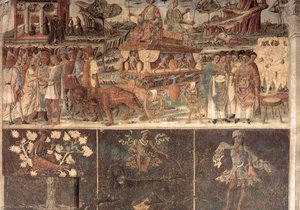
11English Allegory of June Triumph of Mercury (1484) av Cosimo TuraEnglish Allegory of June Triumph of Mercury1484 · Palazzo Schifanoia 12Portrait of a Young Man (1450) av Cosimo TuraPortrait of a Young Man1450 · Metropolitan Museum of Art 13St Anthony of Padua Reading (1475) av Cosimo TuraSt Anthony of Padua Reading1475 · Louvre 14Saint John the Baptist (1474) av Cosimo TuraSaint John the Baptist1474 · Philadelphia Museum of Art 15The Crucifixion (1450) av Cosimo TuraThe Crucifixion1450 · Fitzwilliam Museum 16Untitled (AQRDZC) (1455) av Cosimo TuraUntitled (AQRDZC)1455 · Musée Fesch 17English A Muse (Calliope ) (1460) av Cosimo TuraEnglish A Muse (Calliope )1460 18The Adoration of the Magi (1480) av Cosimo TuraThe Adoration of the Magi1480 · Fogg Museum 19Saint Lucy and Saint Eutychia at the Shrine of Saint Agatha (1484) av Cosimo TuraSaint Lucy and Saint Eutychia at the Shrine of Saint Agatha1484 · Isabella Stewart Gardner Museum 20Saint Louis of Toulouse (1484) av Cosimo TuraSaint Louis of Toulouse1484 · Metropolitan Museum of Art 21Saint Jerome (1474) av Cosimo TuraSaint Jerome1474 22Pietà (panel from the Roverella Polyptych) (1474) av Cosimo TuraPietà (panel from the Roverella Polyptych)1474 · Louvre 23View of the Salone dei Mesi (1484) av Cosimo TuraView of the Salone dei Mesi1484 · Palazzo Schifanoia 24Adoration of the Magi (from the predella of the Roverella Polyptych) (1474) av Cosimo TuraAdoration of the Magi (from the predella of the Roverella Polyptych)1474 25Untitled (D2WVMR) (1450) av Cosimo TuraUntitled (D2WVMR)1450 26Pietà (1474) av Cosimo TuraPietà1474 27Allegory of September (detail) (1476) av Cosimo TuraAllegory of September (detail)1476 · Palazzo Schifanoia 28The Muse Terpsichore (1460) av Cosimo TuraThe Muse Terpsichore1460 29Allegory of August: Triumph of Ceres (detail) (1476) av Cosimo TuraAllegory of August: Triumph of Ceres (detail)1476 · Palazzo Schifanoia 30A Muse (detail) (1455) av Cosimo TuraA Muse (detail)1455 · National Gallery 31St George (fragment av et panel fra Roverella Polyptychen) (1474) av Cosimo TuraSt George (fragment av et panel fra Roverella Polyptychen)1474 · Fine Arts Gallery 32Annunciation (detail) (1469) av Cosimo TuraAnnunciation (detail)1469 · Museo del Duomo 33Manuscript Illumination with All Saints in an Initial V, from an Antiphonary (1450) av Cosimo TuraManuscript Illumination with All Saints in an Initial V, from an Antiphonary1450 34Manuscript Illumination with the Presentation in the Temple in an Initial S, from a Gradual (1450) av Cosimo TuraManuscript Illumination with the Presentation in the Temple in an Initial S, from a Gradual1450 35Manuscript Illumination with the Assumption of the Virgin in an Initial A, from an Antiphonary (1450) av Cosimo TuraManuscript Illumination with the Assumption of the Virgin in an Initial A, from an Antiphonary1450 36Terpsichore (detail) (1450) av Cosimo TuraTerpsichore (detail)1450 · Museo Poldi Pezzoli 37Manuscript Illumination with the Presentation in the Templ in an Initial S, from a Gradual (1450) av Cosimo TuraManuscript Illumination with the Presentation in the Templ in an Initial S, from a Gradual1450 38Manuscript Illumination with All Saints in an Initial V, from an Antiphonary (1450) av Cosimo TuraManuscript Illumination with All Saints in an Initial V, from an Antiphonary1450 39Manuscript Illumination with the Assumption of the Virgin in an Initial G, from a Gradual (1450) av Cosimo TuraManuscript Illumination with the Assumption of the Virgin in an Initial G, from a Gradual1450 40Flight to Egypt (from the predella of the Roverella Polyptych) (1474) av Cosimo TuraFlight to Egypt (from the predella of the Roverella Polyptych)1474 · Metropolitan Museum of Art 41English Portrait of a Young Man (1452) av Cosimo TuraEnglish Portrait of a Young Man1452 42Saint George (1460) av Cosimo TuraSaint George1460 · Collezione Vittorio Cini 43Deutsch Madonna im Garten (1452) av Cosimo TuraDeutsch Madonna im Garten1452 44Madonna and Child in a Garden (1452) av Cosimo TuraMadonna and Child in a Garden1452 45Deutsch Porträt eines Mannes English Portrait of a prince from Este family (1452) av Cosimo TuraDeutsch Porträt eines Mannes English Portrait of a prince from Este family1452 46The Virgin Annunciate [middle right panel] (1480) av Cosimo TuraThe Virgin Annunciate [middle right panel]1480 · National Gallery of Art 47Untitled (AQRE3U) (1480) av Cosimo TuraUntitled (AQRE3U)1480 48Untitled (AQRE2L) (1480) av Cosimo TuraUntitled (AQRE2L)1480 49Alfonso d'Este (1477) av Cosimo TuraAlfonso d'Este1477 50Ercole I d'Este (obverse) and Eleonora of Aragon (reverse) (1477) av Cosimo TuraErcole I d'Este (obverse) and Eleonora of Aragon (reverse)1477 51Portrait of a Young Man (1470) av Cosimo TuraPortrait of a Young Man1470 · Metropolitan Museum of Art 52Deutsch Hl. Dominikus, Detail (1475) av Cosimo TuraDeutsch Hl. Dominikus, Detail1475 53English Allegory of August Triumph of Ceres (detail) (1484) av Cosimo TuraEnglish Allegory of August Triumph of Ceres (detail)1484 · Palazzo Schifanoia 54Madonna with the Child Enthroned (detail) (1474) av Cosimo TuraMadonna with the Child Enthroned (detail)1474 55Deutsch Jungfrau der Verkündigung (1475) av Cosimo TuraDeutsch Jungfrau der Verkündigung1475 56Deutsch Hl. Franz von Assisi (1475) av Cosimo TuraDeutsch Hl. Franz von Assisi1475 · National Gallery of Art 57St Dominic (1475) av Cosimo TuraSt Dominic1475 58Deutsch Hl. Maurelius von Ferrara (1475) av Cosimo TuraDeutsch Hl. Maurelius von Ferrara1475 · National Gallery of Art 59Deutsch Verkündigungsengel (1475) av Cosimo TuraDeutsch Verkündigungsengel1475 · National Gallery of Art 60English St Christopher (1484) av Cosimo TuraEnglish St Christopher1484 · Gemäldegalerie 61Deutsch Hl. Jacobus d. Ä (1475) av Cosimo TuraDeutsch Hl. Jacobus d. Ä1475 · Musée des Beaux-Arts de Caen 62Deutsch Engelpietà, Fragment (1474) av Cosimo TuraDeutsch Engelpietà, Fragment1474 · Kunsthistorisches Museum 63English St Sebastian (1484) av Cosimo TuraEnglish St Sebastian1484 · Gemäldegalerie 64English Madonna and Child in the Garden (1470) av Cosimo TuraEnglish Madonna and Child in the Garden1470 · National Gallery of Art 65Deutsch Hl. Hieronymus (1474) av Cosimo TuraDeutsch Hl. Hieronymus1474 66Allegory of August: Triumph of Ceres (detail) (1476) av Cosimo TuraAllegory of August: Triumph of Ceres (detail)1476 · Palazzo Schifanoia 67St John the Evangelist on Patmos (1470) av Cosimo TuraSt John the Evangelist on Patmos1470 · Thyssen-Bornemisza-museet 68English St James the Great (1475) av Cosimo TuraEnglish St James the Great1475 · Musée des Beaux-Arts de Caen 69Virgin Announced and St Maurelio (panels of a polyptych) (1475) av Cosimo TuraVirgin Announced and St Maurelio (panels of a polyptych)1475 70St Francis of Assisi and Announcing Angel (panels of a polyptych) (1475) av Cosimo TuraSt Francis of Assisi and Announcing Angel (panels of a polyptych)1475 71Circumcision (from the predella of the Roverella Polyptych) (1474) av Cosimo TuraCircumcision (from the predella of the Roverella Polyptych)1474 · Isabella Stewart Gardner Museum 72The Flight into Egypt (1470) av Cosimo TuraThe Flight into Egypt1470 · Metropolitan Museum of Art 73Pietà (panel from the Roverella Polyptych) (1474) av Cosimo TuraPietà (panel from the Roverella Polyptych)1474 · Louvre 74Madonna with the Child Enthroned (detail) (1474) av Cosimo TuraMadonna with the Child Enthroned (detail)1474 · National Gallery 75English Madonna with the Child (1475) av Cosimo TuraEnglish Madonna with the Child1475 · Accademia Carrara 76Allegory of September (detail) (1476) av Cosimo TuraAllegory of September (detail)1476 · Palazzo Schifanoia 77Deutsch Reitergruppe, Fragment av Cosimo TuraDeutsch Reitergruppe, Fragment 78English Allegory of July Triumph of Jupiter (detail) (1484) av Cosimo TuraEnglish Allegory of July Triumph of Jupiter (detail)1484 · Palazzo Schifanoia 79Saint Peter (1474) av Cosimo TuraSaint Peter1474 · Philadelphia Museum of Art 80Deutsch Hl. Sebastian av Cosimo TuraDeutsch Hl. Sebastian 81Madonna of the Zodiac (1459) av Cosimo TuraMadonna of the Zodiac1459 · Gallerie dell'Accademia di Venezia 82Triptych (1469) av Cosimo TuraTriptych1469 83Italiano Pietà (1460) av Cosimo TuraItaliano Pietà1460 · Museo Correr 84Deutsch Hl. Dominikus (1475) av Cosimo TuraDeutsch Hl. Dominikus1475 85Deutsch Hl. Antonius von Padua Italiano Sant'Antonio da Padova (1484) av Cosimo TuraDeutsch Hl. Antonius von Padua Italiano Sant'Antonio da Padova1484 · Galleria Estense 86Untitled (AQRE2U) av Cosimo TuraUntitled (AQRE2U)National Gallery 87English Terpsichore (1450) av Cosimo TuraEnglish Terpsichore1450 · Museo Poldi Pezzoli 88Madonna with the Child Enthroned (panel from the Roverella Polyptych) (1474) av Cosimo TuraMadonna with the Child Enthroned (panel from the Roverella Polyptych)1474 · National Gallery 89Deutsch Gekreuzigter Christus Italiano Cristo crocifisso (1474) av Cosimo TuraDeutsch Gekreuzigter Christus Italiano Cristo crocifisso1474 · Pinacoteca di Brera 90English Allegory of August Triumph of Ceres (1484) av Cosimo TuraEnglish Allegory of August Triumph of Ceres1484 · Palazzo Schifanoia 91Deutsch Altarretabel des Hl. Maurelius, Szene Martyrium des Hl. Maurelius, Tondo (1475) av Cosimo TuraDeutsch Altarretabel des Hl. Maurelius, Szene Martyrium des Hl. Maurelius, Tondo1475 · Palazzo dei Diamanti 92Deutsch Altarretabel des Hl. Maurelius, Szene Verurteilung des Hl. Maurelius, Tondo (1475) av Cosimo TuraDeutsch Altarretabel des Hl. Maurelius, Szene Verurteilung des Hl. Maurelius, Tondo1475 · Palazzo dei Diamanti 93Deutsch Der Frühling (1460) av Cosimo TuraDeutsch Der Frühling1460 · National Gallery

Cosimo Turas berømte malerier, periode for periode

Motivene som fanget Cosimo Turas blikk

De fire motivene som går igjen hyppigst i disse originalverkene, hver med sitt fremste eksempel.

Museene som har Cosimo Turas originalverk

De 8 museene som innehar flest av maleriene på denne siden.

Museum By Verker av Cosimo Tura Malerier fra denne listen
Palazzo Schifanoia, FerraraPalazzo Schifanoia Ferrara 10 Allegory of September (detail), English Allegory of June Triumph of Mercury, View of the Salone dei Mesi
National Gallery, LondonNational Gallery London 6 The Virgin Annunciate, A Muse (detail), Madonna with the Child Enthroned (detail)
National Gallery of Art, WashingtonNational Gallery of Art Washington 6 The Annunciation with Saint Francis and Saint Louis of Toulouse [four panels], The Virgin Annunciate [middle right panel], Deutsch Hl. Franz von Assisi
Metropolitan Museum of Art, New YorkMetropolitan Museum of Art New York 5 Portrait of a Young Man, Saint Louis of Toulouse, Flight to Egypt (from the predella of the Roverella Polyptych)
Gallerie dell'Accademia di Venezia, VeneziaGallerie dell'Accademia di Venezia Venezia 4 The Madonna of the Zodiac (detail), The Madonna of the Zodiac, The Madonna of the Zodiac
Museo del Duomo, FerraraMuseo del Duomo Ferrara 3 Annunciation, St George and the Princess, Annunciation (detail)
Louvre, ParisLouvre Paris 3 St Anthony of Padua Reading, Pietà (panel from the Roverella Polyptych), Pietà (panel from the Roverella Polyptych)
Museo Correr, VeneziaMuseo Correr Venezia 2 Pietà, Italiano Pietà

Cosimo Tura tiår for tiår: originalverket som definerer hvert av dem

Verk per tiår

Velg et tiår for å se originalverket som definerer det.

Samlere spør om maleriene til Cosimo Tura

Hvilket verk er Cosimo Tura mest kjent for?Avslør svaret

Annunciation (1469), Museo del Duomo, Ferrara. Deretter følger The Madonna of the Zodiac (detail) (1459) og The Madonna of the Zodiac (1459).

Hvor gammel var Cosimo Tura da Annunciation ble laget?Avslør svaret

39 år gammel: Annunciation er fra 1469, og Cosimo Tura ble født i 1430.

Hva er de ti mest kjente maleriene til Cosimo Tura?Avslør svaret

Annunciation, The Madonna of the Zodiac (detail), The Madonna of the Zodiac, St George and the Princess, The Madonna of the Zodiac, Pietà, Allegory of September (detail), The Virgin Annunciate, Saints Maurelius and Paul with Niccolò Roverella og The Annunciation with Saint Francis and Saint Louis of Toulouse [four panels]. Rangeringen ovenfor viser årstall og museum for hvert verk.

Hvor mange malerier etterlot Cosimo Tura?Avslør svaret

Vår katalog inneholder 97 verk av Cosimo Tura, datert fra 1450 til 1484.

I hvilke museer henger mesterverkene til Cosimo Tura?Avslør svaret

Hovedsakelig i Palazzo Schifanoia (Ferrara), National Gallery (London) og National Gallery of Art (Washington). Museumslisten ovenfor viser alle.

I hvilke år malte Cosimo Tura sine mest kjente verk?Avslør svaret

I 1470s: 44 av de 93 verkene på denne siden ble laget da, The Virgin Annunciate av dem.

Hva er de første og de siste kjente originalverkene til Cosimo Tura?Avslør svaret

På denne siden er det eldste Portrait of a Young Man (1450) og det nyeste Allegory of September (detail) (1484).

Hvilke motiver valgte Cosimo Tura oftest?Avslør svaret

Virgin mary (13), Allegory (10) og Ferrara (7), fordelt på 93 verk på denne siden.

Hvilken teknikk brukte Cosimo Tura mest?Avslør svaret

Tempera On Panel, for 13 av de 93 verkene på denne siden.

Hvilken kunstretning tilhører Cosimo Tura?Avslør svaret

Early renaissance, basert på originalene på denne siden.

Hvilke verk av Cosimo Tura stilles ut på Palazzo Schifanoia?Avslør svaret

Allegory of September (detail), English Allegory of June Triumph of Mercury og View of the Salone dei Mesi: Palazzo Schifanoia, Ferrara har 10 av verkene på denne siden.

Cosimo Tura: liv og virke

En ferraresisk visjonær: Livet og kunsten til Cosmè Tura

Født rundt 1430 i den livlige hertugbyen Ferrara i Italia, steg Cosmè Tura frem fra beskjedne kår – hans far var en skomaker ved navn Domenico – for å bli en av de mest særpregede og innflytelsesrike malerne i den tidlige renessansen. Selv om detaljene rundt hans første opplæring forblir noe gåtefulle, antyder kunsthistorikere et mulig læresvennskap hos Galasso Galassi, en skyggefull skikkelse knyttet til den berømte Piero della Francesca. Denne tidlige eksponeringen la sannsynligvis grunnlaget for Turas utviklende kunstneriske sans, selv om det var en periode med reiser, som potensielt omfattet Venezia og Padova mellom 1452 og 1456, som virkelig tente hans kreative gnist. I Padova kom han i kontakt med verkstedet til Francesco Squarcione, et sentralt knutepunkt for kunstnerisk innovasjon der studiet av antikken blomstret side om side med fremvoksende renessanseteknikker som lineærperspektiv og robuste former. Disse influensene ble ikke bare absorbert, men syntetisert til noe unikt Tura-aktig – en stil preget av skarpe linjer, dekorativ overflod og en nesten besatt oppmerksomhet på detaljer.

Hofmaleren og hans innovative stil

Turas karriere blomstret innenfor Este-hoffet, først under hertug Borso d'Este og senere Ercole I d’Este. Han var ikke bare en maler; han var en allsidig håndverker som ble ansatt til å skape ikke bare fresker og panelmalerier, men også design for turneringer, dekorerte møbler og til og med tekstiler. Denne mangefasetterte rollen vitner om bredden i den kunstneriske ferdigheten som ble verdsatt i Este-huset, og ga Tura rikelig med muligheter til å eksperimentere med materialer og teknikker. Hans innovative bruk av oljemaling skiller seg særlig ut – han manipulerte mesterlig dens egenskaper for å gjengi et bemerkelsesverdig spekter av teksturer, fra den glitrende glansen i en metallrustning til de delikate foldene i luksuriøse stoffer. Denne tekniske dyktigheten ble kombinert med en kunstnerisk visjon dypt preget av et mangfold av påvirkninger: den serene spiritualiteten til Fra Angelico, Piero della Francescas geometriske presisjon, Andrea Mantegnas dramatiske forkortninger og klassiske referanser, samt den nitidige realismen hos de flamske malerne. Tura imiterte imidlertid ikke bare disse mestrene; han smidde dem om til en distinkt ferraresisk estetikk – en stil definert av ekspressive linjer, intrikat ornamentikk og en fengslende følelse av dynamikk. Fremtredende verk fra denne perioden inkluderer En muse (detalj) fra 1460, som viser hans delikate gjengivelse av form og symbolikk, det tidlige Portrett av en ung mann fra rundt 1450, og det senere St. Antonius av Padova lesende, fullført i 1475. Hans Pietà (1474) er nok et bevis på hans ferdigheter med temperamaling.

En arv smidd i Ferrara

Cosmè Turas innvirkning strakte seg langt utover Este-hoffets grenser. Han regnes med rette som en grunnlegger av skolen i Ferrara, en kunstbevegelse som blomstret på slutten av 1400-tallet og utøvde betydelig innflytelse på påfølgende generasjoner av italienske malere. Hans stil – ofte beskrevet som særegen og til og med noe urovekkende – trollbandt hans samtidige og fortsetter å fascinere kunsthistorikere i dag. Den ekspressive energien i linjene hans, den nesten fantastiske kvaliteten på de dekorative elementene og hans vilje til å tøye grensene for kunstneriske konvensjoner skilte ham fra mange av hans likemenn. Han påvirket kunstnere som Giovanni Andrea Ghirardoni, som fortsatte å utvikle den ferraresiske stilen etter Turas død i 1495. I dag kan eksempler på hans arbeid finnes i museer og samlinger over hele verden, men en betydelig konsentrasjon forblir i selve Ferrara, særlig i Museo del Duomo og Palazzo Schifanoia – sistnevnte med sine praktfulle fresker hvor Turas hånd er tydelig synlig.

Innflytelse og varig betydning

For å forstå Cosmè Turas kunstneriske bragder, er det avgjørende å anerkjenne det komplekse nettet av påvirkninger som formet hans visjon. Hans gjeld til Fra Angelico er tydelig i den hengivne intensiteten i hans religiøse verk, mens Piero della Francescas mestring av perspektiv og geometrisk form ga et strukturelt fundament for hans komposisjoner. Den dramatiske kraften og de klassiske allusjonene man finner i kunsten til Andrea Mantegna resonnerte også dypt hos Tura, og inspirerte ham til å utforske innovative tilnærminger til fremstilling av rom og anatomi. Videre bidro eksponeringen for flamske kunstnere sannsynligvis til hans adopsjon av oljemaling som medium, noe som muliggjorde større detaljrikdom og teksturelle nyanser. Det mulige mentorskapet fra Galasso Galassi, selv om det er innhyllet i mystikk, kan ha gitt et innledende grunnlag i kunstneriske prinsipper. Cosmè Turas arv ligger ikke bare i skjønnheten og originaliteten i hans malerier, men også i hans bidrag til utviklingen av den italienske renessansekunsten. Han demonstrerte en bemerkelsesverdig evne til å syntetisere ulike påvirkninger til en sammenhengende og fengslende stil, noe som etablerte Ferrara som et viktig sentrum for kunstnerisk innovasjon og etterlot et uutslettelig merke på maleriets historie.