
Saint Bavo’s Cathedral: Majestic Tower
This magnificent sight on Sint-Baafsplein in Ghent is a proud old lady: don’t just walk past her on your city trip. St Bavo’s Cathedral is the oldest parish church in the lively heart of Ghent. It stands on the site of the former Chapel of St John the Baptist, which was primarily of wooden construction and was consecrated in 942 by Transmarus, Bishop of Tournai and Noyon.
Traces of a later Romanesque structure can be found in the cathedral’s crypt.
Construction of the Gothic church began around 1274.
In the subsequent period from the 14th through 16th centuries, nearly continuous expansion projects in the Gothic style were executed on the structure. A new choir, radiating chapels, expansions of the transepts, a chapter house, nave aisles and a single-tower western section were all added.
In 1539, as a result of the rebellion against Charles V, who was baptized in the church, the old Abbey of St Bavo was dissolved. Its abbot and monks went on to become canons in a chapter that was attached to what then became the Church of St Bavo. When the Diocese of Ghent was founded in 1559, the church became its cathedral.
Construction was considered complete on 7 June 1569.
In the summer of 1566, bands of Calvinist iconoclasts visited Catholic churches in the Netherlands, including St Bavo, shattering stained-glass windows, smashing statues, and destroying paintings
The Ghent Altarpiece: A Polyptych of Unparalleled Significance
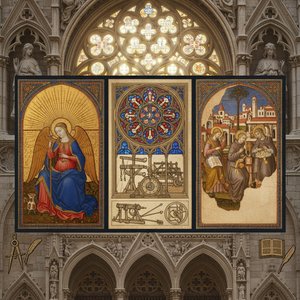
At the heart of St Bavo’s lies its most celebrated treasure: Jan van Eyck's Ghent Altarpiece, completed in 1432. This monumental polyptych is not merely a painting; it is an immersive world of vibrant color, meticulous detail, and profound symbolism.
The altarpiece unfolds across twelve panels, depicting scenes from the lives of Christ and the Virgin Mary with astonishing realism and emotional depth.
Van Eyck’s pioneering use of oil paint allowed for an unprecedented level of luminosity and texture, bringing each figure to life with remarkable presence.
The work is a theological treatise rendered in visual form, inviting contemplation on themes of salvation, sacrifice, and divine grace. The *Adoration of the Mystic Lamb*, as it's also known, isn’t simply observed; it’s experienced – a radiant vision that draws you into its sacred narrative.
Currently undergoing careful restoration—portions of which can be viewed at the Museum of Fine Arts Ghent—the Ghent Altarpiece continues to captivate scholars and art enthusiasts alike, solidifying its place as one of the most important works in the history of Western painting.
The meticulous process of uncovering layers of varnish and overpainting reveals Van Eyck’s original intent with breathtaking clarity, offering a renewed appreciation for his technical mastery and artistic vision.
Beyond Van Eyck: A Legacy of Flemish Art
While the Ghent Altarpiece rightfully commands attention, St Bavo’s Cathedral boasts a rich collection that extends far beyond this single masterpiece.
Explore the intricate medieval sculptures and reliquaries, testaments to the skill of local artisans who poured their devotion into creating objects of sacred beauty.
Discover the lavishly decorated Baroque chapels, commissioned by prominent families seeking to express their piety and status.
Admire paintings by Justus van Gent – his *Calvary Triptych* is a particularly striking example – and Anselmus van Hulle, artists whose contributions helped shape the artistic landscape of Flanders.
The cathedral’s holdings offer a comprehensive overview of artistic production in the region, showcasing the evolution of styles and techniques over centuries.
The presence of works like Justus van Gent's *Hypocrates* demonstrates the breadth of artistic talent nurtured within Ghent during the Renaissance, highlighting the city’s role as a vibrant center for intellectual and creative exchange.
Experiencing St Bavo’s Today: A Blend of Tradition and Innovation
A visit to St Bavo’s Cathedral is not simply a journey into the past; it is an immersive experience that seamlessly blends tradition with innovation.
Augmented reality tours bring the cathedral’s history to life, allowing visitors to interact with its stories in new and engaging ways.
The ongoing restoration work provides a unique opportunity to witness firsthand the meticulous efforts being undertaken to preserve this cultural treasure for future generations.
And, as an active place of worship, St Bavo's continues to hold deep spiritual significance for the local community, offering a space for reflection and connection.
Whether you are an art historian, a collector seeking inspiration, or simply a traveler in search of beauty and meaning, St Bavo’s Cathedral promises an unforgettable encounter with the artistic and spiritual heart of Ghent.