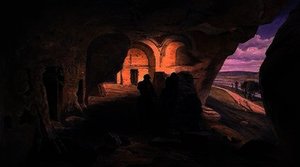
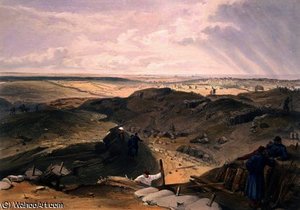
Portret van William Simpson

Schilderijen van William Simpson: De 100 bekendste, door de ogen van een galerie

Bijgewerkt in november 2026 · gerangschikt op basis van onze populariteitsscore (zoekopdrachten, bezoeken en bestellingen per kunstwerk) · 195 werken van William Simpson in onze catalogus

Kortom

Volgens de visie van de galerie is het beroemdste schilderij van William Simpson Lama in a monastery working the prayer wheels (1861), waarvan het origineel in het Victoria and Albert Museum in Londen hangt. The Bull Nandi in the courtyard of the Golden Temple, Benares (1864) en View of the Kaiser Bagh in Lucknow (1864) maken het trio compleet dat elk oog herkent. Van de 195 werken van William Simpson in onze catalogus presenteert de galerie hieronder de 100 bekendste werken, elk een origineel met de jaartal, het museum en wat het uniek maakt.

1823 – 1899, Glasgow Romanticism Meeste werken: Victoria and Albert Museum

De top 10 schilderijen van William Simpson in de galerie

1
Lama in a monastery working the prayer wheels (1861) door William Simpson

Lama in a monastery working the prayer wheels

1861 · Watercolor · Victoria and Albert Museum, Londen

A solitary monk sits within the quietude of a monastery, likely located in the Ladakh region. He is engaged in the rhythmic, spiritual practice of spinning prayer wheels, a central act of Buddhist devotion. The composition centers on a large, ornate cylindrical wheel that dominates the mid-ground, its form contrasting with the organic silhouette of the seated figure. Light enters through arched openings to the left, casting a soft glow…

2
The Bull Nandi in the courtyard of the Golden Temple, Benares (1864) door William Simpson

The Bull Nandi in the courtyard of the Golden Temple, Benares

1864 · Watercolor · Victoria and Albert Museum, Londen

In "The Bull Nandi in the courtyard of the Golden Temple, Benares" by William Simpson, a profound sense of quietude settles over a sacred space. The scene unfolds within a serene courtyard in Benares, where the eye is immediately drawn to the center of the composition. There, a massive, white Nandi bull statue rests, its pale form anchoring the mid-ground of the view. This religious and cultural subject occupies the…

3
View of the Kaiser Bagh in Lucknow (1864) door William Simpson

View of the Kaiser Bagh in Lucknow

1864 · Watercolor · Victoria and Albert Museum, Londen

The scene unfolds in the watercolor painting titled View of the Kaiser Bagh in Lucknow. This work, rendered by the artist William Simpson, captures a moment of intense struggle amidst the grand architecture of the city. The artist, William Simpson, brings a sense of immediacy to the canvas, documenting the unfolding chaos of the Siege of Lucknow through his delicate yet precise application of pigment.

4
The Temple of Poseidon, Sunium door William Simpson

The Temple of Poseidon, Sunium

Watercolor

The Temple of Poseidon, Sunium by William Simpson captures a quiet moment at the edge of the Attica peninsula. The ancient Greek temple of Poseidon sits under a sky heavy with clouds, catching the fading light of a sunset. This celestial display casts a dramatic glow over the stone architecture, turning the scene into a study of light and shadow. The atmosphere feels still, as if the world is holding…

5
Circassia. Teherkess Of The Soubash door William Simpson

Circassia. Teherkess Of The Soubash

Oil

The oil painting titled Circassia. Teherkess Of The Soubash is a work by the artist William Simpson. He was born in Glasgow, United Kingdom, in 1823. His brush captured a specific moment in the mid-19th century, documenting a world of dirt roads and traditional robes. He remained an observer of distant lands until his death in 1899.

6
The Gate Of Huldah The Prophetess, Jerusalem door William Simpson

The Gate Of Huldah The Prophetess, Jerusalem

The painting titled The Gate Of Huldah The Prophetess, Jerusalem is a work by the artist William Simpson. The subject of the piece is the gate of Huldah the prophetess located in Jerusalem. This architectural feature serves as the central focus of the composition.

7
Pheel Khana, Or Elephants Quarters door William Simpson

Pheel Khana, Or Elephants Quarters

Watercolor

In Pheel Khana, Or Elephants Quarters, William Simpson captures a specific moment of repose and labor within an Indian encampment. The composition centers on several large elephants gathered around a cluster of tents. These massive animals form the structural weight of the scene, their heavy bodies anchored near the canvas fabric. Some individuals are perched high upon the backs of the elephants, looking out over the camp, while others move…

8
Kailasanatha temple, Ellora (1862) door William Simpson

Kailasanatha temple, Ellora

1862 · Watercolor · Victoria and Albert Museum, Londen

This artwork is titled Kailasanatha temple, Ellora, and was executed by the artist William Simpson. The work focuses on the Kailasanatha temple located in Ellora, Maharashtra, India. The subject is a monolithic rock temple, a structure carved directly from the living stone. The painting captures the architectural scale of this free-standing rock temple situated within a rock pit.

9
Worship of the Devi at Kothi, near Chini (1860) door William Simpson

Worship of the Devi at Kothi, near Chini

1860 · Watercolor · Victoria and Albert Museum, Londen

The scene unfolds in the Worship of the Devi at Kothi, near Chini, a work that captures a moment of intense devotion. Painted by William Simpson around 1860, the image brings us into the heart of a religious gathering. We find ourselves amidst a crowd of devotees, their presence felt through the collective energy of the assembly. Musicians move through the throng, their long horns and drums providing a rhythmic…

10
The Sanchi tope, Tanjore (1861) door William Simpson

The Sanchi tope, Tanjore

1861 · Watercolor · Victoria and Albert Museum, Londen

In this landscape watercolor, William Simpson presents "The Sanchi tope, Tanjore," a work dating from about 1861. The composition adopts a wide view, looking across a rugged, debris-strewn foreground toward the monument. From this slightly low angle, the large, hemispherical dome of the stupa occupies the center of the frame, positioned slightly to the right. The structure is surrounded by the organic shapes of foliage and the weathered textures of…

Schilderijen van William Simpson, gerangschikt van 11 tot 100

11Buddhist stupa at Sarnath, Benaras (1864) door William SimpsonBuddhist stupa at Sarnath, Benaras1864 · Victoria and Albert Museum 12Gateway of the Buddhist Top at Sanchi (1865) door William SimpsonGateway of the Buddhist Top at Sanchi1865 · Victoria and Albert Museum 13Akalis at the Holy Tank, Umritsar door William SimpsonAkalis at the Holy Tank, Umritsar 14Temple Of Minerva Sunium door William SimpsonTemple Of Minerva Sunium 15Portrait Of Mary Seacole door William SimpsonPortrait Of Mary Seacole 16The Oxford ^ Cambridge Boat Race door William SimpsonThe Oxford ^ Cambridge Boat Race 17Sevastopol door William SimpsonSevastopol 18Prinsep's Ghat, Calcutta door William SimpsonPrinsep's Ghat, Calcutta 19Circassians At The Fort Of Waia door William SimpsonCircassians At The Fort Of Waia 20Graves At The Head Of The Harbour Of Balaklava door William SimpsonGraves At The Head Of The Harbour Of Balaklava 21Attack On The Malakoff door William SimpsonAttack On The Malakoff 22The Field of Inkermann door William SimpsonThe Field of Inkermann 23Elephant Battery door William SimpsonElephant Battery 24Camp of the Fourth Division door William SimpsonCamp of the Fourth Division 25Bastion du Mat from the Central Bastion door William SimpsonBastion du Mat from the Central Bastion 26Yosemite Falls door William SimpsonYosemite Falls 27The Camp of the First Division door William SimpsonThe Camp of the First Division 28Ditch of the Bastion du Mat door William SimpsonDitch of the Bastion du Mat 29Mine In The Bastion Du Mat - door William SimpsonMine In The Bastion Du Mat - 30Second Charge of the Guards at Inkerman door William SimpsonSecond Charge of the Guards at Inkerman 31Shalimar Gardens. Cashmere. door William SimpsonShalimar Gardens. Cashmere. 32The plains, landour church, mussoorie door William SimpsonThe plains, landour church, mussoorie 33Mongolia. Group Near The Great Wall Of China. door William SimpsonMongolia. Group Near The Great Wall Of China. 34Quarantine Cemetery and Church door William SimpsonQuarantine Cemetery and Church 35The graves on cathcart's hill of the officers of the fourth division who fell at inkerman door William SimpsonThe graves on cathcart's hill of the officers of the fourth division who fell at inkerman 36The Maristan Or Mosque-hospital Of Kalaun, Cairo door William SimpsonThe Maristan Or Mosque-hospital Of Kalaun, Cairo 37The river chenab, punjab door William SimpsonThe river chenab, punjab 38Pheel Khan, Or Elephants' Quarters, Holcar's Camp door William SimpsonPheel Khan, Or Elephants' Quarters, Holcar's Camp 39The wellesley monument, bombay door William SimpsonThe wellesley monument, bombay 40Excavated Church in the Caverns of Inkerman door William SimpsonExcavated Church in the Caverns of Inkerman 41Interior Of Fort Nicholas, Sebastopol door William SimpsonInterior Of Fort Nicholas, Sebastopol 42Interior of Lord Raglan's Head Quarters door William SimpsonInterior of Lord Raglan's Head Quarters 43Lintel Of Barclay's Doorway door William SimpsonLintel Of Barclay's Doorway 44Mine of the Bastion du Mat door William SimpsonMine of the Bastion du Mat 45Wilson's arch, jerusalem, door William SimpsonWilson's arch, jerusalem, 46Fallen Voussoirs of Robinson's Arch, Jerusalem door William SimpsonFallen Voussoirs of Robinson's Arch, Jerusalem 47The Church Of Ecce Homo, Convent Of The Soeurs De Sion, Jerusalem door William SimpsonThe Church Of Ecce Homo, Convent Of The Soeurs De Sion, Jerusalem 48Glen Massen door William SimpsonGlen Massen 49Dahad Ziaret door William SimpsonDahad Ziaret 50Kyleakin, Skye door William SimpsonKyleakin, Skye 51The Siege Of Rome door William SimpsonThe Siege Of Rome 52The Shah Nujeef door William SimpsonThe Shah Nujeef 53Ghelenjik door William SimpsonGhelenjik 54A Hot Day in the Batteries door William SimpsonA Hot Day in the Batteries 55An Album Of Sketches Of India door William SimpsonAn Album Of Sketches Of India 56Sentinel of the Zouaves door William SimpsonSentinel of the Zouaves 57Kertch from the north door William SimpsonKertch from the north 58Buddhist Rock Cut Temple, Ajanta door William SimpsonBuddhist Rock Cut Temple, Ajanta 59Cavalry camp door William SimpsonCavalry camp 60The Pir Panjal Pass Into Kashmir door William SimpsonThe Pir Panjal Pass Into Kashmir 61The admiralty, sebastopol door William SimpsonThe admiralty, sebastopol 62The Chitpore Road door William SimpsonThe Chitpore Road 63Fortress of Yenikale door William SimpsonFortress of Yenikale 64Ditch of the Malakoff door William SimpsonDitch of the Malakoff 65Camp of the 3rd Division door William SimpsonCamp of the 3rd Division 66Hospital and cemetry at Scutari door William SimpsonHospital and cemetry at Scutari 67Balaklava Harbour Scene door William SimpsonBalaklava Harbour Scene 68The Old Tower At Cannes door William SimpsonThe Old Tower At Cannes 69A Tibetan Weaver door William SimpsonA Tibetan Weaver 70A Scene From Rob Roy, Theatre Royal, Edinburgh door William SimpsonA Scene From Rob Roy, Theatre Royal, Edinburgh 71Battle of the Tchernaya door William SimpsonBattle of the Tchernaya 72Church Of St. Peter And St. Paul door William SimpsonChurch Of St. Peter And St. Paul 73Camp of the Naval Brigade door William SimpsonCamp of the Naval Brigade 74The Village Welll door William SimpsonThe Village Welll 75Leh, The Capital Of Tibet door William SimpsonLeh, The Capital Of Tibet 76One of the wards of the hospital at Scutari door William SimpsonOne of the wards of the hospital at Scutari 77Bastion du Mat door William SimpsonBastion du Mat 78Valley of the Tchernaya door William SimpsonValley of the Tchernaya 79The Ruins of Inkerman door William SimpsonThe Ruins of Inkerman 80Docks At Sebastopol With Ruins Of Fort St Paul door William SimpsonDocks At Sebastopol With Ruins Of Fort St Paul 81Disembarkation Of The Expedition To Kertch At Kamish door William SimpsonDisembarkation Of The Expedition To Kertch At Kamish 82The Cow's Mouth Glacier, India door William SimpsonThe Cow's Mouth Glacier, India 83The Camp of the Second Division door William SimpsonThe Camp of the Second Division 84Highland brigade camp door William SimpsonHighland brigade camp 85Head of the harbour, Sebastopol door William SimpsonHead of the harbour, Sebastopol 86Interior Of The Malakoff door William SimpsonInterior Of The Malakoff 87The Cavalry Affair of the Heights of Bulganak door William SimpsonThe Cavalry Affair of the Heights of Bulganak 88Interior of the Mamelon Vert door William SimpsonInterior of the Mamelon Vert 89Huts and war clothing for the army door William SimpsonHuts and war clothing for the army 90The Blessing Of The Suez Canal door William SimpsonThe Blessing Of The Suez Canal 91Lord Raglan's Head Quarters At Khutor-karagatch - door William SimpsonLord Raglan's Head Quarters At Khutor-karagatch - 92The Sun Temple Of Martand, Kashmir door William SimpsonThe Sun Temple Of Martand, Kashmir 93The Landing At Calimita Bay door William SimpsonThe Landing At Calimita Bay 94A Hot Night In The Batteries door William SimpsonA Hot Night In The Batteries 95Sketch in the interior of the Mamelon Vert door William SimpsonSketch in the interior of the Mamelon Vert 96Russian Rifle Pit door William SimpsonRussian Rifle Pit 97A Christmas Dinner On The Heights Before Sebastopol door William SimpsonA Christmas Dinner On The Heights Before Sebastopol 98Town batteries door William SimpsonTown batteries 99Sebastopol From The Sea door William SimpsonSebastopol From The Sea 100A Quiet Night In The Batteries door William SimpsonA Quiet Night In The Batteries

De onderwerpen die de aandacht van William Simpson troffen

De vier onderwerpen die het meest voorkomen in deze originelen, elk met zijn mooiste voorbeeld.

De musea waar de originele werken van William Simpson worden bewaard

Het museum met de meeste schilderijen op deze pagina.

Museum Stad Werken van William Simpson Schilderijen uit deze lijst
Victoria and Albert Museum, LondenVictoria and Albert Museum Londen 8 Lama in a monastery working the prayer wheels, The Bull Nandi in the courtyard of the Golden Temple, Benares, View of the Kaiser Bagh in Lucknow

William Simpson, de kenmerkende schilderijen van elk jaar

6 jaar, van 1860 tot 1865, toont deze pagina de volledige carrière van William Simpson: een kort overzicht, hier jaar voor jaar gepresenteerd via de meest beroemde originele werken.

Werken per jaar

Selecteer een jaar om de originele werken te bekijken.

Schilderijen van William Simpson: de galerie geeft antwoord

Welk schilderij van William Simpson is het beroemdste van allemaal?Onthul het antwoord

Lama in a monastery working the prayer wheels (1861), Victoria and Albert Museum, Londen. The Bull Nandi in the courtyard of the Golden Temple, Benares (1864) en View of the Kaiser Bagh in Lucknow (1864) volgen.

Hoe oud was William Simpson bij de voltooiing van Lama in a monastery working the prayer wheels?Onthul het antwoord

38 jaar oud: Lama in a monastery working the prayer wheels dateert uit 1861, en William Simpson werd geboren in 1823.

Wat zijn de top 10 schilderijen van William Simpson?Onthul het antwoord

Lama in a monastery working the prayer wheels, The Bull Nandi in the courtyard of the Golden Temple, Benares, View of the Kaiser Bagh in Lucknow, The Temple of Poseidon, Sunium, Circassia. Teherkess Of The Soubash, The Gate Of Huldah The Prophetess, Jerusalem, Pheel Khana, Or Elephants Quarters, Kailasanatha temple, Ellora, Worship of the Devi at Kothi, near Chini en The Sanchi tope, Tanjore. De bovenstaande ranglijst vermeldt het jaar en het museum van elk werk.

Hoeveel werken heeft William Simpson gemaakt?Onthul het antwoord

Onze catalogus bevat 195 werken van William Simpson, daterend van 1860 tot 1865.

Waar hangen de beroemdste originele werken van William Simpson?Onthul het antwoord

Voornamelijk in Victoria and Albert Museum (Londen). De bovenstaande museumtabel bevat een volledig overzicht.

Wanneer creëerde William Simpson de beroemdste schilderijen?Onthul het antwoord

In 1864: 3 van de 100 werken op deze pagina werden toen gemaakt, waaronder The Bull Nandi in the courtyard of the Golden Temple, Benares.

Wat zijn de vroegste en laatste beroemde werken van William Simpson?Onthul het antwoord

Op deze pagina is het vroegste Worship of the Devi at Kothi, near Chini (1860) en het laatste Gateway of the Buddhist Top at Sanchi (1865).

Welke onderwerpen keerde William Simpson het vaakst naar terug?Onthul het antwoord

Sky (7), Landscape (7) en Crimean war (6), verspreid over de 100 werken op deze pagina.

In welk medium werkte William Simpson het meest?Onthul het antwoord

Watercolor, voor 10 van de 100 werken op deze pagina.

Bij welke stroming wordt William Simpson gerekend?Onthul het antwoord

Romanticism, te oordelen aan de originelen op deze pagina.

Welke originelen van William Simpson zijn in de collectie van het Victoria and Albert Museum?Onthul het antwoord

Lama in a monastery working the prayer wheels, The Bull Nandi in the courtyard of the Golden Temple, Benares en View of the Kaiser Bagh in Lucknow: het Victoria and Albert Museum, Londen herbergt 8 van de werken op deze pagina.

William Simpson: de kunstenaar

William Simpson: Een Schilder van Conflict en Cultuur

William Simpson, een naam die onlosmakelijk verbonden is aan de harde realiteit van de Krimoorlog – vaak aangeduid als “Crimean Simpson” – was veel meer dan zomaar een oorlogskunstenaar. Hij was een visueel chroniqueur, een dapper waarnemer die een 19de-eeuwse wereld in razende transformatie vastlegde. Zijn leven begon in de armoede van Glasgow in 1823, en zijn reis van ellende naar erkenning is een bewijs van zowel innige talent als onwrikbare vastberadenheid. Zijn vroege jaren waren getekend door een moeilijke familieomstandigheden; een verwoestende en alcoholistische vader leidde hem op jonge leeftijd naar de armen van zijn grootmoeder in Perth – een zet die, hoewel stabiliteit bood, formele opleiding beperkte maar binnenin hem een levenslange toewijding aan zelfstudie ontstak. Deze zoektocht naar kennis werd voortgezet door leerstellingen bij het Glasgow lithografisch bedrijf Macfarlane, dat hij later beschreef als cruciaal, en avondstudies aan de Andersonian University en Mechanics’ Institute. Deze vroege jaren legden de basis voor een carrière die artistieke vaardigheid naadloos zou combineren met een onverzadigbare nieuwsgierigheid naar de wereld buiten Groot-Brittannië.

Getuige van Oorlog: De Krimoorsprong

De uitbraak van de Krimoorlog (1853-1856) veranderde Simpson’s pad radicaal. In eerste instantie werd hij ingehuurd om een lithografie te maken op basis van tweedehands verslaggeving over de Slag bij Alma, maar zijn talent trok snel de aandacht van Colnaghi & Son, die hem direct naar de Krim stuurden in november 1854. Dit was niet alleen het illustreren van veldslagen; het ging om *het ervaren* ervan en het vertalen van dat ervaring op papier met minutieuze details. Simpson schuwde het niet om de gruwelen van oorlog te portretteren – het modder, het lijden, de pure uitputting die in de gezichten van soldaten was geëtst. Zijn aquatinta’s waren geen romantische visioenen, maar onverbogen verslaggeving van een wrede strijd. Deze beelden werden vervolgens getransformeerd tot lithografieën voor publicaties zoals *The Illustrated London News*, waardoor de verschrikkingen en heldendaden van de Krimoorlog direct in de huizen van het Britse volk werden gebracht. Hij werd bekend als “Crimean Simpson” niet alleen vanwege zijn aanwezigheid daar, maar ook vanwege de authenticiteit en onmiddellijkheid die hij aan zijn weergaven bracht. Zijn werk leverde een cruciale visuele bijdrage aan een oorlog die voor velen in Groot-Brittannië ver af en abstract was. *The Seat of War in the East*, zijn baanbrekende reeks lithografieën gebaseerd op deze schetsen, blijft een mijlpaal in oorlogskundige verslaggeving en visuele storytelling – een bewijs van zijn moed en artistieke vaardigheid onder vuur.

Buiten de Krim: India, Verkenning en Artistieke Ambities

Simpson’s succes in de Krim opende deuren naar verdere missies als speciale kunstenaar en correspondent voor *The Illustrated London News*. In het laatsthalve van de 19de eeuw reisde hij uitgebreid door India, waarbij hij de nasleep van de Sepoy-opstand van 1857 documenteerde. Deze expeditie was niet alleen bedoeld om militaire gebeurtenissen vast te leggen; het was een diepe duik in de Indiase landschappen, cultuur en dagelijks leven. Hij schilderde drukke markten, serene tempels, majestueuze paleizen en portretten van lokale bewoners met opmerkelijke gevoeligheid. Zijn aquatinta’s uit India tonen een genuanceerd begrip van het subcontinent – ver verwijderd van de vaak-simplistische weergaven die destijds gangbaar waren. Simpson had ambitieuze plannen om een uitgebreid geïllustreerd boek over India te maken, een project dat jammer genoeg mislukte vanwege financiële moeilijkheden bij Colnaghi & Son, de beoogde uitgever. Ondanks deze tegenslag blijven zijn Indiase aquatinta’s waardevolle verslagleggingen van een cruciale periode in de Britse koloniale geschiedenis, die niet alleen de grandeur van het subcontinent tonen, maar ook de complexiteiten en spanningen inherent aan imperialisme. Hij reisde door, documenteerde scènes uit Rusland, China en verder, waarbij hij altijd gedetailleerde waarnemingen bracht die met buitengewone vaardigheid werden vastgelegd.

Erfgoed en blijvende invloed

William Simpson’s nalatenschap strekt zich ver buiten zijn prachtige visuele documentatie van 19de-eeuwse gebeurtenissen uit. Hij legde de basis voor het ‘speciale kunstenaar’-concept – een ingebed waarnemer die directe visuele verslaggeving leverde vanuit conflictzones en verre landen. Zijn werk was niet alleen kunst; het was journalistiek, geschiedenis en culturele observatie allemaal in één. Simpson genoot de gunst van Koningin Victoria zelf, een bewijs van de waardering die zijn kunst kreeg. Hij werd geëlektraal als associate van de Institute of Painters in Water Colours in 1874 en werd vijf jaar later een volwaardig lid. Zijn gedetailleerde aquatinta’s en lithografieën worden nog steeds bestudeerd door historici en kunstliefhebbers, waardoor waardevolle inzichten worden verkregen in het verleden. Hij was, zoals sommigen hem noemden, een “Prince of Pictorial Correspondents”, wiens werk tot op de dag van vandaag resoneert met het publiek.

Bekende Werken

  • The Seat of War in the East: Een baanbrekende reeks lithografieën gebaseerd op zijn Crimean schetsen, die een gedetailleerd visueel verslag geven van de strijd.
  • Retreat of the Russians from Sebastopol: Een krachtige aquatinta die een cruciale moment in de val van Sevastopol vastlegt, en Simpson’s vaardigheid om dramatische scènes weer te geven demonstreert.
  • Mongolia. Group Near The Great Wall Of China.: Demonstreert zijn vermogen om culturele uitwisseling en landschappen met realisme en romantiek vast te leggen.
  • Akalis at the Holy Tank, Umritsar: Een levendige weergave van Sikh devotie, rijk aan historische en culturele details.
  • Camp of the Fourth Division: Een evocatieve schildering die een 19de-eeuwse militaire kamp laat zien.