Portret van William Mulready

De 73 beroemdste schilderijen van William Mulready, elk uniek

Bijgewerkt in november 2026 · gerangschikt op basis van onze populariteitsscore (zoekopdrachten, bezoeken en bestellingen per kunstwerk) · 73 werken van William Mulready in onze catalogus

Kortom

Carghill and Touchwood (1831) is het schilderij van William Mulready dat de meeste aandacht trekt; het origineel bevindt zich in het Yale Center for British Art, New Haven. Daarna gaat de blik naar The Mall, Kensington Gravel Pits (1812) en The Rattle (1808). Van de 73 werken van William Mulready in onze catalogus zijn dit de 73 bekendste, elk een uniek origineel gepresenteerd met het jaar, het museum en de reden waarom het blijft voortbestaan.

1786 – 1863, Ennis Romanticism Meeste werken: National Gallery of Ireland

Top 10 schilderijen van William Mulready, door de ogen van de galerie

1
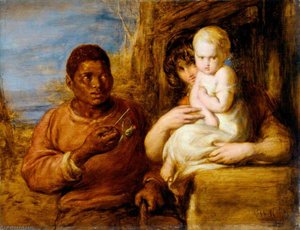
Carghill and Touchwood (1831) door William Mulready

Carghill and Touchwood

1831 · Oil On Panel · Yale Center for British Art, New Haven

The work before us is titled Carghill and Touchwood, a significant genre painting by the Irish artist William Mulready. Created in 1831, this oil on panel captures a specific moment of human interaction, moving away from the landscapes that occupied much of the artist's earlier output. It belongs to a period when Mulready was establishing his reputation within the Royal Academy, focusing his attention on the nuances of domestic and…

2
The Mall, Kensington Gravel Pits (1812) door William Mulready

The Mall, Kensington Gravel Pits

1812 · Oil On Canvas

In "The Mall, Kensington Gravel Pits" by William Mulready, we find ourselves observing a quiet moment from an urban or suburban setting in the early 19th century. The composition is centered around a gravel pit area, a space that anchors the viewer's attention within the landscape. To the left, a cluster of buildings provides a sense of structure and habitation, while a fence runs along the left edge of the…

3
The Rattle (1808) door William Mulready

The Rattle

1808 · Oil On Canvas

In a quiet corner of a domestic interior, a man and a young girl share a fleeting moment of connection. The air feels still, held in the soft light that pours through a large window in the background. This scene, titled The Rattle, captures a simple interaction between an adult and a child, a quiet slice of everyday life frozen in time. The man holds a bird, its presence adding…

4
The Wolf and the Lamb (1819) door William Mulready

The Wolf and the Lamb

1819 · Oil On Canvas · Royal Collection, Londen

The Wolf and the Lamb is an oil on canvas work by the Irish artist William Mulready. Created about 1819, this piece reflects the early development of a painter who would eventually become a central figure in Victorian genre painting. The work measures 60.0 x 51.1cm, a scale that allows for an intimate encounter with the scene it depicts.

5
The Convalescent from Waterloo (1822) door William Mulready

The Convalescent from Waterloo

1822 · Oil On Canvas

The Convalescent from Waterloo is an oil painting on canvas by the artist William Mulready. This work was produced about 1822. The piece depicts a wounded soldier and his family in a field hospital setting following the Battle of Waterloo. The composition centers on the soldier, who is seated alongside a woman and a young child. Two additional children are positioned further in the background, tending to objects on the…

6
Study for 'The Careless Messenger Detected' (1821) door William Mulready

Study for 'The Careless Messenger Detected'

1821 · Oil

This oil painting, titled Study for 'The Careless Messenger Detected', offers a glimpse into the preparatory process of William Mulready. Created in 1821, the work captures a moment of intense human interaction. It reflects the artist's ability to translate social tension into a visual narrative, a skill that would define his reputation within the Victorian era.

7
The Interior of an English Cottage (1828) door William Mulready

The Interior of an English Cottage

1828 · Oil On Canvas · Royal Collection, Londen

In 1828, William Mulready painted The Interior of an English Cottage. The scene captures a solitary woman seated within the rustic confines of a cottage. She sits amidst a dense collection of domestic objects, her presence a quiet anchor within the cramped, lived-in space. Through a window, the sky offers a glimpse of light, contrasting with the heavy shadows of the room.

8
John Sheepshanks (1787–1863) (1832) door William Mulready

John Sheepshanks (1787–1863)

1832 · Oil On Canvas

In John Sheepshanks (1787–1863), the artist William Mulready turns his gaze toward a single, quiet presence. The composition centers tightly on the head and shoulders of an older man, captured in profile. This is a portrait intended to represent an individual, stripping away the distractions of a wider world to focus on the weight of a life lived. The perspective remains shallow, offering a frontal view that provides minimal depth…

9
Interior with John Sheepshanks (1787–1863) (1834) door William Mulready

Interior with John Sheepshanks (1787–1863)

1834 · Oil On Canvas

Interior with John Sheepshanks (1787–1863) by William Mulready depicts an intimate scene within a richly decorated room. The composition centers on the interaction between two figures: a gentleman and a young woman. The gentleman is dressed in attire that suggests wealth and high social status, while the woman wears simple clothing indicative of a lower social standing. This arrangement suggests a moment of service or patronage occurring within a private…

10
Instruct the Child (1841) door William Mulready

Instruct the Child

1841 · Oil On Canvas

A woman leans into the quiet space of a child's world. She is a pillar of orange fabric against the deep, earthy browns of a wooded landscape. The light filters through a canopy of trees, casting a soft, diffused glow over the scene. It is a moment of instruction, caught in the stillness of a forest. A small dog rests nearby, its fur rendered with a tactile softness. The air…

De beroemde schilderijen van William Mulready, nummer 11 tot 73

11The Sonnet (1839) door William MulreadyThe Sonnet1839 · Victoria and Albert Museum 12Ira Aldridge in the Role of Shakespeare (1826) door William MulreadyIra Aldridge in the Role of Shakespeare1826 · The Walters Art Museum 13A Gypsy Encampment (1810) door William MulreadyA Gypsy Encampment1810 · National Gallery of Ireland 14Lock gate (1810) door William MulreadyLock gate1810 · Yale Center for British Art 15Hampstead Heath with Cows (1806) door William MulreadyHampstead Heath with Cows1806 16Sketch for 'Punch' (1812) door William MulreadySketch for 'Punch'1812 17An Old Cottage, St Albans (1806) door William MulreadyAn Old Cottage, St Albans1806 18Near the Mall, Kensington Gravel Pits (1812) door William MulreadyNear the Mall, Kensington Gravel Pits1812 19Suffolk Landscape with Mill (1810) door William MulreadySuffolk Landscape with Mill1810 · Government Art Collection 20Hampstead Heath (1806) door William MulreadyHampstead Heath1806 21The Rattle (study) (1807) door William MulreadyThe Rattle (study)1807 22Landscape with Cottages (1812) door William MulreadyLandscape with Cottages1812 23John Varley (1814) door William MulreadyJohn Varley1814 · National Portrait Gallery 24Cottages on the Coast (1806) door William MulreadyCottages on the Coast1806 25The Wedding Morning (1822) door William MulreadyThe Wedding Morning1822 26The Fight Interrupted (1816) door William MulreadyThe Fight Interrupted1816 27The Butt Shooting a Cherry (1822) door William MulreadyThe Butt Shooting a Cherry1822 28The Village Buffoon (1816) door William MulreadyThe Village Buffoon1816 29The Watering Hole (1825) door William MulreadyThe Watering Hole1825 30An Old Gable (1830) door William MulreadyAn Old Gable1830 · Yale Center for British Art 31Study for 'Interior of an English Cottage' (1828) door William MulreadyStudy for 'Interior of an English Cottage'1828 32A Dog of Two Minds (1830) door William MulreadyA Dog of Two Minds1830 33A Sailing Match (1831) door William MulreadyA Sailing Match1831 34Mary Wright, the Carpenter's Daughter (1828) door William MulreadyMary Wright, the Carpenter's Daughter1828 35The Monopolist (1843) door William MulreadyThe Monopolist1843 · The Dick Institute 36William Mulready (1835) door William MulreadyWilliam Mulready1835 · National Portrait Gallery 37Brother and Sister (1836) door William MulreadyBrother and Sister1836 38Teal (1835) door William MulreadyTeal1835 39Giving a Bite (1834) door William MulreadyGiving a Bite1834 40The Toy Seller (1835) door William MulreadyThe Toy Seller1835 41First Love (1839) door William MulreadyFirst Love1839 42The First Voyage (1833) door William MulreadyThe First Voyage1833 43Open Your Mouth and Shut Your Eyes (1838) door William MulreadyOpen Your Mouth and Shut Your Eyes1838 44The Seven Ages of Man (from William Shakespeare's 'As You Like It', Act II, Scene 7) (1838) door William MulreadyThe Seven Ages of Man (from William Shakespeare's 'As You Like It', Act II, Scene 7)1838 · Victoria and Albert Museum 45Head of a Woman (1840) door William MulreadyHead of a Woman1840 46The Intercepted Billet (1844) door William MulreadyThe Intercepted Billet1844 47An Interior (1842) door William MulreadyAn Interior1842 48Blackheath Park (1852) door William MulreadyBlackheath Park1852 49The Pool (1850) door William MulreadyThe Pool1850 50The Lesson ('Just as the Twig Is Bent, the Tree's Inclined') (1859) door William MulreadyThe Lesson ('Just as the Twig Is Bent, the Tree's Inclined')1859 51The Young Brother (1857) door William MulreadyThe Young Brother1857 52The Artist's Father door William MulreadyThe Artist's FatherNational Gallery of Ireland 53A Squire in a Tavern door William MulreadyA Squire in a TavernNational Gallery of Ireland 54A Sea Shore door William MulreadyA Sea Shore 55The Organ Grinder door William MulreadyThe Organ Grinder 56Horses Baiting (1816) door William MulreadyHorses Baiting1816 · The Whitworth 57The Farrier's Shop (1820) door William MulreadyThe Farrier's Shop1820 · Fitzwilliam College 58Crossing the Ford door William MulreadyCrossing the FordNational Trust 59Cupping the Bees door William MulreadyCupping the BeesNational Gallery of Ireland 60Joseph Pitt (1759–1842) door William MulreadyJoseph Pitt (1759–1842) 61Farmhouse with a White Horse door William MulreadyFarmhouse with a White Horse 62The Cottage door William MulreadyThe Cottage 63The Dead Canary door William MulreadyThe Dead Canary 64Landscape A Cottage with Trees and Two Children door William MulreadyLandscape A Cottage with Trees and Two Children 65Landscape with Figures door William MulreadyLandscape with Figures 66Rustic Charity door William MulreadyRustic Charity 67See Saw door William MulreadySee Saw 68Bathers Surprised (1852) door William MulreadyBathers Surprised1852 · National Gallery of Ireland 69The Toy-seller (1860) door William MulreadyThe Toy-seller1860 · National Gallery of Ireland 70Fair Time ('Returning from the Ale House') door William MulreadyFair Time ('Returning from the Ale House') 71The Last In (1835) door William MulreadyThe Last In1835 72Choosing the Wedding Gown (1845) door William MulreadyChoosing the Wedding Gown1845 · Victoria and Albert Museum 73The Ford ('Crossing the Ford') (1842) door William MulreadyThe Ford ('Crossing the Ford')1842

De beroemde schilderijen van William Mulready, periode voor periode

De onderwerpen die de aandacht van William Mulready troffen

De vier onderwerpen die het meest voorkomen in deze originelen, elk met zijn mooiste voorbeeld.

De musea waar de originele werken van William Mulready worden bewaard

De 8 musea met de meeste schilderijen op deze pagina.

Museum Stad Werken van William Mulready Schilderijen uit deze lijst
National Gallery of Ireland, DublinNational Gallery of Ireland Dublin 6 A Gypsy Encampment, The Artist's Father, A Squire in a Tavern
Yale Center for British Art, New HavenYale Center for British Art New Haven 3 Carghill and Touchwood, Lock gate, An Old Gable
Victoria and Albert Museum, LondenVictoria and Albert Museum Londen 3 The Sonnet, The Seven Ages of Man (from William Shakespeare's 'As You Like It', Act II, Scene 7), Choosing the Wedding Gown
Royal Collection, LondenRoyal Collection Londen 2 The Wolf and the Lamb, The Interior of an English Cottage
National Portrait Gallery, LondenNational Portrait Gallery Londen 2 John Varley, William Mulready
The Walters Art Museum, BaltimoreThe Walters Art Museum Baltimore 1 Ira Aldridge in the Role of Shakespeare
Government Art Collection, LondenGovernment Art Collection Londen 1 Suffolk Landscape with Mill
The Dick Institute, KilmarnockThe Dick Institute Kilmarnock 1 The Monopolist

William Mulready door de decennia heen: elk een uniek origineel

Werken per decennium

Kies een decennium om het origineel te zien dat dit tijdperk definieert.

Schilderijen van William Mulready: vragen voor de galerie

Wat is het bekendste werk van William Mulready?Onthul het antwoord

Carghill and Touchwood (1831), Yale Center for British Art, New Haven. The Mall, Kensington Gravel Pits (1812) en The Rattle (1808) volgen.

Op welke leeftijd creëerde William Mulready Carghill and Touchwood?Onthul het antwoord

45 jaar oud: Carghill and Touchwood dateert uit 1831, en William Mulready werd geboren in 1786.

Welke tien schilderijen van William Mulready zijn het meest bekend?Onthul het antwoord

Carghill and Touchwood, The Mall, Kensington Gravel Pits, The Rattle, The Wolf and the Lamb, The Convalescent from Waterloo, Study for 'The Careless Messenger Detected', The Interior of an English Cottage, John Sheepshanks (1787–1863), Interior with John Sheepshanks (1787–1863) en Instruct the Child. De bovenstaande ranglijst vermeldt het jaar en het museum van elk werk.

Hoeveel werken van William Mulready zijn er bekend?Onthul het antwoord

Onze catalogus bevat 73 werken van William Mulready, daterend van 1806 tot 1860.

Waar kunnen de beroemdste originelen van William Mulready worden bekeken?Onthul het antwoord

Voornamelijk in National Gallery of Ireland (Dublin), Yale Center for British Art (New Haven) en Victoria and Albert Museum (Londen). De bovenstaande museumtabel bevat een volledig overzicht.

In welke periode creëerde William Mulready de bekendste schilderijen?Onthul het antwoord

In 1830s: 17 van de 73 werken op deze pagina werden toen gemaakt, waaronder Carghill and Touchwood.

Welk beroemd schilderij van William Mulready is de vroegste, en welke de laatste?Onthul het antwoord

Op deze pagina is het vroegste Hampstead Heath with Cows (1806) en het laatste The Toy-seller (1860).

Welke onderwerpen had William Mulready de voorkeur?Onthul het antwoord

Landscape (6), Cottages (6) en Interior (4), verspreid over de 73 werken op deze pagina.

Met welke materialen schilderde William Mulready het meest?Onthul het antwoord

Oil On Canvas, voor 9 van de 73 werken op deze pagina.

Bij welke stroming behoort het werk van William Mulready?Onthul het antwoord

Romanticism en Victorian genre painting, te oordelen aan de originelen op deze pagina.

Welke originele werken van William Mulready kan ik zien in het National Gallery of Ireland?Onthul het antwoord

A Gypsy Encampment, The Artist's Father en A Squire in a Tavern: het National Gallery of Ireland, Dublin herbergt 6 van de werken op deze pagina.

William Mulready: een portret van de kunstenaar

A Life Rooted in Observation: The World of William Mulready the Younger

Born in the quiet Irish town of Ennis, County Clare, in 1786, William Mulready the Younger embarked on a journey that would establish him as a pivotal figure in Victorian genre painting. His early life foreshadowed his artistic inclinations; a family relocation to London in 1792 provided access to a burgeoning art world and opportunities for formal training. Even as a young boy, Mulready demonstrated an exceptional talent for copying engravings, revealing a keen eye for detail and a natural aptitude for visual representation. This innate ability led him to the tutelage of John Graham, a historical painter who recognized his potential, followed by studies at the Royal Academy School around the age of fourteen – a significant achievement for someone from such humble beginnings. These formative years were characterized not only by academic instruction but also by self-directed learning; Mulready diligently copied prints and keenly observed actors in theatrical performances, honing his skills through dedicated practice and immersive observation of the world around him.

From Landscape to Life: The Evolution of a Genre Painter

Mulready’s artistic path wasn't immediately defined. He initially focused on landscapes, demonstrating an early mastery of depicting natural settings. His early works often showcased a meticulous attention to detail, capturing the subtle nuances of light and shadow with remarkable precision. However, around 1808, he began his transition into genre painting – scenes from everyday life – a shift that would ultimately define his career and secure his place in art history. This move was significantly influenced by the Dutch masters of the 17th century, whose works he meticulously studied in private collections. He absorbed their techniques for capturing realistic detail, nuanced characterizations, and intimate domestic settings. His paintings became imbued with a romantic sensibility, often carrying subtle moral undertones that resonated deeply with Victorian audiences. Recurring themes emerged in his work: children engaged in various activities – playing games, tending to animals, or assisting in household chores – explorations of behavior and education, reflecting the societal concerns prevalent during the era. Mulready’s technical skill was remarkable, particularly evident in his detailed drawings of the nude figure – a testament to his dedication to mastering fundamental artistic principles. He wasn't merely recording life; he was interpreting it through a lens of sentiment and moral consideration, creating scenes that were both charming and thought-provoking.

Recognition and Innovation: A Royal Academician and Beyond

Mulready’s talent didn’t go unnoticed by the artistic establishment. He rapidly ascended within the ranks of the Royal Academy, becoming an Associate (A.R.A.) in 1815 and a full member (R.A.) just a year later – a remarkable feat demonstrating his exceptional skill and promise. His international recognition extended beyond Britain; in 1816, he was awarded the French Légion d'honneur, further solidifying his reputation as a leading artist of his time. Among his most celebrated works are “Returning from the Ale House” (also known as “Fair Time”), housed in the Tate Gallery, and “Giving a Bite,” which graces the Victoria and Albert Museum. “First Love”, also at the V&A, exemplifies his ability to capture tender emotion and delicate narrative. He was particularly adept at portraying scenes of rural life, capturing the warmth and simplicity of village communities. Mulready’s work often featured a carefully constructed composition, with an emphasis on creating a sense of atmosphere and mood. His use of color was subtle yet effective, contributing to the overall realism and emotional impact of his paintings. Beyond painting, Mulready’s creativity extended into design; he is perhaps equally well-known for designing the iconic Mulready stationery, introduced in 1840 alongside the Penny Black postage stamp. While initially met with some public disapproval – its complexity contrasted with the simplicity of the stamp itself – this commission remains a significant contribution to postal history and demonstrates his versatility as an artist.

Family Connections

  • Elizabeth Varley: Mulready’s wife, also a landscape painter.
  • Paul Augustus Mulready: One of his sons, who followed in his father’s artistic footsteps.
  • William Mulready Junior: Another son, known as a portrait painter and picture restorer.
  • Michael Mulready: The third son to pursue an art career.
  • Augustus Edwin Mulready: His grandson, a prominent member of the Cranbrook Colony of artists, continuing the family tradition.

A Lasting Legacy: The Enduring Appeal of Victorian Life

William Mulready died in 1863, leaving behind a rich artistic legacy that continues to resonate today. His paintings were immensely popular during the Victorian era, reflecting and shaping contemporary tastes and values. He played a crucial role in establishing genre painting as a respected art form within Britain, elevating scenes of everyday life to the level of serious artistic consideration. Mulready’s influence extended beyond his own work; he came from a family deeply rooted in artistry – his wife Elizabeth Varley and their sons Paul Augustus, William Junior, and Michael all pursued careers as artists. His grandson, Augustus Edwin Mulready, became a prominent member of the Cranbrook Colony of artists, continuing the family tradition. While the Mulready stationery may have been short-lived, its association with the Penny Black ensures its place in history. More importantly, his paintings offer a captivating glimpse into Victorian life, capturing the essence of an era with remarkable detail and sensitivity. His dedication to technical mastery, combined with his ability to imbue ordinary scenes with emotional depth, secures William Mulready’s position as a significant and enduring figure in British art.