Portret van William Dyce

De 69 beroemdste schilderijen van William Dyce, elk uniek

Bijgewerkt in oktober 2026 · gerangschikt op basis van onze populariteitsscore (zoekopdrachten, bezoeken en bestellingen per kunstwerk) · 69 werken van William Dyce in onze catalogus

Kortom

Piety: The Knights of the Round Table about to Depart in Quest of the Holy Grail (1849) is het schilderij van William Dyce dat de meeste aandacht trekt; het origineel bevindt zich in het Scottish National Gallery, Edinburgh. Daarna gaat de blik naar James Hamilton, 1749 - 1835. Physician (1832) en The meeting of Jacob and Rachel (1853). Van de 69 werken van William Dyce in onze catalogus zijn dit de 69 bekendste, elk een uniek origineel gepresenteerd met het jaar, het museum en de reden waarom het blijft voortbestaan.

1806 – 1864, Aberdeen Meeste werken: Scottish National Gallery

Top 10 schilderijen van William Dyce, door de ogen van de galerie

1
Piety: The Knights of the Round Table about to Depart in Quest of the Holy Grail (1849) door William Dyce

Piety: The Knights of the Round Table about to Depart in Quest of the Holy Grail

1849 · Oil On Canvas · Scottish National Gallery, Edinburgh

In the grand tapestry of Victorian Romanticism, few works capture the intersection of myth and morality as profoundly as William Dyce’s 1849 masterpiece, Piety: The Knights of the Round Table about to Depart in Quest of the Holy Grail. This monumental canvas is far more than a mere historical tableau; it is an evocative meditation on the spiritual yearning that pulsed through the heart of the nineteenth century. As the…

2
James Hamilton, 1749 - 1835. Physician (1832) door William Dyce

James Hamilton, 1749 - 1835. Physician

1832 · Oil On Canvas · Scottish National Portrait Gallery, Edinburgh

A single figure occupies the vertical composition of this oil on canvas, rendered in a formal 19th-century academic style. James Hamilton stands slightly off-center, his body oriented toward the viewer. He is dressed in period attire consisting of a dark, textured frock coat, breeches, and a dark tricorne-style hat. A light cream cravat provides a sharp tonal contrast against the darker elements of his clothing and the skin tones of…

8
The Virgin and Child (1845) door William Dyce

The Virgin and Child

1845 · Oil On Canvas · Royal Collection, Londen

This evocative painting, depicting The Virgin and Child, immediately draws the viewer into a moment of profound intimacy. At its heart lies the tender connection between mother and son; Mary cradles her young boy with palpable love and exquisite care. Her face, veiled in delicate fabric, speaks volumes of purity and modesty, lending an air of timeless grace to the sacred subject matter. The composition is masterfully balanced, guiding the…

De beroemde schilderijen van William Dyce, nummer 11 tot 69

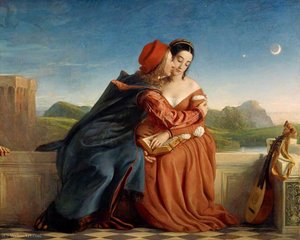
11Westburn (1827) door William DyceWestburn1827 12Portrait of Alexander Jardine (1834) door William DycePortrait of Alexander Jardine1834 13The Descent of Venus (2nd Version) door William DyceThe Descent of Venus (2nd Version) 14Life study door William DyceLife study 15The Judgement of Solomon door William DyceThe Judgement of SolomonScottish National Gallery 16Nicholson bain door William DyceNicholson bain 17Saint catherine door William DyceSaint catherineScottish National Gallery 18The honourable charlotte noel door William DyceThe honourable charlotte noel 19The Descent of Venus door William DyceThe Descent of Venus 20Beatrice door William DyceBeatrice 21Head of a Man door William DyceHead of a ManBirmingham Museum and Art Gallery 22Bacchus Nursed by the Nymphs of Nyssa door William DyceBacchus Nursed by the Nymphs of Nyssa 23Miss hannah carnegie door William DyceMiss hannah carnegie 24King Lear and the Fool in the Storm door William DyceKing Lear and the Fool in the StormScottish National Gallery 25St Joseph (1847) door William DyceSt Joseph1847 · Royal Collection 26Rosslyn Chapel, South Aisle door William DyceRosslyn Chapel, South AisleScottish National Gallery 27Westburn door William DyceWestburn 28Recollection of Pegwell Bay door William DyceRecollection of Pegwell Bay 29Isabella cay door William DyceIsabella cay 30View of Loch Lomond door William DyceView of Loch LomondScottish National Gallery 31Madonna and Child door William DyceMadonna and Child 32Motherhood door William DyceMotherhood 33John Small and His Son door William DyceJohn Small and His Son 34The Woman of Samaria door William DyceThe Woman of SamariaBirmingham Museum and Art Gallery 35The highland ferryman door William DyceThe highland ferryman 36Christ Enthroned with Saints door William DyceChrist Enthroned with Saints 37Pegwell Bay, Kent - a Recollection of October 5th (1858) door William DycePegwell Bay, Kent - a Recollection of October 5th (1858) 38Mrs william crombie door William DyceMrs william crombie 39Welsh Landscape with Two Women Knitting door William DyceWelsh Landscape with Two Women Knitting 40Virgin and Child door William DyceVirgin and Child 41The Garden of Gethsemane door William DyceThe Garden of Gethsemane 42Man of Sorrows door William DyceMan of SorrowsScottish National Gallery 43Christabel door William DyceChristabel 44Dante and Beatrice door William DyceDante and Beatrice 45Francis humberston door William DyceFrancis humberston 46Henry VI at Towton, North Yorkshire door William DyceHenry VI at Towton, North Yorkshire 47Alexander webster door William DyceAlexander webster 48Study for 'Cain' door William DyceStudy for 'Cain' 49The Daughters of Jethro Defended by Moses door William DyceThe Daughters of Jethro Defended by Moses 50Lowry william frederick dyce door William DyceLowry william frederick dyce 51Mrs John Clerk Maxwell and Her Son, James door William DyceMrs John Clerk Maxwell and Her Son, JamesBirmingham Museum and Art Gallery 52Sir James McGrigor door William DyceSir James McGrigor 53Omnia vanitas door William DyceOmnia vanitas 54John Knox Dispensing the Sacrament door William DyceJohn Knox Dispensing the Sacrament 55Francesca da Rimini door William DyceFrancesca da RiminiScottish National Gallery 56The goatherd door William DyceThe goatherd 57Christ's Entry into Jerusalem door William DyceChrist's Entry into Jerusalem 58Lamentation over the Dead Christ door William DyceLamentation over the Dead Christ 59Titian Preparing to Make His First Essay in Colouring door William DyceTitian Preparing to Make His First Essay in Colouring 60James chalmers door William DyceJames chalmers 61George Herbert at Bemerton, Salisbury door William DyceGeorge Herbert at Bemerton, Salisbury 62Portrait of a Lady door William DycePortrait of a Lady 63The Meeting of Jacob and Rachel door William DyceThe Meeting of Jacob and Rachel 64The infant hercules door William DyceThe infant herculesScottish National Gallery 65Sir galbraith lowry cole door William DyceSir galbraith lowry coleNational Portrait Gallery 66Titian's first painting door William DyceTitian's first painting 67Sketch of a Doorway with a Water Barrel door William DyceSketch of a Doorway with a Water Barrel 68Amongst the Trees door William DyceAmongst the Trees 69Pegwell Bay, Kent - a Recollection of October 5th 1858 (1858) door William DycePegwell Bay, Kent - a Recollection of October 5th 18581858 · Tate Britain

De onderwerpen die de aandacht van William Dyce troffen

De vier onderwerpen die het meest voorkomen in deze originelen, elk met zijn mooiste voorbeeld.

De musea waar de originele werken van William Dyce worden bewaard

De 8 musea met de meeste schilderijen op deze pagina.

Museum Stad Werken van William Dyce Schilderijen uit deze lijst
Scottish National Gallery, EdinburghScottish National Gallery Edinburgh 10 Piety: The Knights of the Round Table about to Depart in Quest of the Holy Grail, David in the Wilderness, The Judgement of Solomon
Birmingham Museum and Art Gallery, BirminghamBirmingham Museum and Art Gallery Birmingham 3 Head of a Man, The Woman of Samaria, Mrs John Clerk Maxwell and Her Son, James
Royal Collection, LondenRoyal Collection Londen 2 The Virgin and Child, St Joseph
Scottish National Portrait Gallery, EdinburghScottish National Portrait Gallery Edinburgh 1 James Hamilton, 1749 - 1835. Physician
New Walk Museum - Art Gallery, LeicesterNew Walk Museum - Art Gallery Leicester 1 The meeting of Jacob and Rachel
Minneapolis Institute of Art, MinneapolisMinneapolis Institute of Art Minneapolis 1 Eliezer of Damascus
Aberdeen Art GalleryAberdeen Art Gallery 1 Portrait of a Lady (The Artist's Wife)
National Portrait Gallery, LondenNational Portrait Gallery Londen 1 Sir galbraith lowry cole

William Dyce door de decennia heen: elk een uniek origineel

Werken per decennium

Kies een decennium om het origineel te zien dat dit tijdperk definieert.

Schilderijen van William Dyce: vragen voor de galerie

Wat is het bekendste werk van William Dyce?Onthul het antwoord

Piety: The Knights of the Round Table about to Depart in Quest of the Holy Grail (1849), Scottish National Gallery, Edinburgh. James Hamilton, 1749 - 1835. Physician (1832) en The meeting of Jacob and Rachel (1853) volgen.

Op welke leeftijd creëerde William Dyce Piety: The Knights of the Round Table about to Depart in Quest of the Holy Grail?Onthul het antwoord

43 jaar oud: Piety: The Knights of the Round Table about to Depart in Quest of the Holy Grail dateert uit 1849, en William Dyce werd geboren in 1806.

Welke tien schilderijen van William Dyce zijn het meest bekend?Onthul het antwoord

Piety: The Knights of the Round Table about to Depart in Quest of the Holy Grail, James Hamilton, 1749 - 1835. Physician, The meeting of Jacob and Rachel, Eliezer of Damascus, Portrait of a Lady (The Artist's Wife), Design For A Stained Glass Window In Ely Cathedral by William Dyce - William Dyce, Scene in Arran, The Virgin and Child, Saint john leading home his adopted mother en David in the Wilderness. De bovenstaande ranglijst vermeldt het jaar en het museum van elk werk.

Hoeveel werken van William Dyce zijn er bekend?Onthul het antwoord

Onze catalogus bevat 69 werken van William Dyce, daterend van 1827 tot 1860.

Waar kunnen de beroemdste originelen van William Dyce worden bekeken?Onthul het antwoord

Voornamelijk in Scottish National Gallery (Edinburgh), Birmingham Museum and Art Gallery (Birmingham) en Royal Collection (Londen). De bovenstaande museumtabel bevat een volledig overzicht.

In welke periode creëerde William Dyce de bekendste schilderijen?Onthul het antwoord

In 1850s: 5 van de 69 werken op deze pagina werden toen gemaakt, waaronder The meeting of Jacob and Rachel.

Welk beroemd schilderij van William Dyce is de vroegste, en welke de laatste?Onthul het antwoord

Op deze pagina is het vroegste Westburn (1827) en het laatste Eliezer of Damascus (1860).

Welke onderwerpen had William Dyce de voorkeur?Onthul het antwoord

Landscape (6), Women (6) en Victorian era (5), verspreid over de 69 werken op deze pagina.

Met welke materialen schilderde William Dyce het meest?Onthul het antwoord

Oil On Canvas, voor 5 van de 69 werken op deze pagina.

Welke originele werken van William Dyce kan ik zien in het Scottish National Gallery?Onthul het antwoord

Piety: The Knights of the Round Table about to Depart in Quest of the Holy Grail, David in the Wilderness en The Judgement of Solomon: het Scottish National Gallery, Edinburgh herbergt 10 van de werken op deze pagina.

William Dyce: een portret van de kunstenaar

Early Life and Artistic Training

William Dyce (1806–1864) werd geboren in Aberdeen, Schotland, als zoon van Dr. William Dyce FRSE, een arts en lid van de Royal Society, en Margaret Chalmers, dochter van een welgestelde bankier. Zijn familie stimuleerde een liefde voor leren en cultuur, waardoor hij een sterke basis kreeg voor zijn toekomstige artistieke ambities. Hij studeerde aan Marischal College, de universiteit van Aberdeen, waar hij op slechts zestienjarige leeftijd een masterdiploma behaalde – een opmerkelijke prestatie voor die tijd. Erkend vanwege zijn talent voor ontwerp, volgde Dyce formele opleiding aan de Royal Academy Schools in Edinburgh en Londen, waarbij hij zich verdiepte in de studie van klassieke kunst en de technieken beherskte die cruciaal bleken te zijn voor zijn latere carrière. Zijn jeugd was gekenmerkt door blootstelling aan invloedrijke artistieke ideeën die circuleerden in Schotland en Engeland, waardoor zijn esthetische gevoelens werden gevormd en hij zich vestigde als een student die toegewijd was aan artistieke excellentie.

Italianse Invloeden en Artistieke Ontwikkeling

Dyce’s eerste belangrijke reis naar het buitenland vond plaats in 1825, toen hij naar Rome reisde – een keerpunt dat de loop van zijn artistieke leven onherstelbaar veranderde. Geïnspireerd door de grandeur van de Renaissance kunst en gefascineerd door de geest van de Nazarenes, bracht Dyce negen maanden door met het bestuderen van de werken van Titiaan en Poussin, waarbij hij hun compositieprincipes assimileerde en hun meesterlijke gebruik van kleur beheerst. Deze onderdompeling in de Italiaanse kunsttraditie had een diepgaande impact op zijn stijl, waardoor een voorkeur ontstond voor gedetailleerd observeren en het overbrengen van diepe spirituele contemplatie – kenmerken die later in zijn oeuvre zouden floreren. Hij keerde in 1826 terug naar Aberdeen, waar hij zijn vaardigheden verder perfectioneerde als schilder en verschillende opmerkelijke werken produceerde, waaronder Bacchus Nursed by the Nymphs of Nysa, wat aanzienlijke lof kreeg.

Edinburgh Jaaren en Portretten

Dyce vestigde zich in Edinburgh als portretschilder in de midden jaren 1830, waarbij hij opdrachten ontving van prominente figuren van Schots maatschappelijk leven. Zijn nauwkeurige aandacht voor detail – met name zijn vermogen om subtiele expressies en psychologische nuances vast te leggen – leverde hem aanzienlijke roem op. Hij combineerde klassieke invloeden met romantische gevoelens, waardoor hij portretten creëerde die zowel esthetisch verfijnd als emotioneel resoneren. Tegelijkertijd pleitte hij voor de oprichting van een ontwerfschool in Edinburgh – een positie die hij bekleedde tot 1843, waar hij zijn uitbreiding en modernisering toezicht hield. Hij was tevens adviseur bij architectonische projecten, waaronder het ontwerp van het nieuwe Palace of Westminster.

Londens Engagement en Architecturale Patronage

In 1837 verhuisde Dyce naar Londen en accepteerde de functie van Hoofd van de School of Design in Somerset House. Dit markeerde een significante wending in zijn carrière, waardoor hij in het hart van de Victoriaanse artistieke discussie terechtkwam en toegang kreeg tot invloedrijke patronen – met name Prins Albert. Hij voerde uitgebreid onderzoek uit naar kunsteducatieve praktijken in het buitenland, wat leidde tot de creatie van het “South Kensington System”, dat de Engelse kunstinstructie decennialang zou domineren. Dyce’s betrokkenheid strekte zich verder uit dan pedagogische inspanningen; hij diende als adviseur bij architectonische projecten, waaronder het ontwerp van het nieuwe Houses of Parliament – een project dat zijn meesterschap in fresco-schilderkunst demonstreerde en zijn reputatie als een van Engeland’s toptalenten versterkte.

Belangrijke Prestaties en Erfgoed

Dyce's artistieke nalatenschap rust voornamelijk op twee monumentale ondernemingen: de decoratie van Westminster Abbey en het creëren van het Houses of Parliament. Zijn fresco's in Westminster Abbey – met name Neptune Resigning to Britannia – vertegenwoordigen een triomf van Victoriaanse ambitie en artistieke visie, die de grandeur van het Britse Rijk uitdragen en zijn ongeëvenaarde vaardigheid in fresco-techniek demonstreren. Echter, zijn meest beroemde werk is Pegwell Bay, Kent – een landschapsschilderij dat zijn gedetailleerde observatie van de natuur en zijn vermogen om diepe emoties over te brengen illustreert. Bovendien hebben zijn bijdragen aan kunsteducatie – de oprichting van de Royal College of Art en zijn pleidooi voor innovatieve pedagogische benaderingen – gediend als een getuigenis van zijn onwrikbare geloof in de transformatieve kracht van artistieke training. William Dyce blijft een kunstenaar wiens werk de geest van Victoriaans Engeland belichaamt – gekenmerkt door intellectuele nieuwsgierigheid, morele ernst en een vurige toewijding aan het verhogen van de menselijke cultuur.