


Quiz
Er is slechts één goed antwoord op elke vraag.
Vraag 1:
William Crabb is primarily known for his portraits, particularly of royalty and members of the British aristocracy. Which artistic style best describes his portraiture?
Vraag 2:
During which period did William Crabb primarily work as an artist?
Vraag 3:
What was a notable aspect of William Crabb's artistic practice that distinguished him from many of his contemporaries?
Vraag 4:
William Crabb's diary contains correspondence with several prominent literary figures. Which of the following authors is mentioned as a frequent correspondent?
Vraag 5:
What ultimately led to William Crabb's retirement from active artistic practice?
Journal
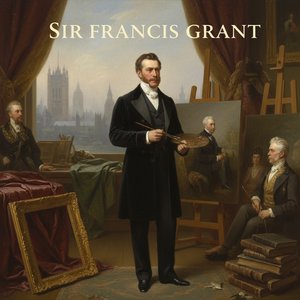
Sir Francis Grant: Portraiture, Patronage & Victorian Society
Explore the life & work of Sir Francis Grant, a leading Victorian portraitist. Discover his aristocratic clientele, role at the Royal Academy, and enduring artistic legacy. Learn about art patronage in 19th-century Britain.


British artworks of the 1870s
1870s British art by Dante Gabriel Rossetti, John Everett Millais, and John Atkinson Grimshaw. Find museum-quality reproductions on OriginalUniqueArt.com.

25 Masterpieces by Sir Anthony van Dyck: The King of Baroque Portraiture
Step into the elegance of the Baroque era with our curated guide to Sir Anthony van Dyck's top 25 masterpieces. Explore royal portraits and Flemish brilliance through museum-quality art reproductions and timeless decor inspiration. Discover all masterpieces on OriginalUniqueArt.com.


Vraag en antwoord
William Crabb is primarily known for his portraits, particularly of royalty and members of the British aristocracy. Which artistic style best describes his portraiture?
Realistic depictions with a focus on detail and character
Welk kleurenpalet kenmerkt het werk van William Crabb?
earthy
Wat is de kleurintensiteit van het werk van William Crabb?
monochromatic
Hoeveel schilderijen van William Crabb zijn er te vinden op ArtsDot.com?
8
Wanneer en waar is William Crabb geboren?
1811, United Kingdom of Great Britain and Ireland
William Crabb's diary contains correspondence with several prominent literary figures. Which of the following authors is mentioned as a frequent correspondent?
Samuel Taylor Coleridge
Hoe lang heeft William Crabb geleefd?
65 years (1811–1876)
During which period did William Crabb primarily work as an artist?
The Victorian era
Welke kleuren zijn typerend voor het werk van William Crabb?
phthalo green, espresso
Wat zijn de 3 best beoordeelde schilderijen van William Crabb op ArtsDot.com?
Provost Charles Barclay, Robert Barr, John Brown