Wifredo Lam: een portret van de kunstenaar
Wifredo Lam (1902-1982): A Crossroads of Cultures
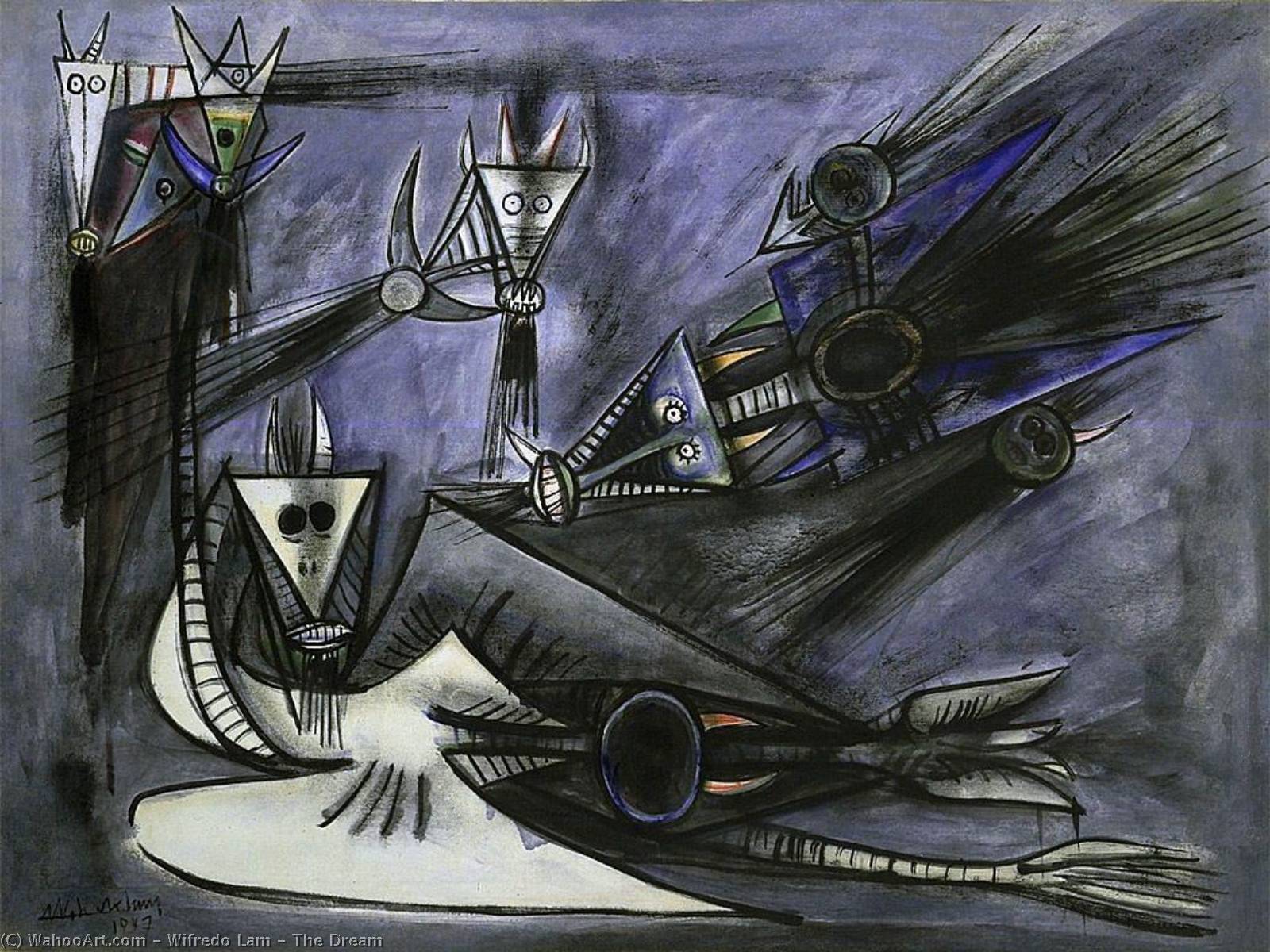
Wifredo Óscar de la Concepción Lam y Castilla, known simply as Wifredo Lam, was a painter who embodied the complexities of cultural identity in the 20th century. Born in Sagua La Grande, Cuba, in 1902, his very lineage spoke to the island’s layered history – a father descended from Chinese immigrants and a mother tracing her roots back to Spanish conquistadors and enslaved Africans. This multicultural heritage wasn't merely biographical detail; it became the wellspring of his artistic vision, fueling a unique style that fused European modernism with Afro-Cuban spirituality and symbolism. Lam’s early life was marked by an initial pursuit of law in Havana, but even amidst legal studies, he found himself drawn to the natural world, spending time at the botanical gardens – a foreshadowing of the organic forms that would later characterize his canvases. Formal artistic training followed at the Escuela de Bellas Artes in Havana and then in Madrid under Fernando Álvarez de Sotomayor y Zaragoza, where he absorbed traditional techniques while simultaneously beginning to question their limitations.
Early Life and Artistic Beginnings
Wifredo Lam’s formative years were shaped by his family’s heritage—a blend of Chinese immigrant traditions and Cuban Afro-Caribbean ancestry. His father, Enrique Lam-Yam, arrived in Cuba from Canton around 1860 as part of a significant wave of Chinese laborers seeking economic opportunity. Growing up amidst the vibrant cultural landscape of Sagua La Grande instilled in him an appreciation for both Eastern and Western artistic influences. He enrolled at Havana’s School of Fine Arts, where he honed his skills in realism, primarily depicting landscapes and still lifes—a style that would serve as a foundation for his later explorations into abstraction. However, Lam possessed an innate curiosity beyond conventional representation, recognizing the transformative potential of experimenting with new techniques and perspectives. His fascination with Goya’s unflinching portrayal of social injustice and political corruption fueled his desire to engage in artistic critique, mirroring the spirit of European avant-garde movements.
European Encounters: The Seeds of Hybrid Style
Lam’s time in Spain proved pivotal in shaping his artistic trajectory. Immersed in the masterpieces of the Prado Museum—particularly those of Hieronymus Bosch and Pieter Bruegel the Elder—he was captivated by artists who dared to populate their paintings with fantastical creatures and unsettling visions. This early exposure instilled a profound appreciation for symbolism and allegory, influencing his subsequent work throughout his career. He studied Velázquez’s masterful use of light and shadow, Goya’s dramatic compositions, and Picasso’s groundbreaking explorations of form and perspective—artists who challenged artistic conventions and paved the way for new aesthetic possibilities. These encounters solidified Lam’s conviction that art could serve as a vehicle for social commentary and intellectual inquiry.
The Surrealist Influence: Embracing the Unconscious
Lam’s arrival in Paris in 1938 coincided with the ascendance of Surrealism, spearheaded by André Breton—a movement dedicated to unlocking the power of the unconscious mind through dreamlike imagery and automatic writing. He immediately connected with fellow artists like Joan Miró, Pablo Picasso, Henri Matisse, and Óscar Domínguez, fostering a collaborative environment that encouraged experimentation and innovation. Breton’s insistence on liberating artistic expression from rational constraints resonated deeply with Lam—who embraced Surrealist techniques such as collage and assemblage to disrupt conventional visual hierarchies and convey emotional intensity. His canvases became infused with dreamlike distortions and fragmented forms—reflecting the anxieties of the era and mirroring the Surrealists’ fascination with irrationality and subconscious impulses.
Cuban Identity and Artistic Synthesis: The Jungle and Beyond
Returning to Cuba in 1941 amidst the escalating tensions leading up to World War II, Lam experienced a renewed connection to his cultural roots—a profound engagement with Afro-Cuban traditions and spiritual practices. Inspired by his godmother, Matonica Wilson—a Santería priestess—he incorporated Yoruba iconography and ritual symbolism into his artwork—creating a visual language that celebrated the resilience of Cuban culture amidst colonial oppression. His most iconic masterpiece, *The Jungle* (1943), exemplifies this synthesis of influences—blending Surrealist techniques with Caribbean imagery to convey themes of social injustice, cultural hybridity, and spiritual rebirth. The painting’s fragmented figures—human, animal, and vegetal forms intertwined in a chaotic yet harmonious composition—represent Lam’s belief that art could transcend boundaries and communicate universal human experiences. Throughout his prolific artistic career, Lam continued to explore these ideas—producing numerous paintings, drawings, sculptures, and prints—solidifying his legacy as one of the most important artists of the 20th century—a visionary who bridged European modernism with Afro-Cuban heritage—and a champion of artistic freedom and cultural dialogue.