Portret van Max Weber

Schilderijen van Max Weber: De 75 bekendste, door de ogen van een galerie

Bijgewerkt in oktober 2026 · gerangschikt op basis van onze populariteitsscore (zoekopdrachten, bezoeken en bestellingen per kunstwerk) · 76 werken van Max Weber in onze catalogus

Kortom

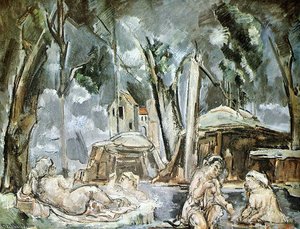
In het oog van de galerie is het beroemdste schilderij van Max Weber Gauguin Girl (1907). Figures in a Landscape (1911) en Woman Reading (1916) maken het trio compleet dat elk oog herkent. Van de 76 werken van Max Weber in onze catalogus presenteert de galerie hieronder de 75 bekendste werken, elk een origineel met de jaartal, het museum en wat het uniek maakt.

1881 – 1961, Białystok Cubism Meeste werken: The Phillips Collection

De top 10 schilderijen van Max Weber in de galerie

Schilderijen van Max Weber, gerangschikt van 11 tot 75

De beroemde schilderijen van Max Weber, periode voor periode

De onderwerpen die de aandacht van Max Weber troffen

De vier onderwerpen die het meest voorkomen in deze originelen, elk met zijn mooiste voorbeeld.

De musea waar de originele werken van Max Weber worden bewaard

De 8 musea met de meeste schilderijen op deze pagina.

Museum Stad Werken van Max Weber Schilderijen uit deze lijst
The Phillips Collection, Washington, D.C.The Phillips Collection Washington, D.C. 5 High Noon, Colonial Bowl, Rabbi
Brooklyn Museum, BrooklynBrooklyn Museum Brooklyn 2 The Visit, The Cellist
John and Mable Ringling Museum of Art, SarasotaJohn and Mable Ringling Museum of Art Sarasota 1 Untitled (Still Life)
Museum of Fine Arts, BostonMuseum of Fine Arts Boston 1 Path in the Woods
Whitney Museum of American Art, New YorkWhitney Museum of American Art New York 1 Adoration of the Moon
Art Institute of Chicago, ChicagoArt Institute of Chicago Chicago 1 Still Life
Metropolitan Museum of Art, New YorkMetropolitan Museum of Art New York 1 Pacific Coast
Smithsonian American Art Museum, Washington, D.C.Smithsonian American Art Museum Washington, D.C. 1 Summer

Max Weber, één iconisch schilderij per decennium

Werken per decennium

Kies een decennium om het origineel te zien dat dit tijdperk definieert.

Schilderijen van Max Weber: de galerie geeft antwoord

Welk schilderij van Max Weber is het beroemdste van allemaal?Onthul het antwoord

Gauguin Girl (1907). Figures in a Landscape (1911) en Woman Reading (1916) volgen.

Hoe oud was Max Weber bij de voltooiing van Gauguin Girl?Onthul het antwoord

26 jaar oud: Gauguin Girl dateert uit 1907, en Max Weber werd geboren in 1881.

Wat zijn de top 10 schilderijen van Max Weber?Onthul het antwoord

Gauguin Girl, Figures in a Landscape, Woman Reading, Untitled (Still Life), Path in the Woods, untitled (1109), untitled (2416), untitled (5652), untitled (8675) en untitled (7238). De bovenstaande ranglijst vermeldt het jaar en het museum van elk werk.

Hoeveel werken heeft Max Weber gemaakt?Onthul het antwoord

Onze catalogus bevat 76 werken van Max Weber, daterend van 1907 tot 1952.

Waar hangen de beroemdste originele werken van Max Weber?Onthul het antwoord

Voornamelijk in The Phillips Collection (Washington, D.C.), Brooklyn Museum (Brooklyn) en John and Mable Ringling Museum of Art (Sarasota). De bovenstaande museumtabel bevat een volledig overzicht.

Wanneer creëerde Max Weber de beroemdste schilderijen?Onthul het antwoord

In 1940s: 5 van de 75 werken op deze pagina werden toen gemaakt, waaronder Untitled (Still Life).

Wat zijn de vroegste en laatste beroemde werken van Max Weber?Onthul het antwoord

Op deze pagina is het vroegste Gauguin Girl (1907) en het laatste Pacific Coast (1952).

Welke onderwerpen keerde Max Weber het vaakst naar terug?Onthul het antwoord

Nude figures (3), Melancholy mood (2) en American art (2), verspreid over de 75 werken op deze pagina.

Bij welke stroming wordt Max Weber gerekend?Onthul het antwoord

Cubism, te oordelen aan de originelen op deze pagina.

Welke originelen van Max Weber zijn in de collectie van het The Phillips Collection?Onthul het antwoord

High Noon, Colonial Bowl en Rabbi: het The Phillips Collection, Washington, D.C. herbergt 5 van de werken op deze pagina.

Max Weber: de kunstenaar

Early Life and the Seeds of Modernism

Max Weber, born in Białystok, Poland in 1881, embarked on a journey that would indelibly mark the landscape of American art. His formative years were steeped in the traditions of Orthodox Judaism, a heritage that would later permeate his artistic vision—a testament to the enduring influence of familial roots. The family’s emigration to Brooklyn, New York, when Weber was merely ten years old, proved transformative. This relocation thrust him into a vibrant, rapidly evolving society—a crucible where Old World customs and New World aspirations wrestled for dominance. It was at the Pratt Institute in Brooklyn that Weber initially encountered art formally, studying under the guidance of Arthur Wesley Dow. Dow’s unwavering belief in innovative artistic approaches, coupled with his profound appreciation for Japanese aesthetics and connections to Paul Gauguin, ignited within Weber a nascent modernist sensibility—a spark that would illuminate his subsequent creative endeavors.

The Parisian Awakening and Introduction of Cubism

In 1905, Weber ventured into Europe, specifically Paris, the epicenter of avant-garde thought. His brief stint at the Académie Julian served merely as an introductory prelude; it was his immersion in the city’s artistic milieu that truly catalyzed his artistic evolution. He forged enduring friendships with Henri Rousseau, whose evocative depictions of nature captivated him—a reflection of Weber's fascination with capturing raw emotion and visual beauty. Simultaneously, he found himself drawn into the orbit of luminaries like Henri Matisse and Pablo Picasso—artists who were bravely dismantling conventional representations of reality. Weber frequented Gertrude Stein’s salon, a legendary gathering place for artists, writers, and intellectuals, absorbing the latest currents in poetic expression and artistic theory. This exposure to the School of Paris fundamentally reshaped his artistic trajectory, propelling him toward experimentation with groundbreaking techniques and stylistic innovations. Weber's artistic explorations intensified during his Parisian years. He actively engaged with Cubist principles—fragmentation, geometric abstraction, and multiple perspectives—drawing inspiration from Picasso’s pioneering efforts to redefine visual perception. Influenced by Gauguin’s expressive use of color and symbolism, Weber sought to convey profound emotional resonance through his canvases. His artistic dialogues spanned across mediums, encompassing painting, sculpture, printmaking, and poetry—demonstrating a multifaceted creative spirit.

Early Works and Critical Reception

Weber's debut paintings, notably Chinese Restaurant (1915), stand as compelling evidence of his early embrace of Cubist aesthetics. The artwork’s bold compositional choices and deliberate disregard for traditional perspective signaled Weber’s determination to challenge established artistic conventions. However, this courageous assertion of modernist ideals encountered a formidable obstacle—a scathing critique leveled against him by prominent art critics during the 1911 exhibition at the 291 Gallery. Many observers dismissed Weber's canvases as “brutal,” “vulgar,” and utterly devoid of artistic merit—a devastating blow to his reputation and a poignant illustration of the difficulties faced by artists attempting to introduce radical new ideas into a conservative cultural landscape. Despite this disheartening setback, Weber’s talent garnered recognition from fellow artists who championed his vision—individuals like Alvin Langdon Coburn, Clarence White, and John Cotton Dana—who offered invaluable support during a pivotal moment in his artistic journey. Dana's decision to organize a solo exhibition at the Newark Museum in 1913 proved particularly significant—marking the inaugural modernist showcase within an American institution. This event signaled a tentative step toward acceptance of avant-garde art, acknowledging Weber’s pioneering role in disseminating European Modernism across the Atlantic.

Later Artistic Development and Legacy

Around 1920, Weber recalibrated his artistic focus, abandoning the strictures of Cubism for more expressive figurative painting—a deliberate move away from geometric abstraction toward conveying emotion and psychological depth. This stylistic shift reflected a broader reconsideration of artistic priorities—a quest to explore new avenues for creative expression while retaining Weber’s distinctive modernist sensibility. His subsequent works frequently depicted scenes from Jewish life—families gathered in intimate settings, rabbis engaged in Talmudic study, and evocative portraits that captured the spiritual essence of his heritage—demonstrating a profound connection to his familial roots and cultural identity. Weber's artistic legacy endured beyond his lifetime. By the 1940s and 50s, his paintings gained considerable acclaim—recognized as masterpieces of American Expressionism. A monumental retrospective at the Jewish Museum in 1982 solidified Weber’s position within art history—establishing him as a pivotal figure in the advancement of American Modernism and cementing his enduring influence on subsequent generations of artists. Today, Max Weber remains celebrated not only for his pioneering role in introducing European Modernism to America but also for his singular ability to synthesize diverse artistic influences—Cubist experimentation, Jewish iconography, and a deeply personal vision—into a body of work that continues to captivate audiences worldwide.

Alle 76 werken van Max Weber →
