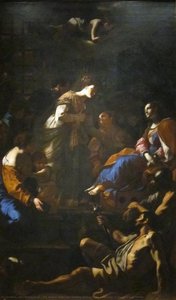
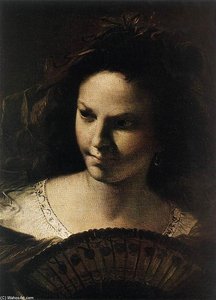
Portret van Mattia Preti

De 98 beroemdste schilderijen van Mattia Preti, elk uniek

Bijgewerkt in november 2026 · gerangschikt op basis van onze populariteitsscore (zoekopdrachten, bezoeken en bestellingen per kunstwerk) · 99 werken van Mattia Preti in onze catalogus

Kortom

The Marriage at Cana (1655) is het schilderij van Mattia Preti dat de meeste aandacht trekt; het origineel bevindt zich in het National Gallery, Londen. Daarna gaat de blik naar Tribute Money (1640) en St. John the Baptist Preaching. Van de 99 werken van Mattia Preti in onze catalogus zijn dit de 98 bekendste, elk een uniek origineel gepresenteerd met het jaar, het museum en de reden waarom het blijft voortbestaan.

1613 – 1699, Taverna Baroque painting Meeste werken: Bayerische Staatsgemäldesammlungen

Top 10 schilderijen van Mattia Preti, door de ogen van de galerie

1
The Marriage at Cana (1655) door Mattia Preti

The Marriage at Cana

1655 · Oil On Canvas · National Gallery, Londen

The air in the room feels heavy, thick with the scent of spilled wine and the heat of a crowded celebration. At the center of this bustling gathering, a miracle unfolds in silence. A long banquet table, draped in a stark white cloth, cuts through the darkness, acting as a stage for a divine transformation. Figures press against one another, their bodies overlapping in a dense, rhythmic movement that pulls…

2
Tribute Money (1640) door Mattia Preti

Tribute Money

1640 · Oil On Canvas · Pinacoteca di Brera, Milaan

To stand before Mattia Preti's Tribute Money is to step directly into the charged atmosphere of 17th-century Italian devotion. This magnificent oil on canvas, executed in 1640, pulses with the dramatic energy characteristic of the Baroque period. It is not merely a depiction of an event; it is an immersive experience, masterfully orchestrated by Preti’s hand. The scene gathers a group of men around a central table, their gestures and…

3
St. John the Baptist Preaching door Mattia Preti

St. John the Baptist Preaching

Oil On Canvas · Legion of Honor, San Francisco

To stand before this depiction of St. John the Baptist is to be enveloped by the very breath of divine revelation. The scene pulses with an almost palpable energy, capturing that electrifying moment when sacred truth breaks through the mundane. At the heart of the composition stands St. John, a figure radiating both ascetic power and profound spiritual authority. He commands attention not merely through his central placement, but through…

4
Christ in Glory (1660) door Mattia Preti

Christ in Glory

1660 · Oil On Canvas · Museo del Prado, Madrid

A Triumph of Baroque Faith: Exploring Mattia Preti’s ‘Christ in Glory’ Mattia Preti, a Calabrian Knight of the Baroque, stands as an emblem of artistic dynamism and fervent devotion during his era. Born in Taverna, Calabria, on February 24, 1613, his journey was marked by absorbing diverse influences—primarily from Caravaggio—resulting in a uniquely expressive style characterized by dramatic chiaroscuro and meticulous realism that would define his oeuvre. Before 1630, he…

5
Clorinda Rescuing Sofronia and Olindo (1660) door Mattia Preti

Clorinda Rescuing Sofronia and Olindo

1660 · Oil On Canvas · J. Paul Getty Museum, Los Angeles

The air in the painting feels heavy, thick with the scent of iron and dust. A single, theatrical light cuts through the murky atmosphere, striking the pale skin of a woman seated on the right. She is the center of a storm, a figure of vulnerability amidst a crowded, muscular arrangement of limbs and steel. Around her, the composition erupts in a series of sweeping diagonals. Weapons and reaching arms…

6
Ecce Homo (1661) door Mattia Preti

Ecce Homo

1661 · Oil On Canvas · Musée Condé, Chantilly

In this treatment of Ecce Homo, Mattia Preti employs a highly theatrical arrangement to command the viewer's attention. The composition is built upon a balcony placed transversely, a clever spatial device that pushes the figure of Christ into the immediate foreground. This positioning creates an intimate, almost confrontational proximity between the subject and the observer. The artist’s style here is both dramatic and heroic, moving beyond simple naturalism to imbue…

7
Saint Paul the Hermit (1650) door Mattia Preti

Saint Paul the Hermit

1650 · Oil On Canvas · Museu Nacional d'Art de Catalunya, Barcelona

The shadows press in from every corner, leaving only a sliver of light to illuminate the weathered face of Saint Paul the Hermit. He sits in a profound, heavy silence, his body a map of ascetic devotion. Every line etched into his skin tells a story of years spent in the desert, away from the clamor of the world. His eyes are turned upward, searching the darkness for a light…

8
Wedding at Cana (1655) door Mattia Preti

Wedding at Cana

1655 · Oil On Canvas · National Gallery, Londen

Mattia Preti’s Wedding at Cana captures the first miracle of Christ during a wedding feast in Galilee. The scene brings together Christ, his mother, and the disciples within a crowded, festive setting. A long banquet table, draped in a white cloth, serves as the central stage for the unfolding event. Amidst the gathering, Mary directs the servants, while the steward observes the transformation of the liquid with astonishment.

9
Doubting Thomas (1660) door Mattia Preti

Doubting Thomas

1660 · Oil On Canvas · Kunsthistorisches Museum, Wenen

In this oil on canvas, we find ourselves pulled into an intimate, almost uncomfortable proximity to a profound biblical encounter. The scene captures the precise second when the apostle Thomas seeks physical verification of the resurrection, reaching out to touch the wound in Christ's side. There is a heavy, palpable tension in the way the figures are arranged along a diagonal axis, guiding our gaze directly toward that central point…

10
The crucifixion of St Andrew (1651) door Mattia Preti

The crucifixion of St Andrew

1651 · Oil On Canvas · Art Gallery of South Australia, Adelaide

The crucifixion of St Andrew is an oil on canvas work by Mattia Preti. Created about 1651, this piece belongs to the Baroque movement of seventeenth-century Italy. The scene captures a moment of profound religious significance, focusing on the martyrdom of the saint. It is a heavy, physical depiction of faith under the weight of wood and shadow.

De beroemde schilderijen van Mattia Preti, nummer 11 tot 98

11St John the Baptist before Herod (1665) door Mattia PretiSt John the Baptist before Herod1665 12Saint Veronica with the Veil (1657) door Mattia PretiSaint Veronica with the Veil1657 · Los Angeles County Museum of Art 13Portrait of a Grand Master of the Knights of Malta, Martin de Redin (1660) door Mattia PretiPortrait of a Grand Master of the Knights of Malta, Martin de Redin1660 · Art Institute of Chicago 14Belisarius Receiving Alms (1660) door Mattia PretiBelisarius Receiving Alms1660 · Museum Boijmans Van Beuningen 15The Game of Draughts (1630) door Mattia PretiThe Game of Draughts1630 · Ashmolean Museum 16Ecce homo door Mattia PretiEcce homo 17Dice Players (1635) door Mattia PretiDice Players1635 · Nationaal Museum in Krakau 18The Beheading of Saint John the Baptist (1640) door Mattia PretiThe Beheading of Saint John the Baptist1640 · National Gallery of Ireland 19The Pardon of St. John Chrysostom (1640) door Mattia PretiThe Pardon of St. John Chrysostom1640 · Cincinnati Art Museum 20Clorinda rescues Olindo and Sophronia (1646) door Mattia PretiClorinda rescues Olindo and Sophronia1646 · Musei di Strada Nuova 21Vocation of the Apostle Matthew (1637) door Mattia PretiVocation of the Apostle Matthew1637 · Kunsthistorisches Museum 22The Adoration of the Shepherds (1645) door Mattia PretiThe Adoration of the Shepherds1645 · Nationaal Museum in Warschau 23the head of St. John presented to the king (1638) door Mattia Pretithe head of St. John presented to the king1638 24Bearded Old Man's Head (1656) door Mattia PretiBearded Old Man's Head1656 · Bayerische Staatsgemäldesammlungen 25Return of the Prodigal Son (1656) door Mattia PretiReturn of the Prodigal Son1656 · Bayerische Staatsgemäldesammlungen 26Mary Magdalene (1656) door Mattia PretiMary Magdalene1656 · Bayerische Staatsgemäldesammlungen 27Tobias and the Angel (1656) door Mattia PretiTobias and the Angel1656 · Bayerische Staatsgemäldesammlungen 28Saint Andrew (1656) door Mattia PretiSaint Andrew1656 · Bayerische Staatsgemäldesammlungen 29The Feast of Absalom (1658) door Mattia PretiThe Feast of Absalom1658 · National Gallery of Canada 30Salomé with the Head of St. John before Herod (1658) door Mattia PretiSalomé with the Head of St. John before Herod1658 · Gemäldegalerie Alte Meister im Schloss Wilhelmshöhe 31An Angel shows Hagar the Way (1656) door Mattia PretiAn Angel shows Hagar the Way1656 · Bayerische Staatsgemäldesammlungen 32Paul of Thebes (1675) door Mattia PretiPaul of Thebes1675 · Nationaal Museum van Oude Kunst 33Self-portrait (1695) door Mattia PretiSelf-portrait1695 34The Vision of Saint Paul (1700) door Mattia PretiThe Vision of Saint Paul1700 35The Martyrdom of Saint Catherine (1700) door Mattia PretiThe Martyrdom of Saint Catherine1700 · MUŻA 36The Denial of Saint Peter (1700) door Mattia PretiThe Denial of Saint Peter1700 · Musée des Beaux-Arts 37The Raising of Lazarus (1650) door Mattia PretiThe Raising of Lazarus1650 · Galleria Nazionale d’Arte Antica 38The Concert (1630) door Mattia PretiThe Concert1630 · Thyssen-Bornemisza Museum 39A Man Cutting Tobacco (1660) door Mattia PretiA Man Cutting Tobacco1660 40Het feest van Herodes (1661) door Mattia PretiHet feest van Herodes1661 · Toledo Museum of Art 41Apelle painting Campaspe (1600) door Mattia PretiApelle painting Campaspe1600 · Pinacoteca Stuard 42The Baptism of Christ (1661) door Mattia PretiThe Baptism of Christ1661 · Conventual Church of St. John 43The Roman Empress Faustina Visiting Saint Catherine of Alexandria in Prison (1643) door Mattia PretiThe Roman Empress Faustina Visiting Saint Catherine of Alexandria in Prison1643 · The Dayton Art Institute 44Queen Tomyris Receiving the Head of Cyrus, King of Persia (1670) door Mattia PretiQueen Tomyris Receiving the Head of Cyrus, King of Persia1670 45St. George Victorious over the Dragon (1678) door Mattia PretiSt. George Victorious over the Dragon1678 · Collegiate Basilica of St. George 46St John Reproaching Herod (1662) door Mattia PretiSt John Reproaching Herod1662 · Museo de Bellas Artes de Sevilla 47Christ and the Money Changers (1600) door Mattia PretiChrist and the Money Changers1600 · Museo di Capodimonte 48Concert (detail) (1630) door Mattia PretiConcert (detail)1630 · Hermitage Museum 49Vliegende Engel (1630) door Mattia PretiVliegende Engel1630 · Kunstpalast 50The Adoration of the Shepherds (1699) door Mattia PretiThe Adoration of the Shepherds1699 · Walker Art Gallery 51Christ and the Woman Taken in Adultery door Mattia PretiChrist and the Woman Taken in AdulterySaint Louis Art Museum 52The Martyrdom of Saint Paul door Mattia PretiThe Martyrdom of Saint PaulMuseum of Fine Arts, Houston 53Tobias Healing His Father's Blindness door Mattia PretiTobias Healing His Father's BlindnessMuseum of Fine Arts, Houston 54Martyrdom of Saint Erasmus door Mattia PretiMartyrdom of Saint ErasmusBayerische Staatsgemäldesammlungen 55Martyrdom of Saint Andrew door Mattia PretiMartyrdom of Saint Andrew 56St. Paul the Hermit door Mattia PretiSt. Paul the HermitCleveland Museum of Art 57Concert in the family door Mattia PretiConcert in the family 58Zachary on his knees, and studies of his head door Mattia PretiZachary on his knees, and studies of his head 59Old man sitting, holding a book, speaking to a young man door Mattia PretiOld man sitting, holding a book, speaking to a young man 60Musical angels, studies for a ceiling compartment door Mattia PretiMusical angels, studies for a ceiling compartment 61A Group of Saints and Angels door Mattia PretiA Group of Saints and Angels 62God the Father surrounded by angels door Mattia PretiGod the Father surrounded by angels 63The Release of St Peter from Prison door Mattia PretiThe Release of St Peter from PrisonAcademy of Fine Arts Vienna 64De Visitatie (1649) door Mattia PretiDe Visitatie1649 · Virginia Museum of Fine Arts 65Pilate Washing his Hands (1663) door Mattia PretiPilate Washing his Hands1663 · Metropolitan Museum of Art 66The Martyrdom of Saint Gennaro (1685) door Mattia PretiThe Martyrdom of Saint Gennaro1685 · National Gallery of Art 67The Martyrdom of St. Bartholomew door Mattia PretiThe Martyrdom of St. BartholomewPokrajinski muzej Ptuj- Ormož 68Saint John the Baptist Preaching (1650) door Mattia PretiSaint John the Baptist Preaching1650 · Metropolitan Museum of Art 69St John Cast into Prison (1661) door Mattia PretiSt John Cast into Prison1661 · Conventual Church of St. John 70Seated Bishop with Arms Extended and Three Attendant Figures door Mattia PretiSeated Bishop with Arms Extended and Three Attendant Figures 71Salome met het hoofd van Sint Johannes de Baptist door Mattia PretiSalome met het hoofd van Sint Johannes de BaptistRingling Museum of Art 72Design for the Decoration of a Cupola with a Prophet, King David and Two Putti door Mattia PretiDesign for the Decoration of a Cupola with a Prophet, King David and Two Putti 73A Mother Entrusting Her Sons to Christ door Mattia PretiA Mother Entrusting Her Sons to ChristPinacoteca di Brera 74Beheading of St. Catherine door Mattia PretiBeheading of St. CatherineNational Museum of Fine Arts 75Holy martyr (Saint Stephan?) door Mattia PretiHoly martyr (Saint Stephan?)Civic Museums of Reggio Emilia 76Flying Angel (1699) door Mattia PretiFlying Angel1699 · Kunstpalast 77St Sebastian (1660) door Mattia PretiSt Sebastian1660 · Museo di Capodimonte 78Sophonisba Receiving the Goblet (1670) door Mattia PretiSophonisba Receiving the Goblet1670 · Musée des Beaux-Arts de Lyon 79St. Nicholas of Bari (1653) door Mattia PretiSt. Nicholas of Bari1653 · Museo di Capodimonte 80Aeneas, Anchises and Ascanius Fleeing Troy (1630) door Mattia PretiAeneas, Anchises and Ascanius Fleeing Troy1630 · Galleria Nazionale d’Arte Antica 81Saint John the Baptist door Mattia PretiSaint John the BaptistMuseo di Capodimonte 82Judith and Holofernes door Mattia PretiJudith and HolofernesMuseo di Capodimonte 83The Return of the Prodigal Son door Mattia PretiThe Return of the Prodigal Son 84The Martyrdom of Saint Peter (1630) door Mattia PretiThe Martyrdom of Saint Peter1630 · Musée de Grenoble 85Saint Anthony Abbot (1628) door Mattia PretiSaint Anthony Abbot1628 86Vanitas (1650) door Mattia PretiVanitas1650 87The Return of the Prodigal Son (1658) door Mattia PretiThe Return of the Prodigal Son1658 · Royal Palace of Naples 88The Four Evangelists (1650) door Mattia PretiThe Four Evangelists1650 · Galleria Regionale di Palazzo Abatellis 89Concert (1630) door Mattia PretiConcert1630 · Hermitage Museum 90The Banquet Of Baldassare door Mattia PretiThe Banquet Of Baldassare 91Absalom's Feast (1653) door Mattia PretiAbsalom's Feast1653 · Museo di Capodimonte 92The Madonna of Costantinople (1656) door Mattia PretiThe Madonna of Costantinople1656 · Museo di Capodimonte 93Christ and the Woman Taken in Adultery door Mattia PretiChrist and the Woman Taken in AdulteryGalleria Regionale di Palazzo Abatellis 94St. George on Horseback (1658) door Mattia PretiSt. George on Horseback1658 · Conventual Church of St. John 95Saint John the Baptist Wearing the Red Tabard of the Order of Saint John (1671) door Mattia PretiSaint John the Baptist Wearing the Red Tabard of the Order of Saint John1671 · MUŻA 96The Banquet of the Rich Glutton (1685) door Mattia PretiThe Banquet of the Rich Glutton1685 · Galleria Nazionale d'Arte Antica 97Tomyris Plunges the Head of the Dead Cyrus Into a Vessel of Blood (1685) door Mattia PretiTomyris Plunges the Head of the Dead Cyrus Into a Vessel of Blood1685 98Plato and Diogenes (1690) door Mattia PretiPlato and Diogenes1690 · Capitoolse Musea

De beroemde schilderijen van Mattia Preti, periode voor periode

De onderwerpen die de aandacht van Mattia Preti troffen

De vier onderwerpen die het meest voorkomen in deze originelen, elk met zijn mooiste voorbeeld.

De musea waar de originele werken van Mattia Preti worden bewaard

De 8 musea met de meeste schilderijen op deze pagina.

Museum Stad Werken van Mattia Preti Schilderijen uit deze lijst
Bayerische Staatsgemäldesammlungen, MünchenBayerische Staatsgemäldesammlungen München 7 Bearded Old Man's Head, Return of the Prodigal Son, Mary Magdalene
Museo di Capodimonte, NapelsMuseo di Capodimonte Napels 7 Christ and the Money Changers, St Sebastian, St. Nicholas of Bari
Conventual Church of St. John, VallettaConventual Church of St. John Valletta 3 The Baptism of Christ, St John Cast into Prison, St. George on Horseback
National Gallery, LondenNational Gallery Londen 2 The Marriage at Cana, Wedding at Cana
Pinacoteca di Brera, MilaanPinacoteca di Brera Milaan 2 Tribute Money, A Mother Entrusting Her Sons to Christ
Kunsthistorisches Museum, WenenKunsthistorisches Museum Wenen 2 Doubting Thomas, Vocation of the Apostle Matthew
MUŻA, VallettaMUŻA Valletta 2 The Martyrdom of Saint Catherine, Saint John the Baptist Wearing the Red Tabard of the Order of Saint John
Galleria Nazionale d’Arte Antica, RomeGalleria Nazionale d’Arte Antica Rome 2 The Raising of Lazarus, Aeneas, Anchises and Ascanius Fleeing Troy

Mattia Preti door de decennia heen: elk een uniek origineel

Werken per decennium

Kies een decennium om het origineel te zien dat dit tijdperk definieert.

Schilderijen van Mattia Preti: vragen voor de galerie

Wat is het bekendste werk van Mattia Preti?Onthul het antwoord

The Marriage at Cana (1655), National Gallery, Londen. Tribute Money (1640) en St. John the Baptist Preaching volgen.

Op welke leeftijd creëerde Mattia Preti The Marriage at Cana?Onthul het antwoord

42 jaar oud: The Marriage at Cana dateert uit 1655, en Mattia Preti werd geboren in 1613.

Welke tien schilderijen van Mattia Preti zijn het meest bekend?Onthul het antwoord

The Marriage at Cana, Tribute Money, St. John the Baptist Preaching, Christ in Glory, Clorinda Rescuing Sofronia and Olindo, Ecce Homo, Saint Paul the Hermit, Wedding at Cana, Doubting Thomas en The crucifixion of St Andrew. De bovenstaande ranglijst vermeldt het jaar en het museum van elk werk.

Hoeveel werken van Mattia Preti zijn er bekend?Onthul het antwoord

Onze catalogus bevat 99 werken van Mattia Preti, daterend van 1628 tot 1699.

Waar kunnen de beroemdste originelen van Mattia Preti worden bekeken?Onthul het antwoord

Voornamelijk in Bayerische Staatsgemäldesammlungen (München), Museo di Capodimonte (Napels) en Conventual Church of St. John (Valletta). De bovenstaande museumtabel bevat een volledig overzicht.

In welke periode creëerde Mattia Preti de bekendste schilderijen?Onthul het antwoord

In 1650s: 22 van de 98 werken op deze pagina werden toen gemaakt, waaronder The Marriage at Cana.

Welk beroemd schilderij van Mattia Preti is de vroegste, en welke de laatste?Onthul het antwoord

Op deze pagina is het vroegste Saint Anthony Abbot (1628) en het laatste The Adoration of the Shepherds (1699).

Welke onderwerpen had Mattia Preti de voorkeur?Onthul het antwoord

Man (31), Woman (15) en Drapery (14), verspreid over de 98 werken op deze pagina.

Met welke materialen schilderde Mattia Preti het meest?Onthul het antwoord

Oil On Canvas, voor 53 van de 98 werken op deze pagina.

Bij welke stroming behoort het werk van Mattia Preti?Onthul het antwoord

Baroque painting, te oordelen aan de originelen op deze pagina.

Welke originele werken van Mattia Preti kan ik zien in het Bayerische Staatsgemäldesammlungen?Onthul het antwoord

Bearded Old Man's Head, Return of the Prodigal Son en Mary Magdalene: het Bayerische Staatsgemäldesammlungen, München herbergt 7 van de werken op deze pagina.

Mattia Preti: een portret van de kunstenaar

Een Barokmeester uit Calabrië

Mattia Preti, beter bekend als *Il Cavalier Calabrese*, is een van de meest invloedrijke en expressieve figuren in de Italiaanse Barokkunst. Geboren in Taverna, Calabrië, op 24 februari 1613, was zijn leven een dynamische evolutie, gekenmerkt door het absorberen van diverse invloeden en het uiteenvallen in een uniek expressief stijl die een blijvende stempel heeft gedrukt op de kunstwereld, met name in Malta waar hij veel van zijn latere jaren doorbracht. Zijn vroege opleiding begon onder Giovanni Battista Caracciolo, een schilder die diep geworteld was in de Caravaggistische beweging. Deze fundamentele blootstelling bracht hem een diepe kennis bij van dramatisch clair-obscur – het intense samenspel van licht en schaduw – en een toewijding aan realistische weergave die kenmerken bleven van zijn werk gedurende zijn hele carrière. Voordat 1630, sloot hij zich aan bij zijn broer Gregorio in Rome, waarbij hij zichzelf onderdompelde in de artistieke fermentatie van de stad en de meesters die het tijdperk hadden gedefinieerd bestudeerde: Caravaggio, Guercino, Rubens, Guido Reni en Giovanni Lanfranco. Deze periode was cruciaal, niet alleen voor zijn technische vaardigheden, maar ook voor zijn esthetische gevoelens.

Het Vormen van een Dynamische Stijl

Preti’s artistieke ontwikkeling was echter niet slechts imitatie; het was een synthese van invloeden, behendig geweven in een stijl die uniek was voor hem. Hoewel hij aanvankelijk verweven was met Caravaggisme, verplaatste hij geleidelijk zich daarbuiten, omarmde de dynamiek en emotionele intensiteit die kenmerkend waren voor de Hoge Barok. Zijn tijd in Napels verdiepte deze evolutie verder, waarbij hij werd blootgesteld aan het levendige werk van Luca Giordano. Deze periode zag Preti’s doeken uitbreiden met energierijke beweging, complexe composities en een verhoogde mate van drama. Hij maakte meesterlijk gebruik van dramatische contrasten van licht en schaduw, geërfd van Caravaggio, niet alleen als een technische truc maar ook als een middel om emotionele impact te versterken en de blik van de toeschouwer te leiden. Zijn figuren zijn doordrenkt met voelbare emotie, uitgedrukt door expressieve gezichten en dynamische lichamen. Deze vaardigheid om intense gevoelens – heiligheid, verdriet, extase – over te brengen, werd een kenmerkende eigenschap van zijn oeuvre. Hij was niet tevreden om scènes te schilderen; hij zocht ernaar om ze tot leven te wekken, het leven in te blazen in biblische verhalen en religieuze iconografie.

Composities en Meesterwerken door Italië

Mattia Preti’s talent won snel erkenning, wat leidde tot een reeks significante opdrachten in heel Italië. Vroeg in zijn carrière schilderde hij indrukwekkende fresco cycli voor Romeinse kerken zoals Sant’Andrea della Valle en San Carlo ai Catinari, waarmee hij zijn vermogen demonstreerde om zijn stijl aan verschillende architectonische omgevingen aan te passen. Zijn werk in de kerk van San Biagio in Modena toonde zijn vermogen om zijn stijl aan verschillende architectonische omgevingen aan te passen. Echter, enkele van zijn meest ambitieuze – zij het spijtig verloren gegaan – werken waren de fresco’s die hij schilderde op zeven stadsdeuren in Napels, die het leven en de marteling van Sint Johannes de Doper afbeeldden. Hoewel er nu alleen nog schetsen over zijn, getuigen ze van de schaal en impact van deze monumentale creaties. Deze opdrachten waren niet slechts bedoeld om een opdrachtgever te voldoen; het waren mogelijkheden voor Preti om zich te engageren in het religieuze en culturele leven van de gemeenschappen waar hij werkte, waardoor zijn kunst betekenis en doel gaf.

De Maltese Zenith: Sint-Johannes de Doper Kathedraal

Het was in Malta echter dat Mattia Preti de hoogte van zijn artistieke prestaties bereikte. Benoemd tot Ridder van de Orde van Sint Johannes op 1660, begon hij aan een transformatieve project: de volledige decoratie van het interieur van de Sint-Johannes Kathedraal in Valletta. Dit ondernemen – waarschijnlijk zijn meest significante erfenis – omvatte een indrukwekkende reeks schilderijen die het leven en de marteling van Sint Johannes de Doper afbeeldden. De enorme schaal van het project is adembenemend; Preti creëerde in feite een visuele narratief dat de toeschouwer onderdompelde, hem meenam in het verhaal van de heilige. De opulence van de Barokke omgeving bood de perfecte canvas voor zijn dramatische stijl, en de resulterende kunstwerken versterkten zijn reputatie als een van Europa’s toonaangevende schilders. Zijn werk in Sint-Johannes was niet alleen decoratief; het was een daad van devotie, een getuigenis van zijn geloof en een krachtige expressie van de identiteit van de Orde.

Een Duurzame Erfenis

Mattia Preti bleef opdrachten ontvangen uit heel Europa na zijn succes in Malta, waardoor hij zijn positie als toonaangevende figuur in de Italiaanse Barokkunst verstevigde. Hij stierf in 1699, nalatend een rijke artistieke erfenis die nog steeds het publiek inspireert en betovert. Zijn meesterlijke gebruik van licht en schaduw, complexe composities en vermogen om intense emoties over te brengen, blijven kenmerken van zijn stijl. Zijn bijdragen worden bewaard in musea zoals het Hermitage in St. Petersburg en de Metropolitan Museum of Art in New York City, en zelfs in de galerij van Bob Jones University in Greenville, South Carolina en het Ringling Museum of Art in Sarasota, Florida. De blijvende impact van Preti’s werk wordt het meest levendig ervaren binnen de muren van Sint-Johannes Kathedraal, een adembenemend getuigenis van zijn artistieke genialiteit en onwrikbare toewijding aan de Barokke esthetiek. *Il Cavalier Calabrese* verdiende werkelijk zijn titel, niet alleen als ridder maar ook als een meester schilder die de wereld verlichtte met zijn visie.