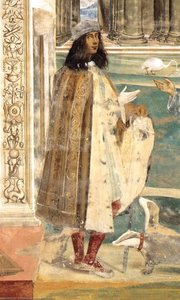
Portret van Il Sodoma

De 67 bekendste schilderijen van Il Sodoma, een selectie uit de galerie

Bijgewerkt in november 2026 · gerangschikt op basis van onze populariteitsscore (zoekopdrachten, bezoeken en bestellingen per kunstwerk) · 71 werken van Il Sodoma in onze catalogus

Kortom

Van alle originele werken die Il Sodoma heeft nagelaten, is De Raad van Sabijn (1506) het bekendst, in de collectie van het Galleria Nazionale d’Arte Antica, Rome. Direct daarna volgen Head of Christ (1537) en The Holy Family with Saint Elizabeth and the Infant Saint John the Baptist (1527). Onze catalogus bevat 71 werken van Il Sodoma; de galerie heeft de 67 meest bewonderde werken ter wereld bewaard, elk voorzien van de datum, het museum en het verhaal erachter.

1477 – 1549, Vercelli Renaissance Meeste werken: National Gallery

De top 10 schilderijen van Il Sodoma: de selectie van de galerie

1
De Raad van Sabijn (1506) door Il Sodoma

De Raad van Sabijn

1506 · Olieverf op paneel · Galleria Nazionale d’Arte Antica, Rome

Het Raadsel van Sabine vrouwen: Een Klassieke Schilderij Ontrafeld De kunstenaar Il Sodoma, beter bekend als Giovanni Antonio Bazzi, staat voor een bijzondere plaats in de geschiedenis van de Italiaanse Renaissance. Geboren rond 1447 in Vercelli, liet hij zich inspireren door het prachtige Siena en ontwikkelde een stijl die zowel de schoonheid van de hoogrenaissance als de complexe emoties van het maniërisme omarmt. Zijn werk "Het Raadsel van Sabine vrouwen"…

2
Head of Christ (1537) door Il Sodoma

Head of Christ

1537 · Oil · National Gallery, Londen

In "Head of Christ" by Giovanni Gerolamo Savoldo, the viewer is met with a close-up portrait that focuses tightly on the face and upper shoulders. The subject is framed by long, dark, wavy hair and a full beard. A crown of thorns rests upon the brow, rendered through textured, dark lines that press against the skin. The eyes are cast downward, heavy with a sense of sadness or exhaustion. This…

3
The Holy Family with Saint Elizabeth and the Infant Saint John the Baptist (1527) door Il Sodoma

The Holy Family with Saint Elizabeth and the Infant Saint John the Baptist

1527 · Oil · Walters Art Museum, Baltimore

Within the circular confines of this tondo, a quiet intimacy unfolds. The air feels heavy with the warmth of a Mediterranean afternoon, filtered through a soft, directional light that carves the figures out of the surrounding landscape. We find ourselves watching a tender moment of familial connection, where the boundaries between the divine and the human seem to blur. The Holy Family gathers closely, their forms wrapped in heavy, tactile…

4
The Ecstasy of Saint Catherine of Siena (1532) door Il Sodoma

The Ecstasy of Saint Catherine of Siena

1532 · Oil · Yale University Art Gallery, New Haven

The spiritual intensity of The Ecstasy of Saint Catherine of Siena unfolds before us through the hand of Il Sodoma. This religious art piece captures a profound moment of divine connection, centering entirely on the figure of Catherine of Siena. The scene invites a sense of wonder as the saint experiences a celestial encounter, her presence anchoring the composition amidst a swirling, sacred atmosphere. Every brushstroke seeks to translate the…

5
The Holy Family and St. John (1477) door Il Sodoma

The Holy Family and St. John

1477 · Oil On Panel · Detroit Institute of Arts, Detroit

The Holy Family and St. John is a devotional work by the Italian artist Il Sodoma. This oil on wood panel depicts a sacred grouping of figures, centering on the intimate connection between Mary, Joseph, and the young Saint John the Baptist. The composition focuses on the quiet, tender interactions shared between the holy figures, presented in a manner that invites a sense of spiritual closeness.

6
The Madonna and Child with Saints and a Donor (1530) door Il Sodoma

The Madonna and Child with Saints and a Donor

1530 · Oil On Panel · National Gallery, Londen

Step closer to observe the way the light settles upon these figures. In this composition from around 1530, we find a sense of stability born from a pyramidal arrangement. At the apex sits the Virgin Mary, her presence anchoring the group. She holds the Christ Child with a natural, unforced tenderness that grounds the divine subject in something deeply human. The palette relies on deep ultramarine blue in her mantle…
7
Saint Jerome in Penitence (1540) door Il Sodoma

Saint Jerome in Penitence

1540 · Oil On Canvas · National Gallery, Londen

A muscular, semi-nude figure occupies the center of this 1540 oil painting, captured in a dynamic, crouching pose that cuts a diagonal path across the canvas. The subject, Saint Jerome, is immersed in a moment of intense religious devotion and physical hardship. Deep, earthy tones of brown and dark green dominate the composition, grounded by the heavy textures of a rugged, rocky landscape. A strong directional light source, characteristic of…

8
Death of Lucretia (1515) door Il Sodoma

Death of Lucretia

1515 · Oil On Panel · Galleria Sabauda, Turijn

In this work, we find ourselves witnessing the final, harrowing moments of Lucretia, a woman whose life is being extinguished in a flash of steel and sorrow. The scene freezes a moment of profound tragedy, capturing the climactic end of a Roman noblewoman whose life was defined by virtue and ended by violence. The composition is thick with tension; the stillness of her form contrasts sharply with the looming presence…

9
Holy Family with St. John the Baptist as child (1525) door Il Sodoma

Holy Family with St. John the Baptist as child

1525 · Oil · Kunsthistorisches Museum, Wenen

This oil painting, dated 1525, is presented within an arched lunette format. The scene focuses on a group of four figures: the Virgin Mary, the Christ Child, Saint Joseph, and a young Saint John the Baptist. Mary is positioned centrally, wearing a red tunic beneath a deep blue mantle. Her pale skin and the skin of the infants are illuminated by a soft, directional light that emerges from the side,…

10
The Madonna and Child (1525) door Il Sodoma

The Madonna and Child

1525 · Oil On Panel · National Gallery, Londen

The composition centers on the Virgin Mary and the infant Jesus, set against an atmospheric landscape of distant hills and trees. A soft, directional light illuminates the faces of the subjects and the child's body, while much of the background remains in shadow. This use of chiaroscuro creates a sense of three-dimensionality, sculpting the figures through subtle gradations of tone.

De selectie van Il Sodoma gaat verder, van 11 tot 67

11charity (1504) door Il Sodomacharity1504 · Gemäldegalerie 12Benedict Presents the Olivetan Monks with His Rule (1505) door Il SodomaBenedict Presents the Olivetan Monks with His Rule1505 13Life of St Benedict, Scene 13: Benedict Frees a Monk (1505) door Il SodomaLife of St Benedict, Scene 13: Benedict Frees a Monk1505 14Life of St Benedict, Scene 12: Benedict Receives Maurus and Placidus (1505) door Il SodomaLife of St Benedict, Scene 12: Benedict Receives Maurus and Placidus1505 15Life of St Benedict, Scene 32: Benedict Appears in the Dreams of Two Monks (1505) door Il SodomaLife of St Benedict, Scene 32: Benedict Appears in the Dreams of Two Monks1505 16Holy Family with young Saint John (1525) door Il SodomaHoly Family with young Saint John1525 17Terrestrial Venus with Eros and Celestial Venus with Anteros and Two Cupids (1525) door Il SodomaTerrestrial Venus with Eros and Celestial Venus with Anteros and Two Cupids1525 18St Sebastian (1525) door Il SodomaSt Sebastian1525 · Palazzo Pitti 19Christ Carrying the Cross (1545) door Il SodomaChrist Carrying the Cross1545 · Gemäldegalerie 20The Crucifixion (1549) door Il SodomaThe Crucifixion1549 · Cleveland Museum of Art 21The Presentation of the Virgin in the Temple (1518) door Il SodomaThe Presentation of the Virgin in the Temple1518 · Oratory of San Bernardino 22The Holy Family (1511) door Il SodomaThe Holy Family1511 · Bayerische Staatsgemäldesammlungen 23The Death of Lucretia (1513) door Il SodomaThe Death of Lucretia1513 · Szépművészeti Múzeum 24The Mystic Marriage of St Catherine (1539) door Il SodomaThe Mystic Marriage of St Catherine1539 · Galleria Nazionale d’Arte Antica 25Pietà (1540) door Il SodomaPietà1540 · Galleria Borghese 26Holy Family with the Infant Saint John the Baptist (1530) door Il SodomaHoly Family with the Infant Saint John the Baptist1530 27Ecce Homo (1510) door Il SodomaEcce Homo1510 · Pinacoteca di Brera 28The Confirmation of the Olivetan Order by the Bishop of Arezzo (1503) door Il SodomaThe Confirmation of the Olivetan Order by the Bishop of Arezzo1503 29Man of Sorrow (1505) door Il SodomaMan of Sorrow1505 30Life of St Benedict, Scene 5: The Devil Destroys the Little Bell (1505) door Il SodomaLife of St Benedict, Scene 5: The Devil Destroys the Little Bell1505 31The Road to Calvary (1510) door Il SodomaThe Road to Calvary1510 · Szépművészeti Múzeum 32Life of St Benedict, Scene 6: A Priest Shares His Easter Meal with Benedict (1505) door Il SodomaLife of St Benedict, Scene 6: A Priest Shares His Easter Meal with Benedict1505 33Life of St Benedict, Scene 3: Benedict Repairs a Broken Colander through Prayer (detail) (1505) door Il SodomaLife of St Benedict, Scene 3: Benedict Repairs a Broken Colander through Prayer (detail)1505 34Deposition from the Cross (detail) (1510) door Il SodomaDeposition from the Cross (detail)1510 · Pinacoteca Nazionale 35Life of St Benedict, Scene 8: Benedict is Tempted (detail) (1505) door Il SodomaLife of St Benedict, Scene 8: Benedict is Tempted (detail)1505 36Life of St Benedict, Scene 19: Benedict Sends away the Harlots (1505) door Il SodomaLife of St Benedict, Scene 19: Benedict Sends away the Harlots1505 37Life of St Benedict, Scene 4: The Monk Romanus Dresses Benedict (detail) (1505) door Il SodomaLife of St Benedict, Scene 4: The Monk Romanus Dresses Benedict (detail)1505 38The Women of Darius's Family before Alexander the Great (1517) door Il SodomaThe Women of Darius's Family before Alexander the Great1517 · Villa Farnesina 39Life of St Benedict, Scene 19: Benedict Sends away the Harlots (detail) (1505) door Il SodomaLife of St Benedict, Scene 19: Benedict Sends away the Harlots (detail)1505 40Life of St Benedict, Scene 3: Benedict Repairs a Broken Colander through Prayer (1505) door Il SodomaLife of St Benedict, Scene 3: Benedict Repairs a Broken Colander through Prayer1505 41Life of St Benedict, Scene 15: Benedict Fishes the Pieces of a Broken Ax (detail) (1505) door Il SodomaLife of St Benedict, Scene 15: Benedict Fishes the Pieces of a Broken Ax (detail)1505 42Deposition from the Cross (1510) door Il SodomaDeposition from the Cross1510 · Pinacoteca Nazionale 43Life of St Benedict, Scene 1: Benedict Leaves His Parent's House (1505) door Il SodomaLife of St Benedict, Scene 1: Benedict Leaves His Parent's House1505 44Life of St Benedict, Scene 12: Benedict Receives Maurus and Placidus (detail) (1505) door Il SodomaLife of St Benedict, Scene 12: Benedict Receives Maurus and Placidus (detail)1505 45Life of St Benedict, Scene 11: Benedict Founds Twelve Monasteries (1505) door Il SodomaLife of St Benedict, Scene 11: Benedict Founds Twelve Monasteries1505 46Life of St Benedict, Scene 33: Benedict Gives Posthumous Absolution to Two Nuns (1505) door Il SodomaLife of St Benedict, Scene 33: Benedict Gives Posthumous Absolution to Two Nuns1505 47Life of St Benedict, Scene 31: Benedict Feeds the Monk (1505) door Il SodomaLife of St Benedict, Scene 31: Benedict Feeds the Monk1505 48Life of St Benedict, Scene 30: Benedict Foretells the Destruction of Montecassino (1505) door Il SodomaLife of St Benedict, Scene 30: Benedict Foretells the Destruction of Montecassino1505 49Life of St Benedict, Scene 30: Benedict Foretells the Destruction of Montecassino (detail) (1505) door Il SodomaLife of St Benedict, Scene 30: Benedict Foretells the Destruction of Montecassino (detail)1505 50Life of St Benedict, Scene 7: Benedict Instructs the Peasants (1505) door Il SodomaLife of St Benedict, Scene 7: Benedict Instructs the Peasants1505 51Saint George and the Dragon (1518) door Il SodomaSaint George and the Dragon1518 · National Gallery of Art 52The Beheading of Niccolò di Tuldo (1526) door Il SodomaThe Beheading of Niccolò di Tuldo1526 · San Domenico 53View of the Oratory (1520) door Il SodomaView of the Oratory1520 · Oratory of San Bernardino 54View of the Cappella di Santa Caterina (1526) door Il SodomaView of the Cappella di Santa Caterina1526 · San Domenico 55Wedding of Alexander and Roxane (detail) (1517) door Il SodomaWedding of Alexander and Roxane (detail)1517 · Villa Farnesina 56The Death of Lucretia (1535) door Il SodomaThe Death of Lucretia1535 · Szépművészeti Múzeum 57Cupid in a Landscape (1510) door Il SodomaCupid in a Landscape1510 · Hermitage Museum 58De Foltering van Christus (1510) door Il SodomaDe Foltering van Christus1510 · Szépművészeti Múzeum 59Mary Magdalene door Il SodomaMary Magdalene 60Christ Carrying the Cross door Il SodomaChrist Carrying the CrossPalazzo d'Arco 61St George and the Dragon door Il SodomaSt George and the DragonNational Gallery of Art 62Allegory of Celestial Love door Il SodomaAllegory of Celestial LoveChigi Saracini Collection 63Christ Presented to the People (Ecce Homo) (1544) door Il SodomaChrist Presented to the People (Ecce Homo)1544 · Metropolitan Museum of Art 64Wedding of Alexander and Roxane (1517) door Il SodomaWedding of Alexander and Roxane1517 · Villa Farnesina 65Man of Sorrows (1500) door Il SodomaMan of Sorrows1500 66Holy Family with Saint John the Baptist and an Angel (1530) door Il SodomaHoly Family with Saint John the Baptist and an Angel1530 · Musée des Beaux-Arts 67Pietà (1533) door Il SodomaPietà1533

De beroemde schilderijen van Il Sodoma, periode voor periode

De onderwerpen die de aandacht van Il Sodoma troffen

De vier onderwerpen die het meest voorkomen in deze originelen, elk met zijn mooiste voorbeeld.

De musea waar de originele werken van Il Sodoma worden bewaard

De 8 musea met de meeste schilderijen op deze pagina.

Museum Stad Werken van Il Sodoma Schilderijen uit deze lijst
National Gallery, LondenNational Gallery Londen 4 Head of Christ, The Madonna and Child with Saints and a Donor, Saint Jerome in Penitence
Szépművészeti Múzeum, BoedapestSzépművészeti Múzeum Boedapest 4 The Death of Lucretia, The Road to Calvary, The Death of Lucretia
Villa Farnesina, RomeVilla Farnesina Rome 3 The Women of Darius's Family before Alexander the Great, Wedding of Alexander and Roxane (detail), Wedding of Alexander and Roxane
Galleria Nazionale d’Arte Antica, RomeGalleria Nazionale d’Arte Antica Rome 2 De Raad van Sabijn, The Mystic Marriage of St Catherine
Gemäldegalerie, BerlijnGemäldegalerie Berlijn 2 charity, Christ Carrying the Cross
Oratory of San Bernardino, SienaOratory of San Bernardino Siena 2 The Presentation of the Virgin in the Temple, View of the Oratory
Pinacoteca Nazionale, SienaPinacoteca Nazionale Siena 2 Deposition from the Cross (detail), Deposition from the Cross
National Gallery of Art, WashingtonNational Gallery of Art Washington 2 Saint George and the Dragon, St George and the Dragon

Il Sodoma decennium voor decennium: het origineel dat elk tijdperk definieert

Werken per decennium

Kies een decennium om het origineel te zien dat dit tijdperk definieert.

Vragen van verzamelaars over de schilderijen van Il Sodoma

Waar is Il Sodoma het meest bekend om?Onthul het antwoord

De Raad van Sabijn (1506), Galleria Nazionale d’Arte Antica, Rome. Head of Christ (1537) en The Holy Family with Saint Elizabeth and the Infant Saint John the Baptist (1527) volgen.

Hoe oud was Il Sodoma toen De Raad van Sabijn werd gemaakt?Onthul het antwoord

29 jaar oud: De Raad van Sabijn dateert uit 1506, en Il Sodoma werd geboren in 1477.

Wat zijn de tien beroemdste schilderijen van Il Sodoma?Onthul het antwoord

De Raad van Sabijn, Head of Christ, The Holy Family with Saint Elizabeth and the Infant Saint John the Baptist, The Ecstasy of Saint Catherine of Siena, The Holy Family and St. John, The Madonna and Child with Saints and a Donor, Saint Jerome in Penitence, Death of Lucretia, Holy Family with St. John the Baptist as child en The Madonna and Child. De bovenstaande ranglijst vermeldt het jaar en het museum van elk werk.

Hoeveel schilderijen heeft Il Sodoma nagelaten?Onthul het antwoord

Onze catalogus bevat 71 werken van Il Sodoma, daterend van 1500 tot 1549.

In welke musea hangen de meesterwerken van Il Sodoma?Onthul het antwoord

Voornamelijk in National Gallery (Londen), Szépművészeti Múzeum (Boedapest) en Villa Farnesina (Rome). De bovenstaande museumtabel bevat een volledig overzicht.

In welke jaren schilderde Il Sodoma de beroemdste werken?Onthul het antwoord

In 1500s: 26 van de 67 werken op deze pagina werden toen gemaakt, waaronder De Raad van Sabijn.

Wat zijn de eerste en de laatste beroemde originelen van Il Sodoma?Onthul het antwoord

Op deze pagina is het vroegste Man of Sorrows (1500) en het laatste The Crucifixion (1549).

Welke onderwerpen koos Il Sodoma het vaakst?Onthul het antwoord

Man (21), People (21) en Woman (14), verspreid over de 67 werken op deze pagina.

Welke techniek gebruikte Il Sodoma het meest?Onthul het antwoord

Fresco, voor 29 van de 67 werken op deze pagina.

Bij welke kunststroming behoort Il Sodoma?Onthul het antwoord

Renaissance, te oordelen aan de originelen op deze pagina.

Welke werken van Il Sodoma hangen in het National Gallery?Onthul het antwoord

Head of Christ, The Madonna and Child with Saints and a Donor en Saint Jerome in Penitence: het National Gallery, Londen herbergt 4 van de werken op deze pagina.

Il Sodoma: leven en werk

De Enigmatische Ziel van de Sienese Renaissance

In het levendige weefsel van de Italiaanse Renaissance bezitten weinig figuren een naam die zo provocerend is, of een nalatenschap die zo veelzijdig, als Giovanni Antonio Bazzi, door de geschiedenis bekend onder de evocatieve bijnaam Il Sodoma. Geboren in Vercelli rond 1477, kwam Bazzi niet slechts naar voren als een schilder, maar als een transformerende kracht die de kloof overbrugde tussen het lumineuze, evenwichtige idealisme van de Hoogrenaissance en het emotionele, vaak onrustbarende drama van het Maniërisme. Zijn artistieke reis was er een van diepgaande synthese, waarin de gedisciplineerde tradities van de Sienese school samenkwamen met de meeslepende, atmosferische innovaties van de Lombardische stijl en de subtiele psychologische diepgang geïnspireerd door Leonardo da Vinci.

De vroege jaren van Bazzi's leven werden gekenmerkt door een strenge opleiding die de basis legde voor zijn technische meesterschap. Onder de begeleiding van meesters zoals de "archaïsche" Martino Spanzotti en Giovenone, absorbeerde hij een fundamenteel begrip van vorm en kleur. Toen hij zich naar het culturele epicentrum van Siena begaf, begon zijn werk een unieke stilistische evolutie te weerspiegelen. Hij bezat het zeldzame vermogen om de verfijnde, klassieke gratie van het vroeg-16e-eeuwse Rome te versmelten met de meer provinciale, decoratieve tradities van Toscane. Deze fusie stelde hem in staat werken te creëren die zowel geworteld voelden in het lokale erfgoed als onderdeel waren van een veel grotere, pan-Italiaanse artistieke revolutie.

Een Meesterschap van Licht, Emotie en Vorm

Het aanschouwen van een werk van Il Sodoma is getuige zijn van een delicate dans tussen sereniteit en spanning. Zijn techniek werd gekenmerkt door een voortreffelijke beheersing van sfumato en een rijk, emotioneel kleurgebruik dat kon verschuiven van de tedere warmte van een Madonna's wang naar de dramatische schaduwen van een mythologische strijd. Deze veelzijdigheid is wellicht het meest evident in zijn diverse reeks onderwerpen, die met gelijke passie het heilige en het profane besloegen.

Zijn bijdragen aan de fresco-traditie zijn niets minder dan monumentaal. In het Oratorium van San Bernardino in Siena toonde Bazzi zijn vermogen om enorme architecturale ruimtes te beheersen, waarbij hij complexe verhalen weefde door middel van gebalanceerde composities die desondanks pulseerden met menselijke emotie. Zijn religieuze werken, zoals De Presentatie van de Maagd in de Tempel, tonen een diepe spirituele gratie, terwijl zijn seculiere en mythologische stukken, zoals de betoverende Cupido in een Landschap, een fascinatie onthullen voor het sensuele en het idyllische. In deze landschappen vindt men een sereen Italiaans uitzicht dat dient als toneel voor het goddelijke of het mythologische, weergegeven met een helderheid die de kijker uitnodigt in een droomtoestand.

De Nalatenschap van een Transitie-meester

De historische betekenis van Il Sodoma ligt in zijn rol als stilistisch doorgeefluik. Hij volgde niet simpelweg de trends van zijn tijd; hij hielp de overgang vorm te geven van de harmonieuze stabiliteit van de Hoogrenaissance naar de meer experimentele, vervormde en expressieve taal van het Maniërisme. Door overdreven gebaren en verhoogde emotionaliteit te introduceren binnen het gevestigde Sienese kader, bereidde hij de weg voor de volgende generatie kunstenaars om de complexiteiten van de menselijke psyche te verkennen.

Zelfs toen zijn naam een zekere beruchtheid met zich meedroeg, bleef zijn artistieke productie een getuigenis van technische briljantie en intellectuele diepgang. Zijn vermogen om de prestigieuze opdrachten van zowel pausen als machtige beschermheren te navigeren—inclusief connecties met de invloedrijke Agostino Chigi—zorgde ervoor dat zijn invloed ver buiten de muren van Siena zou resoneren. Vandaag de dag staat Bazzi als een cruciaal figuur wiens werk ons blijft boeien en ons herinnert aan een periode waarin kunst een diepgaande verkenning was van zowel de aardse schoonheid als de spirituele mysteries van het menselijk bestaan.