Portret van Canaletto

De 100 bekendste schilderijen van Canaletto, een selectie uit de galerie

Bijgewerkt in november 2026 · gerangschikt op basis van onze populariteitsscore (zoekopdrachten, bezoeken en bestellingen per kunstwerk) · 549 werken van Canaletto in onze catalogus

Kortom

Van alle originele werken die Canaletto heeft nagelaten, is De Grand Canal en de Kerk van de Salute (1730) het bekendst, in de collectie van het Museum of Fine Arts, Houston, Houston. Direct daarna volgen De Bucintoro die terugkeert naar de Molo op Hemelvaartdag (1730) en Capriccio with Ruins and Porta Portello, Padua (1750). Onze catalogus bevat 549 werken van Canaletto; de galerie heeft de 100 meest bewonderde werken ter wereld bewaard, elk voorzien van de datum, het museum en het verhaal erachter.

1697 – 1768, Venetië Rococo style Meeste werken: Royal Collection

De top 10 schilderijen van Canaletto: de selectie van de galerie

1
De Grand Canal en de Kerk van de Salute (1730) door Canaletto

De Grand Canal en de Kerk van de Salute

1730 · Olieverf op canvas · Museum of Fine Arts, Houston, Houston

De Grand Canal en de Kerk van de Salute door Canaletto legt een specifiek moment vast in het leven van Venetië. Dit Venetiaanse Urban Landscape, geschilderd in 1730, plaatst de kijker rechtstreeks aan de waterkant. De scène ontvouwt zich met de imposante koepel van Santa Maria della Salute als ankerpunt van de compositie, waarvan de massieve structuur hoog boven de bedrijvigheid van het kanaal uittorent. Het zonlicht danst op het…

2
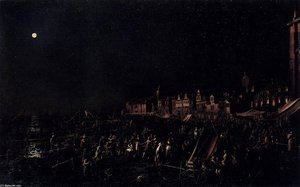
De Bucintoro die terugkeert naar de Molo op Hemelvaartdag (1730) door Canaletto

De Bucintoro die terugkeert naar de Molo op Hemelvaartdag

1730 · Olieverf op canvas

In het hart van de achttiende eeuw kon weinig een spektakel evenaren als de grootsheid van Venetië tijdens de festiviteiten van Hemelvaart. Giovanni Antonio Canal, universeel bekend als Canaletto, legt deze vluchtige magie vast in zijn meesterwerk, De Bucintoro die terugkeert naar de Molo op Hemelvaartdag. Dit monumentale olieverf-op-doek werk is veel meer dan een louter topografische registratie; het is een venster naar een verloren tijdperk van maritieme pracht en…

3
Capriccio with Ruins and Porta Portello, Padua (1750) door Canaletto

Capriccio with Ruins and Porta Portello, Padua

1750 · Oil On Canvas · Gallerie dell'Accademia di Venezia, Venetië

Giovanni Antonio Canal, universally known as Canaletto, possessed an extraordinary gift for capturing the essence of Venice – its light, its atmosphere, and its vibrant daily life. His “Capriccio with Ruins and Porta Portello,” painted in 1750, is a quintessential example of this mastery, offering not merely a depiction of a scene but a carefully constructed evocation of memory, history, and the enduring beauty of a fading grandeur. This painting…

4
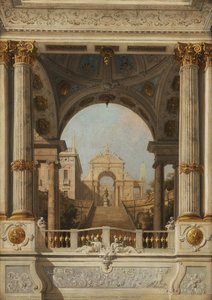
Capriccio of a Renaissance Triumphal Arch seen from the Portico of a Palace (1755) door Canaletto

Capriccio of a Renaissance Triumphal Arch seen from the Portico of a Palace

1755 · Oil On Canvas

To gaze upon Giovanni Antonio Canaletto’s Capriccio of a Renaissance Triumphal Arch seen from the Portico of a Palace is to step directly into a meticulously crafted dreamscape, a moment where the grandeur of classical antiquity meets the vibrant energy of 18th-century life. Painted in 1755, this oil on canvas is far more than a mere depiction of architecture; it is a masterful meditation on permanence, memory, and the enduring…

5
The Feast Day of St Roch (1735) door Canaletto

The Feast Day of St Roch

1735 · Oil On Canvas · National Gallery, Londen

To step before Canaletto’s “The Feast Day of St Roch” is to be instantly transported to the sun-drenched, bustling streets of 18th-century Venice. Created in 1735, this masterpiece serves as much more than a mere topographical record; it is a vibrant, breathing window into a vanished era of grandeur and communal devotion. The painting captures a pivotal moment during the feast day of Saint Roch, a figure deeply revered by…

6
The Grand Canal (1728) door Canaletto

The Grand Canal

1728 · Oil On Canvas · Galleria degli Uffizi, Florence

To gaze upon Canaletto’s 1728 masterpiece, The Grand Canal, is to be transported instantly to the golden age of the Venetian Republic. This breathtaking canvas does not merely depict a waterway; it captures the very soul of a city at its zenith, pulsating with commerce, elegance, and an almost ethereal light. As the eye wanders across the expansive horizontal panorama, one feels the gentle movement of gondolas slicing through the…

7
Piazza San Marco (1730) door Canaletto

Piazza San Marco

1730 · Oil On Canvas · Metropolitan Museum of Art, New York

Piazza San Marco by Canaletto presents a wide view of the principal public square in Venice, Italy. Completed in 1730, the oil painting captures a Venetian cityscape centered on the activity within the square. The scene is populated by various figures, including citizens, merchants, and clergy, who move across the open space. The composition includes architectural landmarks such as St. Mark's Basilica and the Campanile, which rise above the surrounding…

8
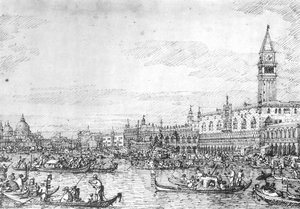
Grand Canal: Looking North-East from Santa Croce to San Geremia (1732) door Canaletto

Grand Canal: Looking North-East from Santa Croce to San Geremia

1732 · Etching · Royal Collection, Londen

To gaze upon this depiction of the Grand Canal looking northeast from Santa Croce toward San Geremia is to step directly into the heart of 18th-century Venice. It is more than just an architectural record; it is a meticulously preserved moment of life, rendered with the breathtaking precision characteristic of Giovanni Antonio Canaletto. The scene unfolds before us, dominated by the majestic sweep of the waterway, where history and daily…

9
Piazza San Marco with the Basilica (1730) door Canaletto

Piazza San Marco with the Basilica

1730 · Oil On Canvas · Harvard Art Museums, Cambridge

The sun hangs high over the bustling heart of Venice in Canaletto's 1730 oil on canvas, Piazza San Marco with the Basilica. This scene captures the very essence of the city's most famous square, where the air feels thick with the movement of a thousand daily lives. We find ourselves standing within the wide expanse of the piazza, looking toward the grand architecture that defines this urban center. The light…

10
Venice: The Canale di San Marco with the Bucintoro at Anchor (1730) door Canaletto

Venice: The Canale di San Marco with the Bucintoro at Anchor

1730 · Royal Collection, Londen

Giovanni Antonio Canal, universally known as Canaletto, possessed an extraordinary gift for capturing the vibrant pulse of 18th-century Venice. His “Venice: The Bucintoro at the Molo on Ascension Day,” painted around 1754, stands as a testament to this skill – a monumental canvas brimming with life, color, and meticulously rendered detail. More than just a depiction of a specific event, it’s an immersive experience, transporting the viewer directly into the…

De selectie van Canaletto gaat verder, van 11 tot 100

11The Piazzetta Looking towards the Torre dell'Orologio (1725) door CanalettoThe Piazzetta Looking towards the Torre dell'Orologio1725 · Royal Collection 12The Piazzetta: Looking North, the Campanile under Repair (1745) door CanalettoThe Piazzetta: Looking North, the Campanile under Repair1745 · Royal Collection 13Santi Giovanni e Paolo and the Scuola di San Marco (1725) door CanalettoSanti Giovanni e Paolo and the Scuola di San Marco1725 · Gemäldegalerie Alte Meister 14Piazza San Marco: Looking East from the North-West Corner (1760) door CanalettoPiazza San Marco: Looking East from the North-West Corner1760 · National Gallery 15London: Ranelagh, Interior of the Rotunda (1754) door CanalettoLondon: Ranelagh, Interior of the Rotunda1754 · National Gallery 16Grand Canal: Looking North-East toward the Rialto Bridge (detail) (1725) door CanalettoGrand Canal: Looking North-East toward the Rialto Bridge (detail)1725 · Gemäldegalerie Alte Meister 17Grand Canal: Looking South-East from the Campo Santa Sophia to the Rialto Bridge (1756) door CanalettoGrand Canal: Looking South-East from the Campo Santa Sophia to the Rialto Bridge1756 · Staatliche Museen zu Berlin 18View through a Baroque Colonnade into a Garden, 1760-1768 (1768) door CanalettoView through a Baroque Colonnade into a Garden, 1760-17681768 · Albertina 19The Grand Canal near the Rialto Bridge, Venice (1730) door CanalettoThe Grand Canal near the Rialto Bridge, Venice1730 · Museum of Fine Arts, Houston 20Grand Canal: Looking North from Near the Rialto Bridge (1726) door CanalettoGrand Canal: Looking North from Near the Rialto Bridge1726 · Gemäldegalerie Alte Meister 21Capriccio: The Grand Canal, with an Imaginary Rialto Bridge and Other Buildings (1740) door CanalettoCapriccio: The Grand Canal, with an Imaginary Rialto Bridge and Other Buildings1740 · Galleria Nazionale 22View of San Giovanni dei Battuti at Murano (1725) door CanalettoView of San Giovanni dei Battuti at Murano1725 · Hermitage Museum 23Interior of San Marco, Venice (1745) door CanalettoInterior of San Marco, Venice1745 · Montreal Museum of Fine Arts 24Venice: Palazzo Grimani (1756) door CanalettoVenice: Palazzo Grimani1756 · National Gallery 25London: The Thames and the City of London from Richmond House (1747) door CanalettoLondon: The Thames and the City of London from Richmond House1747 26Alnwick Castle (1747) door CanalettoAlnwick Castle1747 27Venice, Bacino di San Marco on Ascension Day (1754) door CanalettoVenice, Bacino di San Marco on Ascension Day1754 28London seen through an arch of Westminster Bridge (1747) door CanalettoLondon seen through an arch of Westminster Bridge1747 29Entrance to the Grand Canal: Looking East (1725) door CanalettoEntrance to the Grand Canal: Looking East1725 · Gemäldegalerie Alte Meister 30Landscape with Ruins (also known as picket Duty in Virginia) door CanalettoLandscape with Ruins (also known as picket Duty in Virginia) 31The Piazzetta to the South (1720) door CanalettoThe Piazzetta to the South1720 · Royal Collection 32Piazza San Marco: Looking East along the Central Line (1723) door CanalettoPiazza San Marco: Looking East along the Central Line1723 · Thyssen-Bornemisza Museum 33Grand Canal: The Rialto Bridge from the South (1727) door CanalettoGrand Canal: The Rialto Bridge from the South1727 34Capriccio: The Horses of San Marco in the Piazzetta (1743) door CanalettoCapriccio: The Horses of San Marco in the Piazzetta1743 35Palazzo Ducale and the Piazza di San Marco (1755) door CanalettoPalazzo Ducale and the Piazza di San Marco1755 · Galleria degli Uffizi 36Piazza San Marco: Looking East from the South West Corner (1760) door CanalettoPiazza San Marco: Looking East from the South West Corner1760 · National Gallery 37Piazza San Marco, Looking toward San Geminiano (1735) door CanalettoPiazza San Marco, Looking toward San Geminiano1735 · Galleria Corsini 38View of the Arch of Constantine with the Colosseum (1742) door CanalettoView of the Arch of Constantine with the Colosseum1742 · J. Paul Getty Museum 39Arrival of the French Ambassador in Venice (detail) (1740) door CanalettoArrival of the French Ambassador in Venice (detail)1740 · Hermitage Museum 40Bacino di S. Marco: From the Piazzetta (1750) door CanalettoBacino di S. Marco: From the Piazzetta1750 · National Gallery of Victoria 41The Grand Canal, Venice, Looking South toward the Rialto Bridge (1734) door CanalettoThe Grand Canal, Venice, Looking South toward the Rialto Bridge1734 · Metropolitan Museum of Art 42The Colosseum (1743) door CanalettoThe Colosseum1743 · Galleria Borghese 43Perspective View (Stage design) door CanalettoPerspective View (Stage design)Accademia di San Luca 44Venice: Capriccio of the Courtyard of the Doges' Palace with the Scala dei Giganti (1744) door CanalettoVenice: Capriccio of the Courtyard of the Doges' Palace with the Scala dei Giganti1744 · Buckingham Palace 45Piazzetand the Doge s Palace from the Bacino di San Marco (1737) door CanalettoPiazzetand the Doge s Palace from the Bacino di San Marco1737 46The Stonemason's Yard (1726) door CanalettoThe Stonemason's Yard1726 · National Gallery 47Return of the Bucentoro to the Molo on Ascension Day (detail) (1732) door CanalettoReturn of the Bucentoro to the Molo on Ascension Day (detail)1732 · Royal Collection 48Venice: The Bacino from the Giudecca (1740) door CanalettoVenice: The Bacino from the Giudecca1740 · Wallace Collection 49The Doge's Palace with the Piazza di San Marco (1735) door CanalettoThe Doge's Palace with the Piazza di San Marco1735 · Galleria degli Uffizi 50The Grand Canal, Venice, Looking Southeast, with the Campo della Carità to the Right (1734) door CanalettoThe Grand Canal, Venice, Looking Southeast, with the Campo della Carità to the Right1734 · Metropolitan Museum of Art 51The Grand Canal with the Rialto Bridge and the Fondaco dei Tedeschi (1730) door CanalettoThe Grand Canal with the Rialto Bridge and the Fondaco dei Tedeschi1730 · Rijksmuseum 52The Grand Canal and the Church of the Salute (detail) (1730) door CanalettoThe Grand Canal and the Church of the Salute (detail)1730 · Museum of Fine Arts, Houston 53The Grand Canal from Campo San Vio towards the Bacino (1729) door CanalettoThe Grand Canal from Campo San Vio towards the Bacino1729 · Royal Collection 54Piazza San Marco: Met uitzicht naar het zuidoosten (1735) door CanalettoPiazza San Marco: Met uitzicht naar het zuidoosten1735 · National Gallery of Art 55Capriccio of the Rialto Bridge with the Lagoon Beyond (1746) door CanalettoCapriccio of the Rialto Bridge with the Lagoon Beyond1746 56Piazza San Marco, Looking Towards San Geminiano (1737) door CanalettoPiazza San Marco, Looking Towards San Geminiano1737 · Galleria Nazionale d'Arte Moderna 57A Regatta on the Grand Canal (1735) door CanalettoA Regatta on the Grand Canal1735 · National Gallery 58Rio dei Mendicanti: Looking South (1725) door CanalettoRio dei Mendicanti: Looking South1725 · Gemäldegalerie Alte Meister 59Grand Canal: Looking from Palazzo Balbi (1726) door CanalettoGrand Canal: Looking from Palazzo Balbi1726 · Gemäldegalerie Alte Meister 60The Porta Portello with the Brenta Canal in Padua, 1740-1743 (1743) door CanalettoThe Porta Portello with the Brenta Canal in Padua, 1740-17431743 · Albertina 61San Giacomo di Rialto (detail) (1725) door CanalettoSan Giacomo di Rialto (detail)1725 · Gemäldegalerie Alte Meister 62San Marco Square (Venice) (1743) door CanalettoSan Marco Square (Venice)1743 63Piazza San Marco, Looking East from the Southwest Corner (also known as Piazza San Marco and he Colonnade) (1756) door CanalettoPiazza San Marco, Looking East from the Southwest Corner (also known as Piazza San Marco and he Colonnade)1756 · National Gallery 64SS. Giovanni e Paulo and the Scuola de San Marco (1725) door CanalettoSS. Giovanni e Paulo and the Scuola de San Marco1725 · Staatliche Kunstsammlungen 65Rialto Bridge from the South (1737) door CanalettoRialto Bridge from the South1737 · Galleria Nazionale d’Arte Antica 66A Regatta on the Grand Canal (1740) door CanalettoA Regatta on the Grand Canal1740 67Entrance to the Grand Canal and the Church of La Salute (1735) door CanalettoEntrance to the Grand Canal and the Church of La Salute1735 68The Grand Canal with the Rialto Bridge in the Background (detail) (1724) door CanalettoThe Grand Canal with the Rialto Bridge in the Background (detail)1724 · Gemäldegalerie Alte Meister 69Capriccio: Ruins and Classic Buildings (1730) door CanalettoCapriccio: Ruins and Classic Buildings1730 · Museo Poldi Pezzoli 70Capriccio (Venetian Courtyard) (1765) door CanalettoCapriccio (Venetian Courtyard)1765 · Tel Aviv Museum of Art 71Venice: Riva degli Schiavoni (1730) door CanalettoVenice: Riva degli Schiavoni1730 · Royal Collection 72Grand Canal, Looking East from the Campo San Vio (1723) door CanalettoGrand Canal, Looking East from the Campo San Vio1723 · Thyssen-Bornemisza Museum 73Reception of the Imperial Ambassador at the Doge's Palace (1729) door CanalettoReception of the Imperial Ambassador at the Doge's Palace1729 74Entrance of the Grand Canal - from the West End of the Molo door CanalettoEntrance of the Grand Canal - from the West End of the MoloNational Gallery of Art 75Venice Viewed from the San Giorgio Maggiore door CanalettoVenice Viewed from the San Giorgio MaggioreStädelsche Kunstinstitut Und Städtische Galerie 76The Grand Canal near the Ponte del Rialto (1725) door CanalettoThe Grand Canal near the Ponte del Rialto1725 · Ashmolean Museum of Art and Archaeology 77Rome: The Arch of Constantine (detail) (1742) door CanalettoRome: The Arch of Constantine (detail)1742 · Royal Collection 78Bekijk het kerkgebouw en het Dogepaleis vanuit de Procuratie Vecchie (1742) door CanalettoBekijk het kerkgebouw en het Dogepaleis vanuit de Procuratie Vecchie1742 · National Gallery of Art 79Perspective View with Portico (detail) (1765) door CanalettoPerspective View with Portico (detail)1765 · Gallerie dell'Accademia di Venezia 80View of the Canale Grande from San Vio (Venice) door CanalettoView of the Canale Grande from San Vio (Venice)Bayerische Staatsgemäldesammlungen 81Reception of the Ambassador in the Doge's Palace (1730) door CanalettoReception of the Ambassador in the Doge's Palace1730 82The Vigilia di San Pietro door CanalettoThe Vigilia di San PietroStaatliche Museen zu Berlin 83Padua: The Prato della Valle with Santa Giustinia and the Church of Misericordia (sheet 1) (1740) door CanalettoPadua: The Prato della Valle with Santa Giustinia and the Church of Misericordia (sheet 1)1740 · Royal Collection 84Het Grand Canal bij de Salute Kerk (1738) door CanalettoHet Grand Canal bij de Salute Kerk1738 · Privécollectie 85Grand Canal: San Geremia and the Entrance to the Cannaregio door CanalettoGrand Canal: San Geremia and the Entrance to the CannaregioBarnes Foundation 86San Giacomo de Rialto door CanalettoSan Giacomo de RialtoStaatliche Kunstsammlungen 87Imaginary View of Venice (1740) door CanalettoImaginary View of Venice1740 · British Museum 88London: Westminster Abbey, with a Procession of Knights of the Bath (1749) door CanalettoLondon: Westminster Abbey, with a Procession of Knights of the Bath1749 · Westminster Abbey 89La Vigilia di Santa Marta (1760) door CanalettoLa Vigilia di Santa Marta1760 · Staatliche Museen zu Berlin 90The Quay of the Dogana (1730) door CanalettoThe Quay of the Dogana1730 91View of the Ducal Palace (1730) door CanalettoView of the Ducal Palace1730 · El Paso Museum of Art 92Mestre (1741) door CanalettoMestre1741 93Roofs and Chimneys in Venice (1735) door CanalettoRoofs and Chimneys in Venice1735 94Padua: The Prato della Valle with Santa Giustinia and the Church of Misericordia (1740) door CanalettoPadua: The Prato della Valle with Santa Giustinia and the Church of Misericordia1740 95The Molo with the Library and the Entrance to the Grand Canal (1740) door CanalettoThe Molo with the Library and the Entrance to the Grand Canal1740 96Capriccio: a Palladian Design for the Rialto Bridge, with Buildings at Vicenza (1740) door CanalettoCapriccio: a Palladian Design for the Rialto Bridge, with Buildings at Vicenza1740 · Galleria Nazionale 97London: the Thames and the City of London from the Terrace of Richmond House (1747) door CanalettoLondon: the Thames and the City of London from the Terrace of Richmond House1747 98Piazza San Marco: Looking East from the South West Corner (1760) door CanalettoPiazza San Marco: Looking East from the South West Corner1760 99Interior Court of the Doge's Palace, Venice - Canaletto (2026) door CanalettoInterior Court of the Doge's Palace, Venice - Canaletto2026 · Fitzwilliam Museum 100The Feast Day of St Roch (detail) (1735) door CanalettoThe Feast Day of St Roch (detail)1735 · National Gallery

De beroemde schilderijen van Canaletto, periode voor periode

De onderwerpen die de aandacht van Canaletto troffen

De vier onderwerpen die het meest voorkomen in deze originelen, elk met zijn mooiste voorbeeld.

De musea waar de originele werken van Canaletto worden bewaard

De 8 musea met de meeste schilderijen op deze pagina.

Museum Stad Werken van Canaletto Schilderijen uit deze lijst
Royal Collection, LondenRoyal Collection Londen 54 Grand Canal: Looking North-East from Santa Croce to San Geremia, Venice: The Canale di San Marco with the Bucintoro at Anchor, The Piazzetta Looking towards the Torre dell'Orologio
National Gallery, LondenNational Gallery Londen 21 The Feast Day of St Roch, Piazza San Marco: Looking East from the North-West Corner, London: Ranelagh, Interior of the Rotunda
Gemäldegalerie Alte Meister, DresdenGemäldegalerie Alte Meister Dresden 10 Santi Giovanni e Paolo and the Scuola di San Marco, Grand Canal: Looking North-East toward the Rialto Bridge (detail), Grand Canal: Looking North from Near the Rialto Bridge
Metropolitan Museum of Art, New YorkMetropolitan Museum of Art New York 7 Piazza San Marco, The Grand Canal, Venice, Looking South toward the Rialto Bridge, The Grand Canal, Venice, Looking Southeast, with the Campo della Carità to the Right
National Gallery of Art, WashingtonNational Gallery of Art Washington 6 Piazza San Marco: Met uitzicht naar het zuidoosten, Entrance of the Grand Canal - from the West End of the Molo, Bekijk het kerkgebouw en het Dogepaleis vanuit de Procuratie Vecchie
Museum of Fine Arts, Houston, HoustonMuseum of Fine Arts, Houston Houston 3 De Grand Canal en de Kerk van de Salute, The Grand Canal near the Rialto Bridge, Venice, The Grand Canal and the Church of the Salute (detail)
Galleria degli Uffizi, FlorenceGalleria degli Uffizi Florence 3 The Grand Canal, Palazzo Ducale and the Piazza di San Marco, The Doge's Palace with the Piazza di San Marco
Staatliche Museen zu Berlin, BerlijnStaatliche Museen zu Berlin Berlijn 3 Grand Canal: Looking South-East from the Campo Santa Sophia to the Rialto Bridge, The Vigilia di San Pietro, La Vigilia di Santa Marta

Canaletto decennium voor decennium: het origineel dat elk tijdperk definieert

Werken per decennium

Kies een decennium om het origineel te zien dat dit tijdperk definieert.

Vragen van verzamelaars over de schilderijen van Canaletto

Waar is Canaletto het meest bekend om?Onthul het antwoord

De Grand Canal en de Kerk van de Salute (1730), Museum of Fine Arts, Houston, Houston. De Bucintoro die terugkeert naar de Molo op Hemelvaartdag (1730) en Capriccio with Ruins and Porta Portello, Padua (1750) volgen.

Hoe oud was Canaletto toen De Grand Canal en de Kerk van de Salute werd gemaakt?Onthul het antwoord

33 jaar oud: De Grand Canal en de Kerk van de Salute dateert uit 1730, en Canaletto werd geboren in 1697.

Wat zijn de tien beroemdste schilderijen van Canaletto?Onthul het antwoord

De Grand Canal en de Kerk van de Salute, De Bucintoro die terugkeert naar de Molo op Hemelvaartdag, Capriccio with Ruins and Porta Portello, Padua, Capriccio of a Renaissance Triumphal Arch seen from the Portico of a Palace, The Feast Day of St Roch, The Grand Canal, Piazza San Marco, Grand Canal: Looking North-East from Santa Croce to San Geremia, Piazza San Marco with the Basilica en Venice: The Canale di San Marco with the Bucintoro at Anchor. De bovenstaande ranglijst vermeldt het jaar en het museum van elk werk.

Hoeveel schilderijen heeft Canaletto nagelaten?Onthul het antwoord

Onze catalogus bevat 549 werken van Canaletto, daterend van 1720 tot 1768.

In welke musea hangen de meesterwerken van Canaletto?Onthul het antwoord

Voornamelijk in Royal Collection (Londen), National Gallery (Londen) en Gemäldegalerie Alte Meister (Dresden). De bovenstaande museumtabel bevat een volledig overzicht.

In welke jaren schilderde Canaletto de beroemdste werken?Onthul het antwoord

In 1730s: 29 van de 100 werken op deze pagina werden toen gemaakt, waaronder De Grand Canal en de Kerk van de Salute.

Wat zijn de eerste en de laatste beroemde originelen van Canaletto?Onthul het antwoord

Op deze pagina is het vroegste The Piazzetta to the South (1720) en het laatste View through a Baroque Colonnade into a Garden, 1760-1768 (1768).

Welke onderwerpen koos Canaletto het vaakst?Onthul het antwoord

Architecture (55), Venice (37) en Cityscape (30), verspreid over de 100 werken op deze pagina.

Welke techniek gebruikte Canaletto het meest?Onthul het antwoord

Oil On Canvas, voor 69 van de 100 werken op deze pagina.

Bij welke kunststroming behoort Canaletto?Onthul het antwoord

Rococo style en Baroque realism, te oordelen aan de originelen op deze pagina.

Welke werken van Canaletto hangen in het Royal Collection?Onthul het antwoord

Grand Canal: Looking North-East from Santa Croce to San Geremia, Venice: The Canale di San Marco with the Bucintoro at Anchor en The Piazzetta Looking towards the Torre dell'Orologio: het Royal Collection, Londen herbergt 10 van de werken op deze pagina.

Canaletto: leven en werk

Het Vroege Leven, Familie en Opleiding

Giovanni Antonio Canal, door velen bekend als Canaletto, werd op 18 oktober 1697 geboren in Venetië, Italië. Hij groeide op in een huis waar de wetten van het perspectief en de illusie van ruimte een integraal onderdeel vormden van het dagelijks leven. Zijn vader, Bernardo Canal, was een schilder die gespecialiseerd was in het ontwerpen van theatrale decors, en zijn moeder was Artemisia Barbieri. Van jonge leeftijd aan observeerde Canaletto hoe zijn vader de achtergronden voor het toneel construeerde, waarbij hij leerde hoe een plat oppervlak kon worden getransformeerd tot een diepe, terugwijkende straat of een imposante zaal.

Zijn formele opleiding begon onder het waakzame oog van zijn vader. Hij werkte niet alleen; hij volgde een leertijd aan de zijde van zijn broer, waarbij zij beiden het ambacht van het decorstukschilderen leerden. Dit vroege werk vereiste een uiterst nauwkeurig begrip van de manier waarop licht een oppervlak raakt en hoe architectuur kan worden gemanipuleerd om het oog te misleiden. De jaren die hij doorbracht met het werken aan toneeldecors legden de technische basis voor zijn latere fascinatie voor de werkelijke gebouwen en waterwegen van Venetië.

De invloed van het vakmanschap van zijn familie bleef hem bij terwijl hij zich richting meer blijvende onderwerpen bewoog. Zijn vroege jaren werden gevormd door deze leerlingtijd, waarbij de focus lag op de mechanica van het zien en de constructie van de ruimte. Hij leerde de penseel niet alleen te hanteren om een onderwerp af te beelden, maar om een wereld te creëren die fysiek tastbaar aanvoelde.

De vormende jaren in Rome

In 1718 verliet Canaletto Venetië om zich naar Rome te begeven. Hij bracht een groot deel van deze tijd door in de schaduw van de theaterwereld, waarbij hij de vaardigheden die hij van zijn vader had geleerd, vertaalde naar het toneel. Tijdens het carnaval van 1720 hielp hij bij het vervaardigen van de decors voor twee opera's in het Teatro Catranica. Deze producties, gecomponeerd door grootheden als Alessandro Scarlatti, Tito Sempronio Greco en Turno Aricino, vereisten een uiterst vaste hand en een fijngevoelig begrip van de manier waarop licht en schaduw over een geconstrueerde ruimte vallen.

Tijdens zijn verblijf in Rome maakte hij kennis met het werk van de vedutista Giovanni Paolo Pannini. Deze ontmoeting met Pannini's benadering van architecturale aanzichten vormde het begin van een artistieke verschuiving. Hij bewoog weg van het louter theatrale en zocht naar een nieuwe manier om de stad zelf te observeren. Hij begon de tastbare, fysieke realiteit van gebouwen en straten te bestuderen—een gewoonte die de kern zou vormen van zijn latere oeuvre. De overgang van het ontwerpen van denkbeeldige achtergronden naar het documenteren van de werkelijke stedelijke ruimte was een subtiele, maar fundamentele transformatie in zijn artistieke praktijk.

De Venetiaanse Vedute en de Topografische Stijl

Na zijn terugkeer naar Venetië begon Canaletto zich te ontplooien in een kenmerkende topografische stijl. Hij richtte zijn aandacht op de kanalen van de stad, de imposante gevels van de paleizen, de levendige bedrijvigheid op de markten en de verstilde details van het dagelijks leven. Zijn eerste bekende, gesigneerde en gedateerde werk, een architecturale Capriccio uit 1723, verscheen in een privécollectie in Milaan. Dit vroege werk getuigt al van een groeiende fascinatie voor de wijze waarop gebouwen de ruimte opeisen en vormgeven.

Hij wijdde een groot deel van zijn tijd aan het vastleggen van de specifieke texturen van het Venetiaanse landschap. In 1725 schilderde hij The Stonemason's Yard, een meesterwerk dat zijn vroege talent toont in het vangen van architecturale details. Daarnaast legde hij de dynamiek van het water en de stromende mensenmassa's tijdens publieke evenementen vast, zoals de Regatta op het Canal Grande. Zijn schilderijen waren veel meer dan loutere registraties; het waren zorgvuldige observaties van de subtiele dans tussen licht en schaduw op steen en water.

  • Architectural Capriccio (1723)
  • The Stonemason's Yard (1725)
  • Regatta on the Grand Canal

De Engelse Periode en het Leven in Londen

Tussen 1746 en 1756 maakte Canaletto verschillende reizen naar Engeland. Tijdens deze jaren vond hij een vaste plek bij Britse verzamelaars, een succes dat aanzienlijk werd gestuwd door de invloed van de koopman en kenner Joseph "Consul" Smith. De steun van Smith hielp de kunstenaar om een stevige voet aan de grond te krijgen binnen de exclusieve kringen van degenen die zijn stadsgezichten verzamelden. Hoewel zijn blik vaak gericht bleef op de architectuur van Venetië, stelde zijn verblijf in Engeland hem in staat om nieuwe landschappen en decors vast te leggen voor een geheel ander publiek.

Van 1749 tot 1752 maakte hij deel uit van het bruisende leven in Londen, waar hij woonde aan Beak Street 41 in de wijk Soho. In deze periode trok hij door de stad en haar omgeving, waarbij hij het unieke licht en de specifieke structuur van het Engelse landschap probeerde te vangen. Zijn werk uit deze jaren weerspiegelt een fascinerende verschuiving in onderwerp; hij bewoog zich weg van de vertrouwde kanalen van zijn geboortestad, richting de robuuste steen en het weelderige groen van het Britse platteland.

  • Eton College (1746-1756)

Techniek en Artistieke Stijl

De benadering van Canaletto markeerde een duidelijke breuk met de religieuze en mythologische onderwerpen die door eerdere Venetiaanse meesters werden geprefereerd. In plaats daarvan richtte hij zijn onvermoeibare blik op de tastbare realiteit van de straten, het spel van het water en de textuur van het steen in de steden die hij vastlegde. Zijn werk steunde fundamenteel op een uiterst precieze beheersing van het perspectief. De minutieuze aard van zijn voorbereidende tekeningen heeft ertoe geleid dat sommigen vermoeden dat hij een camera obscura gebruikte om een dergelijke topografische nauwkeurigheid te bereiken. Toch was hij geen loutere registrator die een scène simpelweg vastlegde zoals een camera dat zou doen; hij manipuleerde zijn composities om ervoor te zorgen dat ze harmonieus oogden voor het menselijk oog, waarbij hij het werkelijke uitzicht in evenwicht bracht met een gevoel van compositorische orde.

Naast zijn olieverfschilderijen was hij een vooraanstaand graficus die de etstechniek aanwendde om zijn visuele verslagen te verspreiden. Zijn talent om licht en schaduw te vangen ging verder dan loutere imitatie; het ging over de essentie van hoe licht daadwerkelijk een oppervlak raakt. Hij observeerde hoe het zonlicht op het water schitterde en hoe het lange schaduwen over een piazza wierp, en hij recreëerde deze effecten in zijn atelier om diepte en dimensie te creëren. Deze zorgvuldige observatie stelde hem in staat een visie op Venetië te construeren die zowel authentiek als zorgvuldig gecomponeerd aanvoelde.

Nalatenschap en waar zijn meesterwerken te bewonderen zijn

De aanwezigheid van Canaletto is nog steeds voelbaar in de collecties van vooraanstaande instellingen in heel Europa en daarbuiten. In Londen is zijn meesterschap zichtbaar in de National Gallery en binnen de Royal Collection. Deze werken bieden een unieke blik op de uiterst precieze lijnen en het licht dat hij wist te vangen tijdens zijn verblijf in Venetië en zijn jaren in Engeland. Veel van zijn schilderijen hebben een permanente plek gevonden in de Gemäldegalerie in Dresden, wat de enorme impact van zijn invloed op de manier waarop stadsgezichten worden vastgelegd, alleen maar onderstreept.

Aan de andere kant van de Atlantische Oceaan herbergt de National Gallery of Art in Washington zijn werk uit 1742, View of the Church and the Doge's Palace from the Procuratie Vecchie. Dit stuk illustreert prachtig hoe hij de architectuur en de unieke atmosfeer van de Venetiaanse straten wist te beheersen. Zijn artistieke erfenis reikte zelfs tot binnen zijn eigen familie, aangezien zijn neef Bellotto zijn pad volgde en uitgroeide tot een vooraanstaand kunstenaar op eigen kracht.