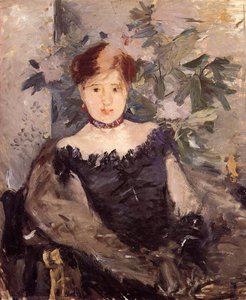
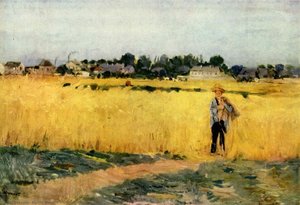
Portrait of Berthe Morisot

The 100 Most Famous Berthe Morisot Paintings, a Gallery Selection

Updated oktober 2026 · ranked by our popularity score (searches, visits and orders for each work) · 361 works by Berthe Morisot in our catalogue

In short

Of all the originals Berthe Morisot left, the most famous is De Cradle (1872), in the collection of the Musée d'Orsay, Parijs. Close behind it come Een Hoek van De Rozen Tuin (1885) and Thatched Cottage in Normandy (1865). Our catalog holds 361 works by Berthe Morisot; the gallery has kept the 100 the world admires most, each shown with its date, its museum and its story.

1841 – 1895, Bourges Impressionist style Most works: Musée Marmottan Monet

Berthe Morisot's top 10 paintings: the gallery's choice

1
De Cradle (1872) by Berthe Morisot

De Cradle

1872 · Olieverf op canvas · Musée d'Orsay, Parijs

Berthe Morisot’s “De Cradle” (Le Berceau), geschilderd in 1872, is meer dan zomaar een afbeelding van een baby en zijn moeder; het is een poëtische vastlegging van intimiteit, zorg en de subtiele schoonheid van het dagelijkse leven. Deze impressionistische meesterwerken, nu te bewonderen in het Musée d’Orsay in Parijs, onthult een wereld van zachte kleuren, fluïde penseelstreken en een diepe emotionele resonans. Het schilderij toont Morisot's zus, Edma, met liefdevolle…

2
Een Hoek van De Rozen Tuin (1885) by Berthe Morisot

Een Hoek van De Rozen Tuin

1885 · Olieverf op canvas

Een blik op impressionistische sereniteit Berthe Morisot's "Een Hoek van De Rozen Tuin" nodigt de kijker uit tot een vredige tuinscène, badend in de zachte, warme tinten van de ondergaande zon. Dit meeslepende kunstwerk is een getuigenis van Morisot's meesterschap in de impressionistische stijl, waarbij ze de vergankelijke schoonheid van de natuur vastlegt met losse penseelstreken en een levendig kleurenpalet. De essentie van de natuur vastgelegd Het schilderij toont een…

3
Thatched Cottage in Normandy (1865) by Berthe Morisot

Thatched Cottage in Normandy

1865 · Oil On Canvas

To stand before Berthe Morisot’s depiction of a Thatched Cottage in Normandy is to step through a veil and into the gentle embrace of a bygone French afternoon. This painting, executed in 1865, is far more than a mere record of rural architecture; it is an immersion into the very spirit of life lived at the rhythm of the seasons. Morisot captures that quintessential joie de vivre found in the…

4
Study, The Water's Edge (1864) by Berthe Morisot

Study, The Water's Edge

1864 · Oil On Canvas

Berthe Morisot’s “Study, The Water’s Edge,” painted in 1864, is more than just a depiction of a serene lakeside scene; it’s an intimate glimpse into the heart of Impressionism. This small canvas – measuring 60 x 73 cm – vibrates with a delicate energy, capturing not just what Morisot saw but also the fleeting emotions and sensations of that particular moment. The painting immediately draws the viewer in with its…

5
In the Garden at Maurecourt (1884) by Berthe Morisot

In the Garden at Maurecourt

1884 · Oil On Canvas · Toledo Museum of Art, Toledo

In the soft, dappled sunlight of a French afternoon, Berthe Morisot’s “In the Garden at Maurecourt” invites the viewer into a sanctuary of profound stillness. Completed in 1884, this masterpiece serves as a window into the Belle Époque, capturing a moment that feels both fleeting and eternal. The scene unfolds within a lush, verdant garden—likely the Morisot estate near Maurecourt—where two young figures, including the artist’s daughter Julie, are nestled…

6
Portrait of Edma (1870) by Berthe Morisot

Portrait of Edma

1870 · Oil On Canvas · Courtauld Gallery, Londen

In the soft, flickering light of a Parisian afternoon, Berthe Morisot captures more than just a likeness in her 1871 masterpiece, Portrait of Edma. This painting serves as a profound window into the intimate domesticity that defined much of the Impressionist movement’s early explorations. The subject, Edma Pontillon—Morisot’s own sister-in-law—is not presented with the stiff, formal grandeur typical of academic portraiture. Instead, she is nestled within a private, quiet moment,…

7
The Bath (1886) by Berthe Morisot

The Bath

1886 · Oil On Canvas

To stand before Berthe Morisot’s The Bath is to step into a moment suspended in time—a breath held within the soft glow of an afternoon indoors. This painting, executed in 1886, transcends a mere depiction of daily routine; it captures the very essence of private contemplation. The scene unfolds with remarkable delicacy: a woman seated amidst the quiet rituals of self-care, brushing her hair. Morisot does not merely record what…

8
The Quay at Bougival (1883) by Berthe Morisot

The Quay at Bougival

1883 · Oil On Canvas · Nasjonalgalleriet, Oslo

To gaze upon Berthe Morisot’s “The Quay at Bougival” is to step through a portal into the heart of French Impressionism, where the boundaries between reality and perception begin to dissolve. Completed in 1883, this exquisite oil on canvas serves as much more than a mere landscape; it is a rhythmic, breathing snapshot of life along the Seine. The scene captures the bustling waterfront of Bougival, a serene suburb of…

9
Daffodils (1885) by Berthe Morisot

Daffodils

1885 · Oil On Canvas

To stand before Berthe Morisot’s Daffodils is not merely to observe a still life; it is to step directly into a sun-drenched, breathlessly beautiful moment captured by the brush. Painted in 1885, this work radiates the delicate spirit of Impressionism, inviting the viewer into an intimate contemplation of nature’s cyclical promise. The composition centers on a simple arrangement: vibrant yellow daffodils gathered within a vase accented with cool blue hues,…

10
Young Woman Picking Oranges (1889) by Berthe Morisot

Young Woman Picking Oranges

1889 · Oil On Canvas

To stand before Berthe Morisot's Young Woman Picking Oranges is to step directly into a sun-dappled moment suspended in time. This exquisite oil on canvas, dating from 1889, is not merely a depiction of an afternoon chore; it is a lyrical meditation on leisure, femininity, and the very nature of light itself. Morisot, a central figure whose genius blossomed within the vibrant currents of Impressionism, captures life with an almost…

The Berthe Morisot selection continues, 11 to 100

11The Garden at Bougival (1884) by Berthe MorisotThe Garden at Bougival1884 · Musée Marmottan Monet 12Woman in Black (1878) by Berthe MorisotWoman in Black1878 · National Gallery of Ireland 13Woman Wearing Gloves (also known as The Parisian) (1885) by Berthe MorisotWoman Wearing Gloves (also known as The Parisian)1885 14Little Dancer (1885) by Berthe MorisotLittle Dancer1885 15Roses (1894) by Berthe MorisotRoses1894 16Two Sisters on a Couch (also known as The Sisters) (1869) by Berthe MorisotTwo Sisters on a Couch (also known as The Sisters)1869 · National Gallery of Art 17Mother and Sister of the Artist (1869) by Berthe MorisotMother and Sister of the Artist1869 · National Gallery of Art 18Young Girl with Basket (1892) by Berthe MorisotYoung Girl with Basket1892 · Philadelphia Museum of Art 19Portrait of a Child (1894) by Berthe MorisotPortrait of a Child1894 · Philadelphia Museum of Art 20Portrait of Madame Edma Pontillon (1871) by Berthe MorisotPortrait of Madame Edma Pontillon1871 21The Beach at Petit Dalles (aka On the Beach) (1873) by Berthe MorisotThe Beach at Petit Dalles (aka On the Beach)1873 · Virginia Museum of Fine Arts 22View of Paris from the Trocadero Heights (1872) by Berthe MorisotView of Paris from the Trocadero Heights1872 · Santa Barbara Museum of Art 23Young Girl with Hat (1891) by Berthe MorisotYoung Girl with Hat1891 · Art Institute of Chicago 24By the Water (1879) by Berthe MorisotBy the Water1879 25Child in Bed (1884) by Berthe MorisotChild in Bed1884 26Girl with Shuttlecock (also known as Jeanne Bonnet) (1888) by Berthe MorisotGirl with Shuttlecock (also known as Jeanne Bonnet)1888 27Little Girl with a Doll (1886) by Berthe MorisotLittle Girl with a Doll1886 28Interior of a Cottage by Berthe MorisotInterior of a Cottage 29Figure of a Woman (Before the Theater) by Berthe MorisotFigure of a Woman (Before the Theater) 30Red haired girl sitting on a veranda (1884) by Berthe MorisotRed haired girl sitting on a veranda1884 31In a Villa at the Seaside (1874) by Berthe MorisotIn a Villa at the Seaside1874 32The Goose (1885) by Berthe MorisotThe Goose1885 33The Port of Nice (1882) by Berthe MorisotThe Port of Nice1882 34Port of Gorey (1886) by Berthe MorisotPort of Gorey1886 35Het Bowl van Melk (1890) by Berthe MorisotHet Bowl van Melk1890 36Young Woman (1871) by Berthe MorisotYoung Woman1871 · Museum of Fine Arts, Houston 37Portrait of Madame Hubbard (1874) by Berthe MorisotPortrait of Madame Hubbard1874 · Ordrupgaard 38Daydreaming (1877) by Berthe MorisotDaydreaming1877 · Nelson-Atkins Museum of Art 39Girl and Child on the Grass (1875) by Berthe MorisotGirl and Child on the Grass1875 40Woman with a Fan (also known as Head of a Girl) (1876) by Berthe MorisotWoman with a Fan (also known as Head of a Girl)1876 41Woman Sewing (1879) by Berthe MorisotWoman Sewing1879 · Buffalo AKG Art Museum 42Child among the Hollyhocks (1881) by Berthe MorisotChild among the Hollyhocks1881 · Wallraf-Richartz-Museum 43On the edge of the lake (1883) by Berthe MorisotOn the edge of the lake1883 · Musée Marmottan Monet 44Portrait of Marcel (1880) by Berthe MorisotPortrait of Marcel1880 45Tete de chien griffon, Follette (1882) by Berthe MorisotTete de chien griffon, Follette1882 46Little Girl Sitting on the Grass (1882) by Berthe MorisotLittle Girl Sitting on the Grass1882 47Young Woman in Grey Reclining (1879) by Berthe MorisotYoung Woman in Grey Reclining1879 48Venus at the Forge of Vulcan (after Boucher) (1884) by Berthe MorisotVenus at the Forge of Vulcan (after Boucher)1884 49Julie at the Table (1891) by Berthe MorisotJulie at the Table1891 50Lucie Léon at the Piano (1892) by Berthe MorisotLucie Léon at the Piano1892 · Art Museum 51Paule Gobillard in prom dress (1887) by Berthe MorisotPaule Gobillard in prom dress1887 52In the apple tree (1890) by Berthe MorisotIn the apple tree1890 · Musée Marmottan Monet 53Young Woman in a Blue Blouse (1889) by Berthe MorisotYoung Woman in a Blue Blouse1889 54Bather (1891) by Berthe MorisotBather1891 55Young Woman in White (1891) by Berthe MorisotYoung Woman in White1891 56Little Girls at the Window (Jeanne and Edma Bodeau) (1892) by Berthe MorisotLittle Girls at the Window (Jeanne and Edma Bodeau)1892 57Cache-cache (Hide-and-Seek) by Berthe MorisotCache-cache (Hide-and-Seek) 58A Woman and Child in a Garden (1884) by Berthe MorisotA Woman and Child in a Garden1884 · Scottish National Gallery 59Young Woman on a Sofa (1893) by Berthe MorisotYoung Woman on a Sofa1893 · Mougins Museum of Classic Art 60Young Woman and Child (1894) by Berthe MorisotYoung Woman and Child1894 · Yale University Art Gallery 61Two Girls (1894) by Berthe MorisotTwo Girls1894 · The Phillips Collection 62Girl with Greyhound (1893) by Berthe MorisotGirl with Greyhound1893 63Jeanne Pontillon Wearing a Hat (1893) by Berthe MorisotJeanne Pontillon Wearing a Hat1893 64Hanging the Laundry out to Dry (1875) by Berthe MorisotHanging the Laundry out to Dry1875 · National Gallery of Art 65Girl with a Dog (1887) by Berthe MorisotGirl with a Dog1887 66On the Balcony of Eugene Manet's Room at Bougival (1881) by Berthe MorisotOn the Balcony of Eugene Manet's Room at Bougival1881 67On a Bench in the Bois de Boulogne (1894) by Berthe MorisotOn a Bench in the Bois de Boulogne1894 · Musée d'Orsay 68Hide and Seek (1873) by Berthe MorisotHide and Seek1873 69Cottage Interior (also known as Interior at Jersey) (1886) by Berthe MorisotCottage Interior (also known as Interior at Jersey)1886 · Musée d'Ixelles 70Young Woman Putting on Her Skates (1888) by Berthe MorisotYoung Woman Putting on Her Skates1888 71Little Girl Reading by Berthe MorisotLittle Girl ReadingMuseum of Fine Arts, St. Petersburg, Florida, USA 72Young Woman Sewing in a Garden by Berthe MorisotYoung Woman Sewing in a Garden 73The Bois de Boulogne by Berthe MorisotThe Bois de Boulogne 74The cradle Sun by Berthe MorisotThe cradle Sun 75Julie with Her Nurse (1880) by Berthe MorisotJulie with Her Nurse1880 · Ny Carlsberg Glyptotek 76Beneath the Lilac at Maurecourt (1874) by Berthe MorisotBeneath the Lilac at Maurecourt1874 77Woman Getting Dressed (also known as Young Woman Fastening Her Stockings) (1880) by Berthe MorisotWoman Getting Dressed (also known as Young Woman Fastening Her Stockings)1880 78The Mandolin (1889) by Berthe MorisotThe Mandolin1889 79Haying at Mezy (1891) by Berthe MorisotHaying at Mezy1891 80Julie and Eugene Manet (1883) by Berthe MorisotJulie and Eugene Manet1883 81Rosbras (Finistere) (1866) by Berthe MorisotRosbras (Finistere)1866 82Image Le berceau (The Cradle) by Berthe MorisotImage Le berceau (The Cradle) 83Julie Rêveuse by Berthe MorisotJulie Rêveuse 84Lucie Leon at the Piano (1892) by Berthe MorisotLucie Leon at the Piano1892 85In the Wheatfield at Gennevilliers (1875) by Berthe MorisotIn the Wheatfield at Gennevilliers1875 · Musée d'Orsay 86Child in the Rose Garden (1881) by Berthe MorisotChild in the Rose Garden1881 · Wallraf-Richartz-Museum 87The Basket Chair (1882) by Berthe MorisotThe Basket Chair1882 · Museum of Fine Arts, Houston 88Peasant Girl among Tulips (1890) by Berthe MorisotPeasant Girl among Tulips1890 89Portrait of Jeanne Pontillon (1894) by Berthe MorisotPortrait of Jeanne Pontillon1894 · Musée d'Art et d'Histoire de Genève 90Memory of the Banks of l'Oise (1863) by Berthe MorisotMemory of the Banks of l'Oise1863 91Old Path at Auvers (1863) by Berthe MorisotOld Path at Auvers1863 92The Harbor at Cherbourg (1871) by Berthe MorisotThe Harbor at Cherbourg1871 · Yale University Art Gallery 93Peonies (1869) by Berthe MorisotPeonies1869 · National Gallery of Art 94The Seine below the Pont d'Lena (1866) by Berthe MorisotThe Seine below the Pont d'Lena1866 95The Artist's Sister at a Window (1869) by Berthe MorisotThe Artist's Sister at a Window1869 96Portrait of a Woman in a pink dress (1870) by Berthe MorisotPortrait of a Woman in a pink dress1870 · Metropolitan Museum of Art 97Woman and Child Seated in a Meadow (1871) by Berthe MorisotWoman and Child Seated in a Meadow1871 98Harbour scene, Isle of Wight (1875) by Berthe MorisotHarbour scene, Isle of Wight1875 · The Newark Museum of Art 99Sliced ​​apple and pitcher (1876) by Berthe MorisotSliced ​​apple and pitcher1876 · Musée Marmottan Monet 100Landscape near Valenciennes (1875) by Berthe MorisotLandscape near Valenciennes1875

Berthe Morisot's famous paintings, period by period

The subjects that held Berthe Morisot's eye

The four subjects that come back most often in these originals, each with its finest example.

The museums that keep Berthe Morisot's originals

The 8 museums that hold the most of the paintings on this page.

Museum City Works by Berthe Morisot Paintings from this list
Musée Marmottan Monet, ParijsMusée Marmottan Monet Parijs 15 The Garden at Bougival, On the edge of the lake, In the apple tree
National Gallery of Art, WashingtonNational Gallery of Art Washington 13 Two Sisters on a Couch (also known as The Sisters), Mother and Sister of the Artist, Hanging the Laundry out to Dry
Musée d'Orsay, ParijsMusée d'Orsay Parijs 10 De Cradle, On a Bench in the Bois de Boulogne, In the Wheatfield at Gennevilliers
Wallraf-Richartz-Museum, KölnWallraf-Richartz-Museum Köln 3 Child among the Hollyhocks, Child in the Rose Garden
Philadelphia Museum of Art, PhiladelphiaPhiladelphia Museum of Art Philadelphia 2 Young Girl with Basket, Portrait of a Child
Museum of Fine Arts, Houston, HoustonMuseum of Fine Arts, Houston Houston 2 Young Woman, The Basket Chair
Yale University Art Gallery, New HavenYale University Art Gallery New Haven 2 Young Woman and Child, The Harbor at Cherbourg
Art Institute of Chicago, ChicagoArt Institute of Chicago Chicago 4 Young Girl with Hat

Berthe Morisot decade by decade: the original that defines each

Works per decade

Pick a decade to see the original that defines it.

Collectors' questions about Berthe Morisot's paintings

Which work is Berthe Morisot most famous for?Reveal the answer

De Cradle (1872), Musée d'Orsay, Parijs. Een Hoek van De Rozen Tuin (1885) and Thatched Cottage in Normandy (1865) come next.

What age was Berthe Morisot when De Cradle was made?Reveal the answer

31 years old: De Cradle dates from 1872, and Berthe Morisot was born in 1841.

What are the ten most famous Berthe Morisot paintings?Reveal the answer

De Cradle, Een Hoek van De Rozen Tuin, Thatched Cottage in Normandy, Study, The Water's Edge, In the Garden at Maurecourt, Portrait of Edma, The Bath, The Quay at Bougival, Daffodils and Young Woman Picking Oranges. The ranking above gives each one's year and museum.

How many paintings did Berthe Morisot leave?Reveal the answer

Our catalog holds 361 works by Berthe Morisot, dated from 1863 to 1894.

In which museums do Berthe Morisot's masterpieces hang?Reveal the answer

Mostly in Musée Marmottan Monet (Parijs), National Gallery of Art (Washington) and Musée d'Orsay (Parijs). The museum table above lists them all.

In which years did Berthe Morisot paint the most famous works?Reveal the answer

In 1880s: 35 of the 100 works on this page were made then, Een Hoek van De Rozen Tuin among them.

What are the first and the last famous originals of Berthe Morisot?Reveal the answer

On this page, the earliest is Memory of the Banks of l'Oise (1863) and the latest Roses (1894).

Which subjects did Berthe Morisot choose most often?Reveal the answer

Portrait (15), Women (12) and Domestic scene (10), across the 100 works on this page.

Which technique did Berthe Morisot use most?Reveal the answer

Oil On Canvas, for 39 of the 100 works on this page.

To which art movement does Berthe Morisot belong?Reveal the answer

Impressionist style, judging by the originals on this page.

Which Berthe Morisot works hang at the Musée Marmottan Monet?Reveal the answer

The Garden at Bougival, On the edge of the lake and In the apple tree: the Musée Marmottan Monet, Parijs holds 4 of the works on this page.

Can I commission a reproduction of a Berthe Morisot painting?Reveal the answer

Yes, as a reproduction: the original stays in its museum, but any painting on this page can be painted by hand for you, made to order one at a time, from the painting's own page.

Berthe Morisot: life and work

Vroege jaren, familie en artistieke vorming

Berthe Morisot werd geboren op 14 januari 1841 in Bourges, Frankrijk. Ze groeide op in een welgestelde burgerlijke familie, waar de grenzen tussen het huiselijke leven en de kunst vaak vervaagden. Haar vader, Edmé Tiburce Morisot, bekleedde de functie van prefect van het departement Cher. Haar moeder, Marie-Joseph-Cornélie Thomas, bracht een verbinding met de Rococo-traditie als de achternicht van Jean-Honoré Fragonard. Deze afkomst zorgde voor een achtergrond van artistieke vertrouwdheid vanaf haar vroegste jaren.

Haar opleiding begon met privélessen van Geoffroy-Alphonse Chocarne en Joseph Guichard. Tegen 1858 bracht ze haar tijd door in de Louvre, waar ze de mechanica van de schilderkunst leerde door de oude meesters te kopiëren. Deze studieperiode werd aangevuld met de begeleiding van Jean-Baptiste-Camille Corot en Achille-Francois Oudinot. Tijdens de winter van 1863–64 richtte zij haar aandacht bovendien op de fysieke vorm door de studie van beeldhouwkunst onder Aimé Millet.

De Impressionistische Beweging en Tentoonstellingen

In 1864 toonde Morisot haar werk voor het eerst in de Parijse Salon. Dit was een cruciale stap, aangezien de Salon de officiële poortwachter van de kunstwereld was. Ze bleef echter niet beperkt tot deze traditionele kaders; in plaats daarvan werd ze een integraal onderdeel van de kring van Parijse schilders die uiteindelijk de Impressionisten zouden worden genoemd. Haar aanwezigheid binnen deze groep was onvermoeibaar. Tussen 1874 en 1886 nam ze deel aan bijna alle Impressionistische tentoonstellingen, met slechts één uitzondering op de acht exposities die in die jaren werden georganiseerd.

De allereerste van deze historische bijeenkomsten vond plaats in het atelier van de fotograaf Nadar. De tentoonstelling ging in op 15 april en duurde tot 15 mei 1874. Deze expositie vormde een radicale breuk met de gevestigde normen van die tijd. Morisot was aanwezig tussen de anderen en hielp mee aan het definiëren van een geheel nieuwe manier van kijken. Gedurende het daaropvolgende decennium bleef ze exposeren met de groep, waarbij ze haar unieke en persoonlijke perspectief inbracht in de diverse tentoonstellingen.

Het persoonlijke leven en de connectie met Manet

De grenzen tussen het privéleven van Morisot en haar kunst waren vaak vervaagd. Ze groeide op in een huishouden met twee oudere zussen, Yves en Edma, en een jongere broer, Tiburce. In 1868 maakte ze kennis met Édouard Manet, een ontmoeting die uitgroeide tot een diepgaande wederzijdse beïnvloeding. Hij schilderde haar vele malen en legde haar vast in verschillende kledingsstijlen en gemoedstoestanden, terwijl zij haar eigen weg vond door het voortdurend veranderende licht van Parijs. Hun relatie was er een van intellectuele uitwisseling en een gedeeld artistiek doel.

In 1874 trouwde Morisot met Eugène Manet, de broer van Édouard. Deze verbintenis zorgde ervoor dat ze nog dieper geworteld raakte in de kring van kunstenaars die de moderne schilderkunst aan het herdefiniëren waren. In 1878 werd in Parijs een dochter geboren, Julie Manet. Julie zou opgroeien in een huis waar de scheidslijn tussen het gezinsleven en de radicale debatten van de avant-garde flinterdun was; zij was vaak aanwezig in de kamers waar de kunst werd gecreëerd en besproken.

Techniek en Artistieke Stijl

De benadering van Berthe Morisot tegenover het canvas wordt gekenmerkt door een ongekende lichtheid van de toets. Ze werkte vaak in de open lucht, waarbij ze de plein air-methode hanteerde om de voortdurend veranderende kwaliteiten van licht en atmosfeer rechtstreeks uit de natuur te vangen. Deze gewoonte om in de buitenlucht te schilderen stelde haar in staat om de vluchtige nuances van kleur te vertalen via losse, zelfverzekerde streken. Haar penseelvoering is vloeiend en beweegt over het oppervlak met een gevoel van onmiddellijkheid, waarbij ze de zwaarte van dikke, moeizame lagen vermijdt. Ze vertrouwde daarbij niet uitsluitend op olieverf; haar artistieke praktijk omvatte ook het werken met aquarel en pastel om verschillende texturen en lichteffecten te verkennen.

Er is een specifieke manier waarop zij de contouren van haar onderwerpen hanteert. In plaats van harde, gedefinieerde omlijningen, gebruikt ze gebroken kleur en kleine pigmentstreken om vorm op te bouwen. Deze techniek creëert een glinsterend effect, waardoor de lucht tussen de objecten bijna even tastbaar aanvoelt als de objecten zelf. In haar weergaven van het huiselijke leven vangt deze methode de zachte gloed op de huid of de manier waarop het licht door een tuin filtert. Het resultaat is een gevoel van spontaniteit, alsof de scène wordt vastgelegd in één enkel, onhaast moment van observatie.

Meesterwerken en Iconische Schilderijen

In 1872 legde Morisot de essentie van moederlijke tederheid vast in The Cradle, een olieverfschilderij op canvas dat haar zus Edma toont terwijl zij waakt over haar slapende dochter, Blanche. De compositie is meesterlijk opgebouwd rond een diagonale lijn, gevormd door de zachte blik van de moeder en de draperie van de wieg, die de toeschouwer onweerstaanbaar naar de wiegende baby leidt. Dit werk markeert haar eerste diepgaande verkenning van het thema moederschap, waarbij ze een ingetogen kleurenpalet en een vloeiende penseelstreek gebruikt om een sfeer van verstilde, beschermende liefde te creëren.

Haar aanwezigheid resoneert ook krachtig in het oeuvre van haar tijdgenoten, het meest treffend in 1872, toen Édouard Manet Berthe Morisot with a Bouquet of Violets schilderde. In dit intrigerende portret verschijnt zij in zwarte rouwkleding, met een nauwelijks waarneembaar boeket viooltjes bij haar halslijn. Het licht valt zijdelings op haar gezicht, waardoor de andere helft in een diepe, mysterieuze schaduw gehuld blijft. Deze studie in zwarte nuances benadrukt het scherpe contrast tussen haar donkere kledij en de lichte achtergrond, wat haar aanwezigheid een bijna etherische kwaliteit geeft.

Naast deze iconische werken behoort haar oeuvre tot de meest betekenisvolle van de impressionistische periode, met werken zoals:

In de latere fase van haar carrière, met het schilderij The Hydrangea uit 1894 als een hoogtepunt, bleef haar unieke talent onveranderd: het vertalen van de subtiele nuances van licht en kleur door middel van losse, zelfverzekerde streken. Deze artistieke beheersing bleef de rode draad in haar levenslange zoektocht naar de vluchtige schoonheid van het moment.

Waar u haar meesterwerken vandaag de dag kunt bewonderen

Wie de subtiele penseelstreek van Berthe Morisot van dichtbij wil ervaren, kan het beste beginnen in Parijs. Het Musée d'Orsay herbergt maar liefst zes van haar schilderijen, waaronder het ontroerende The Cradle. Dit werk, dat zij in 1872 schilderde, toont haar zus Edma die over een slapend kind waakt. Ook het Musée Marmottan Monet bewaart vijf van haar werken in de eigen collectie, waardoor Parijs een essentieel centrum blijft voor haar artistieke nalatenschap.

Buiten de Franse grenzen is haar invloed ook voelbaar in Washington, D.C. De National Gallery of Art bezit zes van haar schilderijen. In deze collectie vindt men onder andere Mother and Sister of the Artist, een werk uit 1869. Andere kostbare stukken in Washington zijn In the Dining Room en Hanging the Laundry out to Dry, beide daterend uit het jaar 1875.

Enkele van haar andere werken bevinden zich op diverse andere locaties, zoals het Thyssen-Bornemisza Museum in Madrid en het Nationalmuseum in Stockholm. Deze werken nodigen uit tot een verstilde reflectie over de wijze waarop zij licht en huiselijke scènes in uiteenlopende omgevingen wist te vangen.

All 361 works by Berthe Morisot →