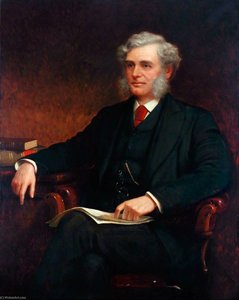
Portret van Sydney Hodges

Schilderijen van Sydney Hodges: De 46 bekendste, door de ogen van een galerie

Bijgewerkt in november 2026 · gerangschikt op basis van onze populariteitsscore (zoekopdrachten, bezoeken en bestellingen per kunstwerk) · 46 werken van Sydney Hodges in onze catalogus

Kortom

Volgens de visie van de galerie is het beroemdste schilderij van Sydney Hodges James Tennant (1863), waarvan het origineel in het King's College London in London hangt. James Bird Read, Mayor of Penryn (1837, 1847, 1853, 1855–1857, 1860–1862 1865) (1866) en Samuel Hey (1873) maken het trio compleet dat elk oog herkent. Van de 46 werken van Sydney Hodges in onze catalogus presenteert de galerie hieronder de 46 bekendste werken, elk een origineel met de jaartal, het museum en wat het uniek maakt.

1829 – 1900, Worthing Academic realism Meeste werken: Leeds General Infirmary

De top 10 schilderijen van Sydney Hodges in de galerie

1
James Tennant (1863) door Sydney Hodges

James Tennant

1863 · Oil On Canvas · King's College London, London

The room feels heavy with a stillness that seems to press against the very edges of the canvas. A man sits alone, his figure anchored to a chair at a table draped in a deep red cloth. He is dressed in the formal attire of 1863, a suit and tie that speak of a specific social gravity, yet his posture suggests a mind far from the immediate surroundings. His hands…

3
Samuel Hey (1873) door Sydney Hodges

Samuel Hey

1873 · Oil On Canvas · Leeds General Infirmary, Leeds

In this 1873 portrait, we find ourselves in the quiet, private space of an elderly gentleman named Samuel Hey. He is seated in a richly upholstered armchair, his figure filling much of the frame in a way that suggests a settled, permanent authority. There is a certain gravity to his posture, a stillness that comes from a life lived with purpose. The lighting, arriving from the upper left, carves his…

4
Sir John Russell Reynolds (1828–1896), Bt (1882) door Sydney Hodges

Sir John Russell Reynolds (1828–1896), Bt

1882 · Oil On Canvas

An elderly gentleman sits anchored in a high-backed chair, his presence filling the quiet space of the canvas. He is a man of substance, draped in the heavy, dark fabrics of the late nineteenth century. His hands rest upon a cane, a tactile connection to the physical world that grounds his seated form. The light is a soft, diffused glow, catching the ridges of his brow and the texture of…

5
Right Honourable Matthew Talbot Baines, QC, MP (1891) door Sydney Hodges

Right Honourable Matthew Talbot Baines, QC, MP

1891 · Oil On Canvas · The Shire Hall, Lancaster

An older gentleman sits at a desk, his presence commanding the frame through a traditional, academic composition. The portrait captures a moment of quiet authority, utilizing a dark, indistinct background to push the subject into the viewer's immediate space. Light falls sharply across his features, carving out the contours of his face and the texture of his attire with dramatic contrast. This chiaroscuro effect lends a somber weight to the…

6
Theophilus Redwood (1806–1892), First Professor of Pharmacy at the Pharmaceutical Society School (1887) door Sydney Hodges

Theophilus Redwood (1806–1892), First Professor of Pharmacy at the Pharmaceutical Society School

1887 · Oil On Canvas · Musée Victor Hugo, Parijs

In this 1887 oil portrait, we encounter Theophilus Redwood, a man whose presence commands a quiet, scholarly respect. The subject is presented in a formal studio style, his face and upper body emerging from a deep, impenetrable black background. This choice of lighting creates a dramatic chiaroscuro effect, casting strong shadows that define the deep lines of his skin and the texture of his full white beard. There is a…

7
General Joseph Edwin Thackwell (1813–1900), CB (1894) door Sydney Hodges

General Joseph Edwin Thackwell (1813–1900), CB

1894 · Oil On Canvas

In this 1894 portrait, we find ourselves in the presence of General Joseph Edwin Thackwell, a man whose very posture commands the space around him. He is seated in a plush, upholstered chair, his presence anchored by a sense of quiet, settled power. The composition is centered, drawing the eye immediately to the intricate details of his military regalia and the weathered, dignified lines of his face. There is a…

Schilderijen van Sydney Hodges, gerangschikt van 11 tot 46

11Edward Vivian (1808–1893), MA, JP, Founder Member and First Treasurer Torquay Natural History Society (1856) door Sydney HodgesEdward Vivian (1808–1893), MA, JP, Founder Member and First Treasurer Torquay Natural History Society1856 12Henry Cranmer March Phillipps, Esq. (1793–1880), JP (1865) door Sydney HodgesHenry Cranmer March Phillipps, Esq. (1793–1880), JP1865 · Torquay Town Hall 13Henry Philpotts (1778–1869), Bishop of Exeter, Controversialist (1866) door Sydney HodgesHenry Philpotts (1778–1869), Bishop of Exeter, Controversialist1866 14Mrs Henry Wood (1814–1887) (1875) door Sydney HodgesMrs Henry Wood (1814–1887)1875 · Worcester Guildhall 15William Thompson in Mayoral Chain (1877) door Sydney HodgesWilliam Thompson in Mayoral Chain1877 · Towneley Hall Art Gallery - Museum 16Right Honourable Sir James Fergusson (1832–1907), 6th Bt of Kilkerran, GCSI, KCMG, CIE (1875) door Sydney HodgesRight Honourable Sir James Fergusson (1832–1907), 6th Bt of Kilkerran, GCSI, KCMG, CIE1875 · County Buildings 17Robert Edward (1742–1801), 9th Lord Petre of Writtle (1885) door Sydney HodgesRobert Edward (1742–1801), 9th Lord Petre of Writtle1885 · The Library And Museum of Freemasonry 18Benjamin Disraeli (1874–1880), MP (1882) door Sydney HodgesBenjamin Disraeli (1874–1880), MP1882 · Maidstone Museum - Bentlif Art Gallery 19William Brown (1882) door Sydney HodgesWilliam Brown1882 · Leeds General Infirmary 20Claudius Galen Wheelhouse (1826–1909) (1884) door Sydney HodgesClaudius Galen Wheelhouse (1826–1909)1884 · Leeds General Infirmary 21John Darnton Luccock, Mayor (1845 1864) (1884) door Sydney HodgesJohn Darnton Luccock, Mayor (1845 1864)1884 · Leeds Civic Hall 22Sir P. Protheroe Smith (1810–1882) (1881) door Sydney HodgesSir P. Protheroe Smith (1810–1882)1881 23Philip Prothero Smith, Mayor (1871–1875 1878) (1881) door Sydney HodgesPhilip Prothero Smith, Mayor (1871–1875 1878)1881 · Truro City Council Municipal Buildings 24Reverend Henry Robert Reynolds, DD (1825–1896), President of Cheshunt College (1882) door Sydney HodgesReverend Henry Robert Reynolds, DD (1825–1896), President of Cheshunt College1882 25Reverend H. R. Reynolds, DD (1888) door Sydney HodgesReverend H. R. Reynolds, DD1888 · Cheshunt Foundation 26William Nevill (1826–1915), Marquess of Abergavenny (1887) door Sydney HodgesWilliam Nevill (1826–1915), Marquess of Abergavenny1887 · Tunbridge Wells Museum And Art Gallery 27John Alan Rolls (1837–1912), 1st Baron Llangattock (1888) door Sydney HodgesJohn Alan Rolls (1837–1912), 1st Baron Llangattock1888 28Reverend W. Relton (1816–1893), Vicar of St Mary's Church, Ealing (1853–1886) (1886) door Sydney HodgesReverend W. Relton (1816–1893), Vicar of St Mary's Church, Ealing (1853–1886)1886 29Sir Andrew Clark (1826–1893), Bt (after Frank Holl) (1889) door Sydney HodgesSir Andrew Clark (1826–1893), Bt (after Frank Holl)1889 · Barts And The London Queen Mary School of Medicine And Dentistry 30Right Honourable Richard Assheton Cross (1823–1914) (1891) door Sydney HodgesRight Honourable Richard Assheton Cross (1823–1914)1891 · The Shire Hall 31Admiral Arthur William Acland Hood (1824–1901), Baron Hood of Avalon (1891) door Sydney HodgesAdmiral Arthur William Acland Hood (1824–1901), Baron Hood of Avalon1891 · National Maritime Museum 32James Grierson (1827–1887), General Manager, Great Western Railway (1863–1887) (1888) door Sydney HodgesJames Grierson (1827–1887), General Manager, Great Western Railway (1863–1887)1888 33Her Majesty Queen Victoria (1819–1901) (1898) door Sydney HodgesHer Majesty Queen Victoria (1819–1901)1898 34Cornelius M. Foden (1893) door Sydney HodgesCornelius M. Foden1893 · Towneley Hall Art Gallery - Museum 35Henry Houlding (1900) door Sydney HodgesHenry Houlding1900 · Towneley Hall Art Gallery - Museum 36Charles Townsend Murdoch (1837–1898), MP (1900) door Sydney HodgesCharles Townsend Murdoch (1837–1898), MP1900 · Reading Museum - Town Hall 37Rear-Admiral Sir James Hope (1808-1881) door Sydney HodgesRear-Admiral Sir James Hope (1808-1881)National Maritime Museum 38Lord Winmarleigh (1802–1892) door Sydney HodgesLord Winmarleigh (1802–1892)The Shire Hall 39Rear Admiral Sir James Hope (1808–1881) door Sydney HodgesRear Admiral Sir James Hope (1808–1881) 40John Coutts (1699–1750), Lord Provost of Edinburgh (1743–1744) (after Allan Ramsay) door Sydney HodgesJohn Coutts (1699–1750), Lord Provost of Edinburgh (1743–1744) (after Allan Ramsay) 41Torquay door Sydney HodgesTorquayTorre Abbey Historic House And Gardens 42Archibald Campbell Tait (1811–1882), Archbishop of Canterbury door Sydney HodgesArchibald Campbell Tait (1811–1882), Archbishop of Canterbury 43Sir Charles Wheatstone door Sydney HodgesSir Charles Wheatstone 44Davies Gilbert (1767–1840), PRS, MP (copy of Henry Howard) door Sydney HodgesDavies Gilbert (1767–1840), PRS, MP (copy of Henry Howard) 45James Smith Turner (1832–1904), MRCS, LDS door Sydney HodgesJames Smith Turner (1832–1904), MRCS, LDSRoyal Society of Medicine 46Charles Chadwick (1873) door Sydney HodgesCharles Chadwick1873 · Leeds General Infirmary

De beroemde schilderijen van Sydney Hodges, periode voor periode

De onderwerpen die de aandacht van Sydney Hodges troffen

De vier onderwerpen die het meest voorkomen in deze originelen, elk met zijn mooiste voorbeeld.

De musea waar de originele werken van Sydney Hodges worden bewaard

De 8 musea met de meeste schilderijen op deze pagina.

Museum Stad Werken van Sydney Hodges Schilderijen uit deze lijst
Leeds General Infirmary, LeedsLeeds General Infirmary Leeds 4 Samuel Hey, William Brown, Claudius Galen Wheelhouse (1826–1909)
The Shire Hall, LancasterThe Shire Hall Lancaster 3 Right Honourable Matthew Talbot Baines, QC, MP, Right Honourable Richard Assheton Cross (1823–1914), Lord Winmarleigh (1802–1892)
Towneley Hall Art Gallery - Museum, BurnleyTowneley Hall Art Gallery - Museum Burnley 3 William Thompson in Mayoral Chain, Cornelius M. Foden, Henry Houlding
National Maritime Museum, LondenNational Maritime Museum Londen 2 Admiral Arthur William Acland Hood (1824–1901), Baron Hood of Avalon, Rear-Admiral Sir James Hope (1808-1881)
King's College London, LondonKing's College London London 1 James Tennant
Musée Victor Hugo, ParijsMusée Victor Hugo Parijs 1 Theophilus Redwood (1806–1892), First Professor of Pharmacy at the Pharmaceutical Society School
Lancaster Town Hall, LancasterLancaster Town Hall Lancaster 1 Alderman Charles Blades, JP
Torquay Town Hall, TorquayTorquay Town Hall Torquay 1 Henry Cranmer March Phillipps, Esq. (1793–1880), JP

Sydney Hodges, één iconisch schilderij per decennium

Werken per decennium

Kies een decennium om het origineel te zien dat dit tijdperk definieert.

Schilderijen van Sydney Hodges: de galerie geeft antwoord

Welk schilderij van Sydney Hodges is het beroemdste van allemaal?Onthul het antwoord

James Tennant (1863), King's College London, London. James Bird Read, Mayor of Penryn (1837, 1847, 1853, 1855–1857, 1860–1862 1865) (1866) en Samuel Hey (1873) volgen.

Hoe oud was Sydney Hodges bij de voltooiing van James Tennant?Onthul het antwoord

34 jaar oud: James Tennant dateert uit 1863, en Sydney Hodges werd geboren in 1829.

Wat zijn de top 10 schilderijen van Sydney Hodges?Onthul het antwoord

James Tennant, James Bird Read, Mayor of Penryn (1837, 1847, 1853, 1855–1857, 1860–1862 1865), Samuel Hey, Sir John Russell Reynolds (1828–1896), Bt, Right Honourable Matthew Talbot Baines, QC, MP, Theophilus Redwood (1806–1892), First Professor of Pharmacy at the Pharmaceutical Society School, General Joseph Edwin Thackwell (1813–1900), CB, Alderman Charles Blades, JP, Henry Cooper, Mayor of Canterbury en W. M. Tweedy. De bovenstaande ranglijst vermeldt het jaar en het museum van elk werk.

Hoeveel werken heeft Sydney Hodges gemaakt?Onthul het antwoord

Onze catalogus bevat 46 werken van Sydney Hodges, daterend van 1856 tot 1900.

Waar hangen de beroemdste originele werken van Sydney Hodges?Onthul het antwoord

Voornamelijk in Leeds General Infirmary (Leeds), The Shire Hall (Lancaster) en Towneley Hall Art Gallery - Museum (Burnley). De bovenstaande museumtabel bevat een volledig overzicht.

Wanneer creëerde Sydney Hodges de beroemdste schilderijen?Onthul het antwoord

In 1880s: 16 van de 46 werken op deze pagina werden toen gemaakt, waaronder Sir John Russell Reynolds (1828–1896), Bt.

Wat zijn de vroegste en laatste beroemde werken van Sydney Hodges?Onthul het antwoord

Op deze pagina is het vroegste Henry Cooper, Mayor of Canterbury (1856) en het laatste Henry Houlding (1900).

Welke onderwerpen keerde Sydney Hodges het vaakst naar terug?Onthul het antwoord

Victorian era (9), Formal art (6) en Portrait (6), verspreid over de 46 werken op deze pagina.

In welk medium werkte Sydney Hodges het meest?Onthul het antwoord

Oil On Canvas, voor 8 van de 46 werken op deze pagina.

Bij welke stroming wordt Sydney Hodges gerekend?Onthul het antwoord

Academic realism, te oordelen aan de originelen op deze pagina.

Welke originelen van Sydney Hodges zijn in de collectie van het Leeds General Infirmary?Onthul het antwoord

Samuel Hey, William Brown en Claudius Galen Wheelhouse (1826–1909): het Leeds General Infirmary, Leeds herbergt 4 van de werken op deze pagina.

Sydney Hodges: de kunstenaar

A Legacy Forged in Cornish Mist and Academic Rigor

Born amidst the rugged, evocative landscapes of Truro, Cornwall, in 1828, Joseph Sydney Willis Hodges was a child of an era where landscape and legend were inextricably linked. The burgeoning Cornish art scene, revitalized by the dramatic rediscovery of Tintagel Castle and its deep associations with Arthurian myth, provided a backdrop of mythic grandeur that would forever color his artistic sensibilities. His early education at Marlborough College allowed him to master the delicate nuances of drawing and watercolor, yet it was his subsequent journey to the Slade School of Fine Art in London that truly forged his professional identity. Here, amidst the rigorous demands of academic realism, Hodges learned to translate the physical world into a language of profound precision, preparing him for a career that would eventually define the very essence of Victorian portraiture.

The Soul Behind the Surface: The Art of Portraiture

As his career matured, Hodges transitioned from the sweeping vistas of his homeland to the intimate, often formal, chambers of Britain's most distinguished figures. He became a master of the psychological portrait, an artist who looked far beyond the velvet and lace to capture the quiet dignity and inner strength of his subjects. His technique was characterized by an unwavering commitment to detail; every subtle shadow and intricate brushstroke served to heighten the realism of his compositions. Whether depicting the scholarly presence of Theophilus Redwood or the commanding, sophisticated air of Charles Chadwick, Hodges utilized oil on canvas to create a depth of color and texture that felt almost tactile. His mastery was evident in several key elements:
  • Meticulous attention to facial features, ensuring each subject possessed a unique, recognizable character and psychological depth.
  • Subtle use of light and shadow, which lent a dramatic, often somber, weight to his formal compositions, reflecting the gravity of his subjects' roles in society.
  • A profound sense of Victorian elegance, capturing the sartorial splendor and social importance of the 19th-century elite through rich textures and precise rendering.
Through works such as his 1873 portrait of Samuel Hey, Hodges demonstrated an ability to imbue even a seated figure in an armchair with a sense of narrative importance and historical weight.

An Enduring Echo of the Victorian Era

The significance of Joseph Sydney Willis Hodges extends far beyond the mere documentation of faces; he was a chronicler of an age. Through his portraits of clergy, military leaders, and civic luminaries like Lord Winmarleigh, he preserved the social fabric of a Britain in transition. His ability to blend the mythic influences of his Cornish upbringing with the disciplined realism of the London art world allowed him to create works that were both historically grounded and emotionally resonant. As we look upon his canvases today, we see more than just historical figures; we witness the meticulous craftsmanship of an artist who captured the very heartbeat of Victorian society, leaving behind a visual testament to the nobility and leadership of his time.