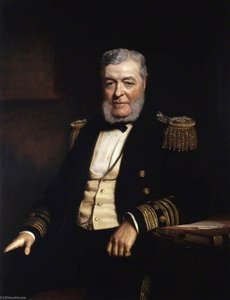
Portret van Stephen Pearce

De 56 beroemdste schilderijen van Stephen Pearce, elk uniek

Bijgewerkt in oktober 2026 · gerangschikt op basis van onze populariteitsscore (zoekopdrachten, bezoeken en bestellingen per kunstwerk) · 57 werken van Stephen Pearce in onze catalogus

Kortom

Alexander Stewart (1854) is het schilderij van Stephen Pearce dat de meeste aandacht trekt. Daarna gaat de blik naar Robert Brown (1773–1858), DCL, LLD, FRS, PLS (1856) en "Antler" with Grey Petty (1840). Van de 57 werken van Stephen Pearce in onze catalogus zijn dit de 56 bekendste, elk een uniek origineel gepresenteerd met het jaar, het museum en de reden waarom het blijft voortbestaan.

1819 – 1904, Charing Cross Academic realism Meeste werken: National Portrait Gallery

Top 10 schilderijen van Stephen Pearce, door de ogen van de galerie

1
Alexander Stewart (1854) door Stephen Pearce

Alexander Stewart

1854 · Oil On Canvas

Stephen Pearce painted Alexander Stewart in 1854. This oil on canvas portrait measures 38 x 32 cm and is currently held in the collection of the National Portrait Gallery (United States).

2
Robert Brown (1773–1858), DCL, LLD, FRS, PLS (1856) door Stephen Pearce

Robert Brown (1773–1858), DCL, LLD, FRS, PLS

1856 · Oil On Canvas · Collection of The Herbarium, Richmond

The man stares directly through the veil of years, his gaze meeting the viewer with a heavy, unyielding seriousness. He sits in a space where the background has dissolved into a deep, indistinct darkness, leaving nothing to distract from the weight of his presence. This is Robert Brown, captured in a moment of quiet, intellectual intensity. The light falls from above and slightly to the left, carving out the contours…

De beroemde schilderijen van Stephen Pearce, nummer 11 tot 56

11Robert McCormick (1856) door Stephen PearceRobert McCormick1856 · National Portrait Gallery 12Stephen Pearce (1860) door Stephen PearceStephen Pearce1860 · National Portrait Gallery 13Sir Horatio Thomas Austin (1860) door Stephen PearceSir Horatio Thomas Austin1860 · National Portrait Gallery 14Rochfort Maguire (1860) door Stephen PearceRochfort Maguire1860 · National Portrait Gallery 15Sir (Francis) Leopold McClintock (1859) door Stephen PearceSir (Francis) Leopold McClintock1859 · National Portrait Gallery 16HRH Henry Frederick (1745–1790), 1st Duke of Cumberland and Strathearn (1884) door Stephen PearceHRH Henry Frederick (1745–1790), 1st Duke of Cumberland and Strathearn1884 · The Library And Museum of Freemasonry 17John Barrow (1764–1848) (1846) door Stephen PearceJohn Barrow (1764–1848)1846 · De Royal Society 18William Philip (1835–1897), 4th Earl of Sefton at Ashdown Park (1864) door Stephen PearceWilliam Philip (1835–1897), 4th Earl of Sefton at Ashdown Park1864 · Walker Art Gallery 19Francis (1754–1826), 2nd Earl of Moira, afterwards 1st Marquess of Hastings, KG (copy after Martin Archer Shee) (1884) door Stephen PearceFrancis (1754–1826), 2nd Earl of Moira, afterwards 1st Marquess of Hastings, KG (copy after Martin Archer Shee)1884 · The Library And Museum of Freemasonry 20Sherard Osborn (1847) door Stephen PearceSherard Osborn1847 · National Portrait Gallery 21George Payne Rainsford James (1846) door Stephen PearceGeorge Payne Rainsford James1846 · National Portrait Gallery 22Sir Francis Beaufort (1850) door Stephen PearceSir Francis Beaufort1850 · National Portrait Gallery 23Sir James Clark Ross (1850) door Stephen PearceSir James Clark Ross1850 · National Portrait Gallery 24John Rae (1813–1893), Arctic Explorer (1853) door Stephen PearceJohn Rae (1813–1893), Arctic Explorer1853 · Scottish National Portrait Gallery 25Frederick William Beechey (1850) door Stephen PearceFrederick William Beechey1850 · National Portrait Gallery 26William Penny (1853) door Stephen PearceWilliam Penny1853 · National Portrait Gallery 27Joseph René Bellot (1851) door Stephen PearceJoseph René Bellot1851 · National Portrait Gallery 28William Alexander Baillie Hamilton (1850) door Stephen PearceWilliam Alexander Baillie Hamilton1850 · National Portrait Gallery 29Sir John Richardson (1850) door Stephen PearceSir John Richardson1850 · National Portrait Gallery 30Sir Richard Collinson (1855) door Stephen PearceSir Richard Collinson1855 · National Portrait Gallery 31Sir Edward Sabine (1850) door Stephen PearceSir Edward Sabine1850 · National Portrait Gallery 32Somerset Richard Lowry Corry (1835–1913), 4th Earl Belmore (1857) door Stephen PearceSomerset Richard Lowry Corry (1835–1913), 4th Earl Belmore1857 33David Walker (1860) door Stephen PearceDavid Walker1860 · National Portrait Gallery 34Sir Henry Kellett (1856) door Stephen PearceSir Henry Kellett1856 · National Portrait Gallery 35Thomas Edward Laws Moore (1860) door Stephen PearceThomas Edward Laws Moore1860 · National Portrait Gallery 36Sir (Francis) Leopold McClintock (1859) door Stephen PearceSir (Francis) Leopold McClintock1859 · National Portrait Gallery 37Sir Roderick Impey Murchison, 1st Bt (1856) door Stephen PearceSir Roderick Impey Murchison, 1st Bt1856 · National Portrait Gallery 38Rear Admiral Sir Francis Beaufort (1774–1857) (1856) door Stephen PearceRear Admiral Sir Francis Beaufort (1774–1857)1856 · National Maritime Museum 39William Robert Hobson (1860) door Stephen PearceWilliam Robert Hobson1860 · National Portrait Gallery 40Sir Edward Belcher (1859) door Stephen PearceSir Edward Belcher1859 · National Portrait Gallery 41Sir Erasmus Ommanney (1861) door Stephen PearceSir Erasmus Ommanney1861 · National Portrait Gallery 42Daniel Robert Scratton of Prittlewell Priory, Essex (1867) door Stephen PearceDaniel Robert Scratton of Prittlewell Priory, Essex1867 43William Seppings, Mayor (1848) (1869) door Stephen PearceWilliam Seppings, Mayor (1848)1869 44Lord Kesteven on a Horse, with Hounds (1871) door Stephen PearceLord Kesteven on a Horse, with Hounds1871 · Usher Gallery 45Captain Sir James Clark Ross (1871) door Stephen PearceCaptain Sir James Clark Ross1871 · National Maritime Museum 46Sir George Henry Richards (1865) door Stephen PearceSir George Henry Richards1865 · National Portrait Gallery 47Sir George Strong Nares (1877) door Stephen PearceSir George Strong Nares1877 · National Portrait Gallery 48Edward Sabine (1788–1883) (1855) door Stephen PearceEdward Sabine (1788–1883)1855 · De Royal Society 49Sir Allen William Young (1876) door Stephen PearceSir Allen William Young1876 · National Portrait Gallery 50Philip Wykeham Martin, MP (1880) door Stephen PearcePhilip Wykeham Martin, MP1880 · Guildhall Museum 51Sir Erasmus Wilson (1809–1884) (1882) door Stephen PearceSir Erasmus Wilson (1809–1884)1882 52Admiral John Lort Stokes (1812–1885) (1879) door Stephen PearceAdmiral John Lort Stokes (1812–1885)1879 · National Maritime Museum 53Benjamin Leigh Smith (1886) door Stephen PearceBenjamin Leigh Smith1886 · National Portrait Gallery 54John Franklin (1786–1847) (after Joseph Mathias Negelen) door Stephen PearceJohn Franklin (1786–1847) (after Joseph Mathias Negelen)Scott Polar Research Institute 55Sir Edward Augustus Inglefield (copy after an original of c.1853 by the artist) door Stephen PearceSir Edward Augustus Inglefield (copy after an original of c.1853 by the artist) 56The Arctic Council planning a search for Sir John Franklin (1851) door Stephen PearceThe Arctic Council planning a search for Sir John Franklin1851 · National Portrait Gallery

De onderwerpen die de aandacht van Stephen Pearce troffen

De vier onderwerpen die het meest voorkomen in deze originelen, elk met zijn mooiste voorbeeld.

De musea waar de originele werken van Stephen Pearce worden bewaard

De 8 musea met de meeste schilderijen op deze pagina.

Museum Stad Werken van Stephen Pearce Schilderijen uit deze lijst
National Portrait Gallery, LondenNational Portrait Gallery Londen 35 John Rae, Sir Robert McClure, William Kennedy
National Maritime Museum, LondenNational Maritime Museum Londen 3 Rear Admiral Sir Francis Beaufort (1774–1857), Captain Sir James Clark Ross, Admiral John Lort Stokes (1812–1885)
The Library And Museum of Freemasonry, LondonThe Library And Museum of Freemasonry London 2 HRH Henry Frederick (1745–1790), 1st Duke of Cumberland and Strathearn, Francis (1754–1826), 2nd Earl of Moira, afterwards 1st Marquess of Hastings, KG (copy after Martin Archer Shee)
De Royal Society, LondenDe Royal Society Londen 2 John Barrow (1764–1848), Edward Sabine (1788–1883)
Collection of The Herbarium, RichmondCollection of The Herbarium Richmond 1 Robert Brown (1773–1858), DCL, LLD, FRS, PLS
Royal Collection, LondenRoyal Collection Londen 1 "Antler" with Grey Petty
Walker Art Gallery, LiverpoolWalker Art Gallery Liverpool 1 William Philip (1835–1897), 4th Earl of Sefton at Ashdown Park
Scottish National Portrait Gallery, EdinburghScottish National Portrait Gallery Edinburgh 1 John Rae (1813–1893), Arctic Explorer

Stephen Pearce door de decennia heen: elk een uniek origineel

Werken per decennium

Kies een decennium om het origineel te zien dat dit tijdperk definieert.

Schilderijen van Stephen Pearce: vragen voor de galerie

Wat is het bekendste werk van Stephen Pearce?Onthul het antwoord

Alexander Stewart (1854). Robert Brown (1773–1858), DCL, LLD, FRS, PLS (1856) en "Antler" with Grey Petty (1840) volgen.

Op welke leeftijd creëerde Stephen Pearce Alexander Stewart?Onthul het antwoord

35 jaar oud: Alexander Stewart dateert uit 1854, en Stephen Pearce werd geboren in 1819.

Welke tien schilderijen van Stephen Pearce zijn het meest bekend?Onthul het antwoord

Alexander Stewart, Robert Brown (1773–1858), DCL, LLD, FRS, PLS, "Antler" with Grey Petty, John Rae, Sir Robert McClure, William Kennedy, Sir Edward Augustus Inglefield, Sir William Edward Parry, John Barrow en Emily Louise Shepherd (1814–1904), Countess Belmore. De bovenstaande ranglijst vermeldt het jaar en het museum van elk werk.

Hoeveel werken van Stephen Pearce zijn er bekend?Onthul het antwoord

Onze catalogus bevat 57 werken van Stephen Pearce, daterend van 1840 tot 1886.

Waar kunnen de beroemdste originelen van Stephen Pearce worden bekeken?Onthul het antwoord

Voornamelijk in National Portrait Gallery (Londen), National Maritime Museum (Londen) en The Library And Museum of Freemasonry (London). De bovenstaande museumtabel bevat een volledig overzicht.

In welke periode creëerde Stephen Pearce de bekendste schilderijen?Onthul het antwoord

In 1850s: 29 van de 56 werken op deze pagina werden toen gemaakt, waaronder Alexander Stewart.

Welk beroemd schilderij van Stephen Pearce is de vroegste, en welke de laatste?Onthul het antwoord

Op deze pagina is het vroegste "Antler" with Grey Petty (1840) en het laatste Benjamin Leigh Smith (1886).

Welke onderwerpen had Stephen Pearce de voorkeur?Onthul het antwoord

Victorian era (10), Formal attire (8) en Portrait (8), verspreid over de 56 werken op deze pagina.

Met welke materialen schilderde Stephen Pearce het meest?Onthul het antwoord

Oil On Canvas, voor 5 van de 56 werken op deze pagina.

Bij welke stroming behoort het werk van Stephen Pearce?Onthul het antwoord

Academic realism, te oordelen aan de originelen op deze pagina.

Welke originele werken van Stephen Pearce kan ik zien in het National Portrait Gallery?Onthul het antwoord

John Rae, Sir Robert McClure en William Kennedy: het National Portrait Gallery, Londen herbergt 35 van de werken op deze pagina.

Stephen Pearce: een portret van de kunstenaar

Early Life and Artistic Foundations

Stephen Pearce, born in the heart of London on November 16, 1819, at King’s Mews, Charing Cross, entered a world subtly interwoven with England’s regal fabric. As the sole child of Stephen Pearce, a clerk within the Department of the Master of Horse, and Ann Whittington, his upbringing was steeped in service to the Crown—a connection that would profoundly resonate throughout his artistic journey. This proximity instilled not merely decorum but access to subjects that defined much of his early career: the magnificent horses of the Royal Mews. Formal training commenced at Sass’s Academy in Charlotte Street, a respected institution for aspiring artists, followed by rigorous study at the prestigious Royal Academy Schools beginning in 1840. A pivotal moment arrived in 1841 when he became a pupil of Sir Martin Archer Shee, a prominent portraitist whose influence shaped Pearce's approach to capturing likeness and character. These formative years laid the groundwork for a career balancing meticulous technique with an evolving artistic sensibility.

A Versatile Career: Portraiture, Equine Art, and Literary Circles

Pearce’s professional life unfolded across decades, marked by remarkable versatility. From 1842 to 1846, he served as an amanuensis—a secretary—to the celebrated novelist Charles Lever. This period offered unique immersion into literary circles, broadening his understanding of narrative and character development – skills that subtly informed the psychological depth of his portraiture. His initial artistic successes centered on paintings of favored horses within the Royal Mews, exhibited at the Royal Academy in 1839 and again in 1841, establishing him as a skilled animalier. A sojourn to Italy around 1849 proved transformative, refining his aesthetic sensibilities before he resumed regular contributions to Burlington House exhibitions upon his return to England. His style underwent noticeable evolution; early works displayed metronomic precision with pronounced shadowing, while later paintings embraced greater freedom and fluidity in technique. He wasn’t confined by genre, moving seamlessly between capturing the nobility of a prized stallion and the nuanced personality of a prominent Victorian gentleman.

The Arctic Chronicles: A Defining Commission

It was through a unique confluence of artistic talent and historical circumstance that Pearce truly distinguished himself: his involvement in documenting the era’s fervent interest in Arctic exploration. Perhaps most notable is “The Arctic Council discussing a plan of search for Sir John Franklin” (1851), commissioned by Colonel John Barrow. This large-scale painting, depicting leading figures strategizing the rescue mission for the ill-fated explorer Sir John Franklin, captured the public’s imagination and served as a poignant reminder of the perils and heroism inherent in polar expeditions. The work is not merely a historical record but a carefully constructed drama, each figure rendered with individual character and contributing to the overall sense of anxious deliberation. Pearce's meticulous attention to detail—the subtle expressions on the faces of the participants, the precise positioning of their bodies—mirrored his dedication to capturing authentic emotion and psychological nuance. Beyond this monumental work, Pearce became renowned for his equestrian portraits, particularly those of masters of foxhounds, harriers, and prominent horse owners like the Earl of Craven and members of families such as the Dukes of Bedford. “Coursing at Ashdown Park” (1869), a sprawling landscape featuring approximately sixty equestrian figures, stands as a testament to his skill in depicting both human subjects and their noble steeds within a dynamic setting. He also created numerous half-length portraits of Arctic explorers—Sir Robert McClure, Sir Leopold McClintock, Captain Penny—commissioned by Barrow and Lady Franklin, many residing today in the National Portrait Gallery.

Legacy and Historical Significance

Pearce’s artistic vision was shaped by 19th-century British art's prevailing currents. His training under Sir Martin Archer Shee firmly placed him within the tradition of formal, academic portraiture that dominated the era. The enduring popularity of equestrian subjects reflected a broader cultural fascination with horses and horsemanship, particularly among the aristocracy and landed gentry. Simultaneously, his Arctic paintings demonstrated engagement with contemporary events—the scientific exploration of the polar regions—and tapped into the public’s intense interest in these daring expeditions. His ability to capture accurate likenesses, combined with sensitivity and precision in portraying human figures and animals, earned him respect within artistic circles. The National Portrait Gallery holds an impressive collection of forty-four portraits by Pearce, including two self-portraits, underscoring his substantial contribution to British portraiture. He passed away on January 31, 1904, at Sussex Gardens, West London. His legacy endures through the substantial body of work he left behind, preserved in public collections like the National Portrait Gallery, offering a captivating glimpse into Victorian society and British art during his lifetime. The meticulous detail, historical significance, and evocative power of his paintings continue to resonate with audiences today, solidifying Stephen Pearce’s place as a noteworthy figure in 19th-century artistic history. His work provides invaluable insights into Victorian society, documenting the lives of prominent individuals and capturing the spirit of exploration that characterized the age—a chronicler of his time, translating social status, scientific endeavor, and personal narratives onto canvas.