Portret van Robert L Alexander

De 21 bekendste schilderijen van Robert L Alexander, een selectie uit de galerie

Bijgewerkt in november 2026 · gerangschikt op basis van onze populariteitsscore (zoekopdrachten, bezoeken en bestellingen per kunstwerk) · 27 werken van Robert L Alexander in onze catalogus

Kortom

Van alle originele werken die Robert L Alexander heeft nagelaten, is A Tangier Gateway (1887) de bekendste. Direct daarna volgen The Happy Mother (1887) en Wat and Wearie (1886). Onze catalogus bevat 27 werken van Robert L Alexander; de galerie heeft de 21 meest bewonderde werken ter wereld bewaard, elk voorzien van de datum, het museum en het verhaal erachter.

1840 – 1923 Meeste werken: Scottish National Gallery

De top 10 schilderijen van Robert L Alexander: de selectie van de galerie

1
A Tangier Gateway (1887) door Robert L Alexander

A Tangier Gateway

1887 · Oil

The sun hangs high over a stone archway in Tangier, casting a soft light that filters through the opening to reveal a slice of brilliant blue sky. Within this frame, a man moves with a quiet, practiced rhythm, guiding two donkeys through the ancient masonry. The animals walk close together, their forms overlapping as they navigate the narrow passage. One donkey leads the way, its head slightly forward, while the…

2
The Happy Mother (1887) door Robert L Alexander

The Happy Mother

1887 · Oil On Canvas · Scottish National Gallery, Edinburgh

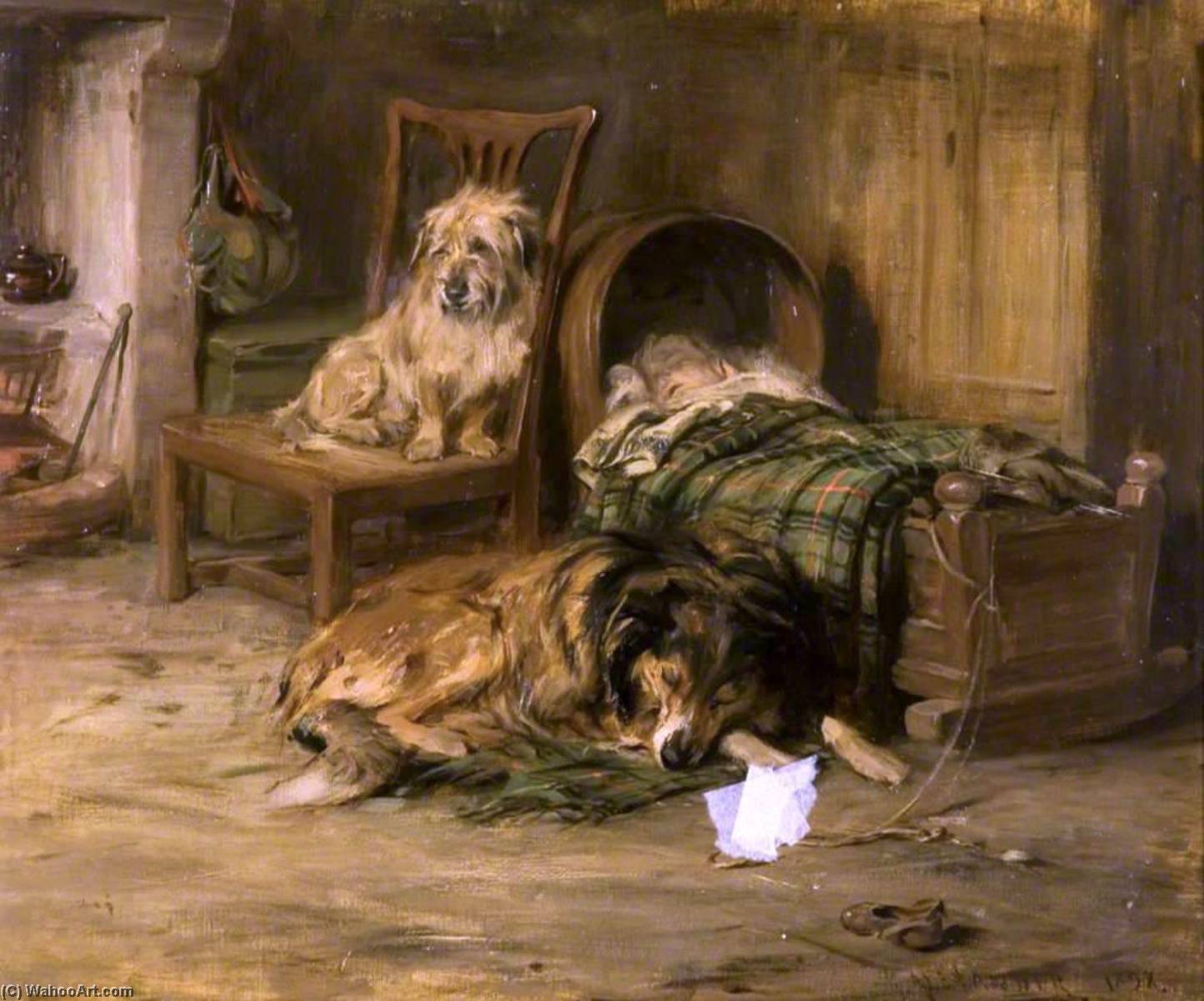
The Happy Mother is an oil on canvas painting by the artist Robert L Alexander. Created in 1887, this work belongs to the period when the artist was establishing his reputation within the Scottish art circles. The medium of oil on canvas allows for a detailed rendering of the textures present in the subject matter.
3
Wat and Wearie (1886) door Robert L Alexander

Wat and Wearie

1886 · Oil On Canvas · Royal Scottish Academy of Art - Architecture, Edinburgh

A man and his horse move along a rural path under the soft, diffused light of late afternoon. The figure, dressed in the practical attire of a 19th-century laborer, walks ahead with a sack slung over his shoulder, his silhouette defined by the heavy folds of his clothing. Beside him, the horse turns its head toward the viewer, its gaze creating a direct connection with the observer. The scene is…

10
The Happy Mother (1887) door Robert L Alexander

The Happy Mother

1887 · Scottish National Gallery, Edinburgh

The Happy Mother is a captivating oil on canvas painting created by Robert L Alexander in 1887. This beautiful artwork is currently housed at the National Galleries of Scotland in the United Kingdom. The painting measures 82 x 116 cm and showcases the artist's exceptional skill in capturing the warmth and bond between a mother dog and her puppies. A Heartwarming Scene The scene depicts a mother dog lying down…

De selectie van Robert L Alexander gaat verder, van 11 tot 21

De onderwerpen die de aandacht van Robert L Alexander troffen

De vier onderwerpen die het meest voorkomen in deze originelen, elk met zijn mooiste voorbeeld.

De musea waar de originele werken van Robert L Alexander worden bewaard

De 8 musea met de meeste schilderijen op deze pagina.

Museum Stad Werken van Robert L Alexander Schilderijen uit deze lijst
Scottish National Gallery, EdinburghScottish National Gallery Edinburgh 2 The Happy Mother, The Happy Mother
Perth And Kinross Council, PerthPerth And Kinross Council Perth 2 Head of a Jack Russell Terrier, Donkey and Foal
Royal Scottish Academy of Art - Architecture, EdinburghRoyal Scottish Academy of Art - Architecture Edinburgh 1 Wat and Wearie
Dundee Art Gallery And Museum, DundeeDundee Art Gallery And Museum Dundee 1 Drowsy Cronies
City Art Centre, EdinburghCity Art Centre Edinburgh 1 Feeding the Horse
Kunstmuseum Den Haag, Den HaagKunstmuseum Den Haag Den Haag 1 A St Bernard Dog
The National Trust For Scotland, ForresThe National Trust For Scotland Forres 1 Mr Wu – A Pekingese
The Fleming Collection, LondenThe Fleming Collection Londen 1 The Dogs' Dinner (possibly 'More Free Than Welcome')

Robert L Alexander decennium voor decennium: het origineel dat elk tijdperk definieert

Werken per decennium

Kies een decennium om het origineel te zien dat dit tijdperk definieert.

Vragen van verzamelaars over de schilderijen van Robert L Alexander

Waar is Robert L Alexander het meest bekend om?Onthul het antwoord

A Tangier Gateway (1887). The Happy Mother (1887) en Wat and Wearie (1886) volgen.

Hoe oud was Robert L Alexander toen A Tangier Gateway werd gemaakt?Onthul het antwoord

47 jaar oud: A Tangier Gateway dateert uit 1887, en Robert L Alexander werd geboren in 1840.

Wat zijn de tien beroemdste schilderijen van Robert L Alexander?Onthul het antwoord

A Tangier Gateway, The Happy Mother, Wat and Wearie, A Basset Hound, Head of a Deerhound, Goat and Kids, Auld Freens, Head of a Jack Russell Terrier, Head of a Jack Russell Terrier en The Happy Mother. De bovenstaande ranglijst vermeldt het jaar en het museum van elk werk.

Hoeveel schilderijen heeft Robert L Alexander nagelaten?Onthul het antwoord

Onze catalogus bevat 27 werken van Robert L Alexander, daterend van 1874 tot 1916.

In welke musea hangen de meesterwerken van Robert L Alexander?Onthul het antwoord

Voornamelijk in Scottish National Gallery (Edinburgh), Perth And Kinross Council (Perth) en Royal Scottish Academy of Art - Architecture (Edinburgh). De bovenstaande museumtabel bevat een volledig overzicht.

In welke jaren schilderde Robert L Alexander de beroemdste werken?Onthul het antwoord

In 1880s: 4 van de 21 werken op deze pagina werden toen gemaakt, waaronder A Tangier Gateway.

Wat zijn de eerste en de laatste beroemde originelen van Robert L Alexander?Onthul het antwoord

Op deze pagina is het vroegste Head of a Goat (1874) en het laatste Head of a Jack Russell Terrier (1916).

Welke onderwerpen koos Robert L Alexander het vaakst?Onthul het antwoord

Man (2), Horse (2) en Scottish art (2), verspreid over de 21 werken op deze pagina.

Welke techniek gebruikte Robert L Alexander het meest?Onthul het antwoord

Oil On Canvas, voor 2 van de 21 werken op deze pagina.

Welke werken van Robert L Alexander hangen in het Scottish National Gallery?Onthul het antwoord

The Happy Mother en The Happy Mother: het Scottish National Gallery, Edinburgh herbergt 2 van de werken op deze pagina.

Robert L Alexander: leven en werk

A Life Immersed in the Scottish Countryside: The World of Robert Alexander

Robert Alexander, born in 1840 in the small village of Dalgarven near Kilwinning in Ayrshire, Scotland, was an artist whose work became synonymous with the gentle warmth of domestic life and the rugged beauty of his homeland. His path to becoming a celebrated painter wasn’t conventional; rather than formal art schooling, Alexander began as an apprentice to a house-painter in Irvine, learning the fundamentals of landscape painting alongside more practical skills. This early grounding instilled in him not only technical proficiency but also a keen observation of light and form that would later characterize his distinctive style. He subsequently found employment with the Royal Scottish Museum in Edinburgh, further honing his abilities before dedicating himself fully to easel painting around 1868 – the year he first exhibited at the prestigious Royal Scottish Academy.

Capturing the Essence of Animals: A Rising Star

Alexander quickly distinguished himself by focusing on animal subjects, particularly dogs and horses. He didn’t merely *depict* these creatures; he sought to capture their personalities, their inherent dignity, and their connection to the rural world around them. His work resonated with a growing Victorian audience that appreciated both realism and sentimentality. He possessed an exceptional skill for portraying expressive eyes and textured coats, bringing his subjects vividly to life on canvas. This talent led to consistent exhibitions at the RSA – over 125 works were displayed throughout his lifetime – establishing him as a prominent figure in Scottish art circles. His election as an Associate of the Royal Scottish Academy (ARSA) in 1878 and then as a full Royal Scottish Academician (RSA) in 1888 solidified his position within the artistic establishment.

Impressionistic Touches and Pastoral Charm

While firmly rooted in realism, Alexander’s work demonstrates a clear influence of Impressionism. This is not to say he abandoned precise detail altogether, but rather that he embraced a looser brushstroke and a more nuanced understanding of light and color. His paintings often evoke a sense of atmosphere, capturing the fleeting moments of everyday life with remarkable sensitivity. Works like “Goat and Kids” exemplify this approach – a serene scene rendered with earthy tones and a delicate play of sunlight. He wasn’t interested in grand historical narratives or dramatic compositions; instead, he found beauty in the simple rhythms of rural existence: feeding horses, quiet moments within barns, and the tender bonds between animals and people. His paintings offer a glimpse into a world where life moved at a slower pace, and nature held a central place.

Legacy and Historical Significance

Robert Alexander’s contribution to Scottish animal painting is undeniable. He elevated the genre beyond mere portraiture, infusing his work with both artistic skill and emotional depth. He was not simply recording what he saw; he was interpreting it through a lens of warmth, understanding, and genuine affection. His paintings provide valuable insights into Victorian rural life and the evolving relationship between humans and animals. Furthermore, Alexander’s influence extended to his own family – his son, John Edwin Alexander, also became a successful artist, continuing the legacy of capturing the beauty of the Scottish countryside. Today, Robert Alexander's works are cherished for their charm, realism, and ability to transport viewers to a simpler, more idyllic time. His paintings continue to be exhibited and admired, ensuring that his vision of Scotland’s pastoral heart endures.