Portret van Pisanello

Schilderijen van Pisanello: De 30 bekendste, door de ogen van een galerie

Bijgewerkt in oktober 2026 · gerangschikt op basis van onze populariteitsscore (zoekopdrachten, bezoeken en bestellingen per kunstwerk) · 31 werken van Pisanello in onze catalogus

Kortom

Volgens de visie van de galerie is het beroemdste schilderij van Pisanello Sigismondo Pandolfo Malatesta, Lord of Rimini (1445), waarvan het origineel in het Calouste Gulbenkian Foundation in Lissabon hangt. Alfonso V of Aragon, King of Naples and Sicily (1449) en Apes (from The Artist S Sketchbook). Drawing. Louvre Museum, Paris (1430) maken het trio compleet dat elk oog herkent. Van de 31 werken van Pisanello in onze catalogus presenteert de galerie hieronder de 30 bekendste werken, elk een origineel met de jaartal, het museum en wat het uniek maakt.

1395 – 1455, Pisa International gothic Meeste werken: Calouste Gulbenkian Foundation

De top 10 schilderijen van Pisanello in de galerie

1
Sigismondo Pandolfo Malatesta, Lord of Rimini (1445) door Pisanello

Sigismondo Pandolfo Malatesta, Lord of Rimini

1445 · Bronze · Calouste Gulbenkian Foundation, Lissabon

A Portrait of Regal Dignity: Pisanello's Coin Depiction of Sigismondo Malatesta The bronze coin bearing the portrait of Sigismondo Pandolfo Malatesta, Lord of Rimini, stands as a testament to Antonio di Puccio Pisano’s extraordinary artistic vision—a figure who bridged the gap between the opulent International Gothic style and the nascent Renaissance. More than just a depiction of a nobleman, this miniature masterpiece encapsulates the spirit of its time, reflecting the…

2
Alfonso V of Aragon, King of Naples and Sicily (1449) door Pisanello

Alfonso V of Aragon, King of Naples and Sicily

1449 · Bronze · Calouste Gulbenkian Foundation, Lissabon

The bronze surface holds the likeness of Alfonso V of Aragon, King of Naples and Sicily, as he appears in a moment of quiet, regal authority. Created about 1449, this portrait by Pisanello captures the sovereign in profile, a style that echoes the ancient coins of a bygone era. The king wears a crown that rests firmly upon his head, signaling his dominion over his realms. His features are rendered…

3
Apes (from The Artist S Sketchbook). Drawing. Louvre Museum, Paris (1430) door Pisanello

Apes (from The Artist S Sketchbook). Drawing. Louvre Museum, Paris

1430 · Ink On Paper

Apes (from The Artist S Sketchbook). Drawing. Louvre Museum, Paris is a study of three monkeys executed by the artist Pisanello. Created about 1430, this work originates from the artist's extensive repertoire of naturalistic observations. The drawing functions as a focused anatomical investigation of primate forms.

4
Vittorino Rambaldoni, called Da Feltre, humanist and teacher (1446) door Pisanello

Vittorino Rambaldoni, called Da Feltre, humanist and teacher

1446 · Bronze · Calouste Gulbenkian Foundation, Lissabon

A single bronze coin holds the weight of a man’s gaze. Within its circular edge, the face of Vittorino Rambaldoni emerges from the metal, etched with the precision of a late Gothic hand. He wears a plain hat and a simple robe, his features marked by a lean, grizzled texture. A faint, bemused smile rests upon his lips, caught in the permanent stillness of cast copper alloy. The artist used…

5
Sketches of the Emperor John VIII Palaeologus, a Monk, and a Scabbard (1438) door Pisanello

Sketches of the Emperor John VIII Palaeologus, a Monk, and a Scabbard

1438 · Ink On Paper

In the delicate dance of pen and ink, we find a profound moment frozen in time from the year 1438. Pisanello, a master who stood at the threshold between the ornate elegance of the International Gothic style and the burgeoning humanism of the Renaissance, presents us with his Sketches of the Empero John VIII Palaeologus, a Monk, and a Scabbard. This work is not merely a drawing; it is a…

Schilderijen van Pisanello, gerangschikt van 11 tot 30

De beroemde schilderijen van Pisanello, periode voor periode

De onderwerpen die de aandacht van Pisanello troffen

De vier onderwerpen die het meest voorkomen in deze originelen, elk met zijn mooiste voorbeeld.

De musea waar de originele werken van Pisanello worden bewaard

De 8 musea met de meeste schilderijen op deze pagina.

Museum Stad Werken van Pisanello Schilderijen uit deze lijst
Calouste Gulbenkian Foundation, LissabonCalouste Gulbenkian Foundation Lissabon 6 Sigismondo Pandolfo Malatesta, Lord of Rimini, Alfonso V of Aragon, King of Naples and Sicily, Vittorino Rambaldoni, called Da Feltre, humanist and teacher
Kupferstichkabinett, BerlijnKupferstichkabinett Berlijn 2 A Boar Hunt with Hounds and Two Naked Men, Two male figure studies and St Peter
National Gallery, LondenNational Gallery Londen 2 The vision of Saint Eustace, NG London, Apparition Of The Virgin To Sts Anthony Abbot And George. Panel. 47 X 29 Cm. National Gallery, London, Uk
Albertina, WenenAlbertina Wenen 1 Allegory of Luxuria (recto), c. 1426
Museo Arqueológico Nacional, MadridMuseo Arqueológico Nacional Madrid 1 Medal of Filippo Maria Visconti, 3rd Duke of Milan\n\nObverse
Accademia Carrara, BergamoAccademia Carrara Bergamo 1 Portrait Of Leonello D Este. Tempera On Wood. 28 X 19 Cm. Accademia Carrara, Bergamo, Italy
Castelvecchio Museum, VeronaCastelvecchio Museum Verona 1 Madone_a_la_caille
Palazzo Ducale, MantovaPalazzo Ducale Mantova 1 Trophy scene

Pisanello, één iconisch schilderij per decennium

Werken per decennium

Kies een decennium om het origineel te zien dat dit tijdperk definieert.

Schilderijen van Pisanello: de galerie geeft antwoord

Welk schilderij van Pisanello is het beroemdste van allemaal?Onthul het antwoord

Sigismondo Pandolfo Malatesta, Lord of Rimini (1445), Calouste Gulbenkian Foundation, Lissabon. Alfonso V of Aragon, King of Naples and Sicily (1449) en Apes (from The Artist S Sketchbook). Drawing. Louvre Museum, Paris (1430) volgen.

Hoe oud was Pisanello bij de voltooiing van Sigismondo Pandolfo Malatesta, Lord of Rimini?Onthul het antwoord

50 jaar oud: Sigismondo Pandolfo Malatesta, Lord of Rimini dateert uit 1445, en Pisanello werd geboren in 1395.

Wat zijn de top 10 schilderijen van Pisanello?Onthul het antwoord

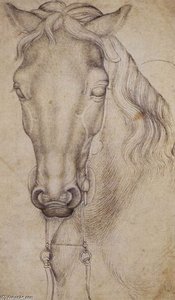
Sigismondo Pandolfo Malatesta, Lord of Rimini, Alfonso V of Aragon, King of Naples and Sicily, Apes (from The Artist S Sketchbook). Drawing. Louvre Museum, Paris, Vittorino Rambaldoni, called Da Feltre, humanist and teacher, Sketches of the Emperor John VIII Palaeologus, a Monk, and a Scabbard, Horses. Pen On Paper. 20 X 16.5 Cm. Louvre Museum, Paris, Study Of Horse Heads. Pen On Paper. 29 X 19 Cm. Louvre Museum, Paris, The Luxury. Drawing. Graphische Sammlung Albertina, Vienna, Austria, Portrait of the Emperor Sigismund, parchm en Portrait Of Emperor Sigismund Of Luxembourg. Tempera On Vellum Stuck On Wood. 64 X 49 Cm. Kunsthistorisches Museum, Vienna, Austria. De bovenstaande ranglijst vermeldt het jaar en het museum van elk werk.

Hoeveel werken heeft Pisanello gemaakt?Onthul het antwoord

Onze catalogus bevat 31 werken van Pisanello, daterend van 1420 tot 1449.

Waar hangen de beroemdste originele werken van Pisanello?Onthul het antwoord

Voornamelijk in Calouste Gulbenkian Foundation (Lissabon), Kupferstichkabinett (Berlijn) en National Gallery (Londen). De bovenstaande museumtabel bevat een volledig overzicht.

Wanneer creëerde Pisanello de beroemdste schilderijen?Onthul het antwoord

In 1430s: 13 van de 30 werken op deze pagina werden toen gemaakt, waaronder Apes (from The Artist S Sketchbook). Drawing. Louvre Museum, Paris.

Wat zijn de vroegste en laatste beroemde werken van Pisanello?Onthul het antwoord

Op deze pagina is het vroegste The Luxury. Drawing. Graphische Sammlung Albertina, Vienna, Austria (1420) en het laatste Alfonso V of Aragon, King of Naples and Sicily (1449).

Welke onderwerpen keerde Pisanello het vaakst naar terug?Onthul het antwoord

Renaissance (6), Portraits (5) en Portrait (4), verspreid over de 30 werken op deze pagina.

In welk medium werkte Pisanello het meest?Onthul het antwoord

Bronze, voor 6 van de 30 werken op deze pagina.

Bij welke stroming wordt Pisanello gerekend?Onthul het antwoord

International gothic, te oordelen aan de originelen op deze pagina.

Welke originelen van Pisanello zijn in de collectie van het Calouste Gulbenkian Foundation?Onthul het antwoord

Sigismondo Pandolfo Malatesta, Lord of Rimini, Alfonso V of Aragon, King of Naples and Sicily en Vittorino Rambaldoni, called Da Feltre, humanist and teacher: het Calouste Gulbenkian Foundation, Lissabon herbergt 6 van de werken op deze pagina.

Pisanello: de kunstenaar

Pisanello (1395–1455)

Pisanello, or Antonio di Puccio Pisano or Antonio di Puccio da Cereto, erroneously called Vittore Pisano by Giorgio Vasari, was one of the most distinguished painters of the early Italian Renaissance and Quattrocento. He was acclaimed by poets such as Guarino da Verona and praised by humanists of his time who compared him to Cimabue, Phidias and Praxiteles.

He is known for his resplendent frescoes in large murals, elegant portraits, small easel pictures, and many brilliant drawings. He is the most important commemorative portrait medallist in the first half of the 15th century, and he can claim to have originated this important genre.

He was employed by the Doge of Venice, the Pope in the Vatican and the courts of Verona, Ferrara, Mantua, Milan, Rimini, and by the King of Naples. He stood in high esteem in the Gonzaga and Este families.

Daarnaast was hij ook een verfijnd tekenaar, voornamelijk van dieren en menselijke figuren. Zijn grafisch werk is heel omvangrijk.

Early Life

Pisanello's life is somewhat shrouded in mystery. He was born between 1380 and 1395 and died between 1450 and 1455 (probably between 14 July and 8 October 1455). He was a native of Pisa but spent his early years in San Vigilio sul Lago in the territory of Verona. He was probably given his early training by a Veronese painter (perhaps Altichiero or Stefano da Verona) as his early style is in the tradition of Veronese painting.

Between 1415 and 1420 he was the assistant of the renowned painter and illuminator Gentile da Fabriano from whom he acquired his refined, delicate, detailed style. The frescoes in the Doge’s Palace at Venice, on which they worked together, have perished as well as the frescoes in the Basilica of St. John Lateran and the palaces of Mantua and Pavia.

His Style and Influences

Pisanello was a master of his craft, blending Gothic traditions with emerging Renaissance ideals. He drew inspiration from ancient Greece and Rome, particularly evident in his portrait medals which echo the numismatic portraits of antiquity. But his influences extended beyond contemporary artists; he knew Paolo Uccello, the painter of the Battle of San Romano with its many horses.

He was celebrated by poets such as Guarino da Verona and praised by humanists of his time who compared him to Cimabue, Phidias and Praxiteles. He stood in high esteem in the Gonzaga and Este families.

Major Achievements

Pisanello is known for his resplendent frescoes in large murals, elegant portraits, small easel pictures, and many brilliant drawings. He is the most important commemorative portrait medallist in the first half of the 15th century, and he can claim to have originated this important genre.

His Saint George and the Princess, a fresco adorning the Pellegrini Chapel in Verona’s Church of Sant'Anastasia, is widely considered his masterpiece. It isn’t merely a depiction of a legendary tale; it’s a vibrant tapestry of courtly life, exotic animals, and intricate details that draw the viewer into a fantastical realm.

His Madonna of the Quail, signed “Antonius Pisanus,” showcases a harmonious blend of Gentile da Fabriano's refinement and Stefano da Verona’s stylistic nuances. Beyond these celebrated works, his Fresco Annunciation in San Fermo, Verona—created as part of Nicolò di Brenzoni’s funeral monument—demonstrates his skill in narrative composition and devotional imagery.

Legacy

Pisanello's place in art history is secure, not merely as a talented painter but as an innovator who helped define the early Renaissance aesthetic. He stands as a pioneer of portrait medals—a genre that would become immensely popular among Italian nobility and beyond. His work embodies a crucial transition from the decorative elegance of International Gothic to the more naturalistic and human-centered approach of the Renaissance, blending detailed observation with refined ornamentation.

He was employed by the Doge of Venice, the Pope in the Vatican and the courts of Verona, Ferrara, Mantua, Milan, Rimini, and by the King of Naples. He stood in high esteem in the Gonzaga and Este families.