
1


Bijgewerkt in november 2026 · gerangschikt op basis van onze populariteitsscore (zoekopdrachten, bezoeken en bestellingen per kunstwerk) · 24 werken van Paul Brason in onze catalogus
Kortom
Van alle originele werken die Paul Brason heeft nagelaten, is Philip William Bryce Lever (1915–2000), 3rd Viscount Leverhulme, KG de bekendste. Direct daarna volgen Professor Dorothy Wedderburn (1991) en Gerald Grosvenor (b.1951), 6th Duke of Westminster (1995). Onze catalogus bevat 24 werken van Paul Brason; de galerie heeft de 24 meest bewonderde werken ter wereld bewaard, elk voorzien van de datum, het museum en het verhaal erachter.


 Robert G. Beldam (1914–2003), CBE, Honorary Fellow (1995–2003)1995
12
 Canon Maurice Ridgway (1918–2002)1994
13
 David George Vaisey (b.1935)1996 · Bodleian Libraries
14
 Gerald Ball, Garage Proprietor1999 · Girton College
15
 Sir Keith Thomas (b.1933), President (1986–2000)2002
16
 Keith Gilbert Robbins (b.1940), Principal and Vice Chancellor of University of Wales Lampeter, St David's University College (1992–2003)2003
17
 Dr Michael Fopp, Director General of the Royal Air Force Museum2007
18
 Lord Wilson of Tillyorn2007 · Peterhouse
19
 Barry Everitt, Master of Downing College2007 · Paintings Owned by Colleges
20
 Professor Michael Mingos (b.1944), FRS, Principal (1999–2009)2007 · St Edmund Hall
21
 Alan and Grace Howard2010 · Paintings Owned by Colleges
22
 Professor Dame Jean Thomas2012 · st Catharine's College
23
 John Hood (b.1942)Bodleian Libraries
24
 Philip William Bryce Lever (1915–2000), 3rd Viscount Leverhulme, Chancellor of the University of Liverpool (1980–1993)
De vier onderwerpen die het meest voorkomen in deze originelen, elk met zijn mooiste voorbeeld.
#1 Philip William Bryce Lever (1915–2000), 3rd Viscount Leverhulme, KG
 #2 Professor Dorothy Wedderburn
 #8 Brian Robert Morris (1930–2001), Lord Morris of Castle Morris
#16 Keith Gilbert Robbins (b.1940), Principal and Vice Chancellor of University of Wales Lampeter, St David's University College (1992–2003)
De 8 musea met de meeste schilderijen op deze pagina.
| Museum | Stad | Werken van Paul Brason | Schilderijen uit deze lijst |
|---|---|---|---|
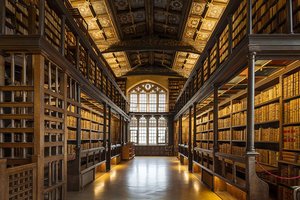 Bodleian Libraries |
Oxford | 2 | David George Vaisey (b.1935), John Hood (b.1942) |
 Paintings Owned by Colleges |
Cambridge | 2 | Barry Everitt, Master of Downing College, Alan and Grace Howard |
 Royal Holloway |
Egham | 1 | Professor Dorothy Wedderburn |
 Chester Town Hall |
Chester | 1 | Gerald Grosvenor (b.1951), 6th Duke of Westminster |
 Merton College |
Oxford | 1 | Dame Jessica Rawson, Warden |
 The University of Reading |
Reading | 1 | Ewan Page |
 Government Art Collection |
Londen | 1 | Brian Robert Morris (1930–2001), Lord Morris of Castle Morris |
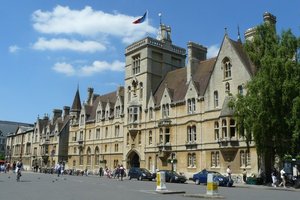 Balliol College |
Oxford | 1 | Baruch S. Blumberg |
Kies een decennium om het origineel te zien dat dit tijdperk definieert.


Philip William Bryce Lever (1915–2000), 3rd Viscount Leverhulme, KG. Professor Dorothy Wedderburn (1991) en Gerald Grosvenor (b.1951), 6th Duke of Westminster (1995) volgen.
Philip William Bryce Lever (1915–2000), 3rd Viscount Leverhulme, KG, Professor Dorothy Wedderburn, Gerald Grosvenor (b.1951), 6th Duke of Westminster, Dame Jessica Rawson, Warden, Brian Robert Morris (1930–2001) (triptych), Ewan Page, Brian Robert Morris (1930–2001), Baron Morris of Castle Morris, Principal of St David's University College (1980–1991), Brian Robert Morris (1930–2001), Lord Morris of Castle Morris, Sir Emmanuel Kaye en Baruch S. Blumberg. De bovenstaande ranglijst vermeldt het jaar en het museum van elk werk.
Onze catalogus bevat 24 werken van Paul Brason, daterend van 1990 tot 2012.
Voornamelijk in Bodleian Libraries (Oxford), Paintings Owned by Colleges (Cambridge) en Royal Holloway (Egham). De bovenstaande museumtabel bevat een volledig overzicht.
In 1990s: 11 van de 24 werken op deze pagina werden toen gemaakt, waaronder Professor Dorothy Wedderburn.
Op deze pagina is het vroegste Ewan Page (1990) en het laatste Professor Dame Jean Thomas (2012).
Reflection (4), Portrait (3) en Portraiture (3), verspreid over de 24 werken op deze pagina.
Contemporary realism, te oordelen aan de originelen op deze pagina.
David George Vaisey (b.1935) en John Hood (b.1942): het Bodleian Libraries, Oxford herbergt 2 van de werken op deze pagina.