


1


Bijgewerkt in november 2026 · gerangschikt op basis van onze populariteitsscore (zoekopdrachten, bezoeken en bestellingen per kunstwerk) · 20 werken van Michael Noakes in onze catalogus
Kortom
Gilbert C. Harding (1907–1960) (1950) is het schilderij van Michael Noakes dat de meeste aandacht trekt. Daarna gaat de blik naar Professor Michael Rosen (b.1927), President of the College of Anaesthetists (1988–1991) (1991) en Margaret Hilda Thatcher, née Roberts (b.1925), Baroness Thatcher, LG, OM, PC, FRS (2004). Van de 20 werken van Michael Noakes in onze catalogus zijn dit de 20 bekendste, elk een uniek origineel gepresenteerd met het jaar, het museum en de reden waarom het blijft voortbestaan.


 Sir Denys Henderson (b.1932), Chancellor (1992–1998)1998 · University of Bath
12
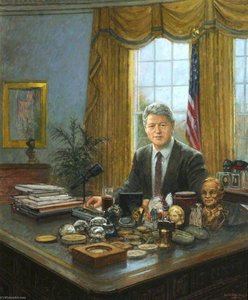 Bill Clinton, 42nd President of the United States of America (1993–2001), Rhodes Scholar (Arkansas and University College, 1968), Seated at His White House Desk1996 · The Rhodes Trust
13
 Michael Turnbull (b.1935), Bishop of Durham (1994–2003)2000 · Auckland Castle
14
 Professor Graham Zellick, Principal of Queen Mary and Westfield College (1990–1998)1999 · Queen Mary
15
 Professor Sir Rowland Smith, Chancellor (1996–2002)2002 · The University of Manchester
16
 Nelson Mandela's Address to the Rhodes Scholars and Guests in Westminster Hall2006
17
 Dame Margaret Thatcher (b.1925)Het Koninklijk Hospitaal Chelsea
18
 Mr D. M. W. Bolton (b.1936), Headmaster (1982–1994)Dame Alice Owen's School
19
 Major General Peter Leuchars (1922–2009)Royal Welch Fusiliers Regimental Museum
20
 Henry Harris, Professor of Pathology (1963–1979), Regius Professor of Medicine (1979–1992), Head of Sir William Dunn School of Pathology (1963–1993)The Sir William Dunn School of Pathology
De vier onderwerpen die het meest voorkomen in deze originelen, elk met zijn mooiste voorbeeld.
De 8 musea met de meeste schilderijen op deze pagina.
| Museum | Stad | Werken van Michael Noakes | Schilderijen uit deze lijst |
|---|---|---|---|
 Royal College of Psychiatrists |
London | 2 | Professor Andrew Sims, President of the Royal College of Psychiatrists (1990–1993), HRH The Prince of Wales (b.1948) |
 Royal College of Anaesthetists |
London | 1 | Professor Michael Rosen (b.1927), President of the College of Anaesthetists (1988–1991) |
 Somerville College |
Oxford | 1 | Margaret Hilda Thatcher, née Roberts (b.1925), Baroness Thatcher, LG, OM, PC, FRS |
 University of Westminster |
London | 1 | Geoffrey Copland |
 Harris Manchester College |
Oxford | 1 | The Honourable Robert Wills |
 Oriel College |
Oxford | 1 | Ernest Nicholson, Provost (1990–2003) |
 University of Bath |
Bath | 1 | Sir Denys Henderson (b.1932), Chancellor (1992–1998) |
 The Rhodes Trust |
Oxford | 1 | Bill Clinton, 42nd President of the United States of America (1993–2001), Rhodes Scholar (Arkansas and University College, 1968), Seated at His White House Desk |
Kies een decennium om het origineel te zien dat dit tijdperk definieert.
Gilbert C. Harding (1907–1960) (1950). Professor Michael Rosen (b.1927), President of the College of Anaesthetists (1988–1991) (1991) en Margaret Hilda Thatcher, née Roberts (b.1925), Baroness Thatcher, LG, OM, PC, FRS (2004) volgen.
17 jaar oud: Gilbert C. Harding (1907–1960) dateert uit 1950, en Michael Noakes werd geboren in 1933.
Gilbert C. Harding (1907–1960), Professor Michael Rosen (b.1927), President of the College of Anaesthetists (1988–1991), Margaret Hilda Thatcher, née Roberts (b.1925), Baroness Thatcher, LG, OM, PC, FRS, Geoffrey Copland, Admiral of the Fleet Terence Thornton Lewin (1920–1999), Baron Lewin, Chief of the Defence Staff, The Honourable Robert Wills, Professor Andrew Sims, President of the Royal College of Psychiatrists (1990–1993), Michael Francis Atiyah (b.1928), OM, FRS, FRSE, Master (1990–1998), Mathematician, HRH The Prince of Wales (b.1948) en Ernest Nicholson, Provost (1990–2003). De bovenstaande ranglijst vermeldt het jaar en het museum van elk werk.
Onze catalogus bevat 20 werken van Michael Noakes, daterend van 1950 tot 2007.
Voornamelijk in Royal College of Psychiatrists (London), Royal College of Anaesthetists (London) en Somerville College (Oxford). De bovenstaande museumtabel bevat een volledig overzicht.
In 1990s: 9 van de 20 werken op deze pagina werden toen gemaakt, waaronder Professor Michael Rosen (b.1927), President of the College of Anaesthetists (1988–1991).
Op deze pagina is het vroegste Gilbert C. Harding (1907–1960) (1950) en het laatste Geoffrey Copland (2007).
Portrait (2) en Reflection (2), verspreid over de 20 werken op deze pagina.
Contemporary realism, te oordelen aan de originelen op deze pagina.
Professor Andrew Sims, President of the Royal College of Psychiatrists (1990–1993) en HRH The Prince of Wales (b.1948): het Royal College of Psychiatrists, London herbergt 2 van de werken op deze pagina.
Born in London in 1933, Michael Noakes’s life and artistic journey were inextricably linked to the evolving social and cultural landscape of post-war Britain. From his early exposure to art within a traditional yet forward-looking household, he developed an enduring fascination with portraiture – not merely as a technical exercise, but as a means of capturing the essence of individuals and reflecting the complexities of their lives. His career spanned over six decades, during which time he became one of the most respected and sought-after artists in the United Kingdom, leaving behind a body of work that continues to resonate with its quiet dignity and remarkable detail.
Noakes’s career gained significant momentum in the early 1970s with a pivotal commission from the Corporation of London: the creation of a series of portraits depicting members of the Royal Family. This undertaking catapulted him to national prominence, establishing his reputation as one of the foremost portrait artists of his generation. The project demanded not only technical skill but also an ability to capture the personalities and gravitas of these iconic figures – a challenge he met with remarkable success.
Noakes’s artistic style is characterized by a remarkable blend of realism, technical precision, and subtle psychological insight. He approached each portrait with a meticulous attention to detail, carefully studying his subjects' features, expressions, and body language. His use of light and shadow created a sense of depth and volume, while his brushstrokes were both confident and controlled – conveying a feeling of timelessness and enduring quality.
Michael Noakes passed away in May 2018, leaving behind a significant body of work that continues to be celebrated for its technical skill, psychological depth, and enduring quality. His portraits are displayed in prestigious museums and galleries throughout the United Kingdom, serving as a testament to his artistic talent and contribution to British art history.
To delve deeper into Michael Noakes’s artistic world, consider exploring these resources: