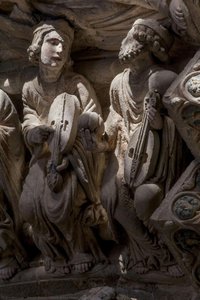
Portret van Meester Mateo

De 44 beroemdste schilderijen van Meester Mateo, elk uniek

Bijgewerkt in oktober 2026 · gerangschikt op basis van onze populariteitsscore (zoekopdrachten, bezoeken en bestellingen per kunstwerk) · 44 werken van Meester Mateo in onze catalogus

Kortom

The disappeared façade at the end of the Camino (1211) is het schilderij van Meester Mateo dat de meeste aandacht trekt; het origineel bevindt zich in het De Catedral de Santiago Foundation Museum, Santiago de Compostela. Daarna gaat de blik naar Base of the mullion of the Portico of Glory (1188) en Trinity of the Portico of Glory (1188). Van de 44 werken van Meester Mateo in onze catalogus zijn dit de 44 bekendste, elk een uniek origineel gepresenteerd met het jaar, het museum en de reden waarom het blijft voortbestaan.

1161 – 1217 Romanesque Meeste werken: De Catedral de Santiago Foundation Museum

Top 10 schilderijen van Meester Mateo, door de ogen van de galerie

2
Base of the mullion of the Portico of Glory (1188) door Meester Mateo

Base of the mullion of the Portico of Glory

1188 · Stone · De Catedral de Santiago Foundation Museum, Santiago de Compostela

To stand before the Portico of Glory is to witness a profound shift in the language of stone. This specific base of the mullion, carved around 1188, offers a glimpse into the transition from the rigid forms of the Romanesque to a more fluid, naturalistic sensibility. Here, the stone does not merely exist; it breathes. The sculptor, Master Mateo, utilized a technique known as trabajo vivo, layering limestone to create…

3
Trinity of the Portico of Glory (1188) door Meester Mateo

Trinity of the Portico of Glory

1188 · Stone · De Catedral de Santiago Foundation Museum, Santiago de Compostela

Divine Presence in Stone The capital features God the Father holding the Christ child upon his lap. Above them, the Holy Spirit takes form as a dove at the peak of the composition. Angels surround these central figures, carrying incense burners to complete the celestial scene. This sculptural arrangement uses the trabajo vivo technique, layering stone slabs to create textures that mimic flesh and fabric. The result is a sense…

4
Statue-column of king David (1188) door Meester Mateo

Statue-column of king David

1188 · Stone · De Catedral de Santiago Foundation Museum, Santiago de Compostela

In the hallowed atmosphere of the Santiago Cathedral, where history and spirituality converge, stands a figure of profound majesty: the Statue-column of King David. Carved by the legendary Master Mateo around 1188, this Romanesque masterpiece is far more than a mere architectural ornament; it is a window into the soul of the twelfth century. The sculpture captures the biblical monarch in a moment of eternal resonance, seated upon a cross-frame…

5
The Glory, Central Arch, Portico of Glory (1211) door Meester Mateo

The Glory, Central Arch, Portico of Glory

1211 · Stone · De Catedral de Santiago Foundation Museum, Santiago de Compostela

The Glory, Central Arch, Portico of Glory is a sculptural work by Master Mateo. It forms a primary component of the Portico of Glory, located at the Cathedral of Santiago de Compostela in Spain. This specific section of the portal was part of a complete three-piece set that reached its conclusion in 1211. The work is currently held at The Catedral de Santiago Foundation in Santiago de Compostela.

6
The Elders holding instruments, Central Arch, Portico of Glory (1211) door Meester Mateo

The Elders holding instruments, Central Arch, Portico of Glory

1211 · Stone · De Catedral de Santiago Foundation Museum, Santiago de Compostela

Within the sacred shadows of the Portico of Glory, a profound scene unfolds in stone. The Elders holding instruments, Central Arch, Portico of Glory emerges from the limestone, appearing as if caught in a moment of eternal preparation. This work, created by the hands of Master Mateo, brings the figures of the Apocalypse into a tangible, breathing presence. They sit amidst the radial archivolts, their bodies leaning toward one another…

8
Saint Matthew, Central Arch, Portico of Glory (1211) door Meester Mateo

Saint Matthew, Central Arch, Portico of Glory

1211 · Stone · De Catedral de Santiago Foundation Museum, Santiago de Compostela

The stone breathes under the soft, diffuse light of the cathedral, revealing a figure caught in a moment of eternal devotion. Here, within the central arch of the Portico of Glory, Saint Matthew sits with a quiet, heavy presence. He is a winged presence, his form emerging from the granite with a startling sense of life. He leans over a desk, his knees supporting the weight of his task, as…

9
Saint Luke, Central Arch, Portico of Glory (1211) door Meester Mateo

Saint Luke, Central Arch, Portico of Glory

1211 · Stone · De Catedral de Santiago Foundation Museum, Santiago de Compostela

The limestone relief of Saint Luke, carved around 1211, occupies a central position within the Portico of Glory at the Cathedral of Santiago de Compostela in Spain. The figure is depicted reclining on his right side, a posture that suggests both physical repose and deep introspection. In his left hand, he holds a book, while his head rests upon a lamb, a direct reference to his role as an Evangelist…

10
Arma Christi, Central Arch, Portico of Glory (1211) door Meester Mateo

Arma Christi, Central Arch, Portico of Glory

1211 · Stone · De Catedral de Santiago Foundation Museum, Santiago de Compostela

The relief known as Arma Christi, Central Arch, Portico of Glory is a sculptural work by the artist Master Mateo. This specific piece is situated within the Central Arch of the Portico of Glory. It was created in 1211. The work is part of a larger architectural and sculptural program located at the Santiago de Compostela Cathedral in Galicia, Spain.

De beroemde schilderijen van Meester Mateo, nummer 11 tot 44

11Santo dos Croques of the Portico of Glory (1200) door Meester MateoSanto dos Croques of the Portico of Glory1200 · De Catedral de Santiago Foundation Museum 12Saint Matthew (1200) door Meester MateoSaint Matthew1200 · De Catedral de Santiago Foundation Museum 13Statues of David and Solomon (1188) door Meester MateoStatues of David and Solomon1188 · De Catedral de Santiago Foundation Museum 14Portico de la Gloria (1168) door Meester MateoPortico de la Gloria1168 · Cathedral 15Portico de la Gloria (detail) (1168) door Meester MateoPortico de la Gloria (detail)1168 · Cathedral 16Portico de la Gloria (1168) door Meester MateoPortico de la Gloria1168 · Cathedral 17Portico de la Gloria (detail) (1168) door Meester MateoPortico de la Gloria (detail)1168 · Cathedral 18Right arch of the Portico of Glory. Iconography of the condemned (1188) door Meester MateoRight arch of the Portico of Glory. Iconography of the condemned1188 · De Catedral de Santiago Foundation Museum 19Right arch of the Portico of Glory (1188) door Meester MateoRight arch of the Portico of Glory1188 · De Catedral de Santiago Foundation Museum 20Left arch of the Portico of Glory (1188) door Meester MateoLeft arch of the Portico of Glory1188 · De Catedral de Santiago Foundation Museum 21Right columns of the central arch of the Portico of Gloryh (1188) door Meester MateoRight columns of the central arch of the Portico of Gloryh1188 · De Catedral de Santiago Foundation Museum 22Saint Marcus, Central Arch, Portico of Glory (1211) door Meester MateoSaint Marcus, Central Arch, Portico of Glory1211 · De Catedral de Santiago Foundation Museum 23Saint John, Central Arch, Portico of Glory (1211) door Meester MateoSaint John, Central Arch, Portico of Glory1211 · De Catedral de Santiago Foundation Museum 24Ordo Prophetarum, The counter facade, Portico of Glory (1211) door Meester MateoOrdo Prophetarum, The counter facade, Portico of Glory1211 · De Catedral de Santiago Foundation Museum 25The Sybil, The counter facade, Portico of Glory (1211) door Meester MateoThe Sybil, The counter facade, Portico of Glory1211 · De Catedral de Santiago Foundation Museum 26Right arch of the Portico of Glory. Iconography of the blessed (1211) door Meester MateoRight arch of the Portico of Glory. Iconography of the blessed1211 · De Catedral de Santiago Foundation Museum 27Detail of the Elders, Central Arch, Portico of Glory (1211) door Meester MateoDetail of the Elders, Central Arch, Portico of Glory1211 · De Catedral de Santiago Foundation Museum 28Tribune of Portico of Glory (1211) door Meester MateoTribune of Portico of Glory1211 · De Catedral de Santiago Foundation Museum 29Angels, The Tribune, Portico of Glory (1211) door Meester MateoAngels, The Tribune, Portico of Glory1211 · De Catedral de Santiago Foundation Museum 30Portico of Glory (1211) door Meester MateoPortico of Glory1211 · De Catedral de Santiago Foundation Museum 31Keystones from Portico of the Glory (1211) door Meester MateoKeystones from Portico of the Glory1211 · De Catedral de Santiago Foundation Museum 32Detail Maiestas Domini of The Portico of Glory (1211) door Meester MateoDetail Maiestas Domini of The Portico of Glory1211 · De Catedral de Santiago Foundation Museum 33Arma Christi, Central Arch, Portico of Glory (1211) door Meester MateoArma Christi, Central Arch, Portico of Glory1211 · De Catedral de Santiago Foundation Museum 34The Just, Central Arch, Portico of Glory (1211) door Meester MateoThe Just, Central Arch, Portico of Glory1211 · De Catedral de Santiago Foundation Museum 35Detail of the Elders, Central Arch, Portico of Glory (1211) door Meester MateoDetail of the Elders, Central Arch, Portico of Glory1211 · De Catedral de Santiago Foundation Museum 36Detail of the Blessed, Central Arch, Portico of Glory (1211) door Meester MateoDetail of the Blessed, Central Arch, Portico of Glory1211 · De Catedral de Santiago Foundation Museum 37Central Arch of The Portico of Glory (1211) door Meester MateoCentral Arch of The Portico of Glory1211 · De Catedral de Santiago Foundation Museum 38Organistrum, Central Arch, Portico of Glory (1211) door Meester MateoOrganistrum, Central Arch, Portico of Glory1211 · De Catedral de Santiago Foundation Museum 39Drawing José Vega y Verdugo (1656-1657) Archivo de la Catedral (1657) door Meester MateoDrawing José Vega y Verdugo (1656-1657) Archivo de la Catedral1657 · De Catedral de Santiago Foundation Museum 40Left arch of the Portico of Glory. Iconography (1188) door Meester MateoLeft arch of the Portico of Glory. Iconography1188 · De Catedral de Santiago Foundation Museum 41Estatuas-columna de dos profetas procedentes de la desaparecida fachada exterior del Pórtico de la Gloria\n\n- Isaac (1188) door Meester MateoEstatuas-columna de dos profetas procedentes de la desaparecida fachada exterior del Pórtico de la Gloria\n\n- Isaac1188 · De Catedral de Santiago Foundation Museum 42Rose window (1200) door Meester MateoRose window1200 · De Catedral de Santiago Foundation Museum 43Stony choir reconstruction (1211) door Meester MateoStony choir reconstruction1211 · De Catedral de Santiago Foundation Museum 44Lintels Central Arch of The Portico of Glory (1188) door Meester MateoLintels Central Arch of The Portico of Glory1188 · De Catedral de Santiago Foundation Museum

De onderwerpen die de aandacht van Meester Mateo troffen

De vier onderwerpen die het meest voorkomen in deze originelen, elk met zijn mooiste voorbeeld.

De musea waar de originele werken van Meester Mateo worden bewaard

De 2 musea met de meeste schilderijen op deze pagina.

Museum Stad Werken van Meester Mateo Schilderijen uit deze lijst
De Catedral de Santiago Foundation Museum, Santiago de CompostelaDe Catedral de Santiago Foundation Museum Santiago de Compostela 40 The disappeared façade at the end of the Camino, Base of the mullion of the Portico of Glory, Trinity of the Portico of Glory
Cathedral, Santiago de CompostelaCathedral Santiago de Compostela 4 Portico de la Gloria, Portico de la Gloria (detail), Portico de la Gloria

Meester Mateo door de decennia heen: elk een uniek origineel

Werken per decennium

Kies een decennium om het origineel te zien dat dit tijdperk definieert.

Schilderijen van Meester Mateo: vragen voor de galerie

Wat is het bekendste werk van Meester Mateo?Onthul het antwoord

The disappeared façade at the end of the Camino (1211), De Catedral de Santiago Foundation Museum, Santiago de Compostela. Base of the mullion of the Portico of Glory (1188) en Trinity of the Portico of Glory (1188) volgen.
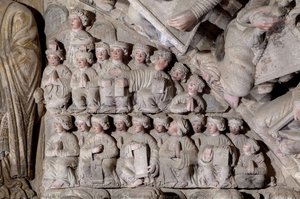
Op welke leeftijd creëerde Meester Mateo The disappeared façade at the end of the Camino?Onthul het antwoord

50 jaar oud: The disappeared façade at the end of the Camino dateert uit 1211, en Meester Mateo werd geboren in 1161.

Welke tien schilderijen van Meester Mateo zijn het meest bekend?Onthul het antwoord

The disappeared façade at the end of the Camino, Base of the mullion of the Portico of Glory, Trinity of the Portico of Glory, Statue-column of king David, The Glory, Central Arch, Portico of Glory, The Elders holding instruments, Central Arch, Portico of Glory, Voussoirs with the punishment of lust, Saint Matthew, Central Arch, Portico of Glory, Saint Luke, Central Arch, Portico of Glory en Arma Christi, Central Arch, Portico of Glory. De bovenstaande ranglijst vermeldt het jaar en het museum van elk werk.

Hoeveel werken van Meester Mateo zijn er bekend?Onthul het antwoord

Onze catalogus bevat 44 werken van Meester Mateo, daterend van 1188 tot 1211.

Waar kunnen de beroemdste originelen van Meester Mateo worden bekeken?Onthul het antwoord

Voornamelijk in De Catedral de Santiago Foundation Museum (Santiago de Compostela) en Cathedral (Santiago de Compostela). De bovenstaande museumtabel bevat een volledig overzicht.

In welke periode creëerde Meester Mateo de bekendste schilderijen?Onthul het antwoord

In 1210s: 24 van de 44 werken op deze pagina werden toen gemaakt, waaronder The disappeared façade at the end of the Camino.

Welk beroemd schilderij van Meester Mateo is de vroegste, en welke de laatste?Onthul het antwoord

Op deze pagina is het vroegste Base of the mullion of the Portico of Glory (1188) en het laatste The disappeared façade at the end of the Camino (1211).

Welke onderwerpen had Meester Mateo de voorkeur?Onthul het antwoord

Sculpture (6), Medieval art (5) en Stone (4), verspreid over de 44 werken op deze pagina.

Met welke materialen schilderde Meester Mateo het meest?Onthul het antwoord

Stone, voor 11 van de 44 werken op deze pagina.

Bij welke stroming behoort het werk van Meester Mateo?Onthul het antwoord

Romanesque, te oordelen aan de originelen op deze pagina.

Welke originele werken van Meester Mateo kan ik zien in het De Catedral de Santiago Foundation Museum?Onthul het antwoord

The disappeared façade at the end of the Camino, Base of the mullion of the Portico of Glory en Trinity of the Portico of Glory: het De Catedral de Santiago Foundation Museum, Santiago de Compostela herbergt 40 van de werken op deze pagina.

Meester Mateo: een portret van de kunstenaar

De Ziel van de Glorie van Santiago

Meester Mateo, een beeldhouwer wiens naam gehuld blijft in mysterie ondanks zijn monumentale bijdrage aan de Kathedraal van Santiago de Compostela, staat te boek als een van de meest vereerde figuren van de romaanse kunst in Spanje. Geboren rond 1161 in Galicië, hoewel de precieze details over zijn leven schaars zijn, rust de nalatenschap van Meester Mateo primair op zijn ongeëvenaarde meesterwerk: de Portico de la Gloria. Dit adembenemende architecturale wonder domineert de façade van de kathedraal en belichaamt de spirituele vurigheid van de twaalfde eeuw. Hij kwam naar voren als beeldhouwer tijdens een periode die werd gekenmerkt door intense religieuze devotie en artistieke innovatie, in een wereld waar de pelgrimsroute naar Santiago al een transformerende reis was voor duizenden zielen.

Het ontstaan van zijn grootste werk begon rond 1188, toen hij de opdracht kreeg om toezicht te houden op de creatie van de drieledige portaal die zijn magnum opus zou worden. Het project van de Kathedraal zelf was decennia eerder bedacht, gedreven door koning Alfonso VIII en gevoed door de immense religieuze betekenis van de locatie. Binnen deze heilige context sneed Meester Mateo niet louter in steen; hij blies er leven in. Zijn betrokkenheid bij de Portico de la Adamant was een goddelijke onderneming, die een structurele noodzaak transformeerde in een theologisch narratief dat tot op de dag van vandaag zowel pelgrims als kunsthistorici blijft fascineren.

Een Symfonie in Steen: Techniek en Stijl

De beeldhouwstijl van Meester Mateo wordt gekenmerkt door een opmerkelijk realisme dat een diepgaande breuk betekende met de eerdere, meer rigide romaanse conventies. Terwijl zijn tijdgenoten vaak vertrouwden op gestileerde, platte figuren, bestudeerde Meester Mateo met uiterste precisie de menselijke anatomie en het complexe gedrag van draperieën, waardoor hij een verbazingwekkende nauwkeurigheid in zijn voorstellingen bereikte. Zijn beheersing van het beeldhouwen in kalksteen was ongeëvenaard, vooral door zijn gebruik van een techniek die bekend staat als trabajo vivo. Deze methode hield in dat er lagen steen werden aangebracht om getextureerde oppervlakken te creëren die de verschijning van vlees en stof nabootsten, wat een gevoel van beweging en vitaliteit gaf aan het statische medium.

Deze innovatieve benadering stelde hem in staat om de kloof tussen het aardse en het goddelijke te overbruggen. Bij het observeren van zijn werk kan men zien hoe hij op meesterlijke wijze licht en schaduw inzette om de diepte van zijn reliëfs te versterken. Zijn vermogen om steen te manipuleren om de zachtheid van een gewaad van een heilige of de musculaire spanning van een bijbels figuur te suggereren, tilde zijn vakmanschap naar een niveau van verfijning dat zelden werd gezien in de middeleeuwen. Deze technische briljantie zorgde ervoor dat zijn figuren niet louter symbolen waren, maar tastbare aanwezigheden bij de ingang van de kathedraal.

De Portico de la Gloria: Een Getuigenis van Geloof

De Portico de la Gloria dient als het ultieme testament van de artistieke en spirituele visie van Meester Mateo. De centrale panelen tonen diepgaande scènes uit de Evangeliën—waaronder de Geboorte, de Annunciatie en de Kruisiging—gerangschikt op een wijze die de kijker door een heilige geschiedenis leidt. De iconografie is uitgestrekt en complex en bevat:

  • De Centrale Boog: Met iconische figuren zoals Sint-Lucas, waar de ingewikkelde romaanse sculptuur een diepe religieuze symboliek vertoont.
  • De Linker Boog: Een meesterproef in de 12e-eeuwse Spaanse reliëfkunst, met gedetailleerde bijbelse verhalen.
  • De Rechter Boog: Een tentoonstelling van complexe schoonheid die zijn vermogen demonstreert om complexe architecturale en sculpturale integratie te beheersen.

Door deze werken bereikte Meester Mateo een historisch belang dat de tijdperk van zijn geboorte overstijgt. Hij leidde de romaanse stijl naar de ontluikende elegantie van de Gotiek, waarmee hij een nalatenschap achterliet die het kloppende hart van Santiago de Compostela blijft vormen. Zijn werk staat als een permanente brug tussen de middeleeuwse geest en het eeuwige, waardoor de glorie van zijn stenen symfonie zelfs eeuwen na zijn dood in 1217 nog steeds ontzag inboezemt.