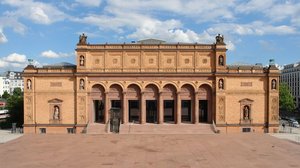
Portret van Meester Francke

De 19 bekendste schilderijen van Meester Francke, een selectie uit de galerie

Bijgewerkt in november 2026 · gerangschikt op basis van onze populariteitsscore (zoekopdrachten, bezoeken en bestellingen per kunstwerk) · 19 werken van Meester Francke in onze catalogus

Kortom

Van alle originele werken die Meester Francke heeft nagelaten, is Dormition of the Mother of God from Barbara altar from the Kalanti church in Finland (1415) het bekendst, in de collectie van het Nationaal Museum van Finland, Helsinki. Direct daarna volgen Adoration of the Magi (1426) en Birth of Jesus (1424). Onze catalogus bevat 19 werken van Meester Francke; de galerie heeft de 19 meest bewonderde werken ter wereld bewaard, elk voorzien van de datum, het museum en het verhaal erachter.

1380 – 1435, Nederrijn Gothic Meeste werken: Hamburger Kunsthalle

De top 10 schilderijen van Meester Francke: de selectie van de galerie

1
Dormition of the Mother of God from Barbara altar from the Kalanti church in Finland (1415) door Meester Francke

Dormition of the Mother of God from Barbara altar from the Kalanti church in Finland

1415 · Tempera On Panel · Nationaal Museum van Finland, Helsinki

The Dormition of the Mother of God from Barbara altar from the Kalanti church in Finland is a significant component of the larger Saint Barbara Altarpiece. Created by the North German artist Master Francke, this specific work belongs to a larger Virgin Mary cycle that spans the corpus and the inner wings of the altarpiece. The subject matter focuses on the profound theological narrative of Mary's death and her subsequent…

2
Adoration of the Magi (1426) door Meester Francke

Adoration of the Magi

1426 · Tempera On Panel · Hamburger Kunsthalle, Hamburg

The painting is a depiction of the Adoration of the Magi, a scene centered on Mary holding her baby Jesus in her arms. She is surrounded by a gathering of twelve people, some of whom stand in close proximity to the viewer while others are positioned further away in the composition. The scene is further detailed by the presence of two chairs, one located near the left side and another…

3
Birth of Jesus (1424) door Meester Francke

Birth of Jesus

1424 · Oil On Panel · Hamburger Kunsthalle, Hamburg

In the quiet, hallowed atmosphere of the early fifteenth century, a masterpiece emerged that would capture the spiritual fervor of the late Gothic era. Master Francke, the enigmatic Dutch virtuoso known as Frater Francke, crafted his Birth of Jesus in 1424 with a profound sense of theatricality and devotion. This is not merely a depiction of a stable scene; it is a cosmic event rendered on wood. The painting commands…

4
The Martyrdom of Saint Thomas of Canterbury (1426) door Meester Francke

The Martyrdom of Saint Thomas of Canterbury

1426 · Tempera · Hamburger Kunsthalle, Hamburg

A Moment of Violent Devotion The scene unfolds with a heavy, dramatic tension, capturing the precise moment of Saint Thomas Becket's death within the cathedral. Four knights surround the Archbishop, their presence defined by the cold steel of a sword and the weight of a shield. There is a palpable sense of movement in the composition, as if the air itself has thickened with the gravity of the act. The…

5
The Entombment (1430) door Meester Francke

The Entombment

1430 · Tempera On Panel · Hamburger Kunsthalle, Hamburg

The artwork is titled The Entombment, a work executed by the artist Master Francke. This specific piece functions as a panel from the St. Thomas Altar. It originated from St. John's Church in Hamburg, Germany. The painting is a religious composition that depicts the deposition of Christ following the crucifixion.

6
Resurrection of Christ (1430) door Meester Francke

Resurrection of Christ

1430 · Hamburger Kunsthalle, Hamburg

In the profound stillness of the early fifteenth century, a moment of eternal victory was captured on panel by the hand of Master Francke. The Resurrection of Christ is not merely a depiction of a biblical event; it is a visceral experience of triumph over the shadows of mortality. As the eye meets the central figure of Jesus, one is immediately struck by the sheer kinetic energy of his ascent.…

7
Adoration of the Child (1426) door Meester Francke

Adoration of the Child

1426 · Tempera On Panel · Hamburger Kunsthalle, Hamburg

In the quiet, hallowed atmosphere of the early fifteenth century, a profound moment of divine intimacy was captured by the hand of Master Francke. His masterpiece, Adoration of the Child, dating to approximately 1426, serves as a breathtaking window into the spiritual fervor of the North German Gothic tradition. The scene unfolds with a tender, almost breathless reverence, as the Virgin Mary cradles the infant Jesus, lifting him toward the…

8
The Mocking of Saint Thomas of Canterbury (1426) door Meester Francke

The Mocking of Saint Thomas of Canterbury

1426 · Hamburger Kunsthalle, Hamburg

In the evocative scene of The Mocking of Saint Thomas of Canterbury, we are transported back to the visceral intensity of the early 15th century. Created around 1426 by the enigmatic North German master known as Frater Francke, this work captures a moment of profound tension and spiritual confrontation. The composition centers on a figure draped in a striking red robe, mounted upon a noble white horse, caught in the…

9
The Women at the Cross (fragment) (1435) door Meester Francke

The Women at the Cross (fragment)

1435 · Tempera On Panel · Hamburger Kunsthalle, Hamburg

The fragment captures a moment of profound grief, centering on the Virgin Mary and a group of women gathered in sorrow. They are draped in long gowns, their heads covered by veils, their postures reflecting the weight of loss following the death of Jesus Christ. In the background, a horse and a smaller group of figures suggest a larger, more complex narrative unfolding beyond this immediate circle of lamentation. Scattered…

De selectie van Meester Francke gaat verder, van 11 tot 19

De onderwerpen die de aandacht van Meester Francke troffen

De vier onderwerpen die het meest voorkomen in deze originelen, elk met zijn mooiste voorbeeld.

De musea waar de originele werken van Meester Francke worden bewaard

De 4 musea met de meeste schilderijen op deze pagina.

Museum Stad Werken van Meester Francke Schilderijen uit deze lijst
Hamburger Kunsthalle, HamburgHamburger Kunsthalle Hamburg 9 Adoration of the Magi, Birth of Jesus, The Martyrdom of Saint Thomas of Canterbury
Nationaal Museum van Finland, HelsinkiNationaal Museum van Finland Helsinki 1 Dormition of the Mother of God from Barbara altar from the Kalanti church in Finland
Museum der bildenden Künste, LeipzigMuseum der bildenden Künste Leipzig 1 Vir Dolorum (Man of Sorrows)
Nationaal Museum in Warschau, WarschauNationaal Museum in Warschau Warschau 1 Holy trinity

Meester Francke decennium voor decennium: het origineel dat elk tijdperk definieert

Werken per decennium

Kies een decennium om het origineel te zien dat dit tijdperk definieert.

Vragen van verzamelaars over de schilderijen van Meester Francke

Waar is Meester Francke het meest bekend om?Onthul het antwoord

Dormition of the Mother of God from Barbara altar from the Kalanti church in Finland (1415), Nationaal Museum van Finland, Helsinki. Adoration of the Magi (1426) en Birth of Jesus (1424) volgen.

Hoe oud was Meester Francke toen Dormition of the Mother of God from Barbara altar from the Kalanti church in Finland werd gemaakt?Onthul het antwoord

35 jaar oud: Dormition of the Mother of God from Barbara altar from the Kalanti church in Finland dateert uit 1415, en Meester Francke werd geboren in 1380.

Wat zijn de tien beroemdste schilderijen van Meester Francke?Onthul het antwoord

Dormition of the Mother of God from Barbara altar from the Kalanti church in Finland, Adoration of the Magi, Birth of Jesus, The Martyrdom of Saint Thomas of Canterbury, The Entombment, Resurrection of Christ, Adoration of the Child, The Mocking of Saint Thomas of Canterbury, The Women at the Cross (fragment) en Barbara Altar, inside the wing. De bovenstaande ranglijst vermeldt het jaar en het museum van elk werk.

Hoeveel schilderijen heeft Meester Francke nagelaten?Onthul het antwoord

Onze catalogus bevat 19 werken van Meester Francke, daterend van 1415 tot 1435.

In welke musea hangen de meesterwerken van Meester Francke?Onthul het antwoord

Voornamelijk in Hamburger Kunsthalle (Hamburg), Nationaal Museum van Finland (Helsinki) en Museum der bildenden Künste (Leipzig). De bovenstaande museumtabel bevat een volledig overzicht.

In welke jaren schilderde Meester Francke de beroemdste werken?Onthul het antwoord

In 1420s: 6 van de 19 werken op deze pagina werden toen gemaakt, waaronder Adoration of the Magi.

Wat zijn de eerste en de laatste beroemde originelen van Meester Francke?Onthul het antwoord

Op deze pagina is het vroegste Dormition of the Mother of God from Barbara altar from the Kalanti church in Finland (1415) en het laatste The Women at the Cross (fragment) (1435).

Welke onderwerpen koos Meester Francke het vaakst?Onthul het antwoord

People (3), Mary (3) en Man (3), verspreid over de 19 werken op deze pagina.

Welke techniek gebruikte Meester Francke het meest?Onthul het antwoord

Tempera On Panel, voor 5 van de 19 werken op deze pagina.

Bij welke kunststroming behoort Meester Francke?Onthul het antwoord

Gothic, te oordelen aan de originelen op deze pagina.

Welke werken van Meester Francke hangen in het Hamburger Kunsthalle?Onthul het antwoord

Adoration of the Magi, Birth of Jesus en The Martyrdom of Saint Thomas of Canterbury: het Hamburger Kunsthalle, Hamburg herbergt 9 van de werken op deze pagina.

Meester Francke: leven en werk

Een Meester van Treurige Vroomheid: De Erfenis van Frater Francke

Johannes Francke, beter bekend als Frater Francke, vormt een cruciaal figuur in het ontluikende artistieke landschap van het 15e-eeuwse Duitsland – en dan specifiek binnen de levendige gotische traditie van Hamburg. Hoewel biografische details enigszins mysterieus blijven, bevestigen overgeleverde documenten zijn betrokkenheid bij monumentale religieuze opdrachten tijdens zijn leven, wat zijn reputatie als een van de meest bekwame altaarstukschilders van die tijd bezegelde.
  • Vroege jaren en opleiding: Precieze informatie over de vormende jaren van Francke is schaars. Hij kwam echter rond 1380 uit Zutphen, waar hij waarschijnlijk zijn eerste artistieke training ontving binnen het destijds gangbare gildesysteem – een hoeksteen van het middeleeuwse vakmanschap, waarin leertrajecten technische meesterschap stimuleerden naast spirituele devotie.
  • Hamburg en De Geboorte van Jezus (1424): Francke’s carrière bloeide werkelijk op in Hamburg, waar hij een contract verwierf voor de creatie van een altaarstuk voor de Sint-Catharinakerk. Dit ambitieuze project – ‘De Geboorte van Jezus’, voltooid in 1424 – is een schoolvoorbeeld van zijn stilistische gevoel: intense rode tinten domineren de compositie, wat diepe emotie overbrengt en symbolische elementen rond de goddelijke incarnatie van Christus accentueert. Het schilderij getuigt van minutieuze details en een meesterlijk kleurgebruik, passend bij de heersende gotische esthetiek.
Het artistieke oeuvre van Francke reikte verder dan dit ene meesterwerk. Hoewel er slechts weinig werken met absolute zekerheid aan hem zijn toe te schrijven – een veelvoorkomende uitdaging voor historici die kunsthistorische stambomen reconstrueren – wijst de wetenschappelijke consensus op een bijdrage in Leipzig en een ander opmerkelijk werk dat ondergebracht is in de Kunsthalle in Hamburg. Deze schilderijen tonen een voortdurende verbondenheid met gotische technieken, gekenmerkt door gestileerde figuren en het weelderige gebruik van bladgoud – de kenmerken van de religieuze ijver uit die periode.
  • Techniek en Stijl: De artistieke stijl van Francke is stevig geworteld in de conventies van de gotische schilderkunst. Hij maakte behendig gebruik van tempera op paneel, waarmee hij lumineuze kleuren en een rijke textuur bereikte. Zijn weergaven van bijbelse scènes zijn doordrenkt met dramatische emotie en psychologische diepgang, waarbij expressieve gebaren en spirituele contemplatie vooropstaan.
  • Invloed en Erfenis: Het werk van Francke heeft een diepgaande impact gehad op latere generaties kunstenaars in Hamburg en daarbuiten. Hij was een voorvechter van de gotische stijl en vestigde deze als de dominante visuele taal voor religieuze kunst in zijn tijd. Zijn oog voor detail en de emotionele vertolking van bijbelse verhalen resoneren nog steeds met de kijker van vandaag, wat zijn plaats als een blijvend symbool van vroomheid en artistieke excellentie veiligstelt.

Opmerkelijke Prestaties: Het Barbara-altaar

Misschien wel Francke’s meest gevierde prestatie is het ‘Barbara-altaar’, in opdracht gemaakt voor de Sint-Barbara-kerk in Hamburg rond 1430. Dit monumentale kunstwerk – een bewijs van zijn artistieke kunde – bevat een complex narratief dat het martelaarschap van de Heilige Barbara uitbeeldt en belichaamt de neiging van de gotische traditie tot grandeur en symbolische representatie. De ingewikkelde sculpturale elementen van het altaar, gecombineerd met levendige polychrome schilderkunst, onderstrepen Francke’s meesterschap in zowel de beeldende kunst als het ambacht.

Historisch Belang

De bijdrage van Meester Francke aan de Duitse kunstgeschiedenis is onmiskenbaar. Hij vertegenwoordigt een cruciale schakel tussen middeleeuwse artistieke tradities en de opkomende renaissancebeweging – een overgangsperiode die werd gekenmerkt door een hernieuwde interesse in klassieke idealen naast een blijvende religieuze devotie. Zijn altaarstukken staan als krachtige visuele uitingen van het geloof, waarin de spirituele zorgen van zijn tijd worden weerspiegeld en de esthetische gevoeligheden van de artistieke gemeenschap van Hamburg voor eeuwen daarna werden gevormd.