
1


Bijgewerkt in november 2026 · gerangschikt op basis van onze populariteitsscore (zoekopdrachten, bezoeken en bestellingen per kunstwerk) · 2 werken van Mabel Young in onze catalogus
Kortom
Van alle originele werken die Mabel Young heeft nagelaten, is A Bulldog (1900) het bekendst, in de collectie van het Belton House, Grantham. Onze catalogus bevat 2 werken van Mabel Young; de galerie heeft de 2 meest bewonderde werken ter wereld bewaard, elk voorzien van de datum, het museum en het verhaal erachter.
Het museum met de meeste schilderijen op deze pagina.
| Museum | Stad | Werken van Mabel Young | Schilderijen uit deze lijst |
|---|---|---|---|
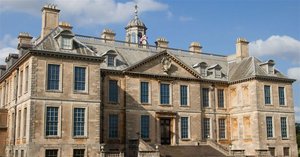 Belton House |
Grantham | 2 | A Bulldog, A Bulldog asleep on a Bed of Straw |
1900 is het jaar van elk gedateerd werk van Mabel Young in deze selectie: hier zijn ze, gerangschikt op bekendheid.
Selecteer een jaar om de originele werken te bekijken.
A Bulldog (1900)
11 jaar oud: A Bulldog dateert uit 1900, en Mabel Young werd geboren in 1889.
Onze catalogus bevat 2 werken van Mabel Young.
Voornamelijk in Belton House (Grantham). De bovenstaande museumtabel bevat een volledig overzicht.
In 1900: 2 van de 2 werken op deze pagina werden toen gemaakt, waaronder A Bulldog.
A Bulldog en A Bulldog asleep on a Bed of Straw: het Belton House, Grantham herbergt 2 van de werken op deze pagina.
Born in Ryde, United Kingdom, Mabel Young was a painter who spent much of her career in Ireland. Her early life was marked by significant transitions; after the decline of her father's coaching business, she worked as a seamstress before moving to Dublin in 1914. During the tumultuous events of 1916 and the civil war in 1922, she witnessed the violence of the era firsthand while living in Dublin. In 1924, she met Paul Henry in Kilmacanogue, County Wicklow, where she eventually ran a guesthouse at Carrigoona Cottage. This period was central to her life, as she later married Henry in 1954 following the death of his first wife.
Young's artistic output was characterized by a loose impressionistic style, with a particular focus on watercolour and oil studies. She specialized in capturing the essence of the Wicklow woods and glens, though her work is noted for a lack of depth. Her subjects often included:
Mabel Young was a frequent contributor to the Royal Hibernian Academy, exhibiting there from 1928 until 1961. Her work reached international audiences when her painting Sugar Loaf mountain was shown at the Helen Hackett Gallery in New York in 1928. Throughout her career, she held several solo exhibitions in Dublin, including shows at the Country Shop in St Stephen's Green and the Ritchie Hendriks Gallery. Beyond her own canvases, she played a vital role in preserving the legacy of Paul Henry by transcribing his autobiography, An Irish portrait, from his dictation.
Her artistic legacy is preserved in various institutions. The Ulster Museum holds her notebooks, while the Hugh Lane Gallery possesses an oil-on-board flowerpiece and a watercolour titled Autumn beech trees. While many of her watercolours remain in private collections, her presence in the Irish art landscape remains documented through her many exhibitions and her dedicated studies of the natural world.
