Portret van Koloman Moser

De 100 beroemdste schilderijen van Koloman Moser, elk uniek

Bijgewerkt in november 2026 · gerangschikt op basis van onze populariteitsscore (zoekopdrachten, bezoeken en bestellingen per kunstwerk) · 189 werken van Koloman Moser in onze catalogus

Kortom

Dans van de Wijdbladige Maagdinnen (1898) is het schilderij van Koloman Moser dat de meeste aandacht trekt; het origineel bevindt zich in het Secession, Wenen. Daarna gaat de blik naar Poster of the Beethoven sonatas evening (1908) en Drafts for the exlibris for Fritz Waerndorfer (1903). Van de 189 werken van Koloman Moser in onze catalogus zijn dit de 100 bekendste, elk een uniek origineel gepresenteerd met het jaar, het museum en de reden waarom het blijft voortbestaan.

1868 – 1918, Wenen Art nouveau Meeste werken: Leopold Museum

Top 10 schilderijen van Koloman Moser, door de ogen van de galerie

1
Dans van de Wijdbladige Maagdinnen (1898) door Koloman Moser

Dans van de Wijdbladige Maagdinnen

1898 · Zwart-witfotografie · Secession, Wenen

Een Dans van Wijdte en Licht: Een Analyse van Koloman Moser’s “Dans der Kranchenden Maidens” De Secession Building in Wien, een symbool van kunstenaarsbeweging en innovatie aan het einde van de 19e eeuw, huisvest een kunstwerk dat niet alleen een prachtige architecturale compositie vertegenwoordigt maar ook een diepgaande symbolische boodschap draagt: Koloman Moser’s “Dans der Kranchenden Maidens.” Deze kleurrijke afbeelding, geschilderd in 1898, biedt een fascinerende kijk op zowel de…

2
Poster of the Beethoven sonatas evening (1908) door Koloman Moser

Poster of the Beethoven sonatas evening

1908 · Print

The Poster of the Beethoven sonatas evening by Koloman Moser emerges from 1908, a moment when the air in Vienna pulses with new artistic energy. This graphic work functions as a visual invitation to a specific musical encounter. It announces an evening dedicated to the profound compositions of Ludwig van Beethoven, inviting the viewer to witness the power of his sonatas through a modern lens. The design carries the weight…

3
Drafts for the exlibris for Fritz Waerndorfer (1903) door Koloman Moser

Drafts for the exlibris for Fritz Waerndorfer

1903 · Ink On Paper

The ink flows across the paper in a rhythmic dance, capturing a moment of transition between thought and final form. In this 1903 draft for an exlibris, the lines possess a liquid quality, winding around figures with an organic grace that feels alive. Three women emerge from the composition, their bodies elongated and poised in a way that suggests a dreamlike elegance. One figure wears a crown, her presence lending…

4
Semmering Landscape door Koloman Moser

Semmering Landscape

Oil On Canvas

The landscape of the Semmering region finds a quiet, symbolic expression in this work. Mountains rise against a sky saturated with purple hues, while a rising sun casts a warm glow over the peaks. Scattered trees provide texture and depth to the composition, grounding the ethereal light in the physical reality of the terrain. Two figures are positioned within the scene—one near the center and another toward the right—offering a…

5
Loneliness (1902) door Koloman Moser

Loneliness

1902 · Watercolor

In Loneliness, Koloman Moser explores a quiet, introspective moment through the medium of watercolor. Created about 1902, this work reflects the sensibilities of the Art Nouveau style, focusing on a singular, solitary figure. A man stands beneath a tree, his head partially obscured by the foliage, creating a sense of withdrawal from the world around him. This choice of posture suggests a deep internal focus, a retreat into the self…

6
Figure study of Tristan (1915) door Koloman Moser

Figure study of Tristan

1915 · Drawing

The scene unfolds through a black and white drawing titled Figure study of Tristan. Created by Koloman Moser, this work captures a singular, quiet moment of preparation. The artist’s hand moves across the paper to document the human form, focusing on the physical presence of the subject. It is a study of light and shadow, stripped of color to emphasize the raw essence of the figure.

7
Poster for 'Prince Richard Metternich' (1899) door Koloman Moser

Poster for 'Prince Richard Metternich'

1899 · Print

In this 1899 composition, we find ourselves observing a moment of suspended motion. A single figure, draped in a flowing blue dress, appears to drift through a serene sky. There is a sense of weightlessness here, as if the subject is caught in a dance or perhaps a flight between the clouds. The lines are not merely outlines; they are sinuous, organic curves that define the movement of the fabric…

8
Self Portrait in Colonial Dress (1910) door Koloman Moser

Self Portrait in Colonial Dress

1910 · Watercolor · Kunsthistorisches Museum, Wenen

The painting depicts a man with a mustache wearing a suit and tie, appearing to look directly at the viewer while seated. His attire is suggestive of colonial clothing. The man's facial features and outfit are rendered with significant detail. The background is somewhat blurry, depicting an indoor setting that includes two chairs, one on the left side and another toward the right, and a bowl located near the bottom…

9
Sketch for a poster of the Vienna Workshop (1904) door Koloman Moser

Sketch for a poster of the Vienna Workshop

1904 · Paper

Sketch for a poster of the Vienna Workshop, created in 1904, is a work by the Austrian artist Koloman Moser. This piece emerged during a period of significant transformation in the Viennese art scene, reflecting the shifting aesthetics of the turn of the century.

10
Am Steinhof Church, Design for the rise window (1905) door Koloman Moser

Am Steinhof Church, Design for the rise window

1905 · Gouache

The design for the rise window of Am Steinhof Church emerges from the creative mind of Koloman Moser. Created about 1905, this work captures a moment of intense artistic focus. Moser, who was born in Vienna, Austria-Hungary in 1868, brings a specific vision to this ecclesiastical design. His hand moves through the intricate patterns that define the window's structure.

De beroemde schilderijen van Koloman Moser, nummer 11 tot 100

11The Rax (1912) door Koloman MoserThe Rax1912 · Leopold Museum 12Franz Dangl in Uniform (1891) door Koloman MoserFranz Dangl in Uniform1891 13Inlaid Eisler-Terramare Armoire (1903) door Koloman MoserInlaid Eisler-Terramare Armoire1903 · Leopold Museum 14Wreath bearer. Design for decorative facade of the Viennese Secession. (1897) door Koloman MoserWreath bearer. Design for decorative facade of the Viennese Secession.1897 15Cover design for Meggendorfer leaves (1895) door Koloman MoserCover design for Meggendorfer leaves1895 16Profile of a girl. Preparatory work for a decorative stain in red and green. (1897) door Koloman MoserProfile of a girl. Preparatory work for a decorative stain in red and green.1897 17Mermaid. Illustration for Jugendschatz German seals. (1896) door Koloman MoserMermaid. Illustration for Jugendschatz German seals.1896 18Reproduction template for the leaf for Gerlach's love allegories. New Series, Plate 35 (1895) door Koloman MoserReproduction template for the leaf for Gerlach's love allegories. New Series, Plate 351895 19A modern Tantalus. Illustration for 'Meggendorfer leaves'. (1895) door Koloman MoserA modern Tantalus. Illustration for 'Meggendorfer leaves'.1895 20Happy editing. Illustration with self-portrait. (1895) door Koloman MoserHappy editing. Illustration with self-portrait.1895 21The sketch of the round window art (1897) door Koloman MoserThe sketch of the round window art1897 22‘Surface Decoration,’ Cover (1902) door Koloman Moser‘Surface Decoration,’ Cover1902 · Harvard Art Museums 23Picture book for the niece of Ditha Mautner von Markhof (1904) door Koloman MoserPicture book for the niece of Ditha Mautner von Markhof1904 24Poster for the XIII. Secession (1902) door Koloman MoserPoster for the XIII. Secession1902 25Elisabeth Steindl, Niece of the Artist (1910) door Koloman MoserElisabeth Steindl, Niece of the Artist1910 26Charlotte Moser, Sister of the Artist (1910) door Koloman MoserCharlotte Moser, Sister of the Artist1910 27Rudolf Steindl, Brother-in-law of the Artist (1910) door Koloman MoserRudolf Steindl, Brother-in-law of the Artist1910 28Portrait of the painter Carl Otto Czeschka (1909) door Koloman MoserPortrait of the painter Carl Otto Czeschka1909 29Postcard with Emperor Franz Josef (1908) door Koloman MoserPostcard with Emperor Franz Josef1908 30Catalogue of the Austrian Exhibition in London (1906) door Koloman MoserCatalogue of the Austrian Exhibition in London1906 31Design for the bill of 50 crowns (1911) door Koloman MoserDesign for the bill of 50 crowns1911 32Self-Portrait (1915) door Koloman MoserSelf-Portrait1915 33Venus in the Grotto (1914) door Koloman MoserVenus in the Grotto1914 · Leopold Museum 34The Wayfarer (1914) door Koloman MoserThe Wayfarer1914 · Leopold Museum 35Stamp Design for Emperor Charles I (not accepted) (1917) door Koloman MoserStamp Design for Emperor Charles I (not accepted)1917 36Reclining Female Nude (Mileva Roller) (1912) door Koloman MoserReclining Female Nude (Mileva Roller)1912 37Three women squatting (1914) door Koloman MoserThree women squatting1914 38Kolo middle Dolomites (1912) door Koloman MoserKolo middle Dolomites1912 39Loïe Fuller in the Dance (1902) door Koloman MoserLoïe Fuller in the Dance1902 · Albertina 40Decorative Fabric [“Bird Bülow”] (1900) door Koloman MoserDecorative Fabric [“Bird Bülow”]1900 · MAK – Museum voor toegepaste kunst 41Animal motif for a picture book (1904) door Koloman MoserAnimal motif for a picture book1904 42Marigolds (1909) door Koloman MoserMarigolds1909 · Leopold Museum 43Steinhoch church in Vienna door Koloman MoserSteinhoch church in Vienna 44Study for The Wanderer (1914) door Koloman MoserStudy for The Wanderer1914 45Illustration for the Viennese fashion magazine (1890) door Koloman MoserIllustration for the Viennese fashion magazine1890 46Male Nude Study (1888) door Koloman MoserMale Nude Study1888 47Ver Sacrum (1898) door Koloman MoserVer Sacrum1898 48Draft of the emblem by the Association of Austrian Artists Secession (1897) door Koloman MoserDraft of the emblem by the Association of Austrian Artists Secession1897 49Allegory of Ver Sacrum, sketch of illustration to Ver Sacrum, 101 1898, p.1 (1897) door Koloman MoserAllegory of Ver Sacrum, sketch of illustration to Ver Sacrum, 101 1898, p.11897 50Vignettes for the catalog Secessionausstellung, 1898 (1898) door Koloman MoserVignettes for the catalog Secessionausstellung, 18981898 51Waidmannsheil (1896) door Koloman MoserWaidmannsheil1896 52Laurel wreath (1897) door Koloman MoserLaurel wreath1897 53Serpentine dancer. Poster design for Lois Fuller. (1895) door Koloman MoserSerpentine dancer. Poster design for Lois Fuller.1895 54Landscape with Tree (1896) door Koloman MoserLandscape with Tree1896 55A decorative stain in red and green (1897) door Koloman MoserA decorative stain in red and green1897 56Pisces (1904) door Koloman MoserPisces1904 57Postcard to Carl Moll, Ver Sacrum (1897) door Koloman MoserPostcard to Carl Moll, Ver Sacrum1897 58Spring morning (1896) door Koloman MoserSpring morning1896 59Girls in henhouse (1897) door Koloman MoserGirls in henhouse1897 60A decorative stain in red and green (1898) door Koloman MoserA decorative stain in red and green1898 61Sketch of emblem to 'Ver Sacrum' (1898) door Koloman MoserSketch of emblem to 'Ver Sacrum'1898 62Square vignette (1896) door Koloman MoserSquare vignette1896 63Rudolf Steindl, a brother of the artist (1895) door Koloman MoserRudolf Steindl, a brother of the artist1895 64Iris. Illustration to a poem by Arno Holz. (1898) door Koloman MoserIris. Illustration to a poem by Arno Holz.1898 65Girl in rose (1898) door Koloman MoserGirl in rose1898 66Pieta (1895) door Koloman MoserPieta1895 67'The Rich Catch of Fish' Armchair (1900) door Koloman Moser'The Rich Catch of Fish' Armchair1900 · Los Angeles County Museum of Art 68Sketches for Eisler Terramare High Chair (1903) door Koloman MoserSketches for Eisler Terramare High Chair1903 69Purkersdorf Sanatorium Armchair (1903) door Koloman MoserPurkersdorf Sanatorium Armchair1903 70Lacquered Wood Chair (1905) door Koloman MoserLacquered Wood Chair1905 71Designs for silver brooches (1904) door Koloman MoserDesigns for silver brooches1904 72Picture book for the niece of Ditha Mautner von Markhof (1904) door Koloman MoserPicture book for the niece of Ditha Mautner von Markhof1904 73Picture book for the niece of Ditha Mautner von Markhof (1904) door Koloman MoserPicture book for the niece of Ditha Mautner von Markhof1904 74Picture book for the niece of Ditha Mautner von Markhof (1904) door Koloman MoserPicture book for the niece of Ditha Mautner von Markhof1904 75Picture book for the niece of Ditha Mautner von Markhof (1904) door Koloman MoserPicture book for the niece of Ditha Mautner von Markhof1904 76Picture book for the niece of Ditha Mautner von Markhof (1904) door Koloman MoserPicture book for the niece of Ditha Mautner von Markhof1904 77Picture book for the niece of Ditha Mautner von Markhof (1904) door Koloman MoserPicture book for the niece of Ditha Mautner von Markhof1904 78Am Steinhof Church, Design for the right side altar Guardian Angel (1904) door Koloman MoserAm Steinhof Church, Design for the right side altar Guardian Angel1904 79Picture book for the niece of Ditha Mautner von Markhof (1904) door Koloman MoserPicture book for the niece of Ditha Mautner von Markhof1904 80Am Steinhof Church, Design for the left side altar Our Lady of Mercy (1904) door Koloman MoserAm Steinhof Church, Design for the left side altar Our Lady of Mercy1904 81Picture book for the niece of Ditha Mautner von Markhof (1904) door Koloman MoserPicture book for the niece of Ditha Mautner von Markhof1904 82Picture book for the niece of Ditha Mautner von Markhof (1904) door Koloman MoserPicture book for the niece of Ditha Mautner von Markhof1904 83Church Am Steinhof, drawing of the angel in the left side window (1905) door Koloman MoserChurch Am Steinhof, drawing of the angel in the left side window1905 84Draft of furniture decoration for the bedroom of the apartment Eisler Terra Mare (1902) door Koloman MoserDraft of furniture decoration for the bedroom of the apartment Eisler Terra Mare1902 85Draft for wall decoration in the living room of the apartment in Berlin Stonborough (1904) door Koloman MoserDraft for wall decoration in the living room of the apartment in Berlin Stonborough1904 86Book cover of Austrian art of the XIX. Century (1903) door Koloman MoserBook cover of Austrian art of the XIX. Century1903 87Exlibris Adele Bloch - Bookplate with princess and frog (1905) door Koloman MoserExlibris Adele Bloch - Bookplate with princess and frog1905 88Fabric design with moving waves for Backhausen (1902) door Koloman MoserFabric design with moving waves for Backhausen1902 89Landscape with cloudy sky (1904) door Koloman MoserLandscape with cloudy sky1904 90Backhausen Interior Texiles (1899) door Koloman MoserBackhausen Interior Texiles1899 91Fabric design with floral awakening for Backhausen (1900) door Koloman MoserFabric design with floral awakening for Backhausen1900 92Backhausen Interior Texiles (1899) door Koloman MoserBackhausen Interior Texiles1899 93Am Steinhof Church, mosaic design for the main altar (1905) door Koloman MoserAm Steinhof Church, mosaic design for the main altar1905 94Design for the fabric (1902) door Koloman MoserDesign for the fabric1902 95Design for a Stage Decoration (1901) door Koloman MoserDesign for a Stage Decoration1901 96Design for the bill of 50 crowns (1902) door Koloman MoserDesign for the bill of 50 crowns1902 97Drafts for metal relief (1904) door Koloman MoserDrafts for metal relief1904 98Fabric design with trout dance for Backhausen (1899) door Koloman MoserFabric design with trout dance for Backhausen1899 99Fabric design with birds for Backhausen (1899) door Koloman MoserFabric design with birds for Backhausen1899 100Drafts for metal relief (1904) door Koloman MoserDrafts for metal relief1904

De beroemde schilderijen van Koloman Moser, periode voor periode

De onderwerpen die de aandacht van Koloman Moser troffen

De vier onderwerpen die het meest voorkomen in deze originelen, elk met zijn mooiste voorbeeld.

De musea waar de originele werken van Koloman Moser worden bewaard

De 7 musea met de meeste schilderijen op deze pagina.

Museum Stad Werken van Koloman Moser Schilderijen uit deze lijst
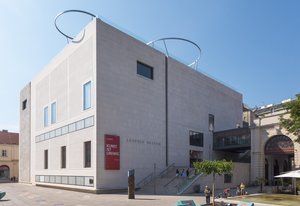
Leopold Museum, WenenLeopold Museum Wenen 6 The Rax, Inlaid Eisler-Terramare Armoire, Venus in the Grotto
Secession, WenenSecession Wenen 2 Dans van de Wijdbladige Maagdinnen
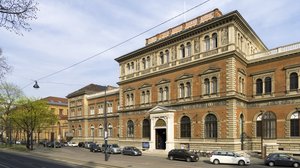
MAK – Museum voor toegepaste kunst, WenenMAK – Museum voor toegepaste kunst Wenen 2 Decorative Fabric [“Bird Bülow”]
Kunsthistorisches Museum, WenenKunsthistorisches Museum Wenen 1 Self Portrait in Colonial Dress
Harvard Art Museums, CambridgeHarvard Art Museums Cambridge 1 ‘Surface Decoration,’ Cover
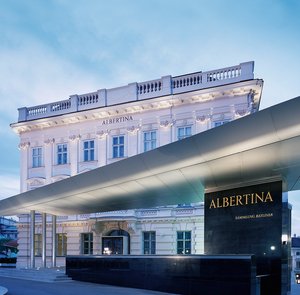
Albertina, WenenAlbertina Wenen 1 Loïe Fuller in the Dance
Los Angeles County Museum of Art, Los AngelesLos Angeles County Museum of Art Los Angeles 1 'The Rich Catch of Fish' Armchair

Koloman Moser door de decennia heen: elk een uniek origineel

Werken per decennium

Kies een decennium om het origineel te zien dat dit tijdperk definieert.

Schilderijen van Koloman Moser: vragen voor de galerie

Wat is het bekendste werk van Koloman Moser?Onthul het antwoord

Dans van de Wijdbladige Maagdinnen (1898), Secession, Wenen. Poster of the Beethoven sonatas evening (1908) en Drafts for the exlibris for Fritz Waerndorfer (1903) volgen.

Op welke leeftijd creëerde Koloman Moser Dans van de Wijdbladige Maagdinnen?Onthul het antwoord

30 jaar oud: Dans van de Wijdbladige Maagdinnen dateert uit 1898, en Koloman Moser werd geboren in 1868.

Welke tien schilderijen van Koloman Moser zijn het meest bekend?Onthul het antwoord

Dans van de Wijdbladige Maagdinnen, Poster of the Beethoven sonatas evening, Drafts for the exlibris for Fritz Waerndorfer, Semmering Landscape, Loneliness, Figure study of Tristan, Poster for 'Prince Richard Metternich', Self Portrait in Colonial Dress, Sketch for a poster of the Vienna Workshop en Am Steinhof Church, Design for the rise window. De bovenstaande ranglijst vermeldt het jaar en het museum van elk werk.

Hoeveel werken van Koloman Moser zijn er bekend?Onthul het antwoord

Onze catalogus bevat 189 werken van Koloman Moser, daterend van 1888 tot 1917.

Waar kunnen de beroemdste originelen van Koloman Moser worden bekeken?Onthul het antwoord

Voornamelijk in Leopold Museum (Wenen), Secession (Wenen) en MAK – Museum voor toegepaste kunst (Wenen). De bovenstaande museumtabel bevat een volledig overzicht.

In welke periode creëerde Koloman Moser de bekendste schilderijen?Onthul het antwoord

In 1900s: 47 van de 100 werken op deze pagina werden toen gemaakt, waaronder Poster of the Beethoven sonatas evening.

Welk beroemd schilderij van Koloman Moser is de vroegste, en welke de laatste?Onthul het antwoord

Op deze pagina is het vroegste Male Nude Study (1888) en het laatste Stamp Design for Emperor Charles I (not accepted) (1917).

Welke onderwerpen had Koloman Moser de voorkeur?Onthul het antwoord

Designs and sketches (14), Woman (13) en Man (11), verspreid over de 100 werken op deze pagina.

Met welke materialen schilderde Koloman Moser het meest?Onthul het antwoord

Oil On Canvas, voor 10 van de 100 werken op deze pagina.

Bij welke stroming behoort het werk van Koloman Moser?Onthul het antwoord

Art nouveau, te oordelen aan de originelen op deze pagina.

Welke originele werken van Koloman Moser kan ik zien in het Leopold Museum?Onthul het antwoord

The Rax, Inlaid Eisler-Terramare Armoire en Venus in the Grotto: het Leopold Museum, Wenen herbergt 5 van de werken op deze pagina.

Koloman Moser: een portret van de kunstenaar

Early Life and Artistic Foundations

Koloman Moser, a name inextricably linked to the vibrant spirit of Vienna’s artistic landscape at the turn of the 20th century, was born on March 30, 1868, in the heart of Vienna, Austria-Hungary – a region brimming with cultural ferment. His origins were deeply rooted in a family connected to the prestigious Wiener Akademie, an institution that nurtured young artists and instilled within him a profound appreciation for classical aesthetics. However, it wasn’t solely through formal training that Moser's artistic sensibilities blossomed; his upbringing also exposed him to the world of craftsmanship, particularly through the workshops associated with the Theresianum, a renowned academy dedicated to various artisanal skills. This unique blend of academic rigor and practical experience proved instrumental in shaping his diverse talents – he was equally adept at painting, graphic design, architecture, and the creation of exquisite applied arts. The influence of this early environment fostered an innate eye for detail, a deep understanding of materials, and a nascent desire to infuse beauty into every facet of life.

A Pioneer of the Vienna Secession

Moser’s artistic trajectory took a decisive turn in 1897 when he became one of the founding members of the Vienna Secession – a movement that irrevocably altered the course of Viennese art. Dissatisfied with the conservative confines of the established art world, a group of forward-thinking artists, including Gustav Klimt, Josef Hoffmann, and others, sought to establish their own independent platform for artistic expression. The Secession’s manifesto, boldly rejecting academic traditions, declared its intention to “break away from the old foundations” and forge a new path rooted in innovation and aesthetic freedom. Moser quickly emerged as a key figure within this revolutionary collective, contributing significantly to the Secession's influential journal, *Ver Sacrum*, with his distinctive graphic designs – characterized by their geometric precision, elegant typography, and a subtle yet powerful sense of modernity. His involvement signaled not just an artistic shift but also a commitment to challenging established norms and embracing a more dynamic approach to visual communication.

The Wiener Werkstätte: A Synthesis of Art and Craft

Building upon the foundations laid by the Secession, Moser played a pivotal role in the establishment of the Wiener Werkstätte (Vienna Workshop) in 1903 – a collaborative endeavor that epitomized the movement’s core philosophy of “Gesamtkunstwerk” or total work of art. Alongside Josef Hoffmann and Fritz Wärndorfer, Moser envisioned a space where artists and craftsmen could unite to create aesthetically pleasing household goods, integrating design, production, and functionality into a harmonious whole. The Wiener Werkstätte championed the idea that every element of an object – from its initial concept to its final execution – should be carefully considered and executed with artistic intention. Moser’s contributions to this remarkable workshop were vast and varied, encompassing furniture design, ceramics, textiles, metalwork, and even fashion, demonstrating his versatility as a designer and his commitment to elevating the status of applied arts. The collaborative spirit fostered within the Werkstätte allowed for experimentation, innovation, and a profound appreciation for the beauty of everyday objects.

Architectural Innovations and Decorative Masterpieces

Beyond his contributions to graphic design and applied arts, Moser’s talents extended significantly into the realm of architecture. His most celebrated architectural achievement is undoubtedly the apse mosaic and stained-glass windows he designed for the Kirche am Steinhof (Church at the Steinhof) in Vienna – a project completed in 1904. This monumental undertaking showcased his ability to seamlessly blend artistic vision with functional design, creating a space that was both visually stunning and spiritually evocative. The intricate mosaic panels, depicting scenes from the life of Christ, combined with the vibrant stained-glass windows, transformed the church into a masterpiece of Art Nouveau architecture – a testament to Moser’s innovative spirit and his profound understanding of light, color, and form. His work on this project solidified his reputation as a leading architect and designer, demonstrating his ability to create works that transcended mere functionality and embraced artistic expression.

Legacy and Enduring Influence

Koloman Moser's life was tragically cut short in October 1918, succumbing to cancer at the age of 50. Despite his untimely death, his legacy continues to resonate throughout the world of art and design. His pioneering spirit, innovative designs, and unwavering commitment to artistic excellence have left an indelible mark on Vienna’s cultural heritage. Furthermore, Moser's influence extends far beyond Austria, shaping the development of Art Nouveau and inspiring generations of artists and designers. A poignant reminder of his enduring impact is found on the Austrian 100 Euro Steinhof Church commemorative coin (2005), a symbolic recognition of his profound contribution to Viennese art and design. Moser’s work continues to be studied, admired, and celebrated as a testament to the power of artistic vision and the transformative potential of integrating beauty into everyday life.