Jurden Chick Wooten: A Rural Visionary
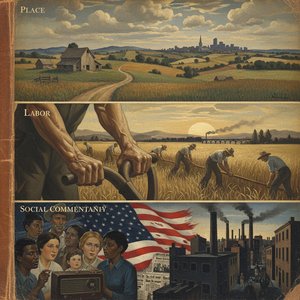
Chick Wooten (1930 – 2011) emerged from the quiet landscapes of eastern North Carolina as a singular voice in American regionalist painting. Born in Lansing, he cultivated an artistic sensibility rooted deeply within his upbringing in Lenoir County—a formative experience that would permeate every brushstroke of his prolific career spanning six decades. Unlike many artists of his time who pursued formal training, Wooten’s talent blossomed organically, nurtured by a lifelong fascination with capturing the essence of rural life during the Depression and wartime eras. His artistic journey began in grade school, where he discovered an innate aptitude for drawing, honing this skill into a masterful craft by his late twenties. Wooten eschewed academic conventions, preferring to translate his observations of the natural world—the weathered barns, rolling hills, and hardworking families—onto canvas with unwavering conviction. This dedication resulted in countless paintings and murals that serve as poignant reminders of a bygone America. He published a book about his life and art called “The Painter’s Eye,” which documented his artistic process and philosophical reflections on the role of art in preserving cultural memory. Wooten’s distinctive style is characterized by meticulous detail and an almost photographic realism combined with a palpable sense of emotion. He employed oil paints on canvas, layering colors to achieve luminous effects that conveyed the warmth and vibrancy of his subjects. The artist's technique prioritized capturing light—particularly golden hour—to illuminate scenes of rural activity, emphasizing textures and contours with painstaking accuracy. This approach wasn’t merely about depicting what he saw; it was about conveying a feeling, an atmosphere, a connection to the land and its inhabitants. Wooten famously stated, “I don't try to paint what I see; I try to paint how I feel.” Throughout his career, Wooten exhibited extensively in North Carolina and beyond, garnering recognition for his evocative depictions of rural America. His work resonated deeply with audiences who appreciated his ability to distill complex narratives into simple yet powerful images—a testament to the enduring appeal of regionalist art. He was particularly celebrated for his murals commissioned by local schools and civic organizations, which served as visual chronicles of Lenoir County’s history and traditions. Wooten's contribution to American art is significant because he championed a genre that prioritizes authenticity and emotional resonance, offering viewers a glimpse into the everyday lives of ordinary people during formative historical periods. His artistic output included numerous landscapes capturing the beauty of North Carolina’s countryside—particularly scenes bathed in the golden light of dawn and dusk. These paintings are notable for their exceptional realism and subtle tonal gradations, demonstrating Wooten's mastery of oil painting technique. Recurring motifs in his work – rolling hills, distant mountains, weathered barns – reflect his deep connection to the rural landscape and his desire to convey its spirit.- Notable Paintings:
- Laundry Day
- Untitled Landscape
- Harvest Moon
Vraag en antwoord
Waar kan ik alle kunstwerken van Jurden Chick Wooten bekijken?
Alle werken van Jurden Chick Wooten op deze website zijn te bekijken op de Alle kunstwerken pagina van de kunstenaar.
Kan ik de werken van Jurden Chick Wooten bekijken per medium?
De werken van Jurden Chick Wooten kunnen per medium worden bekeken op de Alle technieken pagina van de kunstenaar.
Welke kleuren gebruikte Jurden Chick Wooten het meest vaak?
Het kleurgebruik van Jurden Chick Wooten in de werken die op deze website worden vermeld, kan worden bestudeerd op de Kleurenpalet van de kunstenaar pagina van de kunstenaar.