Portret van Jules Tavernier

Schilderijen van Jules Tavernier: De 46 bekendste, door de ogen van een galerie

Bijgewerkt in november 2026 · gerangschikt op basis van onze populariteitsscore (zoekopdrachten, bezoeken en bestellingen per kunstwerk) · 46 werken van Jules Tavernier in onze catalogus

Kortom

Volgens de visie van de galerie is het beroemdste schilderij van Jules Tavernier Kilauea at Night (1888), waarvan het origineel in het Honolulu Museum of Art in Honolulu hangt. Dry Creek (1881) en Kilauea Fire Fountain (1884) maken het trio compleet dat elk oog herkent. Van de 46 werken van Jules Tavernier in onze catalogus presenteert de galerie hieronder de 46 bekendste werken, elk een origineel met de jaartal, het museum en wat het uniek maakt.

1844 – 1889, Parijs Meeste werken: Honolulu Museum of Art

De top 10 schilderijen van Jules Tavernier in de galerie

1
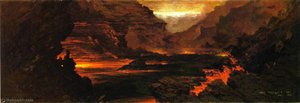
Kilauea at Night (1888) door Jules Tavernier

Kilauea at Night

1888 · Oil On Canvas · Honolulu Museum of Art, Honolulu

The night air seems to hold its breath in Kilauea at Night, a work by Jules Tavernier. This oil on canvas captures a specific, pulsing moment within the volcanic landscape of Hawaii. The scene unfolds with a raw energy that speaks to the untamed spirit of the islands. It is a vision of natural beauty, caught in the glow of geological power.

2
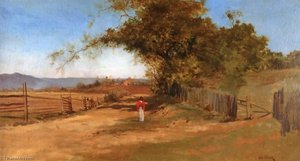
Dry Creek (1881) door Jules Tavernier

Dry Creek

1881 · Oil On Canvas

Dry Creek by Jules Tavernier presents a rural landscape scene composed of earthy tones. The composition is organized around a winding path that leads the eye from the foreground into the distance. This path is framed by a fence and several trees, which establish the boundaries of the immediate terrain. A solitary figure wearing red is positioned near a large tree, providing a singular point of focus within the pastoral…

3
Kilauea Fire Fountain (1884) door Jules Tavernier

Kilauea Fire Fountain

1884 · Oil On Canvas · Honolulu Museum of Art, Honolulu

In this 1884 oil on canvas, we find ourselves standing at the edge of a profound geological event. The scene captures the intense heat of a volcanic eruption, where molten red lava surges from the earth into a darkened sky. Smoke and ash hang heavy in the air, obscuring the horizon and creating a sense of immense, suffocating power. It is a moment of pure, unbridled natural force, caught in…

4
Dance in a Subterranean Roundhouse at Clear Lake, California (1878) door Jules Tavernier

Dance in a Subterranean Roundhouse at Clear Lake, California

1878 · Acrylic On Canvas · Metropolitan Museum of Art, New York

Jules Tavernier's “Dance in a Subterranean Roundhouse at Clear Lake, California” isn’t merely a painting; it’s a portal. Painted in 1878 during a pivotal moment of cultural exchange and encroaching Western influence, this work offers an intimate, almost voyeuristic view into the sacred practices of the Elem Pomo people of Northern California. Tavernier, a French-born artist who embraced the American West with an adventurous spirit, was commissioned by Tiburcio Parrott,…

Schilderijen van Jules Tavernier, gerangschikt van 11 tot 46

11Hostellerie de Trois Barbeaus (also known as A Street Scene in Old Paris) (1877) door Jules TavernierHostellerie de Trois Barbeaus (also known as A Street Scene in Old Paris)1877 12Indian Sun Dance Young Bucks Proving Their Endurance by Self Torture (1875) door Jules TavernierIndian Sun Dance Young Bucks Proving Their Endurance by Self Torture1875 13A Disputed Passage (also known as A Disputed Passage in the Days of '46) (1876) door Jules TavernierA Disputed Passage (also known as A Disputed Passage in the Days of '46)1876 14Dance in a Subterranean Roundhouse at Clear Lake, California (1878) door Jules TavernierDance in a Subterranean Roundhouse at Clear Lake, California1878 · Metropolitan Museum of Art 15The Crater of Kilauea, Island of Hawaii (1885) door Jules TavernierThe Crater of Kilauea, Island of Hawaii1885 · Russell-Cotes Art Gallery - Museum 16White Man's Weapon (1880) door Jules TavernierWhite Man's Weapon1880 17An Eruption, Hawaii (1880) door Jules TavernierAn Eruption, Hawaii1880 · Honolulu Museum of Art 18Kilauea Caldera (1885) door Jules TavernierKilauea Caldera1885 19Kilauea Volcano and Rain Forest (1885) door Jules TavernierKilauea Volcano and Rain Forest1885 · Isaacs Art Center 20Volcano at Night (1885) door Jules TavernierVolcano at Night1885 · Honolulu Museum of Art 21Kilauea Caldera (1885) door Jules TavernierKilauea Caldera1885 22Moonlight on the Coast (1882) door Jules TavernierMoonlight on the Coast1882 23El Rodeo, Rancho Santa Margarita (1884) door Jules TavernierEl Rodeo, Rancho Santa Margarita1884 24Indian Encampment in the Desert (1884) door Jules TavernierIndian Encampment in the Desert1884 · American Museum of Western Art 25A Sunset in Waioming (1889) door Jules TavernierA Sunset in Waioming1889 26Kilauea Caldera, Sandwich Islands (1886) door Jules TavernierKilauea Caldera, Sandwich Islands1886 · San Diego Museum of Art 27View of the Pali (1886) door Jules TavernierView of the Pali1886 · Honolulu Museum of Art 28Halema'uma'u Crater, Kilauea Volcano (1887) door Jules TavernierHalema'uma'u Crater, Kilauea Volcano1887 · Isaacs Art Center 29Wailuku Falls (1886) door Jules TavernierWailuku Falls1886 · Honolulu Museum of Art 30Sunrise over Diamond Head (1888) door Jules TavernierSunrise over Diamond Head1888 · Honolulu Museum of Art 31Full Moon over Kilauea (1887) door Jules TavernierFull Moon over Kilauea1887 32Volcano Hawaii (1888) door Jules TavernierVolcano Hawaii1888 33Hilo (1886) door Jules TavernierHilo1886 34Kilauea at Dusk (1887) door Jules TavernierKilauea at Dusk1887 35Hilo, Hawaii (1886) door Jules TavernierHilo, Hawaii1886 36Hawaiian Landscape (1889) door Jules TavernierHawaiian Landscape1889 · Honolulu Museum of Art 37Hilo (also known as Hawaiian Volcano) (1886) door Jules TavernierHilo (also known as Hawaiian Volcano)1886 38Red Cloud Camp door Jules TavernierRed Cloud Camp 39Indian Village door Jules TavernierIndian VillageGilcrease Museum 40Nocturnal Landscape door Jules TavernierNocturnal Landscape 41Montezuma Rising (also known as Waiting for Montezuma) door Jules TavernierMontezuma Rising (also known as Waiting for Montezuma) 42Indian Village at Dawn door Jules TavernierIndian Village at Dawn 43Indian Encampment at Dusk door Jules TavernierIndian Encampment at Dusk 44Kilauea Volcano door Jules TavernierKilauea Volcano 45Gathering of the Clans (also known as Sioux Encampment (Red Cloud's Camp, Wyoming)) door Jules TavernierGathering of the Clans (also known as Sioux Encampment (Red Cloud's Camp, Wyoming))Oakland Museum of California 46Marin Sunset, Back of Petaluma (1882) door Jules TavernierMarin Sunset, Back of Petaluma1882 · Crocker Art Museum

De onderwerpen die de aandacht van Jules Tavernier troffen

De vier onderwerpen die het meest voorkomen in deze originelen, elk met zijn mooiste voorbeeld.

De musea waar de originele werken van Jules Tavernier worden bewaard

De 8 musea met de meeste schilderijen op deze pagina.
Museum Stad Werken van Jules Tavernier Schilderijen uit deze lijst
Honolulu Museum of Art, HonoluluHonolulu Museum of Art Honolulu 8 Kilauea at Night, Kilauea Fire Fountain, An Eruption, Hawaii
Metropolitan Museum of Art, New YorkMetropolitan Museum of Art New York 2 Dance in a Subterranean Roundhouse at Clear Lake, California, Dance in a Subterranean Roundhouse at Clear Lake, California
Isaacs Art Center, Hawaii CountyIsaacs Art Center Hawaii County 2 Kilauea Volcano and Rain Forest, Halema'uma'u Crater, Kilauea Volcano
Monterey State Historic Park, CaliforniaMonterey State Historic Park California 1 A Dream (also known as Lady Fishing)
Russell-Cotes Art Gallery - Museum, BournemouthRussell-Cotes Art Gallery - Museum Bournemouth 1 The Crater of Kilauea, Island of Hawaii
American Museum of Western Art, ColoradoAmerican Museum of Western Art Colorado 1 Indian Encampment in the Desert
San Diego Museum of Art, San DiegoSan Diego Museum of Art San Diego 1 Kilauea Caldera, Sandwich Islands
Gilcrease Museum, TulsaGilcrease Museum Tulsa 1 Indian Village

Jules Tavernier, de kenmerkende schilderijen van elk jaar

19 jaar aan kunst van Jules Tavernier, van 1871 tot 1889: de galerie volgt hen jaar voor jaar, via de meest beroemde originelen van elk jaar.

Werken per jaar

Selecteer een jaar om de originele werken te bekijken.

Schilderijen van Jules Tavernier: de galerie geeft antwoord

Welk schilderij van Jules Tavernier is het beroemdste van allemaal?Onthul het antwoord

Kilauea at Night (1888), Honolulu Museum of Art, Honolulu. Dry Creek (1881) en Kilauea Fire Fountain (1884) volgen.

Hoe oud was Jules Tavernier bij de voltooiing van Kilauea at Night?Onthul het antwoord

44 jaar oud: Kilauea at Night dateert uit 1888, en Jules Tavernier werd geboren in 1844.

Wat zijn de top 10 schilderijen van Jules Tavernier?Onthul het antwoord

Kilauea at Night, Dry Creek, Kilauea Fire Fountain, Dance in a Subterranean Roundhouse at Clear Lake, California, Fort Lee, Trading Post of J. S. Collins, Eagle Rock, An Emigrants' Boarding House in New York, In Wildwood Glen, Saucelito , California en A Dream (also known as Lady Fishing). De bovenstaande ranglijst vermeldt het jaar en het museum van elk werk.

Hoeveel werken heeft Jules Tavernier gemaakt?Onthul het antwoord

Onze catalogus bevat 46 werken van Jules Tavernier, daterend van 1871 tot 1889.

Waar hangen de beroemdste originele werken van Jules Tavernier?Onthul het antwoord

Voornamelijk in Honolulu Museum of Art (Honolulu), Metropolitan Museum of Art (New York) en Isaacs Art Center (Hawaii County). De bovenstaande museumtabel bevat een volledig overzicht.

Wanneer creëerde Jules Tavernier de beroemdste schilderijen?Onthul het antwoord

In 1886: 6 van de 46 werken op deze pagina werden toen gemaakt, waaronder Kilauea Caldera, Sandwich Islands.

Wat zijn de vroegste en laatste beroemde werken van Jules Tavernier?Onthul het antwoord

Op deze pagina is het vroegste Fort Lee (1871) en het laatste A Sunset in Waioming (1889).

Welke onderwerpen keerde Jules Tavernier het vaakst naar terug?Onthul het antwoord

Usa (4), Mountains (3) en Landscape (3), verspreid over de 46 werken op deze pagina.

In welk medium werkte Jules Tavernier het meest?Onthul het antwoord

Oil On Canvas, voor 3 van de 46 werken op deze pagina.

Welke originelen van Jules Tavernier zijn in de collectie van het Honolulu Museum of Art?Onthul het antwoord

Kilauea at Night, Kilauea Fire Fountain en An Eruption, Hawaii: het Honolulu Museum of Art, Honolulu herbergt 8 van de werken op deze pagina.

Jules Tavernier: de kunstenaar

A Life of Adventure and Artistry

Born in Paris, France, Jules Tavernier was a man whose life was as much a journey of exploration as it was a pursuit of aesthetic mastery. Trained under the French painter Félix-Joseph Barrias, his early years were steeped in the classical traditions of Europe, yet his spirit was far too restless to be confined by the salons of Paris alone. After experiencing the turbulence of the Franco-Prussian War, Tavernier’s path took him through London and eventually across the Atlantic, where he would find a new canvas in the vast, untamed landscapes of the American West. As a painter, draftsman, and illustrator, he possessed a unique ability to translate the raw energy of the natural world into evocative works of art.

His career was defined by an adventurous spirit that led him from the rugged frontiers of California to the volcanic heart of Hawaii. In the United States, his talent caught the attention of major institutions; notably, his work as an illustrator for Harper's Magazine allowed him to document the American frontier during a year-long sketching tour of the coast. This period of travel was instrumental in shaping his vision, as he captured the essence of Native American themes and pastoral scenes that were then being transformed by westward expansion.

The Volcano School and Masterful Technique

Tavernier is perhaps most celebrated for his association with Hawaii’s Volcano School, a movement characterized by its intense focus on the dramatic geological phenomena of the islands. His time in Hawaii allowed him to witness and record the terrifying beauty of volcanic eruptions, a subject he treated with profound technical skill. In masterpieces such as Kilauea Fire Fountain, Tavernier utilized bold brushstrokes and a vibrant palette to convey the heat and power of flowing lava against darkened, ash-filled skies. His technique often involved thick layers of oil paint, creating a sense of three-dimensional depth that made the molten landscapes appear almost tangible to the viewer.

Beyond the volcanic landscapes, his work also served as a vital historical record of cultural encounters. In pieces like Dance in a Subterranean Roundhouse at Clear Lake, California, he demonstrated a masterful command of chiaroscuro, using stark contrasts between light and shadow to illuminate the sacred rituals of the Elem Pomo people. Through his use of earthy tones punctuated by flashes of red and ochre, he captured not just a scene, but an atmosphere of mystery and reverence. His ability to blend the ethnographic with the atmospheric ensured that his paintings functioned as both fine art and poignant meditations on tradition and change.

Legacy and Artistic Significance

The significance of Jules Tavernier lies in his role as a visual bridge between the Old World and the New. He brought the refined training of French academic art to the wild, burgeoning landscapes of the American West and the Pacific. His work remains a vital window into a period of intense cultural exchange and environmental awe. Whether capturing the serene sunset over Marin or the subterranean shadows of a California roundhouse, Tavernier’s legacy is one of profound observation and an enduring passion for the sublime power of the natural world.