Portret van Joseph Stannard

De 17 bekendste schilderijen van Joseph Stannard, een selectie uit de galerie

Bijgewerkt in november 2026 · gerangschikt op basis van onze populariteitsscore (zoekopdrachten, bezoeken en bestellingen per kunstwerk) · 17 werken van Joseph Stannard in onze catalogus

Kortom

Van alle originele werken die Joseph Stannard heeft nagelaten, is Thorpe Water Frolic, Afternoon (1824) de bekendste. Direct daarna volgen Buckenham Ferry, on the River Yare, Norfolk (1826) en Fishing Smack and Other Vessels in a Strong Breeze (1830). Onze catalogus bevat 17 werken van Joseph Stannard; de galerie heeft de 17 meest bewonderde werken ter wereld bewaard, elk voorzien van de datum, het museum en het verhaal erachter.

1797 – 1830, Norwich Meeste werken: Yale Center for British Art

De top 10 schilderijen van Joseph Stannard: de selectie van de galerie

1
Thorpe Water Frolic, Afternoon (1824) door Joseph Stannard

Thorpe Water Frolic, Afternoon

1824 · Oil On Canvas

The canvas depicts a wide expanse of water filled with various vessels during a daytime event. Several sailboats of different sizes and designs occupy the midground and background, while others sit closer to the shoreline. Small figures are positioned on these boats and along the water's edge, engaged in sailing or observing the scene. The composition captures a moment of leisure, with the movement of the boats and the presence…

3
Fishing Smack and Other Vessels in a Strong Breeze (1830) door Joseph Stannard

Fishing Smack and Other Vessels in a Strong Breeze

1830 · Oil On Canvas · Yale Center for British Art, New Haven

Fishing Smack and Other Vessels in a Strong Breeze is an oil painting by Joseph Stannard. The canvas captures a group of sailing vessels navigating through choppy, turbulent waters. The scene is set under a heavy, cloud-filled sky that dominates the upper reaches of the composition. Muted tones of ochre, sepia, and cream define the palette, mirroring the somber mood of a sea in motion. The diagonal tilt of the…

4
Yarmouth Beach and Jetty, Norfolk (1828) door Joseph Stannard

Yarmouth Beach and Jetty, Norfolk

1828 · Oil

The salt air and the rhythmic movement of the tides find their expression in Yarmouth Beach and Jetty, Norfolk. This oil painting by Joseph Stannard captures a specific moment of coastal life, rendered with a focus on the textures of the sand and the shifting light of the North Sea. The work emerged from a period of rest for the artist, as he sought to recuperate at the seaside resort…

5
Yarmouth Sands, Norfolk (1829) door Joseph Stannard

Yarmouth Sands, Norfolk

1829 · Oil On Canvas

Yarmouth Sands, Norfolk is an oil painting by Joseph Stannard, executed about 1829. The work depicts a coastal scene on a sandy beach, focusing on a group of fishermen gathered in the foreground. These figures are positioned amidst the shoreline, engaged in their daily activities. The composition places the human subjects against an expansive background of sea and sky, establishing a clear sense of scale within the maritime environment.

6
Boats on the Yare near Bramerton, Norfolk (1828) door Joseph Stannard

Boats on the Yare near Bramerton, Norfolk

1828 · Oil · Fitzwilliam College, Cambridge

The river flows with a quiet purpose in Boats on the Yare near Bramerton, Norfolk. Created about 1828, this work by Joseph Stannard captures a specific moment along the water's edge. The scene unfolds upon the River Yare, where the current carries vessels through the Norfolk landscape. It is a view of a working waterway, caught in a stillness that feels both heavy and light.

7
Yarmouth Jetty, Norfolk (1830) door Joseph Stannard

Yarmouth Jetty, Norfolk

1830 · Oil

Joseph Stannard's Yarmouth Jetty, Norfolk, painted about 1830, presents a maritime scene centered on a bustling harbor. The composition focuses on the activity surrounding several boats positioned along the shoreline. In the foreground, a large boat is positioned on the sand, appearing to undergo the process of unloading cargo or passengers. Other vessels are visible in the background, some of which remain anchored near the coast. The water and the…

De selectie van Joseph Stannard gaat verder, van 11 tot 17

De onderwerpen die de aandacht van Joseph Stannard troffen

De vier onderwerpen die het meest voorkomen in deze originelen, elk met zijn mooiste voorbeeld.

De musea waar de originele werken van Joseph Stannard worden bewaard

De 3 musea met de meeste schilderijen op deze pagina.

Museum Stad Werken van Joseph Stannard Schilderijen uit deze lijst
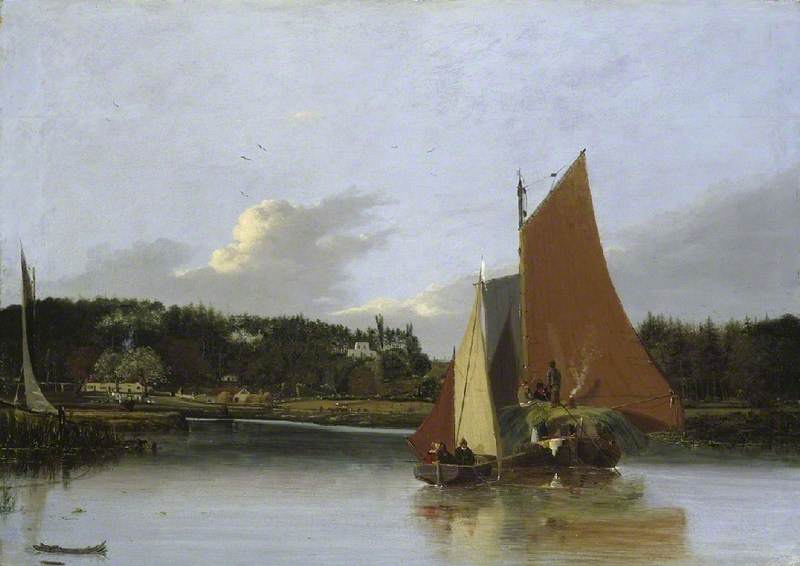
Yale Center for British Art, New HavenYale Center for British Art New Haven 2 Buckenham Ferry, on the River Yare, Norfolk, Fishing Smack and Other Vessels in a Strong Breeze
National Trust, CambridgeNational Trust Cambridge 2 A Fisherboy with Lobster Pots by the Sea, A Ferry Boat with Cattle
Fitzwilliam College, CambridgeFitzwilliam College Cambridge 1 Boats on the Yare near Bramerton, Norfolk

Joseph Stannard jaar voor jaar: de originelen die elk jaar definiëren

De gedateerde werken van Joseph Stannard in deze selectie beslaan slechts 7 jaar, van 1824 tot 1830: een korte carrière, hier jaar voor jaar weergegeven.

Werken per jaar

Selecteer een jaar om de originele werken te bekijken.

Vragen van verzamelaars over de schilderijen van Joseph Stannard

Waar is Joseph Stannard het meest bekend om?Onthul het antwoord

Thorpe Water Frolic, Afternoon (1824). Buckenham Ferry, on the River Yare, Norfolk (1826) en Fishing Smack and Other Vessels in a Strong Breeze (1830) volgen.

Hoe oud was Joseph Stannard toen Thorpe Water Frolic, Afternoon werd gemaakt?Onthul het antwoord

27 jaar oud: Thorpe Water Frolic, Afternoon dateert uit 1824, en Joseph Stannard werd geboren in 1797.

Wat zijn de tien beroemdste schilderijen van Joseph Stannard?Onthul het antwoord

Thorpe Water Frolic, Afternoon, Buckenham Ferry, on the River Yare, Norfolk, Fishing Smack and Other Vessels in a Strong Breeze, Yarmouth Beach and Jetty, Norfolk, Yarmouth Sands, Norfolk, Boats on the Yare near Bramerton, Norfolk, Yarmouth Jetty, Norfolk, Tetley Water, Fishing Boats in a Rough Sea en A Fisherboy with Lobster Pots by the Sea. De bovenstaande ranglijst vermeldt het jaar en het museum van elk werk.

Hoeveel schilderijen heeft Joseph Stannard nagelaten?Onthul het antwoord

Onze catalogus bevat 17 werken van Joseph Stannard, daterend van 1824 tot 1830.

In welke musea hangen de meesterwerken van Joseph Stannard?Onthul het antwoord

Voornamelijk in Yale Center for British Art (New Haven), National Trust (Cambridge) en Fitzwilliam College (Cambridge). De bovenstaande museumtabel bevat een volledig overzicht.

In welke jaren schilderde Joseph Stannard de beroemdste werken?Onthul het antwoord

In 1828: 2 van de 17 werken op deze pagina werden toen gemaakt, waaronder Yarmouth Beach and Jetty, Norfolk.

Wat zijn de eerste en de laatste beroemde originelen van Joseph Stannard?Onthul het antwoord

Op deze pagina is het vroegste Thorpe Water Frolic, Afternoon (1824) en het laatste Fishing Smack and Other Vessels in a Strong Breeze (1830).

Welke onderwerpen koos Joseph Stannard het vaakst?Onthul het antwoord

Sky (6), People (4) en Water (3), verspreid over de 17 werken op deze pagina.

Welke techniek gebruikte Joseph Stannard het meest?Onthul het antwoord

Oil, voor 4 van de 17 werken op deze pagina.

Welke werken van Joseph Stannard hangen in het Yale Center for British Art?Onthul het antwoord

Buckenham Ferry, on the River Yare, Norfolk en Fishing Smack and Other Vessels in a Strong Breeze: het Yale Center for British Art, New Haven herbergt 2 van de werken op deze pagina.

Joseph Stannard: leven en werk

A Norfolk Master of Light and Landscape

Joseph Stannard (1797–1830) stands as a remarkable figure within the Norwich School of Painters, an artistic movement that flourished in Norfolk during the early Victorian era. Born in Norwich on September 13th, 1797, his formative years were shaped by the tutelage of John Crome—a celebrated landscape artist himself—who recognized Stannard’s prodigious talent and secured him a place at Norwich Grammar School. Despite facing financial constraints that necessitated a shift to Robert Ladbrooke as instructor, Stannard's artistic journey quickly gained momentum, establishing him as a prominent voice within the burgeoning Norfolk art scene.

From his debut exhibition in 1811 at the Norwich Society of Artists—a young boy showcasing remarkable skill—Stannost’s work garnered positive reviews in publications like The Norwich Mercury, cementing his reputation as a gifted artist. Demonstrating both ambition and artistic conviction, Stannard eventually severed ties with the Norwich Society of Artists in 1816 to forge ahead with a rival organization. This bold decision underscored his desire to pursue independent artistic endeavors and navigate the competitive landscape of the nineteenth-century British art world.

The Influence of the Dutch Masters

Stannard’s stylistic evolution was profoundly influenced by the profound legacies of the Dutch masters. During a transformative trip to Holland in 1821, he meticulously studied the works of legends such as Rembrandt and Vermeer. These encounters instilled within him a deep appreciation for chiaroscuro, atmospheric perspective, and the careful rendering of light and shadow—techniques that would become the unmistakable hallmarks of his oeuvre. By blending the local charm of English scenery with the dramatic lighting traditions of the Netherlands, he created a visual language that was both intimate and grand.

His mastery is perhaps most vividly realized in his ability to capture the ephemeral qualities of nature. Whether depicting the rugged coastline or the tranquil riverbanks of Norfolk, Stannard utilized light not merely as an illumination, but as a narrative tool to evoke emotion. His work often features:

  • Atmospheric Perspective: A technique used to create depth and a sense of vastness in his coastal and marine scenes.
  • Chiaroscuro: The dramatic interplay between light and dark that lends a sculptural quality to his subjects.
  • Realistic Detail: An exacting devotion to the textures of water, sand, and sky, particularly evident in works like Yarmouth Sands, Norfolk.

Legacy and Artistic Achievement

The zenith of Stannard's career is epitomized by his magnum opus, “Thorpe Water Frolic,” completed in 1825. This painting captures the serene beauty of Thorpe Waters with breathtaking realism, conveying a palpable sense of tranquility through its balanced and harmonious composition. It remains one of the most celebrated examples of his ability to transform a local landscape into a timeless piece of art. Beyond his landscapes, Stannard was also a skilled marine and portrait painter, capable of capturing the rugged vitality of maritime life and the dignified presence of his subjects.

Though his life was tragically short, ending in 1830, the impact of Joseph Stannard remains etched in the history of British art. He helped elevate the Norwich School from a provincial movement to a significant contributor to the national landscape tradition. His ability to marry the ruggedness of the English coast with the sophisticated light-play of the Dutch masters ensures that his name continues to resonate with anyone seeking the true essence of the Norfolk spirit.