


1


Bijgewerkt in november 2026 · gerangschikt op basis van onze populariteitsscore (zoekopdrachten, bezoeken en bestellingen per kunstwerk) · 14 werken van Joseph Allen in onze catalogus
Kortom
In het oog van de galerie is het beroemdste schilderij van Joseph Allen Catherine of Berain (1535-1591), 'the Grandmother of Wales' (after Adriaen van Cronenburgh) (1568). Piers Wynne Yorke (1789-1837) as a Boy (1795) en Sir Robert Walpole, 1st Earl of Orford, KG (1676-1745), as Ranger of Richmond Park (after Jonathan Richardson the elder) (1800) maken het trio compleet dat elk oog herkent. Van de 14 werken van Joseph Allen in onze catalogus presenteert de galerie hieronder de 14 bekendste werken, elk een origineel met de jaartal, het museum en wat het uniek maakt.


De 3 musea met de meeste schilderijen op deze pagina.
| Museum | Stad | Werken van Joseph Allen | Schilderijen uit deze lijst |
|---|---|---|---|
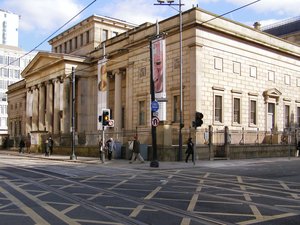 Manchester Art Gallery |
Manchester | 3 | Dr Charles White, John Pooley, Hannah Hatfield |
 Sizergh Castle |
Kendal | 2 | Thomas Strickland Standish (1763 - 1813), George Strickland |
 Amgueddfa ac Oriel Gwynedd |
Bangor | 1 | Mary Fryer Todd, née Evans |
Kies een decennium om het origineel te zien dat dit tijdperk definieert.


Catherine of Berain (1535-1591), 'the Grandmother of Wales' (after Adriaen van Cronenburgh) (1568). Piers Wynne Yorke (1789-1837) as a Boy (1795) en Sir Robert Walpole, 1st Earl of Orford, KG (1676-1745), as Ranger of Richmond Park (after Jonathan Richardson the elder) (1800) volgen.
Catherine of Berain (1535-1591), 'the Grandmother of Wales' (after Adriaen van Cronenburgh), Piers Wynne Yorke (1789-1837) as a Boy, Sir Robert Walpole, 1st Earl of Orford, KG (1676-1745), as Ranger of Richmond Park (after Jonathan Richardson the elder), Diana Wynne, Mrs Philip Yorke I (1748-1805) as a Widow, Diana Wynne, Mrs Philip Yorke I (1748–1805) as a Widow, Thomas Strickland Standish (1763 - 1813), George Bullock, Sculptor, with a Bust of Henry Blundell, Mary Fryer Todd, née Evans, Mrs Thomas Lance en Dr Charles White. De bovenstaande ranglijst vermeldt het jaar en het museum van elk werk.
Onze catalogus bevat 14 werken van Joseph Allen, daterend van 1795 tot 1839.
Voornamelijk in Manchester Art Gallery (Manchester), Sizergh Castle (Kendal) en Amgueddfa ac Oriel Gwynedd (Bangor). De bovenstaande museumtabel bevat een volledig overzicht.
In 1800s: 5 van de 14 werken op deze pagina werden toen gemaakt, waaronder Sir Robert Walpole, 1st Earl of Orford, KG (1676-1745), as Ranger of Richmond Park (after Jonathan Richardson the elder).
Op deze pagina is het vroegste Piers Wynne Yorke (1789-1837) as a Boy (1795) en het laatste Hannah Hatfield (1839).
Dr Charles White, John Pooley en Hannah Hatfield: het Manchester Art Gallery, Manchester herbergt 3 van de werken op deze pagina.
Joseph Allen (1769 – 1839) remains a figure shrouded in scholarly interest, yet his contribution to British artistic and intellectual life is undeniable. Primarily recognized as a sculptor’s assistant under George Romney—a partnership that yielded some of England's most celebrated Neoclassical portraits—Allen’s own artistic endeavors deserve greater appreciation, offering glimpses into a mind deeply engaged with classical ideals and biblical narratives. Born in London, Allen’s formative years were marked by exposure to the burgeoning neoclassical movement. While details about his family background are scarce, reflecting the societal norms of the time when biographical information was often limited for artisans and craftsmen, his early immersion in the London art scene provided the essential foundation for a career defined by precision and classical reverence.
The relationship between Allen and Romney constitutes a cornerstone of Allen's artistic legacy. Romney, a prolific portrait painter himself, entrusted Allen with assisting in numerous commissions, fostering a collaborative environment where Allen honed his sculptural skills alongside Romney’s masterful technique. This association produced iconic images like “The Painter,” showcasing Romney’s genius and cementing Allen's reputation as a skilled craftsman capable of navigating the delicate balance between oil and stone. Through this mentorship, Allen learned to translate the fluid grace of portraiture into the enduring permanence of sculpture, a skill that would define his independent contributions to the Neoclassical canon.
Allen's artistic output extended far beyond his involvement with Romney. He undertook commissions for private clients, producing busts and sculptures that demonstrate a commitment to anatomical accuracy and stylistic refinement—characteristics consistent with the prevailing aesthetic sensibilities of the era. His work often sought to capture more than just a physical likeness; he aimed to distill complex psychological states into visual form. Notably, he created a striking portrait of Henry Blundell, sculptor and fellow Romantic artist, capturing Blundell’s solemn gaze and conveying a palpable sense of intellectual contemplation. This ability to imbue cold medium with human emotion is what elevates his work from mere craftsmanship to true fine art.
The breadth of his technical skill can be seen in the variety of subjects he approached:
Allen’s artistic style was profoundly shaped by the classical tradition championed by the great masters of his age. His work serves as a vital link in the evolution of British Neoclassicism, bridging the gap between the grand decorative styles of the eighteenth century and the more psychologically nuanced approaches of the nineteenth. Though often overshadowed by his more famous contemporaries, Allen's dedication to the principles of anatomical truth and classical dignity ensures his place in the annals of British art history. His ability to navigate the transition from assistant to independent creator reflects a profound mastery of the tools of his trade and an enduring passion for the beauty of the human form.


