Portret van John Phillip

De 100 beroemdste schilderijen van John Phillip, elk uniek

Bijgewerkt in oktober 2026 · gerangschikt op basis van onze populariteitsscore (zoekopdrachten, bezoeken en bestellingen per kunstwerk) · 101 werken van John Phillip in onze catalogus

Kortom

Mary MacKay Caird, later Mrs James Glen (1847 - 1940) (1866) is het schilderij van John Phillip dat de meeste aandacht trekt; het origineel bevindt zich in het Scottish National Gallery, Edinburgh. Daarna gaat de blik naar William Borthwick Johnstone (1804 - 1868) (1865) en Gonzalo de Vilches, 1st Earl of Vilches (?) (1850). Van de 101 werken van John Phillip in onze catalogus zijn dit de 100 bekendste, elk een uniek origineel gepresenteerd met het jaar, het museum en de reden waarom het blijft voortbestaan.

1817 – 1867, Aberdeen Academic realism Meeste werken: Royal Collection

Top 10 schilderijen van John Phillip, door de ogen van de galerie

1
Mary MacKay Caird, later Mrs James Glen (1847 - 1940) (1866) door John Phillip

Mary MacKay Caird, later Mrs James Glen (1847 - 1940)

1866 · Oil On Canvas · Scottish National Gallery, Edinburgh

A young woman is presented in a medium shot, her presence defined by a quiet, formal elegance. She holds a small dog, a detail that anchors the composition in a sense of domestic intimacy. The subject is positioned against a dark, textured background of foliage, which recedes into a distant, twilight landscape. Light enters from the upper left, casting a soft glow upon her face and chest, while the deep…

2
William Borthwick Johnstone (1804 - 1868) (1865) door John Phillip

William Borthwick Johnstone (1804 - 1868)

1865 · Oil On Canvas · Scottish National Gallery, Edinburgh

An elderly man gazes toward the right, his expression marked by quiet introspection and a sense of wisdom. This bust-length portrait utilizes a low-key, dramatic atmosphere to establish a somber tone. The subject's weathered skin and the subtle textures of his clothing are rendered through visible brushstrokes, suggesting the tactile reality of a life lived. Lighting originates from the upper left, casting soft shadows across the right side of the…

3
Gonzalo de Vilches, 1st Earl of Vilches (?) (1850) door John Phillip

Gonzalo de Vilches, 1st Earl of Vilches (?)

1850 · Oil On Canvas · Museo del Prado, Madrid

A young man occupies the center of this intimate space, his body turned in a three-quarter view that suggests a sudden, quiet movement. He gazes toward the left, his eyes fixed on something unseen beyond the frame, lending the scene a sense of suspended animation. A heavy, dark mantle drapes over his shoulders, its deep shadows swallowing the light, while a crisp white collar breaks the darkness with a sharp,…

4
Ellen Brown, Mrs William Borthwick Johnstone (1861) door John Phillip

Ellen Brown, Mrs William Borthwick Johnstone

1861 · Oil On Canvas · Scottish National Gallery, Edinburgh

The portrait titled Ellen Brown, Mrs William Borthwick Johnstone emerges from the canvas as a quiet study of a woman in her prime. Painted by John Phillip in 1861, the work captures Ellen Brown, the daughter of J. C. Brown, ARSA. She sits with a composed grace that suggests a life of refinement and settled purpose. There is a stillness in her gaze that invites the viewer into her private…

5
Rev. Alexander Dyce Davidson, 1807 - 1872. Free Church minister (1850) door John Phillip

Rev. Alexander Dyce Davidson, 1807 - 1872. Free Church minister

1850 · Oil On Canvas · Scottish National Portrait Gallery, Edinburgh

This oil on canvas portrait is titled Rev. Alexander Dyce Davidson, 1807 - 1872. Free Church minister. The work was executed by the artist John Phillip about 1850. It depicts the subject, Rev. Alexander Dyce Davidson, in a formal bust-length composition. The sitter is positioned slightly off-center, facing toward the viewer's right while his gaze meets the observer directly. He is shown wearing a dark clerical garment and a white…

De beroemde schilderijen van John Phillip, nummer 11 tot 100

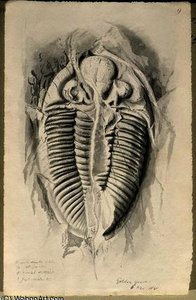
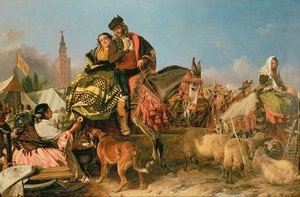
11Dorothea Harriet Gibbs (1840 -1914), as a child (1844) door John PhillipDorothea Harriet Gibbs (1840 -1914), as a child1844 · Tyntesfield 12Provost George Henry (1850-1853) (1845) door John PhillipProvost George Henry (1850-1853)1845 13Disgorging the Fly (1841) door John PhillipDisgorging the Fly1841 14The Highland Home (1845) door John PhillipThe Highland Home1845 15Tasso in Disguise Relating his Persecutions to his Sister (1840) door John PhillipTasso in Disguise Relating his Persecutions to his Sister1840 16Self Portrait (1840) door John PhillipSelf Portrait1840 17Mrs Jean Chalmers (1840) door John PhillipMrs Jean Chalmers1840 18A Scotch Fair (1848) door John PhillipA Scotch Fair1848 19The Orange Girl (1854) door John PhillipThe Orange Girl1854 · Birmingham Museum and Art Gallery 20A Spanish Gipsy Mother (1852) door John PhillipA Spanish Gipsy Mother1852 · Royal Collection 21El Paseo (1854) door John PhillipEl Paseo1854 · Royal Collection 22Princess Feodora of Hohenlohe-Langenburg (1839-1872) (1852) door John PhillipPrincess Feodora of Hohenlohe-Langenburg (1839-1872)1852 · Royal Collection 23Princess Charlotte of Belgium (1840-1927) (1852) door John PhillipPrincess Charlotte of Belgium (1840-1927)1852 · Royal Collection 24Collecting the Offering in a Scottish Kirk (1855) door John PhillipCollecting the Offering in a Scottish Kirk1855 · York Art Gallery 25La Perla de Triana (1852) door John PhillipLa Perla de Triana1852 26William Brodie RSA, sculptor (1850) door John PhillipWilliam Brodie RSA, sculptor1850 27John Innes (1850) door John PhillipJohn Innes1850 28Gypsy Musicians of Spain (Spanish Minstrels) (1855) door John PhillipGypsy Musicians of Spain (Spanish Minstrels)1855 29Sketch for "Drawing For The Militia" (1849) door John PhillipSketch for "Drawing For The Militia"1849 30The Marriage of the Princess Victoria Adelaide, Princess Royal (1840-1901) later Empress of Prussia, to Crown Prince Frederick William of Prussia (1831-1888) later Emperor Frederick III, Emperor of G (1858) door John PhillipThe Marriage of the Princess Victoria Adelaide, Princess Royal (1840-1901) later Empress of Prussia, to Crown Prince Frederick William of Prussia (1831-1888) later Emperor Frederick III, Emperor of G1858 31The Promenade (1859) door John PhillipThe Promenade1859 32The Antonia (1863) door John PhillipThe Antonia1863 33The Prison Window (1857) door John PhillipThe Prison Window1857 34Princess Beatrice (1857-1944) later Princess Henry of Battenberg (1860) door John PhillipPrincess Beatrice (1857-1944) later Princess Henry of Battenberg1860 · Royal Collection 35Spanish Boys Playing at Bull-fighting (1860) door John PhillipSpanish Boys Playing at Bull-fighting1860 · Scottish National Gallery 36John Phillip, 1817 - 1867. Artist (Self-portrait) (1863) door John PhillipJohn Phillip, 1817 - 1867. Artist (Self-portrait)1863 37William Borthwick Johnstone, 1804 - 1868. Artist (1861) door John PhillipWilliam Borthwick Johnstone, 1804 - 1868. Artist1861 · Scottish National Portrait Gallery 38Samuel Bough, 1822 - 1878. Landscape painter (1856) door John PhillipSamuel Bough, 1822 - 1878. Landscape painter1856 · Scottish National Portrait Gallery 39Spanish peasants at the well (1859) door John PhillipSpanish peasants at the well1859 40Albert (1819–1861), Prince Consort (1859) door John PhillipAlbert (1819–1861), Prince Consort1859 41La Loteria Nacional (1860) door John PhillipLa Loteria Nacional1860 42House of Commons - Study for 'At The House of Commons' (1860) door John PhillipHouse of Commons - Study for 'At The House of Commons'1860 43Kate Nickleby (1862) door John PhillipKate Nickleby1862 44Miss Jean Isabella Ross (1856) door John PhillipMiss Jean Isabella Ross1856 45Sketch for "The Marriage of the Princess Royal" (1858) door John PhillipSketch for "The Marriage of the Princess Royal"1858 46Agua-Bendita - A Church Scene (1861) door John PhillipAgua-Bendita - A Church Scene1861 47The Artist's Spanish Guide (1856) door John PhillipThe Artist's Spanish Guide1856 48The Pride of Seville (1858) door John PhillipThe Pride of Seville1858 49La Bomba (1863) door John PhillipLa Bomba1863 50O Nannie, Wilt Thou Gang Wi'me (1859) door John PhillipO Nannie, Wilt Thou Gang Wi'me1859 51Dolores, A Spanish Widow (1862) door John PhillipDolores, A Spanish Widow1862 52Una Maja Bonita (1856) door John PhillipUna Maja Bonita1856 53Spanish Peasants - The Wayside in Andalucia (1863) door John PhillipSpanish Peasants - The Wayside in Andalucia1863 54'La Gloria': A Spanish Wake (1864) door John Phillip'La Gloria': A Spanish Wake1864 · Scottish National Gallery 55Donald Kennedy of Drumashie, Inverness (1865) door John PhillipDonald Kennedy of Drumashie, Inverness1865 56The Spanish Flower Seller (1864) door John PhillipThe Spanish Flower Seller1864 57The Fortune Teller door John PhillipThe Fortune Teller 58First steps door John PhillipFirst steps 59Self-portrait door John PhillipSelf-portraitScottish National Gallery 60The Brig 'Manly' (1834) door John PhillipThe Brig 'Manly'1834 61Sketch for 'A Scotch Fair' (1848) door John PhillipSketch for 'A Scotch Fair'1848 62Spanish Carnival door John PhillipSpanish CarnivalFitzwilliam Museum 63A Highland Piper door John PhillipA Highland PiperRoyal Collection 64Two Boys: Study after 'Spanish Boys Playing at Bull-fighting' (NG 534) door John PhillipTwo Boys: Study after 'Spanish Boys Playing at Bull-fighting' (NG 534)Scottish National Gallery 65Sir Thomas Blaikie, Provost of Aberdeen 1839-47, 1853-56 door John PhillipSir Thomas Blaikie, Provost of Aberdeen 1839-47, 1853-56 66John Smith, First City Architect to Aberdeen door John PhillipJohn Smith, First City Architect to Aberdeen 67Bal Masque door John PhillipBal Masque 68Nude Bather - after Rubens door John PhillipNude Bather - after Rubens 69Gathering The Offerings door John PhillipGathering The Offerings 70Highland Lassie door John PhillipHighland Lassie 71Self Portrait door John PhillipSelf Portrait 72Portrait of a Lady door John PhillipPortrait of a Lady 73James Hardie door John PhillipJames Hardie 74Cornelius van der Geest - after Van Dyck door John PhillipCornelius van der Geest - after Van Dyck 75The Artist and his Wife door John PhillipThe Artist and his Wife 76Self Portrait door John PhillipSelf Portrait 77Lady Gordon and her Child door John PhillipLady Gordon and her Child 78The Bohemian Woman door John PhillipThe Bohemian Woman 79Charity door John PhillipCharity 80Scotch Washing door John PhillipScotch Washing 81Presbyterian catechising door John PhillipPresbyterian catechisingScottish National Gallery 82Faith (1864) door John PhillipFaith1864 · Museum of London 83Trilobite from Golden Grove door John PhillipTrilobite from Golden Grove 84In The Garden, Seville door John PhillipIn The Garden, Seville 85At the Opera door John PhillipAt the Opera 86Spanish Industry door John PhillipSpanish Industry 87Fiesta Time door John PhillipFiesta Time 88Fair At Seville door John PhillipFair At Seville 89Life Among The Gypsies, Seville door John PhillipLife Among The Gypsies, Seville 90A scottish fair door John PhillipA scottish fair 91A Scottish Christening door John PhillipA Scottish Christening 92A Gypsy Water-Carrier of Seville door John PhillipA Gypsy Water-Carrier of Seville 93The orange seller door John PhillipThe orange seller 94Lord Palmerston Addressing the House of Commons door John PhillipLord Palmerston Addressing the House of Commons 95A Scotch Roadside Inn door John PhillipA Scotch Roadside Inn 96Lady Playing The Mandolin door John PhillipLady Playing The MandolinWolverhampton Art Gallery 97The Evil Eye door John PhillipThe Evil Eye 98The Dying Contrabandista (1858) door John PhillipThe Dying Contrabandista1858 · Royal Collection 99The Marriage of Victoria, Princess Royal, 25 January 1858 (1860) door John PhillipThe Marriage of Victoria, Princess Royal, 25 January 18581860 · Royal Collection 100The Letter-Writer of Seville (1854) door John PhillipThe Letter-Writer of Seville1854 · Royal Collection

De onderwerpen die de aandacht van John Phillip troffen

De vier onderwerpen die het meest voorkomen in deze originelen, elk met zijn mooiste voorbeeld.

De musea waar de originele werken van John Phillip worden bewaard

De 8 musea met de meeste schilderijen op deze pagina.

Museum Stad Werken van John Phillip Schilderijen uit deze lijst
Royal Collection, LondenRoyal Collection Londen 9 A Spanish Gipsy Mother, El Paseo, Princess Feodora of Hohenlohe-Langenburg (1839-1872)
Scottish National Gallery, EdinburghScottish National Gallery Edinburgh 8 Mary MacKay Caird, later Mrs James Glen (1847 - 1940), William Borthwick Johnstone (1804 - 1868), Ellen Brown, Mrs William Borthwick Johnstone
Scottish National Portrait Gallery, EdinburghScottish National Portrait Gallery Edinburgh 3 Rev. Alexander Dyce Davidson, 1807 - 1872. Free Church minister, William Borthwick Johnstone, 1804 - 1868. Artist, Samuel Bough, 1822 - 1878. Landscape painter
TyntesfieldTyntesfield 3 Oil painting, Antony Gibbs (1841 - 1907), aged 3, Dorothea Harriet Gibbs (1840 -1914), as a child
Museo del Prado, MadridMuseo del Prado Madrid 1 Gonzalo de Vilches, 1st Earl of Vilches (?)
Birmingham Museum and Art Gallery, BirminghamBirmingham Museum and Art Gallery Birmingham 1 The Orange Girl
York Art Gallery, YorkYork Art Gallery York 1 Collecting the Offering in a Scottish Kirk
Fitzwilliam MuseumFitzwilliam Museum 1 Spanish Carnival

John Phillip door de decennia heen: elk een uniek origineel

Werken per decennium

Kies een decennium om het origineel te zien dat dit tijdperk definieert.

Schilderijen van John Phillip: vragen voor de galerie

Wat is het bekendste werk van John Phillip?Onthul het antwoord

Mary MacKay Caird, later Mrs James Glen (1847 - 1940) (1866), Scottish National Gallery, Edinburgh. William Borthwick Johnstone (1804 - 1868) (1865) en Gonzalo de Vilches, 1st Earl of Vilches (?) (1850) volgen.

Op welke leeftijd creëerde John Phillip Mary MacKay Caird, later Mrs James Glen (1847 - 1940)?Onthul het antwoord

49 jaar oud: Mary MacKay Caird, later Mrs James Glen (1847 - 1940) dateert uit 1866, en John Phillip werd geboren in 1817.

Welke tien schilderijen van John Phillip zijn het meest bekend?Onthul het antwoord

Mary MacKay Caird, later Mrs James Glen (1847 - 1940), William Borthwick Johnstone (1804 - 1868), Gonzalo de Vilches, 1st Earl of Vilches (?), Ellen Brown, Mrs William Borthwick Johnstone, Rev. Alexander Dyce Davidson, 1807 - 1872. Free Church minister, Ann Allan, James Blaikie of Craigiebuckler, Provost of Aberdeen (1833-1835), Sketch after Rubens, Oil painting en Antony Gibbs (1841 - 1907), aged 3. De bovenstaande ranglijst vermeldt het jaar en het museum van elk werk.

Hoeveel werken van John Phillip zijn er bekend?Onthul het antwoord

Onze catalogus bevat 101 werken van John Phillip, daterend van 1831 tot 1866.

Waar kunnen de beroemdste originelen van John Phillip worden bekeken?Onthul het antwoord

Voornamelijk in Royal Collection (Londen), Scottish National Gallery (Edinburgh) en Scottish National Portrait Gallery (Edinburgh). De bovenstaande museumtabel bevat een volledig overzicht.

In welke periode creëerde John Phillip de bekendste schilderijen?Onthul het antwoord

In 1850s: 26 van de 100 werken op deze pagina werden toen gemaakt, waaronder Gonzalo de Vilches, 1st Earl of Vilches (?).

Welk beroemd schilderij van John Phillip is de vroegste, en welke de laatste?Onthul het antwoord

Op deze pagina is het vroegste Ann Allan (1831) en het laatste Mary MacKay Caird, later Mrs James Glen (1847 - 1940) (1866).

Welke onderwerpen had John Phillip de voorkeur?Onthul het antwoord

Man (4), Woman (3) en Portrait (3), verspreid over de 100 werken op deze pagina.

Met welke materialen schilderde John Phillip het meest?Onthul het antwoord

Oil On Canvas, voor 6 van de 100 werken op deze pagina.

Bij welke stroming behoort het werk van John Phillip?Onthul het antwoord

Academic realism, te oordelen aan de originelen op deze pagina.

Welke originele werken van John Phillip kan ik zien in het Royal Collection?Onthul het antwoord

A Spanish Gipsy Mother, El Paseo en Princess Feodora of Hohenlohe-Langenburg (1839-1872): het Royal Collection, Londen herbergt 9 van de werken op deze pagina.

John Phillip: een portret van de kunstenaar

De Schilder van Spaanse Dromen: Het Leven en de Nalatenschap van John Phillip

Geboren in het ruige landschap van Aberdeen, Schotland, in 1817, zou John Phillip uiteindelijk zijn bescheiden begin overstijgen om een van de meest evocatieve stemmen van het Victoriaanse tijdperk te worden. Affectioneerd bekend onder de bijnaam "Spanish Phillip," was zijn reis er een van diepgaande transformatie, waarbij hij bewoog van de minutieuze, sombere voorstellingen van het Schotse plattelandsleven naar de zonovergoten, levendige doeken van Zuid-Europa. Zijn vroege jaren werden gekenmerkt door een ontluikend talent dat de aandacht trok van invloedrijke beschermheren, met name Lord Panmure, wiens vrijgevigheid de essentiële brug vormde voor Phillip om in 1836 de Royal Academy of Arts in Londen te bereiken. Het was binnen deze prestigieuze instelling dat Phillip zijn artistieke stam vond door zich aan te sluiten bij de invloedrijke groep die bekend stond als The Clique. Onder leiding van de excentrieke Richard Dadd deelden deze kring van kunstenaars een diep ontzag voor het narratieve realisme van William Hogarth en de dramatische landschappen van David Wilkie, principes die de basis zouden vormen voor de vroege technische beheersing van Phillip.

In zijn vormende jaren was de penseel van Phillip gewijd aan de waardigheid en de ontberingen van het Schotse volk. Hij legde het stille, vaak zwoegende bestaan van kleine boeren vast met een precisie die de ziel van zijn vaderland sprak. Deze vroege werken werden gekenmerkt door een minutieuze aandacht voor detail en een gevoel van vrome huiselijkheid, wat de culturele stromingen van het laat-Victoriaanse Schotland weerspiegelde. Echter, in 1851 vond er een cruciale verschuiving plaats, ingegeven door medisch advies om voor zijn gezondheid warmere klimaten op te zoeken. Deze pelgrimstocht naar Spanje was niet louter een herstellende reis, maar een artistieke wedergeboorte. Terwijl hij door de straten van Sevilla en Madrid dwaalde, werden de schaduwen van Schotland vervangen door het stralende licht van Andalusië. De invloed van Spaanse meesters als Bartolom Tamayo, Bartolomé Esteban Murillo en Diego Velázquez begon zijn werk te doordringen, wat zijn palet en zijn benadering van vorm fundamenteel veranderde.

Een Transformatie van Licht en Techniek

De overgang van de gedetailleerde, bijna documentaire stijl van zijn Schotse periode naar een veel bredere, schilderkunstigere techniek markeert de meest fascinerende evolutie in de carrière van Phillip. Hoewel hij zich aanvankelijk verzette tegen de opkomende Prerafaëlitische beweging, begonnen zijn latere werken, zoals The Letter Writer, Seville, een subtiele betrokkenheid te tonen bij hun lumineuze kwaliteiten. Naarmate zijn reizen zijn verbinding met de Spaanse geest verdiepten, werd zijn penseelstreek zelfverzekerder en expressiever, wat de ontwikkelingen in de late carrière van tijdgenoten als John Everett Millais weerspiegelde. Hij bewoog weg van rigide contouren naar een verkenning van textuur en atmosfeer, waarbij hij impasto gebruikte om de hitte en het stof van het Spaanse landschap te vangen.

Deze stilistische volwassenheid bereikte haar hoogtepunt in de jaren 1860, waar zijn composities grootschaliger en emotioneel resonanter werden. Zijn vermogen om de volgende elementen samen te weven, definieerde zijn volwassen periode:

  • Dramatisch Chiaroscuro: Het gebruik van diepe schaduwen en doordringende hoogtepunten om een gevoel van theatrale beweging te creëren.
  • Culturele Onderdompeling: Het verder gaan dan loutere observatie om de essentie van het Spaanse straatleven en de religieuze devotie te vangen.
  • Narratieve Diepgang: Het creëren van scènes die aanvoelden als bevroren momenten uit een groter, ontrollend verhaal, vergelijkbaar met zijn inspiratiebronnen Murillo en Velázquez.

Grote prestaties zoals The Early Career of Murillo (1864) en La Gloria (1865) staan als testamenten voor deze periode van meesterschap. In deze werken schilderde Phillip niet alleen onderwerpen; hij schilderde de geschiedenis van de kunst zelf, als eerbetoon aan de meesters die zijn eigen metamorfose hadden geïnspireerd. Zijn nalatenschap blijft die van een brugbouwer—tussen de sombere tradities van de Schotse genreschilderkunst en het levendige, door licht gevulde romantisme van het Middellandse Zeegebied. Hoewel zijn leven in 1867 voortijdig werd beëindigd, liet John Phillip een oeuvre na dat blijft betoveren, en dat de kijker uitnodigt om uit de grijze nevels van het Noorden te stappen en in de eeuwige, gouden gloed van zijn Spaanse dromen te duiken.