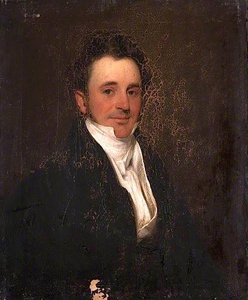
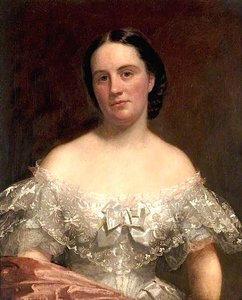
Portret van John Graham-Gilbert

De 100 bekendste schilderijen van John Graham-Gilbert, een selectie uit de galerie

Bijgewerkt in november 2026 · gerangschikt op basis van onze populariteitsscore (zoekopdrachten, bezoeken en bestellingen per kunstwerk) · 140 werken van John Graham-Gilbert in onze catalogus

Kortom

Van alle originele werken die John Graham-Gilbert heeft nagelaten, is James Watt (1736–1819) (1819) de bekendste. Direct daarna volgen Professor George Jardine (1742–1827) (after Henry Raeburn) (1827) en John T. Alston (1780–1857), Provost of Glasgow (1820–1821) (1832). Onze catalogus bevat 140 werken van John Graham-Gilbert; de galerie heeft de 100 meest bewonderde werken ter wereld bewaard, elk voorzien van de datum, het museum en het verhaal erachter.

1794 – 1866, Glasgow Neoclassicism Meeste werken: The Dick Institute

De top 10 schilderijen van John Graham-Gilbert: de selectie van de galerie

1
James Watt (1736–1819) (1819) door John Graham-Gilbert

James Watt (1736–1819)

1819 · Oil On Canvas

A single light source strikes the brow of James Watt, casting the rest of the world into a heavy, velvet darkness. He sits in a quiet stillness, his gaze fixed forward as if looking through the viewer toward a horizon of steam and iron. The white of his hair catches the light, a stark contrast against the deep shadows that define the contours of his face. There is a gravity…

2
Professor George Jardine (1742–1827) (after Henry Raeburn) (1827) door John Graham-Gilbert

Professor George Jardine (1742–1827) (after Henry Raeburn)

1827 · Oil On Canvas

The shadows cling to the edges of the frame, leaving only the face and upper torso of Professor George Jardine to emerge from the darkness. He gazes directly at us, his expression heavy with a quiet, intellectual authority that seems to command the very air around him. There is a stillness here, a moment frozen in 1827, where the weight of a lifetime of thought is etched into the lines…

3
John T. Alston (1780–1857), Provost of Glasgow (1820–1821) (1832) door John Graham-Gilbert

John T. Alston (1780–1857), Provost of Glasgow (1820–1821)

1832 · Oil On Canvas

The portrait presents a formal study of John Thomas Alston, a man whose posture and expression command the space of the canvas. He is depicted in a moment of quiet gravity, his presence defined by the heavy, dark tones of his attire and the deliberate arrangement of his hands. The lighting is directional, carving his features out of a deep, shadowed background and emphasizing the textures of his skin and…

4
Mrs Hugh Robertson of Gartloch (1798–1846) (1841) door John Graham-Gilbert

Mrs Hugh Robertson of Gartloch (1798–1846)

1841 · Oil On Canvas

The portrait depicts a woman seated in profile against a dark, indistinct background. She is positioned centrally, her form creating a pyramidal structure that directs the eye toward her head. The subject wears a burgundy velvet dress, the texture of which is rendered through meticulous brushwork that suggests the weight and softness of the fabric. A lace detail adorns the neckline, and a red feathered hat rests upon her head.…

5
Professor James Adair Lawrie; (1801-1859) (1855) door John Graham-Gilbert

Professor James Adair Lawrie; (1801-1859)

1855 · Oil On Canvas · The Hunterian Museum and Art Gallery, Glasgow

In this 1855 oil portrait, we encounter Professor James Adair Lawrie, a man whose presence commands a quiet, somber authority. He is presented in a three-quarter length view, seated with an upright posture that suggests a lifetime of academic discipline. The composition is intimate, placing the viewer at eye-level with the subject, creating a direct connection that feels almost private. There is a profound sense of weight to the figure,…

6
Mrs Agnes D'Arcy Jarvie (1866) door John Graham-Gilbert

Mrs Agnes D'Arcy Jarvie

1866 · Oil On Canvas

This portrait, titled Mrs Agnes D'Arcy Jarvie, was painted by John Graham Gilbert in 1866. The subject is depicted from the chest up in a seated position. She is positioned in the center of the frame, gazing directly at the viewer. The composition focuses on her face and upper body, set against a blurred background that suggests an interior environment.

De selectie van John Graham-Gilbert gaat verder, van 11 tot 100

11Self Portrait (copy of Joshua Reynolds) (1819) door John Graham-GilbertSelf Portrait (copy of Joshua Reynolds)1819 12James Irvine (1826) door John Graham-GilbertJames Irvine1826 13An Italian Nobleman (1830) door John Graham-GilbertAn Italian Nobleman1830 14James Dennistoun, Esq., of Golfhill (1829) door John Graham-GilbertJames Dennistoun, Esq., of Golfhill1829 15Joseph Hume, Political Economist (1823) door John Graham-GilbertJoseph Hume, Political Economist1823 16James Irvine (d.1831) (1826) door John Graham-GilbertJames Irvine (d.1831)1826 17William Murdoch (1754–1839) (1827) door John Graham-GilbertWilliam Murdoch (1754–1839)1827 · Birmingham Museum and Art Gallery 18William Dale (1794–1827) (1825) door John Graham-GilbertWilliam Dale (1794–1827)1825 19A Tyrolese Hunter (1826) door John Graham-GilbertA Tyrolese Hunter1826 20Joseph Hume (1777–1855), Political Economist (1823) door John Graham-GilbertJoseph Hume (1777–1855), Political Economist1823 · Scottish National Portrait Gallery 21William Richardson (1743–1814), Professor of Humanity at the University of Glasgow (1773–1815) (1827) door John Graham-GilbertWilliam Richardson (1743–1814), Professor of Humanity at the University of Glasgow (1773–1815)1827 22An Italian Nobleman (1830) door John Graham-GilbertAn Italian Nobleman1830 · Royal Scottish Academy of Art - Architecture 23Saint Sebastian (1826) door John Graham-GilbertSaint Sebastian1826 24James Dennistoun, Esq., of Golfhill (1758–1835) (1829) door John Graham-GilbertJames Dennistoun, Esq., of Golfhill (1758–1835)1829 25Sir Walter Scott (1771–1832), Bt, FRSE (1829) door John Graham-GilbertSir Walter Scott (1771–1832), Bt, FRSE1829 · The Royal Society of Edinburgh 26Figure of a Lady (after Jacopo Palma il vecchio) (1825) door John Graham-GilbertFigure of a Lady (after Jacopo Palma il vecchio)1825 27The Martyrdom of Saint Justina (after Paolo Veronese) (1825) door John Graham-GilbertThe Martyrdom of Saint Justina (after Paolo Veronese)1825 28Reverend Stevenson MacGill (1765–1840), Professor of Divinity at the University of Glasgow (1834) door John Graham-GilbertReverend Stevenson MacGill (1765–1840), Professor of Divinity at the University of Glasgow1834 29James Hopkirk of Dalbeth (1835) door John Graham-GilbertJames Hopkirk of Dalbeth1835 30Thomas Graham (1805–1869), FRS (1837) door John Graham-GilbertThomas Graham (1805–1869), FRS1837 31Duncan MacFarlan (1771–1857), Principal of the University of Glasgow (1823–1857) (1839) door John Graham-GilbertDuncan MacFarlan (1771–1857), Principal of the University of Glasgow (1823–1857)1839 32John Gibson (1847) door John Graham-GilbertJohn Gibson1847 · Scottish National Gallery 33John Burns, Professor of Surgery at the University of Glasgow (1848) door John Graham-GilbertJohn Burns, Professor of Surgery at the University of Glasgow1848 34Lord Kelvin William Thomson, at the Age of 22 (1846) door John Graham-GilbertLord Kelvin William Thomson, at the Age of 221846 35John Burns (1775–1850), Professor of Surgery at the University of Glasgow (1815–1850) (1848) door John Graham-GilbertJohn Burns (1775–1850), Professor of Surgery at the University of Glasgow (1815–1850)1848 36John Gibson (1790–1866), RA (1848) door John Graham-GilbertJohn Gibson (1790–1866), RA1848 37Portrait of an Unknown Sitter with a Book (1846) door John Graham-GilbertPortrait of an Unknown Sitter with a Book1846 · The Dick Institute 38Georgina Smith (1846) door John Graham-GilbertGeorgina Smith1846 · Stirling Smith Art Gallery And Museum 39Georgina Smith (1846) door John Graham-GilbertGeorgina Smith1846 · The Stirling Smith Art Gallery - Museum 40Lord Kelvin William Thomson (1824–1907), at the Age of 22 (1846) door John Graham-GilbertLord Kelvin William Thomson (1824–1907), at the Age of 221846 41Portrait of a Man (formerly designated as Andreas Vesalius) (after a Venetian artist) (1840) door John Graham-GilbertPortrait of a Man (formerly designated as Andreas Vesalius) (after a Venetian artist)1840 42Mrs James Scott of Kelly (1850) door John Graham-GilbertMrs James Scott of Kelly1850 43The Holy Family (1850) door John Graham-GilbertThe Holy Family1850 · Baddesley Clinton 44Mrs James Scott of Kelly (1850) door John Graham-GilbertMrs James Scott of Kelly1850 45Thomas Thomson (1773–1852) (1850) door John Graham-GilbertThomas Thomson (1773–1852)1850 46William Fleming (d.1866), Professor of Oriental Languages (1831–1839) and Professor of Moral Philosophy (1839–1866) at the University of Glasgow (1854) door John Graham-GilbertWilliam Fleming (d.1866), Professor of Oriental Languages (1831–1839) and Professor of Moral Philosophy (1839–1866) at the University of Glasgow1854 47Sir John Watson Gordon (1788–1864), Artist (1854) door John Graham-GilbertSir John Watson Gordon (1788–1864), Artist1854 · Scottish National Portrait Gallery 48The First Born (1853) door John Graham-GilbertThe First Born1853 49Mrs John Jarvie (1859) door John Graham-GilbertMrs John Jarvie1859 50James Buchanan (1860) door John Graham-GilbertJames Buchanan1860 · Nhs Lothian 51Going to Market (1860) door John Graham-GilbertGoing to Market1860 52Crossing the Ford (1859) door John Graham-GilbertCrossing the Ford1859 53Alexander Hill (1786–1867), Professor of Divinity at the University of Glasgow (1840–1862) (1864) door John Graham-GilbertAlexander Hill (1786–1867), Professor of Divinity at the University of Glasgow (1840–1862)1864 54William Weir (1794–1876), President of the Faculty of Physicians and Surgeons of Glasgow (1847–1849) (1865) door John Graham-GilbertWilliam Weir (1794–1876), President of the Faculty of Physicians and Surgeons of Glasgow (1847–1849)1865 55The Bandit’s Bride (1866) door John Graham-GilbertThe Bandit’s Bride1866 · Royal Scottish Academy of Art - Architecture 56The Beggar Maid door John Graham-GilbertThe Beggar Maid 57Ideal Portrait door John Graham-GilbertIdeal Portrait 58A Lady (after Henry Raeburn) door John Graham-GilbertA Lady (after Henry Raeburn) 59Bailie David Mitchell, OBE door John Graham-GilbertBailie David Mitchell, OBE 60Charles Lawson of Borthwick Hall (d.1874), Lord Provost of Edinburgh (1862–1865) door John Graham-GilbertCharles Lawson of Borthwick Hall (d.1874), Lord Provost of Edinburgh (1862–1865) 61Archibald William Montgomerie (1812–1861), 13th Earl of Eglinton door John Graham-GilbertArchibald William Montgomerie (1812–1861), 13th Earl of Eglinton 62Ann Margaret Forbes Leslie, Wife of Alexander Forbes Irvine, 20th Laird of Drum door John Graham-GilbertAnn Margaret Forbes Leslie, Wife of Alexander Forbes Irvine, 20th Laird of Drum 63Professor James Thomson (1786–1849), Professor of Mathematics at the University of Glasgow (1832–1849) door John Graham-GilbertProfessor James Thomson (1786–1849), Professor of Mathematics at the University of Glasgow (1832–1849)The Hunterian Museum and Art Gallery 64James Dennistoun, Esq. of Golfhill (1758–1835) door John Graham-GilbertJames Dennistoun, Esq. of Golfhill (1758–1835) 65The Young Seamstress door John Graham-GilbertThe Young Seamstress 66Dr William Hunter (1718–1783) (after Joshua Reynolds) door John Graham-GilbertDr William Hunter (1718–1783) (after Joshua Reynolds) 67Old Woman Reading (after Rembrandt van Rijn) door John Graham-GilbertOld Woman Reading (after Rembrandt van Rijn) 68Head of an Old Woman with a Cap, in Profile to the Right door John Graham-GilbertHead of an Old Woman with a Cap, in Profile to the Right 69Madonna della scodella (after Correggio) (1825) door John Graham-GilbertMadonna della scodella (after Correggio)1825 70Madonna with Saint Jerome (after Correggio) (1825) door John Graham-GilbertMadonna with Saint Jerome (after Correggio)1825 71Humphrey E. Maclae of Cathkin door John Graham-GilbertHumphrey E. Maclae of Cathkin 72Mungo Campbell door John Graham-GilbertMungo Campbell 73Elizabeth Buchanan door John Graham-GilbertElizabeth Buchanan 74Mrs Isabella C. Campbell door John Graham-GilbertMrs Isabella C. Campbell 75Girls at a Stream door John Graham-GilbertGirls at a Stream 76Italian Gentleman door John Graham-GilbertItalian Gentleman 77Self Portrait door John Graham-GilbertSelf PortraitRoyal Scottish Academy of Art - Architecture 78A Grecian Girl door John Graham-GilbertA Grecian Girl 79Study of a Female Figure door John Graham-GilbertStudy of a Female Figure 80Mrs James Buchanan door John Graham-GilbertMrs James BuchananNhs Lothian 81James Hamilton door John Graham-GilbertJames Hamilton 82Reverend John Burns (1744–1839), Minister of the Barony Church, Glasgow (1774–1839) door John Graham-GilbertReverend John Burns (1744–1839), Minister of the Barony Church, Glasgow (1774–1839) 83A Lady Sketching door John Graham-GilbertA Lady Sketching 84Portrait of Lady door John Graham-GilbertPortrait of LadyThe Dick Institute 85Female Portrait door John Graham-GilbertFemale Portrait 86Female Portrait door John Graham-GilbertFemale Portrait 87Italian Woman door John Graham-GilbertItalian Woman 88James Buchanan of Dowanhill (1756–1844) door John Graham-GilbertJames Buchanan of Dowanhill (1756–1844) 89Jane Buchanan door John Graham-GilbertJane BuchananThe Dick Institute 90William Murdock (1754–1839) door John Graham-GilbertWilliam Murdock (1754–1839)The Royal Society of Edinburgh 91Adam Black door John Graham-GilbertAdam BlackThe Merchant's Hall 92Italian Girl door John Graham-GilbertItalian Girl 93Andrew Stevenson Dalglish (1793–1858) door John Graham-GilbertAndrew Stevenson Dalglish (1793–1858) 94Humphrey E. Maclae of Cathkin (1773–1860) door John Graham-GilbertHumphrey E. Maclae of Cathkin (1773–1860) 95Contemplation door John Graham-GilbertContemplation 96Mungo Campbell door John Graham-GilbertMungo Campbell 97Portrait of a Man door John Graham-GilbertPortrait of a ManThe Dick Institute 98Elizabeth Buchanan door John Graham-GilbertElizabeth BuchananThe Dick Institute 99Figure Study door John Graham-GilbertFigure Study 100A Grecian Girl door John Graham-GilbertA Grecian Girl

De onderwerpen die de aandacht van John Graham-Gilbert troffen

De vier onderwerpen die het meest voorkomen in deze originelen, elk met zijn mooiste voorbeeld.

De musea waar de originele werken van John Graham-Gilbert worden bewaard

De 8 musea met de meeste schilderijen op deze pagina.

Museum Stad Werken van John Graham-Gilbert Schilderijen uit deze lijst
The Dick Institute, KilmarnockThe Dick Institute Kilmarnock 5 Portrait of an Unknown Sitter with a Book, Portrait of Lady, Jane Buchanan
The Hunterian Museum and Art Gallery, GlasgowThe Hunterian Museum and Art Gallery Glasgow 3 Professor James Adair Lawrie; (1801-1859), Self Portrait, Professor James Thomson (1786–1849), Professor of Mathematics at the University of Glasgow (1832–1849)
Royal Scottish Academy of Art - Architecture, EdinburghRoyal Scottish Academy of Art - Architecture Edinburgh 3 An Italian Nobleman, The Bandit’s Bride, Self Portrait
Scottish National Portrait Gallery, EdinburghScottish National Portrait Gallery Edinburgh 2 Joseph Hume (1777–1855), Political Economist, Sir John Watson Gordon (1788–1864), Artist
The Royal Society of Edinburgh, EdinburghThe Royal Society of Edinburgh Edinburgh 2 Sir Walter Scott (1771–1832), Bt, FRSE, William Murdock (1754–1839)
Nhs Lothian, EdinburghNhs Lothian Edinburgh 2 James Buchanan, Mrs James Buchanan
Birmingham Museum and Art Gallery, BirminghamBirmingham Museum and Art Gallery Birmingham 1 William Murdoch (1754–1839)
Scottish National Gallery, EdinburghScottish National Gallery Edinburgh 1 John Gibson

John Graham-Gilbert decennium voor decennium: het origineel dat elk tijdperk definieert

Werken per decennium

Kies een decennium om het origineel te zien dat dit tijdperk definieert.

Vragen van verzamelaars over de schilderijen van John Graham-Gilbert

Waar is John Graham-Gilbert het meest bekend om?Onthul het antwoord

James Watt (1736–1819) (1819). Professor George Jardine (1742–1827) (after Henry Raeburn) (1827) en John T. Alston (1780–1857), Provost of Glasgow (1820–1821) (1832) volgen.

Hoe oud was John Graham-Gilbert toen James Watt (1736–1819) werd gemaakt?Onthul het antwoord

25 jaar oud: James Watt (1736–1819) dateert uit 1819, en John Graham-Gilbert werd geboren in 1794.

Wat zijn de tien beroemdste schilderijen van John Graham-Gilbert?Onthul het antwoord

James Watt (1736–1819), Professor George Jardine (1742–1827) (after Henry Raeburn), John T. Alston (1780–1857), Provost of Glasgow (1820–1821), Mrs Hugh Robertson of Gartloch (1798–1846), Professor James Adair Lawrie; (1801-1859), Mrs Agnes D'Arcy Jarvie, Meditation, Isabella Ewing, Mrs Smith of Jordanhill, James Watt en Self Portrait. De bovenstaande ranglijst vermeldt het jaar en het museum van elk werk.

Hoeveel schilderijen heeft John Graham-Gilbert nagelaten?Onthul het antwoord

Onze catalogus bevat 140 werken van John Graham-Gilbert, daterend van 1810 tot 1866.

In welke musea hangen de meesterwerken van John Graham-Gilbert?Onthul het antwoord

Voornamelijk in The Dick Institute (Kilmarnock), The Hunterian Museum and Art Gallery (Glasgow) en Royal Scottish Academy of Art - Architecture (Edinburgh). De bovenstaande museumtabel bevat een volledig overzicht.

In welke jaren schilderde John Graham-Gilbert de beroemdste werken?Onthul het antwoord

In 1820s: 18 van de 100 werken op deze pagina werden toen gemaakt, waaronder Professor George Jardine (1742–1827) (after Henry Raeburn).

Wat zijn de eerste en de laatste beroemde originelen van John Graham-Gilbert?Onthul het antwoord

Op deze pagina is het vroegste Isabella Ewing, Mrs Smith of Jordanhill (1810) en het laatste Mrs Agnes D'Arcy Jarvie (1866).

Welke onderwerpen koos John Graham-Gilbert het vaakst?Onthul het antwoord

Portrait (13), Victorian era (10) en Formal (6), verspreid over de 100 werken op deze pagina.

Welke techniek gebruikte John Graham-Gilbert het meest?Onthul het antwoord

Oil On Canvas, voor 6 van de 100 werken op deze pagina.

Bij welke kunststroming behoort John Graham-Gilbert?Onthul het antwoord

Neoclassicism, te oordelen aan de originelen op deze pagina.

Welke werken van John Graham-Gilbert hangen in het The Dick Institute?Onthul het antwoord

Portrait of an Unknown Sitter with a Book, Portrait of Lady en Jane Buchanan: het The Dick Institute, Kilmarnock herbergt 5 van de werken op deze pagina.

John Graham-Gilbert: leven en werk

John Graham-Gilbert: Een Venetiaanse Echo in de Schotse Hooglanden

John Graham-Gilbert (1794 – 4 juni 1866) staat te boek als een meeslepende figuur binnen de Britse Victoriaanse kunst, een schilder wiens carrière zich over continenten uitstrekte en wiens stijl een fascinerende versmelting van invloeden onthult. Geboren in Glasgow, Schotland, in een familie die diep geworteld was in de handel—zijn vader was een prominente koopman in West-Indië—sloeg Graham-Gilbert aanvankelijk het pad van de accountancy in, voordat hij zijn ware roeping ontdekte: de betoverende wereld van de schilderkunst. Deze verschuiving was niet louter een beroepswijziging; het was een bewuste afwijzing van familiale verwachtingen en een omarming van artistieke expressie, een besluit dat uiteindelijk zowel zijn leven als zijn nalatenschap zou vormen. Zijn vroege opleiding was enigszini onconventioneel en werd gekenmerkt door een reis naar Londen in 1818, waar hij werd toegelaten tot de Royal Academy, een cruciale stap naar erkenning binnen de gevestigde kunstwereld. Het was tijdens deze periode dat hij zijn eigen kenmerkende stijl begon te ontwikkelen, een stijl die werd gekenmerkt door een opmerkelijke gevoeligheid voor licht en schaduw, wat vooral duidelijk werd in zijn portretten en genreschilderingen.

De Venetiaanse Invloed: Correggio en de Meesters

De artistieke reis van Graham-Gilbert nam een beslissend keerpunt tijdens een verblijf in Italië in de jaren 1820. Deze onderdompeling in het hart van de Renaissance bleek transformatief en beïnvloedde zijn techniek en esthetische gevoel diepgaand. Hij raakte bijzonder gegrepen door het werk van Correggio, wiens meesterlijke gebruik van chiaroscuro – het dramatische samenspel van licht en donker – diepe resonantie in hem vond. Hij bestudeerde de composities van Correggio met uiterste precisie, waarbij hij niet slechts kopieerde, maar de principes van atmosferisch perspectief, delicate modellering en een diep begrip van menselijke emotie in zich opnam. Deze fascinatie voor Correggio is onmiskenbaar aanwezig in veel van zijn latere werken, met name in zijn portretten, waarin hij behendig subtiele kleurnuances gebruikt om een illusie van diepte en volume te creëren. Naast Correggio putte Graham-Gilbert inspiratie uit andere Venetiaanse meesters zoals Palma Vecchio en Gaspard Dughet, waarbij hij hun technieken van lumineuze kleur en dynamische penseelvoering integreerde in zijn eigen praktijk. Zijn schilderijen roepen vaak de sfeer van Venetië op – de kanalen, het licht en het levendige sociale leven – wat duidt op een diepe waardering voor het artistieke erfgoed van de stad.

Portretten en Genrescènes: Het Vastleggen van het Victoriaanse Leven

Graham-Gilbert richtte zich voornemenlijk op twee genres: portretkunst en genrescènes. Zijn portretten waren niet simpelweg gelijkenissen; ze streefden ernaar de persoonlijkheid, het karakter en de sociale status van zijn onderwerpen te vangen. Hij bezat een bewonderenswaardig vermogen om individuen met gevoeligheid en inzicht weer te geven, waarbij hij hun innerlijke leven onthulde door subtiele gebaren, gezichtsuitdrukkingen en zorgvuldig geobserveerde details. Zijn portretten van de Victoriaanse samenleving – industriëlen, kooplieden, academici en leden van de aristocratie – worden beschouwd als voortreffelijke voorbeelden van de artistieke conventies van die tijd, maar ze bezitten ook een onmiskenbaar menselijke kwaliteit. Naast zijn portretkunst produceerde Graham-Gilbert talrijke genrescènes die het dagelijks leven in Schotland en Engeland afbeeldden. Deze werken bieden blikken in de huiselijke routines, sociale interacties en vrijetijdsbesteding van het Victoriaanse tijdperk, vaak doordrenkt met een zachte humor en een scherp bewustzijn van de nuances van het menselijk gedrag. “The Bandit’s Bride,” een van zijn meest gevierde schilderijen, is hiervan het ultieme voorbeeld – een betoverende weergave van een mysterieuze vrouw in een pittoresk landschap, die zijn meesterschap over licht, kleur en compositie tentoonstelt.

Techniek en Stijl: Een Delicaat Evenwicht

De artistieke stijl van Graham-Gilbert kan worden gekenmerkt door een delicaat evenwicht tussen observatie en verbeelding. Hij was een minutieuze waarnemer van de wereld om hem heen, die anatomie, perspectief en de effecten van licht zorgvuldig bestudeerde. Tegelijkertijd beschikte hij over een sterk gevoel voor artistieke vrijheid, waarbij hij technieken zoals sfumato – het subtiel vervagen van contouren – toepaste om een sfeer van mysterie en ambiguïteit te creëren. Zijn penseelvoering is over het algemeen vloeiend en verfijnd, maar behoudt toch een zekere spontaniteit en vitaliteit. Hij was bijzonder vaardig in het weergeven van stoffen en texturen, waardoor zijn schilderijen een opmerkelijk gevoel van realisme kregen. De invloed van Correggio is het meest zichtbaar in zijn gebruik van chiaroscuro, waarmee hij dramatische contrasten tussen licht en donker creëerde, wat diepte en emotionele intensiteit toevoegde aan zijn composities.

Nalatenschap en Invloed

De bijdrage van John Graham-Gilbert aan de Victoriaanse kunst ligt niet alleen in de kwaliteit van zijn individuele werken, maar ook in zijn rol als een bekwame vertolker van de Venetiaanse artistieke tradities. Hij hielp de stijl van Correggio te introduceren bij het Britse publiek en beïnvloedde zo een generatie kunstenaars die streefden naar zijn meesterschap in licht en kleur. Zijn schilderijen worden nog steeds bewonderd om hun schoonheid, gevoeligheid en technische vaardigheid. Zijn werk is tegenwoordig ondergebracht in collecties zoals de Glasgow Kelvingrove Art Gallery and Museum, een getuigenis van zijn blijvende artistieke waarde. Hoewel hij misschien niet zo breed gevierd wordt als sommige van zijn tijdgenoten, blijft John Graham-Gilbert een belangrijke figuur in de Schotse kunstgeschiedenis—een schilder die erin slaagde de kloof tussen de Noordelijke traditie en de idealen van de Italiaanse Renaissance te overbruggen.