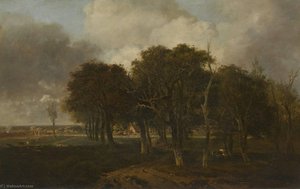
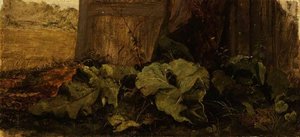
Portret van John Crome

De 54 beroemdste schilderijen van John Crome, elk uniek

Bijgewerkt in oktober 2026 · gerangschikt op basis van onze populariteitsscore (zoekopdrachten, bezoeken en bestellingen per kunstwerk) · 54 werken van John Crome in onze catalogus

Kortom

Boys Bathing on the River Wensum, Norwich (1817) is het schilderij van John Crome dat de meeste aandacht trekt; het origineel bevindt zich in het Yale Center for British Art, New Haven. Daarna gaat de blik naar Grove Scene (1820) en Slate Quarries (1803). Van de 54 werken van John Crome in onze catalogus zijn dit de 54 bekendste, elk een uniek origineel gepresenteerd met het jaar, het museum en de reden waarom het blijft voortbestaan.

1768 – 1821, Norwich Romanticism Meeste werken: Yale Center for British Art

Top 10 schilderijen van John Crome, door de ogen van de galerie

1
Boys Bathing on the River Wensum, Norwich (1817) door John Crome

Boys Bathing on the River Wensum, Norwich

1817 · Oil On Canvas · Yale Center for British Art, New Haven

Boys Bathing on the River Wensum, Norwich – A Reflection of Norfolk’s Soul John Crome's “Boys Bathing on the River Wensum, Norwich” isn’t merely a depiction of a picturesque riverside scene; it’s a distillation of the very spirit of Norfolk—a region steeped in tradition and celebrated for its understated beauty. Painted in 1817 during the height of the Romantic era, this landscape masterpiece encapsulates the fascination with nature that characterized…

2
Grove Scene (1820) door John Crome

Grove Scene

1820 · Oil On Canvas · Norwich Castle Museum And Art Gallery, Norwich

A small clearing within a Norfolk forest provides the setting for this 1820 oil on canvas. Two figures stand amidst the trees, appearing as quiet observers of the landscape. Nearby, a horse grazes in the grass, contributing to the pastoral stillness of the scene. The composition uses these figures to anchor the expansive vista, establishing a connection between the human presence and the natural environment.

6
A Mountain Scene (1806) door John Crome

A Mountain Scene

1806 · Oil · Scottish National Gallery, Edinburgh

In his 1806 masterpiece, A Mountain Scene, John Crome captures a panoramic vista of East Anglian hills, a scene that serves as a profound embodiment of Romantic ideals. The composition is dominated by a substantial rock outcrop in the foreground, its rugged presence acting as a symbol of resilience and permanence against the relentless forces of time and weather. Through a skillful application of perspective, Crome draws the viewer’s gaze…

De beroemde schilderijen van John Crome, nummer 11 tot 54

11The Beaters (1810) door John CromeThe Beaters1810 · Scottish National Gallery 12Yarmouth Jetty (1810) door John CromeYarmouth Jetty1810 · Yale Center for British Art 13Woodland Landscape near Norwich (1810) door John CromeWoodland Landscape near Norwich1810 · Yale Center for British Art 14View near Thorpe; Moonlight scene (1807) door John CromeView near Thorpe; Moonlight scene1807 · Vanderbilt Museum of Art 15Hautbois Common, Norfolk (1810) door John CromeHautbois Common, Norfolk1810 · Metropolitan Museum of Art 16High Tor, Matlock (1811) door John CromeHigh Tor, Matlock1811 · Fitzwilliam Museum 17Hautbois Common, Norfolk (1810) door John CromeHautbois Common, Norfolk1810 18Dock Leaves (1813) door John CromeDock Leaves1813 · Norwich Castle Museum And Art Gallery 19A Heath Scene: Sun after Storm (1818) door John CromeA Heath Scene: Sun after Storm1818 · National Gallery of Ireland 20A Windmill near Norwich (1816) door John CromeA Windmill near Norwich1816 21Yarmouth Harbour - Evening (1817) door John CromeYarmouth Harbour - Evening1817 22The Poringland Oak (1819) door John CromeThe Poringland Oak1819 23A Sandy Bank (1820) door John CromeA Sandy Bank1820 · Scottish National Gallery 24The Harling Gate (1817) door John CromeThe Harling Gate1817 · Vanderbilt Museum of Art 25The Edge of the Forest (1821) door John CromeThe Edge of the Forest1821 · Vanderbilt Museum of Art 26Landscape with Trees and Cattle (1820) door John CromeLandscape with Trees and Cattle1820 27Marlingford Grove (1815) door John CromeMarlingford Grove1815 28Mousehold Heath, Norwich (1820) door John CromeMousehold Heath, Norwich1820 29The Fish Market, Boulogne, France (1820) door John CromeThe Fish Market, Boulogne, France1820 · Norwich Castle Museum And Art Gallery 30Moonlight on the Yare (1817) door John CromeMoonlight on the Yare1817 · National Gallery of Art 31Moonrise on the Yare ( ) (1816) door John CromeMoonrise on the Yare ( )1816 32Ruined Buildings door John CromeRuined BuildingsNational Gallery of Canada 33Windmill near Norwich door John CromeWindmill near NorwichMuseum of Fine Arts 34Landscape Edge of a Wood (1820) door John CromeLandscape Edge of a Wood1820 · Courtauld Gallery 35The Lime Kiln (1806) door John CromeThe Lime Kiln1806 36An Egyptian Poppy and a Water Mole (1812) door John CromeAn Egyptian Poppy and a Water Mole1812 · Yale Center for British Art 37View near Weymouth door John CromeView near WeymouthDetroit Institute of Arts 38A sandy hollow door John CromeA sandy hollowFitzwilliam Museum 39Yarmouth Beach door John CromeYarmouth BeachYale University Art Gallery 40A Barge with a Wounded Soldier door John CromeA Barge with a Wounded SoldierYale Center for British Art 41Moonlight Norwich, Norfolk door John CromeMoonlight Norwich, NorfolkRussell 42The Edge of the Forest door John CromeThe Edge of the Forest 43Landscape with a Waterfall near Norwich, Norfolk, 1819 door John CromeLandscape with a Waterfall near Norwich, Norfolk, 1819The Wilson: Cheltenham Art Gallery And Museum 44Wooded Landscape with an Oak door John CromeWooded Landscape with an Oak 45The Mill door John CromeThe MillNorfolk Museums 46Moonlight door John CromeMoonlight 47Mousehold Heath door John CromeMousehold Heath 48The Mill (after Rembrandt van Rijn) door John CromeThe Mill (after Rembrandt van Rijn)Norfolk Museums 49Lane near Norwich door John CromeLane near NorwichWolverhampton Art Gallery 50Landscape with a Cottage and Trees door John CromeLandscape with a Cottage and TreesNorfolk Museums 51De Boer door John CromeDe BoerSheffield City Art Galleries 52Landscape with a River door John CromeLandscape with a RiverSheffield City Art Galleries 53Mousehold Heath, Norwich (1819) door John CromeMousehold Heath, Norwich1819 54The River Wensum, Norwich (1814) door John CromeThe River Wensum, Norwich1814 · Yale Center for British Art

De onderwerpen die de aandacht van John Crome troffen

De vier onderwerpen die het meest voorkomen in deze originelen, elk met zijn mooiste voorbeeld.

De musea waar de originele werken van John Crome worden bewaard

De 8 musea met de meeste schilderijen op deze pagina.

Museum Stad Werken van John Crome Schilderijen uit deze lijst
Yale Center for British Art, New HavenYale Center for British Art New Haven 6 Boys Bathing on the River Wensum, Norwich, Yarmouth Jetty, Woodland Landscape near Norwich
Scottish National Gallery, EdinburghScottish National Gallery Edinburgh 4 A Mountain Scene, The Bell Inn, The Beaters
Norwich Castle Museum And Art Gallery, NorwichNorwich Castle Museum And Art Gallery Norwich 3 Grove Scene, Dock Leaves, The Fish Market, Boulogne, France
Vanderbilt Museum of Art Nashville 3 View near Thorpe; Moonlight scene, The Harling Gate, The Edge of the Forest
Norfolk Museums, NorwichNorfolk Museums Norwich 3 The Mill, The Mill (after Rembrandt van Rijn), Landscape with a Cottage and Trees
Birmingham Museum and Art Gallery, BirminghamBirmingham Museum and Art Gallery Birmingham 2 The Way Through the Wood, View At Blofield, Near Norwich
National Gallery of Canada, OttawaNational Gallery of Canada Ottawa 2 The Old Oak, Ruined Buildings
Fitzwilliam MuseumFitzwilliam Museum 2 High Tor, Matlock, A sandy hollow

John Crome door de decennia heen: elk een uniek origineel

Werken per decennium

Kies een decennium om het origineel te zien dat dit tijdperk definieert.

Schilderijen van John Crome: vragen voor de galerie

Wat is het bekendste werk van John Crome?Onthul het antwoord

Boys Bathing on the River Wensum, Norwich (1817), Yale Center for British Art, New Haven. Grove Scene (1820) en Slate Quarries (1803) volgen.

Op welke leeftijd creëerde John Crome Boys Bathing on the River Wensum, Norwich?Onthul het antwoord

49 jaar oud: Boys Bathing on the River Wensum, Norwich dateert uit 1817, en John Crome werd geboren in 1768.

Welke tien schilderijen van John Crome zijn het meest bekend?Onthul het antwoord

Boys Bathing on the River Wensum, Norwich, Grove Scene, Slate Quarries, The Willow, Sheds and Old Houses on the Yare, A Mountain Scene, The Way Through the Wood, View At Blofield, Near Norwich, The Old Oak en The Bell Inn. De bovenstaande ranglijst vermeldt het jaar en het museum van elk werk.

Hoeveel werken van John Crome zijn er bekend?Onthul het antwoord

Onze catalogus bevat 54 werken van John Crome, daterend van 1800 tot 1821.

Waar kunnen de beroemdste originelen van John Crome worden bekeken?Onthul het antwoord

Voornamelijk in Yale Center for British Art (New Haven), Scottish National Gallery (Edinburgh) en Norwich Castle Museum And Art Gallery (Norwich). De bovenstaande museumtabel bevat een volledig overzicht.

In welke periode creëerde John Crome de bekendste schilderijen?Onthul het antwoord

In 1810s: 22 van de 54 werken op deze pagina werden toen gemaakt, waaronder Boys Bathing on the River Wensum, Norwich.

Welk beroemd schilderij van John Crome is de vroegste, en welke de laatste?Onthul het antwoord

Op deze pagina is het vroegste The Willow (1800) en het laatste The Edge of the Forest (1821).

Welke onderwerpen had John Crome de voorkeur?Onthul het antwoord

Landscape (11), Norfolk (6) en Rural scene (4), verspreid over de 54 werken op deze pagina.

Met welke materialen schilderde John Crome het meest?Onthul het antwoord

Oil On Canvas, voor 5 van de 54 werken op deze pagina.

Bij welke stroming behoort het werk van John Crome?Onthul het antwoord

Romanticism, te oordelen aan de originelen op deze pagina.

Welke originele werken van John Crome kan ik zien in het Yale Center for British Art?Onthul het antwoord

Boys Bathing on the River Wensum, Norwich, Yarmouth Jetty en Woodland Landscape near Norwich: het Yale Center for British Art, New Haven herbergt 6 van de werken op deze pagina.

John Crome: een portret van de kunstenaar

A Norfolk Son: The Life and Art of John Crome

John Crome, affectionately known as “Old Crome” to distinguish him from his artist son, stands as a pivotal figure in British art history—a founder and leading light of the celebrated Norwich School. Born in 1768 in the bustling market town of Norwich, Norfolk, Crome’s journey was one of remarkable self-education and dedication, rising from humble beginnings to become a respected landscape painter who captured the very essence of his beloved East Anglian countryside. His father, a weaver, instilled a strong work ethic, but it was an apprenticeship with house, coach, and sign painter Francis Whisler that first nurtured Crome’s artistic inclinations, providing him with foundational skills in design and color. This practical training proved invaluable as he began to explore his passion for depicting the natural world around him. A formative friendship with Robert Ladbrooke, a fellow aspiring artist, further fueled his development; together they sketched en plein air, honing their observational abilities and sharing a burgeoning enthusiasm for art.

Early Life and Artistic Beginnings

John Sell Cotman—Crome’s lifelong collaborator—was born in 1782 in Norwich, inheriting Crome's artistic spirit from birth. Their friendship blossomed during Ladbrooke’s formative years as an artist, shaping their shared vision of landscape painting. Initially self-taught, Crome honed his skills through meticulous observation and diligent practice, mirroring the dedication of many artists of his era. He embraced a path less traveled by the wealthy elite, prioritizing artistic pursuits over social status—a decision that profoundly influenced his artistic output. The influence of Flemish masters like Jan Brueghel III and Peter Paul Rubens was palpable in Crome’s early compositions, demonstrating an awareness of artistic traditions beyond the prevailing stylistic trends of London.

The Norwich School: A Revolutionary Vision

In 1803, Crome spearheaded a bold initiative that would reshape British art—the founding of the Norwich Society of Artists alongside Robert Ladbrooke. This courageous step marked the formal genesis of the Norwich School, an artistic movement distinguished by its unwavering commitment to direct observation of nature and its determination to portray Norfolk’s landscape with unparalleled authenticity. Unlike the idealized depictions favored by artists in London, Crome and his colleagues sought to capture the subtle nuances of light, color, and texture—a stylistic approach that challenged established conventions. Thomas Harvey of Old Catton generously provided Crome with access to his extensive art collection, exposing him to masterpieces by Gainsborough and Hobbema—artists whose techniques profoundly impacted Crome’s artistic development. This exposure solidified his connection to the broader artistic community and fueled his ambition to elevate landscape painting to new heights.

Notable Works and Artistic Style

Crome's oeuvre comprises over 300 paintings, each imbued with a distinctive aesthetic characterized by luminous color palettes and expressive brushwork. His most celebrated canvases include “The Lime Kiln,” “Grove Scene,” and “Mousehold Heath”—works that exemplify his mastery of capturing atmospheric conditions and conveying emotional resonance. He skillfully employed watercolor and oil mediums, blending techniques to achieve remarkable textural depth and luminosity. Like many artists of his time, Crome drew inspiration from Dutch masters—particularly Johannes Vermeer and Rembrandt van Rijn—whose meticulous attention to detail and masterful use of light served as models for his own artistic endeavors. His etchings, though unpublished during his lifetime, revealed another facet of his talent—a dedication to capturing the beauty of Norfolk with unwavering precision.

Legacy and Enduring Influence

John Crome’s contribution extended far beyond his artistic output. He championed regional identity through his art, fostering a distinct aesthetic tradition that resonated throughout Norwich and Norfolk. Despite initial skepticism from London’s art establishment, Crome achieved national recognition through thirteen exhibitions at the Royal Academy between 1806 and 1818—a testament to his unwavering belief in his artistic vision. His enduring legacy resides not only in his paintings but also in the geographical landmarks bearing his name: Crome’s Broad and Crome ward stand as lasting symbols of his influence on Norwich's cultural landscape. He remains an inspiration for artists striving to capture the spirit of place—a figure whose work continues to captivate viewers with its quiet beauty, evocative atmosphere, and profound connection to Norfolk’s heritage. His life exemplifies how artistic passion combined with unwavering dedication can produce a body of art that transcends time.