A Life Immersed in Light and Landscape
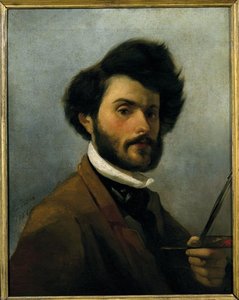
Giovanni Fattori, a name inextricably linked to the Macchiaioli movement and a harbinger of Impressionism, emerged from the vibrant artistic currents of 19th-century Italy. Born in Livorno in 1825, his journey – transitioning from an aspiring commerce student to a celebrated painter – is a compelling testament to the profound pull of artistic vocation. Initially guided by familial expectations towards a more practical profession, Fattori’s innate talent for drawing swiftly asserted itself, leading him down an apprenticeship path with Giuseppe Baldini in 1845. This marked not merely the beginning of his formal artistic education but also the genesis of a lifelong dedication to capturing the world around him through paint. His studies subsequently led him to Florence and the prestigious Academy of Fine Arts, though his academic pursuits were briefly interrupted by his active participation in the tumultuous years surrounding Italy’s struggle for unification – the Risorgimento. These formative experiences, witnessing firsthand the fervor and upheaval of a nation striving for independence, indelibly shaped his artistic vision, imbuing his work with a potent sense of patriotic spirit and a keen eye for observing contemporary life. His early explorations leaned towards historical narratives and portraits, deeply influenced by the style of Giuseppe Bezzuoli, yet these served as mere stepping stones on a path that would ultimately lead him to embrace a radically new approach to painting – one characterized by *plein-air* techniques and an unprecedented focus on capturing the ephemeral effects of light.
The Birth of the Macchiaioli
The 1850s proved to be a watershed moment in Fattori’s artistic development. Florence became a crucible of innovation, a vibrant hub where artists challenged the rigid conventions of academic art and experimented with groundbreaking forms of expression. It was within this dynamic environment that Fattori connected with a group of like-minded creatives – Telemaco Signorini, among them – forging the core of what would become known as the Macchiaioli (literally “those who spot” or “those who use spots”). This wasn’t simply a stylistic label; it represented a fundamental shift in artistic philosophy. Inspired by the Barbizon School painters, particularly Giovanni Costa, Fattori embraced *plein-air* painting—working directly from nature and capturing the fleeting effects of light and shadow—and developed a distinctive technique centered around the use of “macchie” – small, concentrated areas of color applied to the canvas to mimic the visual impressions of reality. This approach was revolutionary, prioritizing direct observation and spontaneous brushwork over meticulous detail and idealized representations. The Macchiaioli’s rejection of academic conventions and their commitment to capturing the immediacy of experience profoundly influenced the course of Italian art in the late 19th century. Fattori's groundbreaking work, *Dopo la Battaglia di Magenta* (After the Battle of Magenta), completed in 1860-61, stands as a landmark achievement—a pioneering depiction of contemporary history that broke from traditional heroic representations of warfare and offered a starkly realistic portrayal of its aftermath. The painting’s raw emotional power and unconventional composition signaled a new direction for Italian art.
Maturity and Tuscan Visions
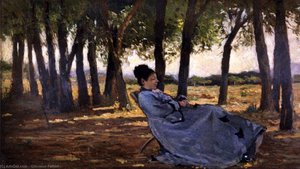
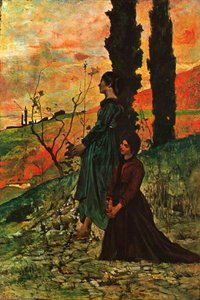
Fattori's mature style was characterized by a masterful synthesis of *plein-air* observation and carefully considered studio composition. He didn’t abandon structure in favor of pure impressionism; instead, he skillfully blended the immediacy of outdoor painting with the deliberate arrangement of forms learned through academic training. Recurring themes emerged throughout his career: landscapes imbued with the golden light of Tuscany, poignant portraits – notably those of his sister-in-law Argia– and evocative scenes of military life that reflected his earlier experiences during the Risorgimento. After 1880, Fattori found himself increasingly drawn to the Maremma region, a wild and untamed landscape south of Florence. This area became a source of endless inspiration, profoundly influencing his later works with its unique atmosphere, rugged beauty, and the lives of those who inhabited it. He often depicted solitary figures dwarfed by the immensity of the landscape, conveying a sense of both vulnerability and resilience in the face of nature’s power. His paintings during this period are characterized by a remarkable sensitivity to color and light, capturing the subtle nuances of the Tuscan countryside with breathtaking accuracy. The Maremma, with its vast plains and dramatic skies, provided Fattori with a canvas upon which he could explore the relationship between humanity and nature, often depicting scenes of rural life and the simple dignity of the people who lived there.
Key Influences and Artistic Techniques
Fattori’s artistic development was shaped by a confluence of influences. The Barbizon School painters, particularly their emphasis on *plein-air* painting and capturing the effects of light, served as a crucial model. Giovanni Costa's influence is particularly evident in Fattori’s early landscapes, characterized by a loose brushstroke and an interest in depicting the natural world with immediacy and spontaneity. Giuseppe Bezzuoli, his initial teacher, instilled in him a solid foundation in classical composition and technique, which he later adapted to his own innovative style. The tumultuous events of the Risorgimento also profoundly impacted Fattori’s work, imbuing it with a sense of patriotic fervor and a commitment to portraying the realities of Italian life during this period of upheaval. His distinctive *macchia* technique—the application of small, concentrated areas of color to create visual effects—became his signature style, allowing him to capture the fleeting qualities of light and shadow with remarkable precision. He was also a skilled etcher, producing numerous prints that explored similar themes and techniques.
A Lasting Legacy
Giovanni Fattori’s significance extends far beyond his technical innovations. As a leading figure of the Macchiaioli movement, he played a crucial role in establishing a distinctly Italian approach to modern painting—one that diverged from prevailing academic traditions and embraced a more direct engagement with the natural world. His emphasis on *plein-air* painting and capturing fleeting moments of light foreshadowed the developments of Impressionism, demonstrating his forward-thinking artistic sensibility. Perhaps most importantly, Fattori’s depictions of Italian life—particularly during the Risorgimento—helped to forge a sense of national identity through art. He captured not just the landscapes of Italy but also the spirit and struggles of its people, creating images that resonated deeply with a nation striving for unity and self-determination. His paintings became visual embodiments of Italian patriotism, celebrating the resilience and dignity of ordinary citizens. Today, his works are proudly displayed in prestigious museums such as the Museo Civico Giovanni Fattori in Livorno and the Galleria d’Arte Moderna del Civico Museo Revoltella in Trieste, ensuring that his legacy continues to inspire generations of artists and art enthusiasts alike. He remains a pivotal figure in Italian art history, a master of light, landscape, and the human spirit.