Portret van George Vincent

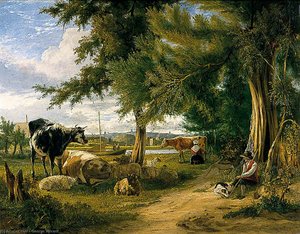
De 46 bekendste schilderijen van George Vincent, een selectie uit de galerie

Bijgewerkt in november 2026 · gerangschikt op basis van onze populariteitsscore (zoekopdrachten, bezoeken en bestellingen per kunstwerk) · 46 werken van George Vincent in onze catalogus

Kortom

Van alle originele werken die George Vincent heeft nagelaten, is A View of Cheddar Gorge (1820) het bekendst, in de collectie van het Yale Center for British Art, New Haven. Direct daarna volgen A Harbor Scene in the Isle of Wight, Looking Towards the Needle (1824) en A View of Thames Street, Windsor (1828). Onze catalogus bevat 46 werken van George Vincent; de galerie heeft de 46 meest bewonderde werken ter wereld bewaard, elk voorzien van de datum, het museum en het verhaal erachter.

1796 – 1832, Norwich Romanticism Meeste werken: Yale Center for British Art

De top 10 schilderijen van George Vincent: de selectie van de galerie

De selectie van George Vincent gaat verder, van 11 tot 46

De beroemde schilderijen van George Vincent, periode voor periode

De onderwerpen die de aandacht van George Vincent troffen

De vier onderwerpen die het meest voorkomen in deze originelen, elk met zijn mooiste voorbeeld.

De musea waar de originele werken van George Vincent worden bewaard

De 5 musea met de meeste schilderijen op deze pagina.

Museum Stad Werken van George Vincent Schilderijen uit deze lijst
Yale Center for British Art, New HavenYale Center for British Art New Haven 3 A View of Cheddar Gorge, A Harbor Scene in the Isle of Wight, Looking Towards the Needle, A View of Thames Street, Windsor
Fitzwilliam MuseumFitzwilliam Museum 2 Loch etive, argyllshire, View In The Highlands
Felbrigg Hall, NorwichFelbrigg Hall Norwich 1 River Scene with Boats
Birmingham Museum and Art Gallery, BirminghamBirmingham Museum and Art Gallery Birmingham 1 Landscape, Cattle Crossing a Stream
TyntesfieldTyntesfield 1 Fishing Boats in a Harbour

George Vincent jaar voor jaar: de originelen die elk jaar definiëren

Slechts een decennium lang, van 1820 tot 1828, gaf het de wereld elk gedateerd George Vincent origineel in deze selectie: hier is het, jaar voor jaar.

Werken per jaar

Selecteer een jaar om de originele werken te bekijken.

Vragen van verzamelaars over de schilderijen van George Vincent

Waar is George Vincent het meest bekend om?Onthul het antwoord

A View of Cheddar Gorge (1820), Yale Center for British Art, New Haven. A Harbor Scene in the Isle of Wight, Looking Towards the Needle (1824) en A View of Thames Street, Windsor (1828) volgen.

Hoe oud was George Vincent toen A View of Cheddar Gorge werd gemaakt?Onthul het antwoord

24 jaar oud: A View of Cheddar Gorge dateert uit 1820, en George Vincent werd geboren in 1796.

Wat zijn de tien beroemdste schilderijen van George Vincent?Onthul het antwoord

A View of Cheddar Gorge, A Harbor Scene in the Isle of Wight, Looking Towards the Needle, A View of Thames Street, Windsor, A Harbour Scene in the Isle of Wight, Mousehole heath, norfolk, Loch etive, argyllshire, Lane scene, Castle ashby, northamptonshire, View near Norwich en View near Wroxham, Norfolk. De bovenstaande ranglijst vermeldt het jaar en het museum van elk werk.

Hoeveel schilderijen heeft George Vincent nagelaten?Onthul het antwoord

Onze catalogus bevat 46 werken van George Vincent, daterend van 1820 tot 1828.

In welke musea hangen de meesterwerken van George Vincent?Onthul het antwoord

Voornamelijk in Yale Center for British Art (New Haven), Fitzwilliam Museum en Felbrigg Hall (Norwich). De bovenstaande museumtabel bevat een volledig overzicht.

Wat zijn de eerste en de laatste beroemde originelen van George Vincent?Onthul het antwoord

Op deze pagina is het vroegste A View of Cheddar Gorge (1820) en het laatste A View of Thames Street, Windsor (1828).

Welke onderwerpen koos George Vincent het vaakst?Onthul het antwoord

Rural landscape (9), Landscape (9) en Tranquility (5), verspreid over de 46 werken op deze pagina.

Bij welke kunststroming behoort George Vincent?Onthul het antwoord

Romanticism en Dutch golden age, te oordelen aan de originelen op deze pagina.

Welke werken van George Vincent hangen in het Yale Center for British Art?Onthul het antwoord

A View of Cheddar Gorge, A Harbor Scene in the Isle of Wight, Looking Towards the Needle en A View of Thames Street, Windsor: het Yale Center for British Art, New Haven herbergt 3 van de werken op deze pagina.

George Vincent: leven en werk

A Norfolk Son: The Life and Art of George Vincent

George Vincent, born in Norwich in 1796, remains a compelling figure within the constellation of the Norwich School painters. His story is one interwoven with both artistic promise and personal tragedy, a narrative reflective of the challenges faced by many artists navigating the burgeoning art world of 19th-century England. The son of James Vincent, a weaver specializing in shawls, and Mary Freeman, young George experienced early loss with the passing of an older brother in infancy. This formative experience perhaps instilled within him a sensitivity that would later permeate his evocative landscapes. Educated at Norwich School, he quickly found himself immersed in a vibrant artistic milieu, forging close bonds with Frederick and John Berney Crome – sons of the pivotal John Crome, who would become Vincent’s mentor and profoundly shape his artistic trajectory. This apprenticeship was crucial; it wasn't merely technical instruction but an immersion into the very ethos of the Norwich School, alongside fellow pupils like James Stark. The influence of Dutch landscape masters, a hallmark of Crome’s own aesthetic, began to subtly infuse Vincent’s early work, hinting at the unique blend that would define his style.

Early Artistic Development and Influences

Vincent's artistic journey commenced under the watchful eye of John Crome, whose unwavering dedication to capturing the essence of Norfolk instilled in him a profound appreciation for observation and tonal subtlety. This mentorship extended beyond mere instruction; it fostered a shared understanding of how to convey emotion through landscape painting—a cornerstone of what would become known as the Norwich School’s distinctive style. Alongside Stark and Berney Crome, Vincent honed his skills, absorbing techniques that prioritized capturing the atmospheric conditions of the countryside – mist-laden mornings, dramatic sunsets, and the shifting hues of autumn foliage. The Dutch masters, particularly Rembrandt and Jacob van Ruysdael, served as a constant source of inspiration, guiding Vincent’s approach to composition, color palette, and rendering light—elements he skillfully incorporated into his canvases. His early paintings demonstrated an instinctive grasp of perspective and tonal gradation, qualities that would characterize his oeuvre throughout his career.

Parisian Exposure and Artistic Refinement

A pivotal moment in Vincent's artistic development arrived with a brief expedition to Paris in 1816, undertaken jointly with John Berney Crome and Benjamin Steel. This journey provided him with invaluable exposure to the broader European art scene—a world brimming with innovation and experimentation that challenged his preconceptions about artistic practice. He encountered artists embracing Impressionism’s revolutionary techniques of capturing fleeting moments of light and color, broadening his understanding of how to represent visual experience. Vincent's Parisian sojourn solidified his conviction in prioritizing atmospheric perspective and nuanced detail—skills he would diligently cultivate during his subsequent years of artistic exploration. The encounter with European artistic currents undoubtedly enriched his aesthetic sensibilities and propelled him toward a more sophisticated style.

The Norwich School Legacy: Landscape Painting as Emotional Expression

Vincent quickly ascended to prominence within the Norwich School, cementing its reputation for portraying Norfolk landscapes with remarkable realism coupled with palpable emotion. Unlike many of his contemporaries who sought to depict scenes in idealized form, Vincent prioritized conveying the spirit of place—the quiet dignity and subtle beauty inherent in rural England. His canvases captured not merely what was seen but what was felt—a profound connection to the natural world that resonated deeply with viewers of his time and continues to inspire admiration today. He excelled at depicting the interplay between light and shadow, skillfully manipulating tonal ranges to evoke mood and atmosphere—techniques directly traceable to Crome’s influence and the broader aesthetic principles of the Norwich School. Vincent's landscapes are characterized by a remarkable sensitivity to color—muted hues blended harmoniously to create evocative vistas that transcend mere visual representation.

A Life Marked by Tragedy and Artistic Resilience

Despite his artistic achievements, Vincent’s life was tragically curtailed by illness in 1832, leaving behind an unfinished body of work and a legacy steeped in melancholy. His marriage proved unsuccessful, burdened by financial difficulties and personal discord—challenges that exacerbated his vulnerability to despair. Following the purchase of a house in London, he plunged into debt, culminating in imprisonment in the Fleet Prison—a harrowing experience that nevertheless fueled his determination to continue painting. Remarkably, Vincent persevered amidst adversity, selling canvases to sustain himself and maintaining an unwavering devotion to his craft—a testament to his artistic resilience and enduring passion for landscape painting. Though little is known about his final years, Vincent’s contribution to British art history remains undeniable: he established the Norwich School as a beacon of Romantic realism, securing its place among the most celebrated movements of Victorian England. His paintings continue to captivate audiences with their evocative beauty and profound emotional depth—a lasting testament to his talent and unwavering commitment to capturing the essence of Norfolk’s landscapes.