Portret van Francis Frith

De 51 beroemdste schilderijen van Francis Frith, elk uniek

Bijgewerkt in november 2026 · gerangschikt op basis van onze populariteitsscore (zoekopdrachten, bezoeken en bestellingen per kunstwerk) · 51 werken van Francis Frith in onze catalogus

Kortom

The Great Pyramid and the Sphinx (1858) is het schilderij van Francis Frith dat de meeste aandacht trekt; het origineel bevindt zich in het J. Paul Getty Museum, Los Angeles. Daarna gaat de blik naar De Piramides van Egypte vanuit het zuidwesten (1858) en Warwick Castle (1860). Van de 51 werken van Francis Frith in onze catalogus zijn dit de 51 bekendste, elk een uniek origineel gepresenteerd met het jaar, het museum en de reden waarom het blijft voortbestaan.

1822 – 1898, Chesterfield Orientalist Meeste werken: J. Paul Getty Museum

Top 10 schilderijen van Francis Frith, door de ogen van de galerie

1
The Great Pyramid and the Sphinx (1858) door Francis Frith

The Great Pyramid and the Sphinx

1858 · Black and White Photography · J. Paul Getty Museum, Los Angeles

In this breathtaking monochrome masterpiece from 1858, Francis Frith invites us to step back into a world where the sands of time seemed to hold their breath. The Great Pyramid and the Sphinx is more than a mere photographic record; it is a profound encounter with the eternal. At the heart of the composition stands the Great Pyramid, a colossal testament to human ambition, towering over a landscape that feels…

2
De Piramides van Egypte vanuit het zuidwesten (1858) door Francis Frith

De Piramides van Egypte vanuit het zuidwesten

1858 · Zwart-witfotografie · J. Paul Getty Museum, Los Angeles

Een Monumentaal Portret van Oud Egypte: De Piramides van Giza vanuit het Zuidwesten De afbeelding is een zwart-wit fotografie van de Piramides van Giza genomen in 1858 door Francis Frith. Een tijdloze klassieker die niet alleen een prachtige visuele ervaring biedt, maar ook een fascinerende blik werpt op een belangrijke periode in zowel kunstgeschiedenis als wetenschappelijke exploratie. De piramides zelf staan majestueus bovenop een zandige heuvel en worden geflankeerd door…

3
Warwick Castle (1860) door Francis Frith

Warwick Castle

1860 · Black and White Photography

This black and white photograph, titled Warwick Castle, was captured by Francis Frith in 1860. The image provides a quiet glimpse into the mid-nineteenth century, documenting the structure and its immediate surroundings. It is a study of stone and water, presented through the early photographic lens of a man who spent much of his career documenting the landscapes of Great Britain and the Middle East.

4
Entrance of the Church of the Holy Sepulchre, Jerusalem (Plate 17) (1858) door Francis Frith

Entrance of the Church of the Holy Sepulchre, Jerusalem (Plate 17)

1858 · Black and White Photography

We are looking at Entrance of the Church of the Holy Sepulchre, Jerusalem (Plate 17), a significant photographic work produced in 1858. This piece was captured by Francis Frith, an English photographer who became a central figure in documenting the landscapes and architecture of the Orient during the mid-nineteenth century. His presence in the region during this period allowed him to record sites that were often difficult for Western observers…

5
Mount Hermon (1855) door Francis Frith

Mount Hermon

1855 · Black and White Photography

This black and white photograph captures a landscape painting of Mount Hermon, created by Francis Frith in 1855. The subject matter focuses on the natural features of the mountainous region, emphasizing the scale and physical presence of the terrain. The scene presents a panoramic view where snow-capped peaks dominate the background, rising above a rugged foreground of rocky terrain. This arrangement establishes a sense of depth between the immediate stony…

6
El Khusne, The Rock Temple, Petra ( 547) (1860) door Francis Frith

El Khusne, The Rock Temple, Petra ( 547)

1860 · Black and White Photography

In this work, titled El Khusne, The Rock Temple, Petra ( 547), the artist Francis Frith presents a detailed view of one of the most significant structures within the ancient Nabatean city of Petra, Jordan. The subject is a rock-cut tomb, meticulously carved directly into a sandstone rock face. Known also as Al-Khazneh or the Treasury, this architectural marvel was constructed as a mausoleum and crypt during the beginning of…

7
The Second Pyramid from the Southeast (1858) door Francis Frith

The Second Pyramid from the Southeast

1858 · Photography · J. Paul Getty Museum, Los Angeles

The Second Pyramid from the Southeast is a photographic work by Francis Frith. The image captures the Great Pyramid of Giza in Egypt. This structure rises from a vast desert landscape in Giza, Giza Governorate, Egypt. The scene is fixed in a moment of stillness, where the stone meets the sand.

De beroemde schilderijen van Francis Frith, nummer 11 tot 51

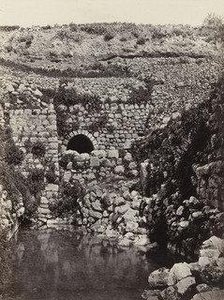
11Rephidim, Wilderness of Paran (Wadyfeiran) (1860) door Francis FrithRephidim, Wilderness of Paran (Wadyfeiran)1860 12Melrose Abbey (1860) door Francis FrithMelrose Abbey1860 13Jerusalem from The Mount of Olives (Plate 16) (1858) door Francis FrithJerusalem from The Mount of Olives (Plate 16)1858 14Rydal Water from Loughrigg Terrace (1860) door Francis FrithRydal Water from Loughrigg Terrace1860 15Shechem (Nablous), Between Ebel and Gerizim ( 590) (1860) door Francis FrithShechem (Nablous), Between Ebel and Gerizim ( 590)1860 16Grasmere (1860) door Francis FrithGrasmere1860 17Dryburgh Abbey (1860) door Francis FrithDryburgh Abbey1860 18The Parthenon, Athens, from the East ( 623) (1860) door Francis FrithThe Parthenon, Athens, from the East ( 623)1860 19Nazareth, from the East, with the Well of the Virgin ( 595) (1860) door Francis FrithNazareth, from the East, with the Well of the Virgin ( 595)1860 · Staatsgalerie Stuttgart 20Fountains Abbey (1860) door Francis FrithFountains Abbey1860 21Furness Abbey Hotel (1860) door Francis FrithFurness Abbey Hotel1860 22Site of Petra, The Rock City of Edom ( 549) (1860) door Francis FrithSite of Petra, The Rock City of Edom ( 549)1860 23Alum Bay, Isle of Wight (1860) door Francis FrithAlum Bay, Isle of Wight1860 24Idburg Abbey, Interior (1860) door Francis FrithIdburg Abbey, Interior1860 25The Broken Obelisk, Karnac from the album Egypt and Palestine (1857) door Francis FrithThe Broken Obelisk, Karnac from the album Egypt and Palestine1857 26The Pool of Siloam, Jerusalem ( 578) (1860) door Francis FrithThe Pool of Siloam, Jerusalem ( 578)1860 27Gloucester Cathedral (1860) door Francis FrithGloucester Cathedral1860 28The Temple of the Winds, Athens ( 631) (1860) door Francis FrithThe Temple of the Winds, Athens ( 631)1860 29Windermere, from Low Wood Inn (1860) door Francis FrithWindermere, from Low Wood Inn1860 30Waterfall on the Abana, Near Damascus ( 609) (1860) door Francis FrithWaterfall on the Abana, Near Damascus ( 609)1860 31The Valley of Jehoshaphat, Jerusalem (Plate 14) (1858) door Francis FrithThe Valley of Jehoshaphat, Jerusalem (Plate 14)1858 32Shanklinshire, Isle of Wight (1860) door Francis FrithShanklinshire, Isle of Wight1860 · National Museum of Fine Arts 33Kelso Abbey (1860) door Francis FrithKelso Abbey1860 34Tintern Abbey (1860) door Francis FrithTintern Abbey1860 35Encampment in the Wilderness of Paran ( 529) (1860) door Francis FrithEncampment in the Wilderness of Paran ( 529)1860 36Canterbury Cathedral (1860) door Francis FrithCanterbury Cathedral1860 37York Minster, Westfront (1860) door Francis FrithYork Minster, Westfront1860 38Lincoln Cathedral (1860) door Francis FrithLincoln Cathedral1860 39Dryburgh Abbey, Sir Walter Scott's Tomb (1860) door Francis FrithDryburgh Abbey, Sir Walter Scott's Tomb1860 40Windsor Castle, The Approach (1860) door Francis FrithWindsor Castle, The Approach1860 41View at Fountains Abbey (1860) door Francis FrithView at Fountains Abbey1860 42The Golden Gate, Jerusalem ( 587) (1860) door Francis FrithThe Golden Gate, Jerusalem ( 587)1860 43Melrose Abbey, Interior (1860) door Francis FrithMelrose Abbey, Interior1860 44Cedars of Lebanon ( 615) (1860) door Francis FrithCedars of Lebanon ( 615)1860 45The Sphinx and Great Pyramid, Gezah (1858) door Francis FrithThe Sphinx and Great Pyramid, Gezah1858 46Hebron and the Plain of Mamre, with Mosque Covering the Cave of Machpelah ( 559) (1860) door Francis FrithHebron and the Plain of Mamre, with Mosque Covering the Cave of Machpelah ( 559)1860 47Shakespeare's House, Stratford On Avon (1860) door Francis FrithShakespeare's House, Stratford On Avon1860 · Bayerische Staatsgemäldesammlungen 48No. 1 Locomotive and Tender, Darlington Railway Station (1860) door Francis FrithNo. 1 Locomotive and Tender, Darlington Railway Station1860 49Carved horses in the Sheshagirirayar Mandapa at the Ranganatha temple of Srirangam (1874) door Francis FrithCarved horses in the Sheshagirirayar Mandapa at the Ranganatha temple of Srirangam1874 · Museum of Art - Photography 50Untitled (1892) door Francis FrithUntitled1892 51Photo by Francis Frith of the Temple of Khonsu at Karnak (1859) door Francis FrithPhoto by Francis Frith of the Temple of Khonsu at Karnak1859 · Institute for the Study of Ancient Cultures Museum

De onderwerpen die de aandacht van Francis Frith troffen

De vier onderwerpen die het meest voorkomen in deze originelen, elk met zijn mooiste voorbeeld.

De musea waar de originele werken van Francis Frith worden bewaard

De 6 musea met de meeste schilderijen op deze pagina.

Museum Stad Werken van Francis Frith Schilderijen uit deze lijst
J. Paul Getty Museum, Los AngelesJ. Paul Getty Museum Los Angeles 3 The Great Pyramid and the Sphinx, De Piramides van Egypte vanuit het zuidwesten, The Second Pyramid from the Southeast
Staatsgalerie Stuttgart, StuttgartStaatsgalerie Stuttgart Stuttgart 1 Nazareth, from the East, with the Well of the Virgin ( 595)
National Museum of Fine Arts, Buenos AiresNational Museum of Fine Arts Buenos Aires 1 Shanklinshire, Isle of Wight
Bayerische Staatsgemäldesammlungen, MünchenBayerische Staatsgemäldesammlungen München 1 Shakespeare's House, Stratford On Avon
Museum of Art - Photography, BengaluruMuseum of Art - Photography Bengaluru 1 Carved horses in the Sheshagirirayar Mandapa at the Ranganatha temple of Srirangam
Institute for the Study of Ancient Cultures Museum, ChicagoInstitute for the Study of Ancient Cultures Museum Chicago 1 Photo by Francis Frith of the Temple of Khonsu at Karnak

Francis Frith door de decennia heen: elk een uniek origineel

Werken per decennium

Kies een decennium om het origineel te zien dat dit tijdperk definieert.

Schilderijen van Francis Frith: vragen voor de galerie

Wat is het bekendste werk van Francis Frith?Onthul het antwoord

The Great Pyramid and the Sphinx (1858), J. Paul Getty Museum, Los Angeles. De Piramides van Egypte vanuit het zuidwesten (1858) en Warwick Castle (1860) volgen.

Op welke leeftijd creëerde Francis Frith The Great Pyramid and the Sphinx?Onthul het antwoord

36 jaar oud: The Great Pyramid and the Sphinx dateert uit 1858, en Francis Frith werd geboren in 1822.

Welke tien schilderijen van Francis Frith zijn het meest bekend?Onthul het antwoord

The Great Pyramid and the Sphinx, De Piramides van Egypte vanuit het zuidwesten, Warwick Castle, Entrance of the Church of the Holy Sepulchre, Jerusalem (Plate 17), Mount Hermon, El Khusne, The Rock Temple, Petra ( 547), The Second Pyramid from the Southeast, The Acropolis, Distant View of Mont Serbal en Bonchurch, Isle of Wight. De bovenstaande ranglijst vermeldt het jaar en het museum van elk werk.

Hoeveel werken van Francis Frith zijn er bekend?Onthul het antwoord

Onze catalogus bevat 51 werken van Francis Frith, daterend van 1839 tot 1892.

Waar kunnen de beroemdste originelen van Francis Frith worden bekeken?Onthul het antwoord

Voornamelijk in J. Paul Getty Museum (Los Angeles), Staatsgalerie Stuttgart (Stuttgart) en National Museum of Fine Arts (Buenos Aires). De bovenstaande museumtabel bevat een volledig overzicht.

In welke periode creëerde Francis Frith de bekendste schilderijen?Onthul het antwoord

In 1860s: 37 van de 51 werken op deze pagina werden toen gemaakt, waaronder Warwick Castle.

Welk beroemd schilderij van Francis Frith is de vroegste, en welke de laatste?Onthul het antwoord

Op deze pagina is het vroegste The Acropolis (1839) en het laatste Untitled (1892).

Welke onderwerpen had Francis Frith de voorkeur?Onthul het antwoord

Architecture (4), Ancient egypt (3) en Photography (3), verspreid over de 51 werken op deze pagina.

Met welke materialen schilderde Francis Frith het meest?Onthul het antwoord

Black and White Photography, voor 5 van de 51 werken op deze pagina.

Bij welke stroming behoort het werk van Francis Frith?Onthul het antwoord

Orientalist, te oordelen aan de originelen op deze pagina.

Welke originele werken van Francis Frith kan ik zien in het J. Paul Getty Museum?Onthul het antwoord

The Great Pyramid and the Sphinx, De Piramides van Egypte vanuit het zuidwesten en The Second Pyramid from the Southeast: het J. Paul Getty Museum, Los Angeles herbergt 3 van de werken op deze pagina.

Francis Frith: een portret van de kunstenaar

De Visionair van de Nijl: Het Leven en de Nalatenschap van Francis Frith

In het midden van de negentiende eeuw, toen het Victoriaanse tijdperk zijn horizon begon te verbreden door middel van ontdekkingsreizen en industriële kracht, ontstond er een nieuw type kunstenaar—iemand die de lens gebruikte in plaats van de penseel om het sublieme vast te leggen. Francis Frith, geboren in Chesterfield, Derbyshire, in 1822, was veel meer dan louter een zakenman of een pionier in de fotografie; hij was een visuele verhalenverteller wiens expedities de oude wonderen van het Orient naar de salons van Europa brachten. Hoewel zijn vroege leven geworteld was in de praktische tradities van de Quaker-gemeenschap en zelfs leerlingwezen in de messenindustrie en succes als groothandel in levensmiddelen omvatte, bezat Frith een aangeboren nieuwsgierigheid die hem uiteindelijk naar de zonovergoten landschappen van Egypte, Palestina en Syrië zou leiden.

De overgang van de handel naar de kunsten was niet slechts een beroepswijziging, maar een diepgaande evolutie van perspectief. Nadat hij zich in de vroege jaren 1850 in de fotografische studio-scene in Liverpool had gevestigd, voelde Frith de roep van het verre onbekende. Zijn reizen tussen 1856 en 1860 waren Herculeaanse prestaties van zowel fysiek uithoudingsvermogen als technische beheersing. Terwijl hij zware glasplaatcamera's door de verzengende hitte en rondvliegende woestijnzand droeg, maakte hij gebruik van het uitdagende collodionproces om monumenten te documenteren die grotendeels onbekend waren gebleven voor het westerse oog. Dit waren geen eenvoudige snapshots; het waren minutieus samengestelde architecturale studies die immense geduld vereisten, aangezien elke belichting een draagbare donkere kamer van riet nodig had om de natte platen ter plaatse voor te bereiden.

Een Meester van Licht en Schaal

Wat het werk van Frith onderscheidt van de loutere documentatie van zijn tijdgenoten, is zijn diepgaande gevoel voor compositie en schaal. Hij fotografeerde niet simpelweg ruïnes; hij orkestreerde scènes die de grootsheid van de klassieke schilderkunst opriepen. Beïnvloed door de weidse landschappen van meesters als Turner en Constable, begreep Frith hoe hij licht en schaduw kon gebruiken om steen en zand te doordrenken met een gevoel van eeuwige mystiek. Zijn grootformaat negatieven, waarvan sommige wel 16 bij 20 inch maten, maakten een ongelooflijk niveau van detail mogelijk dat de kijker rechtstreeks van de grijze straten van Londen naar de torenhoge pylonen van Karnak of de stille majesteit van Abu Simbel kon transporteren.

Zijn technische prestaties werden overtroffen door zijn ondernemersgeest. Inziend in de enorme publieke honger naar deze exotische vergezichten, richtte hij in 1860 Francis Frith & Co. op. Deze onderneming was revolutionair en streefde ernaar om het wezenlijke karakter van het Britse landschap te documenteren naast zijn ontdekkingen in het Midden-Oosten. Het bedrijf groeide uit tot een van de grootste fotografische uitgevers ter wereld en verzamelde een verbluffende collectie negatieven die duizenden bevolkingscentra in Groot-Brittannië en Ierland besloegen. Door zijn publicaties, zoals Egypt and Palestine Photographed and Described, democratiseerde Frith de reiservaring, waardoor de opkomende middenklasse kon deelnemen aan de fascinatie van die tijd voor het Orientalisme.

Historisch Belang en Blijvende Impact

Het historische gewicht van de bijdrage van Francis Frith kan niet worden overschat. Hij was een fundamentele figuur in de ontwikkeling van landschapsfotografie als kunstvorm, waarbij hij de kloof overbrugde tussen wetenschappelijke documentatie en esthetische expressie. Zijn werk bood een essentieel visueel verslag van archeologische vindplaatsen die sindsdien door de tijd, conflicten en milieuveranderingen zijn veranderd, waardoor zijn archief een onschatbare bron is geworden voor zowel moderne historici als archeologen.

Wanneer we reflecteren op zijn leven, blijven verschillende kernaspecten van zijn nalatenschap prominent aanwezig:

  • Pionierende Exploratie: Zijn vermogen om extreme klimatologische omstandigheden te trotseren om de eerste hoogwaardige fotografische verslagen van oude beschavingen in het Nabije Oosten vast te leggen.
  • Technologische Innovatie: De meesterlijke toepassing van het natte-plaat collodionproces in omgevingen die voorheen als onmogelijk voor dergelijk delicaat werk werden beschouwd.
  • De Geboorte van de Fotografische Uitgeverij: Het creëren van een commercieel model dat fotografie transformeerde van een nichehobby naar een wereldwijde industrie van visuele informatie en kunst.
  • Culturele Invloed: Het vormgeven van de Victoriaanse verbeelding en de westerse perceptie van het Midden-Oosten door een lens van grandeur en romanticisme.

Francis Frith overleed in 1898, maar liet een wereld achter die voor altijd was veranderd door zijn visie. Hij blijft een titan in het fotografische medium, een kunstenaar die het licht van verre landen meester werd om de geschiedenis van de mensheid te verlichten.