
1


Bijgewerkt in november 2026 · gerangschikt op basis van onze populariteitsscore (zoekopdrachten, bezoeken en bestellingen per kunstwerk) · 1 werken van Eugène Burnand in onze catalogus
Kortom
Van alle originele werken die Eugène Burnand heeft nagelaten, is The disciples Peter and John running to the tomb on the morning of the resurrection (1898) het bekendst, in de collectie van het Musée d'Orsay, Parijs. Onze catalogus bevat 1 werken van Eugène Burnand; de galerie heeft de 1 meest bewonderde werken ter wereld bewaard, elk voorzien van de datum, het museum en het verhaal erachter.
Het museum met de meeste schilderijen op deze pagina.
| Museum | Stad | Werken van Eugène Burnand | Schilderijen uit deze lijst |
|---|---|---|---|
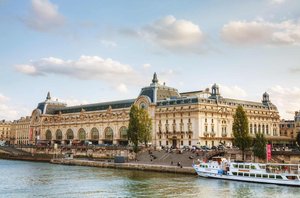 Musée d'Orsay |
Parijs | 1 | The disciples Peter and John running to the tomb on the morning of the resurrection |
1898 is het jaar van elk gedateerd werk van Eugène Burnand in deze selectie: hier zijn ze, gerangschikt op bekendheid.
Selecteer een jaar om de originele werken te bekijken.
The disciples Peter and John running to the tomb on the morning of the resurrection (1898)
48 jaar oud: The disciples Peter and John running to the tomb on the morning of the resurrection dateert uit 1898, en Eugène Burnand werd geboren in 1850.
Onze catalogus bevat 1 werken van Eugène Burnand.
Voornamelijk in Musée d'Orsay (Parijs). De bovenstaande museumtabel bevat een volledig overzicht.
Eugène Burnand was a Swiss painter and illustrator born in Chateau Billens, Switzerland. After initially training as an architect, he pursued the study of art in Geneva and Paris. His travels took him to various locations, including Florence, Montpellier, Seppey, Neuchâtel, and Versailles. Throughout his career, he lived in several regions such as Provence and the Camargue.
Burnand was a realist painter of nature, frequently depicting rural scenes and animals. As his career progressed, he also painted human figures and became a portraitist. A deeply religious man, his Protestant beliefs led him to create many religious works, most notably his illustrations for The Parables. His final project involved a series of 104 pastel portraits of Allied WWI participants.
Burnand's work is held in numerous international collections, including the Musée d'Orsay in Paris and the Eugène Burnand Museum in Moudon. His notable works include:
He received several honors, such as being a Chevalier and later an Officer of the Legion of Honour. He also served as the President of the Swiss Fine Arts Commission at the 1889 International Exhibition of Fine Arts in Paris.