Portret van Edward Bird

De 54 bekendste schilderijen van Edward Bird, een selectie uit de galerie

Bijgewerkt in november 2026 · gerangschikt op basis van onze populariteitsscore (zoekopdrachten, bezoeken en bestellingen per kunstwerk) · 54 werken van Edward Bird in onze catalogus

Kortom

Van alle originele werken die Edward Bird heeft nagelaten, is The Scavengers (1800) het bekendst, in de collectie van het Musée Cognacq-Jay, Parijs. Direct daarna volgen Village Choristers Rehearsing an Anthem for Sunday (1810) en Mr Ricketts' Return From Shooting. Onze catalogus bevat 54 werken van Edward Bird; de galerie heeft de 54 meest bewonderde werken ter wereld bewaard, elk voorzien van de datum, het museum en het verhaal erachter.

1772 – 1819, Wolverhampton Meeste werken: Sunnycroft

De top 10 schilderijen van Edward Bird: de selectie van de galerie

1
The Scavengers (1800) door Edward Bird

The Scavengers

1800 · Oil On Canvas · Musée Cognacq-Jay, Parijs

Two small figures occupy the center of a shadowed world. They are children, caught in a quiet act of discovery amidst the heavy, dark foliage of a large tree. A strong light descends from the upper left, carving their pale faces out of the gloom and catching the light-colored fabric of a girl's apron. The scene is a study in contrast, where the soft skin of youth meets the rough,…

2
Village Choristers Rehearsing an Anthem for Sunday (1810) door Edward Bird

Village Choristers Rehearsing an Anthem for Sunday

1810 · Oil On Canvas · Royal Collection, Londen

The scene unfolds within a crowded, dimly lit room where a group of villagers has assembled for a musical rehearsal. The composition is dense, with figures arranged in a semi-circle around a central wooden table. To the left, seated musicians anchor the group, while standing figures occupy the right side of the frame. Light enters from a window on the far left, casting directional beams that illuminate faces and hands…

3
Mr Ricketts' Return From Shooting door Edward Bird

Mr Ricketts' Return From Shooting

Oil

The room is heavy with the scent of roasted meat and the warmth of a low fire. At the head of the table, a man sits in a green coat, his yellow waistcoat catching the light as he turns his gaze toward the viewer. He has returned from the field, his presence anchoring the domestic scene. Beside him, a woman in a blue dress looks upward, her posture a silent…

4
The Reading Of The Will Concluded door Edward Bird

The Reading Of The Will Concluded

Oil On Panel

The air in the room feels heavy, thick with the unspoken expectations of those gathered. A man stands at the center of the composition, his posture firm as he holds a document that holds the power to shift fortunes. He reads aloud, his voice cutting through the stillness of the drawing room. Around him, the figures are frozen in a state of intense observation. Some sit in chairs, their bodies…

5
Proclaiming Joash King door Edward Bird

Proclaiming Joash King

Oil

Proclaiming Joash King is an oil painting by the English artist Edward Bird. Created about 1815, the work depicts a specific narrative from the Old Testament of the Bible. The scene focuses on the anointing of the young Joash as the king of Judah. This historical and religious subject matter reflects the artist's transition toward large-scale historical and religious themes during this period of his career.

6
Princess Caraboo of Javasu , (1817) door Edward Bird

Princess Caraboo of Javasu ,

1817 · Oil

Edward Bird painted Princess Caraboo of Javasu , in 1817. The portrait presents Mary Baker in exotic attire, presenting her as the fictional Princess Caraboo of Javasu. This identity was a fabrication used by Baker, an English impostor, to claim royal lineage from a non-existent island in the Indian Ocean.

De selectie van Edward Bird gaat verder, van 11 tot 54

De beroemde schilderijen van Edward Bird, periode voor periode

De onderwerpen die de aandacht van Edward Bird troffen

De vier onderwerpen die het meest voorkomen in deze originelen, elk met zijn mooiste voorbeeld.

De musea waar de originele werken van Edward Bird worden bewaard

De 4 musea met de meeste schilderijen op deze pagina.

Museum Stad Werken van Edward Bird Schilderijen uit deze lijst
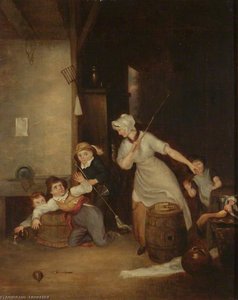
Sunnycroft, WellingtonSunnycroft Wellington 2 A Dame Scolding Naughty Children, The Toy Prisoner Being Shot In The School Room
Musée Cognacq-Jay, ParijsMusée Cognacq-Jay Parijs 1 The Scavengers
Royal Collection, LondenRoyal Collection Londen 1 Village Choristers Rehearsing an Anthem for Sunday
Anglesey AbbeyAnglesey Abbey 1 The Life Guards In A Guardroom

Edward Bird jaar voor jaar: de originelen die elk jaar definiëren

Van 1800 tot 1817 werkte Edward Bird 18 jaar lang: de selectie volgt deze lange carrière jaar voor jaar, via de mooiste originele werken.

Werken per jaar

Selecteer een jaar om de originele werken te bekijken.

Vragen van verzamelaars over de schilderijen van Edward Bird

Waar is Edward Bird het meest bekend om?Onthul het antwoord

The Scavengers (1800), Musée Cognacq-Jay, Parijs. Village Choristers Rehearsing an Anthem for Sunday (1810) en Mr Ricketts' Return From Shooting volgen.

Hoe oud was Edward Bird toen The Scavengers werd gemaakt?Onthul het antwoord

28 jaar oud: The Scavengers dateert uit 1800, en Edward Bird werd geboren in 1772.

Wat zijn de tien beroemdste schilderijen van Edward Bird?Onthul het antwoord

The Scavengers, Village Choristers Rehearsing an Anthem for Sunday, Mr Ricketts' Return From Shooting, The Reading Of The Will Concluded, Proclaiming Joash King, Princess Caraboo of Javasu ,, The Arrival of Louis XVIII at Calais, The Birth, The Duet en The Life Guards In A Guardroom. De bovenstaande ranglijst vermeldt het jaar en het museum van elk werk.

Hoeveel schilderijen heeft Edward Bird nagelaten?Onthul het antwoord

Onze catalogus bevat 54 werken van Edward Bird, daterend van 1800 tot 1817.

In welke musea hangen de meesterwerken van Edward Bird?Onthul het antwoord

Voornamelijk in Sunnycroft (Wellington), Musée Cognacq-Jay (Parijs) en Royal Collection (Londen). De bovenstaande museumtabel bevat een volledig overzicht.

Wat zijn de eerste en de laatste beroemde originelen van Edward Bird?Onthul het antwoord

Op deze pagina is het vroegste The Scavengers (1800) en het laatste Princess Caraboo of Javasu , (1817).

Welke onderwerpen koos Edward Bird het vaakst?Onthul het antwoord

Children (5), Man (3) en Royalty (3), verspreid over de 54 werken op deze pagina.

Welke techniek gebruikte Edward Bird het meest?Onthul het antwoord

Oil, voor 3 van de 54 werken op deze pagina.

Welke werken van Edward Bird hangen in het Sunnycroft?Onthul het antwoord

A Dame Scolding Naughty Children en The Toy Prisoner Being Shot In The School Room: het Sunnycroft, Wellington herbergt 2 van de werken op deze pagina.

Edward Bird: leven en werk

Edward Bird (1772–1819): Naturalism and the Bristol School

  • Early Life & Training
  • The Bristol School and Artistic Flourishing
  • Recognition in London & Shift to Historical Themes
  • Later Years, Legacy & Artistic Style

Early Life & Training

Edward Bird was born in Wolverhampton, Staffordshire, on April 12th, 1772. His father, a carpenter, instilled in him a practical understanding of craftsmanship—a grounding that would profoundly shape his artistic trajectory. Unlike many artists of his time who pursued formal academic training, Bird honed his skills through apprenticeship as a japanning artist, meticulously applying decorative designs onto tea trays. This painstaking process demanded precision and an eye for detail, qualities that would become hallmarks of his oeuvre. The influence of this early discipline—far removed from the grand narratives of history painting he would later embrace—laid the foundation for his artistic future. Initial observations suggest that Bird’s father encouraged him to develop a keen interest in art and design.

The Bristol School and Artistic Flourishing

Bristol proved to be more than just a place of employment; it became an intellectual and creative crucible. Bird swiftly found himself at the heart of what would become known as the “Bristol School”—an informal collective bound by a shared spirit of experimentation and mutual encouragement. This wasn’t a formally structured academy, but rather a dynamic network where ideas flowed freely, and artistic boundaries were gently pushed. A pivotal relationship for Bird was his friendship with George Cumberland, an art collector and connoisseur whose extensive library and collection provided invaluable access to a wealth of artistic inspiration. Cumberland's patronage opened doors to study works by the Old Masters, shaping Bird’s aesthetic sensibilities. Regular evening sketching sessions and excursions into the surrounding countryside fostered both technical skill and a shared artistic vision. The Bristol School championed a naturalistic style, prioritizing fresh color palettes and a keen observation of everyday life—qualities that would become hallmarks of Bird’s work and profoundly influence artists like Rippingille and, later, Francis Danby.

Recognition in London & Shift to Historical Themes

The year 1809 marked a turning point in Bird’s career. His submission to the Royal Academy—Good News—garnered immediate attention, its compelling narrative and skillful execution resonating with both critics and patrons. This success brought royal recognition, as the Prince Regent acquired his painting The Country Choristers and commissioned Blind Man’s Buff. These commissions not only solidified Bird's reputation but also provided financial stability, allowing him to explore more ambitious projects. He began a transition towards history painting, specializing in dramatic battle scenes—a genre that demanded both technical mastery and a powerful sense of narrative. Works like The Field of Chevy Chase and The Day After the Battle showcased his growing ability to capture the intensity and emotional weight of historical events.

Later Years, Legacy & Artistic Style

Despite achieving considerable acclaim, Bird’s later years were shadowed by declining health and artistic challenges. His attempts at large-scale historical paintings proved more difficult than anticipated, and he struggled to maintain the momentum of his earlier successes. He passed away on November 2nd, 1819, leaving behind a diverse body of work that was celebrated in a retrospective exhibition held in Bristol shortly after his death. Edward Bird is remembered as a pivotal figure in British art history, particularly for his contributions to the development of the Bristol School and his unique ability to seamlessly blend genre painting with historical themes. His influence extended beyond his immediate circle, inspiring subsequent generations of artists who embraced naturalism and sought to capture the authenticity of everyday life.