Portret van Cuthbert Cartwright Grundy

De 15 beroemdste schilderijen van Cuthbert Cartwright Grundy, elk uniek

Bijgewerkt in november 2026 · gerangschikt op basis van onze populariteitsscore (zoekopdrachten, bezoeken en bestellingen per kunstwerk) · 15 werken van Cuthbert Cartwright Grundy in onze catalogus

Kortom

Dawn (1900) is het schilderij van Cuthbert Cartwright Grundy dat de meeste aandacht trekt; het origineel bevindt zich in het Grundy Art Gallery, Blackpool. Daarna gaat de blik naar The Old Millhouse, Milnthorpe (1900) en The End of the Village. Van de 15 werken van Cuthbert Cartwright Grundy in onze catalogus zijn dit de 15 bekendste, elk een uniek origineel gepresenteerd met het jaar, het museum en de reden waarom het blijft voortbestaan.

1846 – 1946 Meeste werken: Grundy Art Gallery

Top 10 schilderijen van Cuthbert Cartwright Grundy, door de ogen van de galerie

6
Autumn (1919) door Cuthbert Cartwright Grundy

Autumn

The painting Autumn by Cuthbert Cartwright Grundy is a stunning representation of the fall season, showcasing the artist's skill in capturing the essence of nature. Created in 1919, this oil on canvas piece measures 111 x 86 cm and is currently housed at the Harris Museum - Art Gallery in Preston, United Kingdom. A Closer Look at the Painting The scene features two trees, one on the left side and…

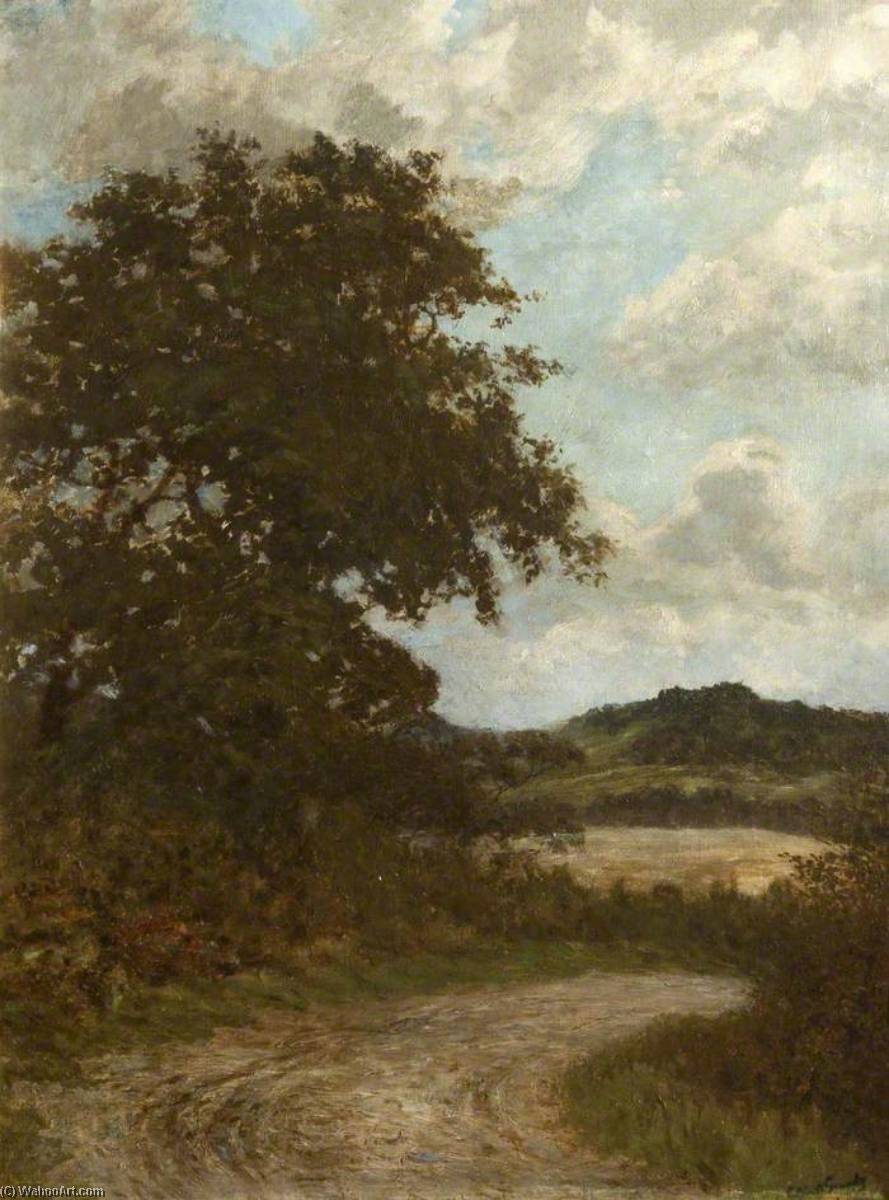
De beroemde schilderijen van Cuthbert Cartwright Grundy, nummer 11 tot 15

De onderwerpen die de aandacht van Cuthbert Cartwright Grundy troffen

De vier onderwerpen die het meest voorkomen in deze originelen, elk met zijn mooiste voorbeeld.

De musea waar de originele werken van Cuthbert Cartwright Grundy worden bewaard

De 5 musea met de meeste schilderijen op deze pagina.

Museum Stad Werken van Cuthbert Cartwright Grundy Schilderijen uit deze lijst
Grundy Art Gallery, BlackpoolGrundy Art Gallery Blackpool 4 Dawn, The Old Millhouse, Milnthorpe, View from My Window
Laing Art Gallery, Newcastle upon TyneLaing Art Gallery Newcastle upon Tyne 1 Plas Mawr, Conwy
Harris Museum - Art Gallery, PrestonHarris Museum - Art Gallery Preston 1 Autumn
Touchstones Rochdale, RochdaleTouchstones Rochdale Rochdale 1 Fresh and Breezy
Royal West of England Academy, BristolRoyal West of England Academy Bristol 1 A Study, A Grassy Bank, with Trees

Cuthbert Cartwright Grundy door de decennia heen: elk een uniek origineel

Werken per decennium

Kies een decennium om het origineel te zien dat dit tijdperk definieert.

Schilderijen van Cuthbert Cartwright Grundy: vragen voor de galerie

Wat is het bekendste werk van Cuthbert Cartwright Grundy?Onthul het antwoord

Dawn (1900), Grundy Art Gallery, Blackpool. The Old Millhouse, Milnthorpe (1900) en The End of the Village volgen.

Op welke leeftijd creëerde Cuthbert Cartwright Grundy Dawn?Onthul het antwoord

54 jaar oud: Dawn dateert uit 1900, en Cuthbert Cartwright Grundy werd geboren in 1846.

Welke tien schilderijen van Cuthbert Cartwright Grundy zijn het meest bekend?Onthul het antwoord

Dawn, The Old Millhouse, Milnthorpe, The End of the Village, Plas Mawr, Conwy, View from My Window, Autumn, Landscape, Coming Rain, Undisturbed en Elterwater. De bovenstaande ranglijst vermeldt het jaar en het museum van elk werk.

Hoeveel werken van Cuthbert Cartwright Grundy zijn er bekend?Onthul het antwoord

Onze catalogus bevat 15 werken van Cuthbert Cartwright Grundy, daterend van 1900 tot 1937.

Waar kunnen de beroemdste originelen van Cuthbert Cartwright Grundy worden bekeken?Onthul het antwoord

Voornamelijk in Grundy Art Gallery (Blackpool), Laing Art Gallery (Newcastle upon Tyne) en Harris Museum - Art Gallery (Preston). De bovenstaande museumtabel bevat een volledig overzicht.

In welke periode creëerde Cuthbert Cartwright Grundy de bekendste schilderijen?Onthul het antwoord

In 1900s: 2 van de 15 werken op deze pagina werden toen gemaakt, waaronder Dawn.

Welk beroemd schilderij van Cuthbert Cartwright Grundy is de vroegste, en welke de laatste?Onthul het antwoord

Op deze pagina is het vroegste Dawn (1900) en het laatste View from My Window (1937).

Welke onderwerpen had Cuthbert Cartwright Grundy de voorkeur?Onthul het antwoord

Landscape (2), Hills (2) en Tranquility (2), verspreid over de 15 werken op deze pagina.

Welke originele werken van Cuthbert Cartwright Grundy kan ik zien in het Grundy Art Gallery?Onthul het antwoord

Dawn, The Old Millhouse, Milnthorpe en View from My Window: het Grundy Art Gallery, Blackpool herbergt 4 van de werken op deze pagina.

Cuthbert Cartwright Grundy: een portret van de kunstenaar

Cuthbert Cartwright Grundy: A Vision of Northumberland

Cuthbert Cartwright Grundy (1846 – 1946) remains a relatively obscure figure in the annals of British watercolor painting, yet his landscapes hold a quiet beauty and profound connection to the rugged terrain of Northumberland. Born into a family steeped in artistic tradition—his father was a noted sculptor—Grundy’s early life fostered an appreciation for visual art that would shape his lifelong dedication to capturing the spirit of Northern England. While biographical details remain sparse, archival records indicate he pursued formal training at Slade School of Art in London, honing his skills under influential instructors and absorbing the stylistic currents of Impressionism and Neo-Romanticism prevalent during his formative years.
  • Early Influences: Grundy’s artistic sensibilities were undeniably shaped by the Romantic movement's fascination with sublime landscapes and emotional expression. Artists like Turner and Constable served as beacons, demonstrating how watercolor could convey grandeur and evoke powerful feelings.
  • Northumberland Obsession: From around 1890 onwards, Grundy established his studio in Kirkcudbrightshire, Scotland, but Northumberland became the focal point of his artistic endeavors. He tirelessly documented the dramatic coastline, rolling hills, and picturesque villages of Northumberland with meticulous detail and sensitivity.

A Distinctive Watercolor Style

Grundy’s technique distinguished him from many of his contemporaries. Unlike looser Impressionists who prioritized fleeting effects of light, Grundy favored a deliberate layering process—often applying multiple washes to build up tonal depth and texture. He meticulously observed the nuances of color and atmosphere, striving for accuracy while simultaneously imbuing his paintings with an emotional resonance. His palette leaned towards muted greens, blues, and browns, reflecting the subdued hues of Northumberland’s landscape. Notably, Grundy employed a technique known as ‘grisaille,’ applying thin washes of gray to establish tonal values before adding color—a method that allowed him to achieve remarkable realism and compositional control.
  • Detailed Observation: Grundy's approach mirrored the scientific rigor championed by Victorian naturalists; he meticulously documented geological formations, plant life, and animal behavior.
  • Emotional Resonance: Despite his technical precision, Grundy’s paintings are imbued with a palpable sense of tranquility and contemplation. He sought to convey not merely what he saw but how he felt—a testament to the power of art as a vehicle for emotional expression.

Notable Works & Recognition

Grundy produced over 300 paintings during his prolific career, many of which depict Northumberland scenes with breathtaking fidelity. Among his most celebrated works are ‘Old Skelwith Bridge,’ capturing the serene beauty of Cumbria’s Skelwith Beck; ‘Undisturbed,’ a contemplative depiction of moorland tranquility; and ‘Autumn,’ showcasing the vibrant colors of Northumberland’s autumnal foliage. His paintings reside in collections across Britain, including Kirkcudbrightshire Art Gallery & Museum and Tate Britain. Although Grundy achieved considerable acclaim within his artistic circle—particularly amongst fellow watercolorists—he remained largely unrecognized by the broader public during his lifetime.

Legacy & Historical Significance

Today, Cuthbert Cartwright Grundy’s paintings are appreciated for their understated elegance and masterful execution. They represent a crucial contribution to the history of British landscape painting, embodying the Romantic spirit's fascination with nature while simultaneously demonstrating the enduring power of watercolor as a medium for conveying emotion and observation. His dedication to capturing Northumberland’s beauty—a region undergoing significant industrialization during his era—offers a poignant glimpse into Victorian England’s relationship with its environment. Grundy’s legacy continues to inspire artists today who strive to achieve similar levels of technical skill and artistic sensitivity.