A Life Observed: The Photorealistic World of Catherine Murphy
Born in Cambridge, Massachusetts, in 1946, Catherine Murphy emerged as a profound and singular voice within the landscape of American painting. While many of her contemporaries during the late twentieth century were swept up in the tides of abstraction or the provocative gestures of postmodernism, Murphy chose a different path—one of intense, quiet devotion to the visible world. Her work does not seek to escape reality through grand, sweeping metaphors; instead, it finds its power in the meticulous documentation of the everyday. Through her lens of realism, the mundane is elevated to the monumental, and the overlooked becomes a subject of deep contemplation.
Murphy’s artistic journey was shaped by an early, innate connection to the act of creation. She has often recounted childhood moments where the impulse to paint felt less like a choice and more like a calling. This foundational passion led her to the prestigious Pratt Institute in Brooklyn, from which she graduated in 1967, and later to the Skowhegan School of Painting and Sculpture in Maine. Her formal education provided the technical scaffolding for what would become a career defined by extraordinary precision. Yet, beyond the classroom, it was her own disciplined way of seeing—a belief that attentive looking is a form of profound connection—that truly forged her style.
The Poetry of the Mundane
To step into a world created by Catherine Murphy is to enter a space where time seems to slow. Her canvases are masterclasses in photorealism, yet they transcend mere imitation. There is a palpable soul within her still lifes and interiors; she captures objects not just as they appear to the eye, but as they exist in a state of quiet significance. Whether it is the way light clings to the surface of a glass or the intricate textures of a domestic scene, Murphy utilizes a breathtaking level of detail to invite the viewer into a deeper relationship with the physical world.
Her technique serves a philosophical purpose. By rendering commonplace objects with such startling clarity, she challenges the viewer to reconsider their own surroundings. In her hands, an ordinary object becomes a vessel for light, shadow, and memory. This approach creates a sense of haunting stillness, where the familiar feels both intimately recognizable and strangely distant, as if we are seeing the world anew through a lens of heightened awareness. Her work suggests that beauty is not something to be sought in the extraordinary, but something to be discovered within the very fabric of our daily existence.
Recognition and Lasting Legacy
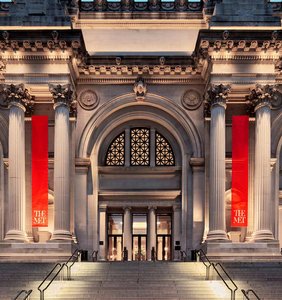
The trajectory of Murphy’s career has been marked by significant milestones that cemented her place in the canon of American realism. A pivotal moment occurred as early as 1971, when her work was included in the Annual Exhibition of Painting and Sculpture at the Whitney Museum of American Art. This early institutional validation signaled the arrival of a talent capable of commanding attention through sheer technical and conceptual depth. Over the decades, her contributions to the arts have been honored with prestigious accolades, including:
- National Endowment for the Arts Grants (awarded in 1979 and 1989)
- Guggenheim Fellowship (1982)
- The Robert De Niro, Sr. Prize (2013)
Beyond her individual achievements as a painter, Murphy has left an indelible mark on the academic community. Her long tenure as a Senior Critic at the Yale University Graduate School of Art allowed her to influence generations of emerging artists, sharing her rigorous approach to observation and craft. Currently holding the Tepper Family Endowed Chair in Visual Arts at the Mason Gross School of the Arts at Rutgers, she continues to be a vital presence in the art world. Her legacy remains one of profound looking—a reminder that through the disciplined eye of the artist, even the simplest object can tell an epic story.