Portret van Bertram Nicholls

De 36 bekendste schilderijen van Bertram Nicholls, een selectie uit de galerie

Bijgewerkt in november 2026 · gerangschikt op basis van onze populariteitsscore (zoekopdrachten, bezoeken en bestellingen per kunstwerk) · 39 werken van Bertram Nicholls in onze catalogus

Kortom

Van alle originele werken die Bertram Nicholls heeft nagelaten, is Bridgnorth, Shropshire (1943) het bekendst, in de collectie van het Buxton Museum - Art Gallery, Buxton. Direct daarna volgen By a Sussex Stream (1926) en Porto Rocco, Orvieto, Italy (1926). Onze catalogus bevat 39 werken van Bertram Nicholls; de galerie heeft de 36 meest bewonderde werken ter wereld bewaard, elk voorzien van de datum, het museum en het verhaal erachter.

1883 – 1974 Contemporary realism Meeste werken: The National Trust For Scotland

De top 10 schilderijen van Bertram Nicholls: de selectie van de galerie

1
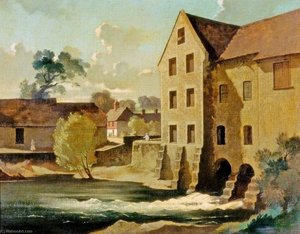
Bridgnorth, Shropshire (1943) door Bertram Nicholls

Bridgnorth, Shropshire

The painting Bridgnorth, Shropshire by Bertram Nicholls is a captivating representation of a quaint town in the English countryside. Created in 1943, this oil on canvas piece measures 54 x 76 cm and is currently housed at the Buxton Museum - Art Gallery in Buxton, United Kingdom. The scene features a picturesque town situated near a river with a bridge crossing it, surrounded by lush greenery and charming buildings. Composition…

5
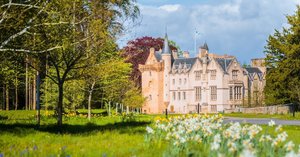
Pitigliano (1926) door Bertram Nicholls

Pitigliano

1926 · Oil · The National Trust For Scotland, Forres

In the quiet, evocative strokes of Bertram Nicholls’ 1926 masterpiece, Pitigliano, we are transported to a world where history breathes through the very architecture of the landscape. The painting captures the enchanting Italian town of Pitigliano, famously carved into the volcanic tuff rock, presenting a scene that feels less like a mere depiction and more like a rediscovered memory. At the heart of the composition stands a formidable stone castle,…

6
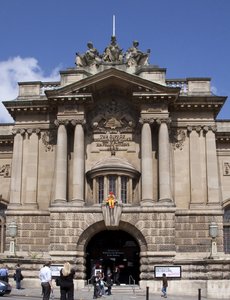
Washing in a Stream at Gouda (1928) door Bertram Nicholls

Washing in a Stream at Gouda

In the quietude of 1928, Bertram Nicholls captured a moment of profound stillness in his evocative work, Washing in a Stream at Gouda. This painting invites the viewer into a pastoral dreamscape where the boundaries between human presence and the natural world seem to dissolve. At its heart, the composition centers on a gentle stream flowing beneath a weathered stone bridge, a structure that speaks of time's passage and the…

De selectie van Bertram Nicholls gaat verder, van 11 tot 36

De onderwerpen die de aandacht van Bertram Nicholls troffen

De vier onderwerpen die het meest voorkomen in deze originelen, elk met zijn mooiste voorbeeld.

De musea waar de originele werken van Bertram Nicholls worden bewaard

De 8 musea met de meeste schilderijen op deze pagina.

Museum Stad Werken van Bertram Nicholls Schilderijen uit deze lijst
The National Trust For Scotland, ForresThe National Trust For Scotland Forres 3 Pitigliano, A Mountain Village, Philippe le Bel's Tower
Buxton Museum - Art Gallery, BuxtonBuxton Museum - Art Gallery Buxton 2 Bridgnorth, Shropshire, Wilton Bridge, Ross on Wye, Herefordshire
Harris Museum - Art Gallery, PrestonHarris Museum - Art Gallery Preston 2 By a Sussex Stream, Ragusa
Bristol Museum - Art Gallery, BristolBristol Museum - Art Gallery Bristol 2 Washing in a Stream at Gouda, Assisi
Government Art Collection, LondenGovernment Art Collection Londen 2 Le mammelle d'Italia, Lambeth Bridge
Guildhall Art Gallery, LondenGuildhall Art Gallery Londen 1 Porto Rocco, Orvieto, Italy
Maidstone Museum - Bentlif Art Gallery, MaidstoneMaidstone Museum - Bentlif Art Gallery Maidstone 1 San Giovanni Nepomuceno
Touchstones Rochdale, RochdaleTouchstones Rochdale Rochdale 1 Easby Abbey, Richmond, North Yorkshire

Bertram Nicholls decennium voor decennium: het origineel dat elk tijdperk definieert

Werken per decennium

Kies een decennium om het origineel te zien dat dit tijdperk definieert.

Vragen van verzamelaars over de schilderijen van Bertram Nicholls

Waar is Bertram Nicholls het meest bekend om?Onthul het antwoord

Bridgnorth, Shropshire (1943), Buxton Museum - Art Gallery, Buxton. By a Sussex Stream (1926) en Porto Rocco, Orvieto, Italy (1926) volgen.

Hoe oud was Bertram Nicholls toen Bridgnorth, Shropshire werd gemaakt?Onthul het antwoord

60 jaar oud: Bridgnorth, Shropshire dateert uit 1943, en Bertram Nicholls werd geboren in 1883.

Wat zijn de tien beroemdste schilderijen van Bertram Nicholls?Onthul het antwoord

Bridgnorth, Shropshire, By a Sussex Stream, Porto Rocco, Orvieto, Italy, Goodrich Village, Herefordshire, Pitigliano, Washing in a Stream at Gouda, Picturesque Steyning, Drying the Sails, Steyning Church, Sussex en The Bridge. De bovenstaande ranglijst vermeldt het jaar en het museum van elk werk.

Hoeveel schilderijen heeft Bertram Nicholls nagelaten?Onthul het antwoord

Onze catalogus bevat 39 werken van Bertram Nicholls, daterend van 1914 tot 1949.

In welke musea hangen de meesterwerken van Bertram Nicholls?Onthul het antwoord

Voornamelijk in The National Trust For Scotland (Forres), Buxton Museum - Art Gallery (Buxton) en Harris Museum - Art Gallery (Preston). De bovenstaande museumtabel bevat een volledig overzicht.

In welke jaren schilderde Bertram Nicholls de beroemdste werken?Onthul het antwoord

In 1920s: 16 van de 36 werken op deze pagina werden toen gemaakt, waaronder By a Sussex Stream.

Wat zijn de eerste en de laatste beroemde originelen van Bertram Nicholls?Onthul het antwoord

Op deze pagina is het vroegste Picturesque Steyning (1914) en het laatste Lambeth Bridge (1949).

Welke onderwerpen koos Bertram Nicholls het vaakst?Onthul het antwoord

Bridge (2), People (2) en Dog (2), verspreid over de 36 werken op deze pagina.

Bij welke kunststroming behoort Bertram Nicholls?Onthul het antwoord

Contemporary realism, te oordelen aan de originelen op deze pagina.

Welke werken van Bertram Nicholls hangen in het The National Trust For Scotland?Onthul het antwoord

Pitigliano, A Mountain Village en Philippe le Bel's Tower: het The National Trust For Scotland, Forres herbergt 3 van de werken op deze pagina.

Bertram Nicholls: leven en werk

The Quiet Observer: The Life and Legacy of Bertram Nicholls

Born in the industrious heart of Didsbury, Manchester, on September 26th, 1883, Bertram Nicholls emerged as a painter of profound stillness and atmospheric grace. As the youngest child of William Andrews Nicholls, a local fruit merchant, and Mary Allen, his early years were rooted in the steady rhythms of Northern English life. His journey toward artistic mastery began at the Manchester Grammar School, but it was his subsequent enrollment at the prestigious Slade School of Fine Art between 1901 and 1904 that would fundamentally reshape his vision. Under the tutelage of Reginald Barber, Nicholls began to move beyond mere representation, seeking instead a deeper connection with the light and tonal harmonies that define the natural world.

The foundations of his style were laid by the giants of British art history. He drew deep inspiration from the meticulous observation found in the works of Joshua Reynolds and the landscape sensibilities of Richard Wilson. These early influences instilled in him a reverence for compositional balance and a sophisticated understanding of how light interacts with texture. His formative years were further enriched by encounters with the Staithes Group, particularly Frederick Jackson, whose commitment to plein air painting—the practice of painting directly from nature—encouraged Nicholls to capture the immediate, breathing essence of the British countryside.

A Journey Through Light and Stone

In 1904, a transformative voyage to Madrid introduced Nicholls to the profound complexities of Baroque mastery. Immersing himself in the works of Diego Velázquez, he developed an acute sensitivity to the rendering of light and the structural integrity of composition. This Spanish influence would later manifest in his ability to imbue even the most tranquil landscapes with a sense of monumental presence. Upon returning to England, Nicholls’ work began to reflect a unique synthesis of styles; he absorbed the innovative color palettes of Whistler and the atmospheric grandeur of Turner, blending them into a personal language characterized by understated beauty and quietude.

His travels across Europe provided him with an endless repertoire of subjects, from the rugged, sun-drenched architecture of Italy to the pastoral serenity of the Netherlands. In his 1926 masterpiece, Pitigliano, one can witness his ability to turn stone into memory, capturing an Italian town carved from volcanic tuff with a tactile precision that makes the ancient masonry feel almost palpable. Similarly, in works such as Washing in a Stream at Gouda (1928), he achieved a rare dissolution of boundaries between human presence and the natural world, using soft, painterly brushstrokes to evoke the misty, restorative solitude of a Dutch landscape.

The Resilience of Vision

The trajectory of Nicholls’ life was not without its interruptions by the turbulence of history. During the First World War, he served in the Kite Balloon Service of the Royal Flying Corps. This period of aerial reconnaissance offered him a unique, panoramic perspective on the landscape—a view from above that likely deepened his understanding of spatial relationships and the sweeping contours of the earth. This experience of observing the world from a detached, soaring height may have contributed to the sense of peaceful, observational distance found in his later landscapes.

Throughout his long life, which concluded in 1974, Nicholls remained dedicated to the pursuit of the "quiet landscape." His oeuvre stands as a testament to the power of subtle emotion and the enduring beauty of the everyday. Whether depicting a sun-dappled quay in Italy or a muted, impressionistic stream in Sussex, his work continues to resonate with those seeking a moment of respite. His historical significance lies in his ability to bridge the gap between the rigorous traditions of the Slade School and a modern, emotive approach to light, ensuring that his paintings remain timeless windows into a world of profound peace.