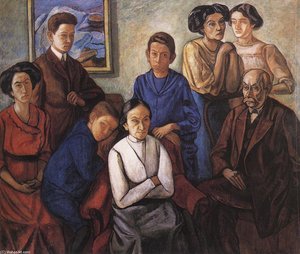
Portret van Bertalan Pór

De 39 bekendste schilderijen van Bertalan Pór, een selectie uit de galerie

Bijgewerkt in november 2026 · gerangschikt op basis van onze populariteitsscore (zoekopdrachten, bezoeken en bestellingen per kunstwerk) · 39 werken van Bertalan Pór in onze catalogus

Kortom

Van alle originele werken die Bertalan Pór heeft nagelaten, is Selt-portrait de bekendste. Direct daarna volgen trait of Mátyás Rákosi en Trait Of Ödön Lechner. Onze catalogus bevat 39 werken van Bertalan Pór; de galerie heeft de 39 meest bewonderde werken ter wereld bewaard, elk voorzien van de datum, het museum en het verhaal erachter.

1880 – 1964, Babiná Post-impressionism Meeste werken: Museum of Fine Arts

De top 10 schilderijen van Bertalan Pór: de selectie van de galerie

De selectie van Bertalan Pór gaat verder, van 11 tot 39

De beroemde schilderijen van Bertalan Pór, periode voor periode

De onderwerpen die de aandacht van Bertalan Pór troffen

De vier onderwerpen die het meest voorkomen in deze originelen, elk met zijn mooiste voorbeeld.

De musea waar de originele werken van Bertalan Pór worden bewaard

Het museum met de meeste schilderijen op deze pagina.

Museum Stad Werken van Bertalan Pór Schilderijen uit deze lijst
Museum of Fine Arts, BostonMuseum of Fine Arts Boston 1 Self-portrait -

Vragen van verzamelaars over de schilderijen van Bertalan Pór

Waar is Bertalan Pór het meest bekend om?Onthul het antwoord

Selt-portrait. trait of Mátyás Rákosi en Trait Of Ödön Lechner volgen.

Wat zijn de tien beroemdste schilderijen van Bertalan Pór?Onthul het antwoord

Selt-portrait, trait of Mátyás Rákosi, Trait Of Ödön Lechner, Trait Of My Mother, The Family, Self-portrait -, Trait Of A Man -, Self-portrait -, Landscape en Sunlit Landscape With Bridge. De bovenstaande ranglijst vermeldt het jaar en het museum van elk werk.

Hoeveel schilderijen heeft Bertalan Pór nagelaten?Onthul het antwoord

Onze catalogus bevat 39 werken van Bertalan Pór.

In welke musea hangen de meesterwerken van Bertalan Pór?Onthul het antwoord

Voornamelijk in Museum of Fine Arts (Boston). De bovenstaande museumtabel bevat een volledig overzicht.

Welke onderwerpen koos Bertalan Pór het vaakst?Onthul het antwoord

Landscape (6), Portraits (4) en Introspection (4), verspreid over de 39 werken op deze pagina.

Bij welke kunststroming behoort Bertalan Pór?Onthul het antwoord

Post-impressionism, te oordelen aan de originelen op deze pagina.

Bertalan Pór: leven en werk

A Pioneer of Hungarian Modernism: The Life and Art of Bertalan Pór

Bertalan Pór, born in Budapest on November 4th, 1880, emerged as a pivotal figure in the landscape of early twentieth-century Hungarian art. His journey, spanning from his formative years amidst the burgeoning artistic fervor of fin-de-siècle Hungary to his eventual embrace of Parisian modernism and return to contribute to his homeland’s cultural revival, embodies a commitment to innovation and a profound engagement with the evolving aesthetic sensibilities of his time. From an early age, Pór demonstrated a natural aptitude for drawing, setting him on a path that would lead him through rigorous academic training and ultimately into the heart of avant-garde artistic circles. He initially honed his skills at the School of Industrial Design in Budapest under László Gyulay, but recognizing the limitations of local instruction, he sought further development abroad. Munich became his first destination, where he studied with Gabriel von Hackl, absorbing German artistic traditions before venturing to the vibrant artists’ colony of Nagybánya. This community, founded by Simon Hollósy and others, proved instrumental in shaping Pór's artistic vision, fostering a collaborative spirit and an openness to experimentation that would define his future work. His studies culminated in Paris at the Académie Julian under Jean Paul Laurens, exposing him to the latest trends in French painting and solidifying his foundation in academic technique.

Early Training and Artistic Foundations

Pór’s artistic education began with a grounding in traditional drawing techniques at Budapest's School of Industrial Design, overseen by László Gyulay. However, recognizing the restrictive nature of Hungarian art pedagogy, he proactively pursued opportunities for advancement beyond national borders. Munich proved to be a formative experience, where he studied under Gabriel von Hackl, immersing himself in German artistic heritage and absorbing influences from Impressionism and Symbolism. This exposure broadened his understanding of artistic expression and prepared him for the challenges posed by the avant-garde movements gaining momentum across Europe. Simultaneously, he joined Simon Hollósy’s Nagybánya artists' colony, a crucible of creativity where experimentation flourished and collaborative endeavors were encouraged. The collective spirit fostered within this community instilled in Pór a belief in pushing boundaries and questioning established conventions—a conviction that would permeate his subsequent artistic pursuits.

The Influence of ‘The Eight’ and Parisian Modernism

Pór’s artistic trajectory took its decisive turn upon his return to Hungary with his involvement with “The Eight” (Nyolcak), a collective of artists who fundamentally reshaped the Hungarian art landscape. Formed in 1909, this group – comprising Károly Kernstok, Róbert Berény, Dezső Czigány, Béla Czóbel, Ödön Márffy, Dezső Orbán, and Lajos Tihanyi alongside Pór – represented a bold defiance of conservative artistic dogma. They rejected academic realism in favor of expressive color palettes and distorted forms—a stylistic choice that mirrored the burgeoning influence of Fauvism and Cubism on European art. The Eight’s unwavering commitment to portraying modern life with uncompromising honesty and emotional intensity established them as pioneers of Hungarian modernist thought. Pór, particularly attuned to the aesthetic innovations championed by Hodler and Laurens, skillfully integrated elements of German and French artistic theories into his own distinctive style.

Notable Works and Artistic Style

Bertalan Pór’s oeuvre encompasses a diverse range of subjects—landscapes imbued with vibrant hues, portraits capturing psychological depth, and animal paintings reflecting an intimate connection to the natural world. His most celebrated canvases include “Bulls,” “The Family,” and “Margitka”—works that exemplify his mastery of technique and his ability to convey profound emotional resonance. He favored bold brushstrokes and a luminous palette—characteristics consistent with the stylistic precepts of Fauvism and Cubism—demonstrating an unwavering dedication to artistic experimentation. His lithograph "Proletarians of the World, Unite!" stands as a testament to his engagement with social commentary and his willingness to confront pressing societal issues through visual art.

Legacy and Recognition

Bertalan Pór’s contribution to Hungarian art history is undeniable—he served as a catalyst for artistic innovation and championed the transformative potential of modernist aesthetics. Today, his paintings are housed in prominent museums across Europe, including the Hungarian National Gallery and the Museum of Modern Art in New York City, securing his place among the most influential artists of his era. His centenary exhibitions underscored the enduring significance of The Eight’s artistic vision and reaffirmed Pór's pivotal role in shaping Hungarian cultural identity. He remains an inspiring figure for aspiring artists—a beacon of creativity, resilience, and unwavering devotion to artistic integrity. His paintings are not merely representations of reality but expressions of a deeply felt emotional and intellectual engagement with the world around him.