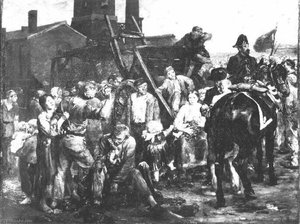
Portret van Alfred Philippe Roll

De 49 bekendste schilderijen van Alfred Philippe Roll, een selectie uit de galerie

Bijgewerkt in november 2026 · gerangschikt op basis van onze populariteitsscore (zoekopdrachten, bezoeken en bestellingen per kunstwerk) · 50 werken van Alfred Philippe Roll in onze catalogus

Kortom

Van alle originele werken die Alfred Philippe Roll heeft nagelaten, is Portrait de Mme Roll de bekendste. Direct daarna volgen Retour du bal en The feast of Silenus (1871). Onze catalogus bevat 50 werken van Alfred Philippe Roll; de galerie heeft de 49 meest bewonderde werken ter wereld bewaard, elk voorzien van de datum, het museum en het verhaal erachter.

1845 – 1919, voormalig 8e arrondissement van Parijs Meeste werken: Petit Palais

De top 10 schilderijen van Alfred Philippe Roll: de selectie van de galerie

1
Portrait de Mme Roll door Alfred Philippe Roll

Portrait de Mme Roll

Oil On Canvas

The portrait depicts a woman, identified as Madame Roll, positioned in a vertical orientation. She is situated slightly off-center within a domestic interior, appearing to stand near a window. The figure is rendered with a muted color palette, primarily composed of blacks, grays, and browns. Subtle ochre and muted red tones appear in the highlights and the background. Her attire is formal, and her expression remains serene with a slight…

2
Retour du bal door Alfred Philippe Roll

Retour du bal

Oil On Canvas · Musée d'Arts de Nantes, Nantes

The air in the room feels heavy with the scent of perfume and the soft rustle of silk as two women move through an opulent interior. We watch them from behind, catching only the graceful curve of their backs and the sweeping lines of their attire. They are poised, perhaps caught in a moment of transition between the excitement of a social gathering and the quietude of their private quarters.…

3
The feast of Silenus (1871) door Alfred Philippe Roll

The feast of Silenus

1871 · Oil On Canvas · Museum voor Schone Kunsten Gent, Gent

The feast of Silenus emerges from the brush of Alfred Philippe Roll, a painter whose life spanned the transformative decades of the late nineteenth century. Born in the former 8th arrondissement of Paris, France, in 1845, Roll carries the weight of a changing era within his lineage. He remains a figure of the French tradition, having departed this world in 1919. This specific work, The feast of Silenus, captures a…

4
Marianne Orfrey, Green Crier (1880) door Alfred Philippe Roll

Marianne Orfrey, Green Crier

1880 · Oil On Canvas · Musée des Beaux-Arts de Pau, Pau

In this 1880 oil on canvas, we find ourselves standing at eye-level with a solitary woman, a street vendor whose presence commands a quiet, stoic dignity. She is positioned slightly off-center, a choice that lends a sense of naturalism to the vertical composition. There is a certain weight to her figure, anchored by the heavy folds of her skirt and the rounded, organic form of the basket she carries. The…

5
July 14, 1880, Inauguration of the Monument to the République (1882) door Alfred Philippe Roll

July 14, 1880, Inauguration of the Monument to the République

1882 · Oil · Petit Palais, Parijs

The canvas depicts a dense, wide-angle view of a Parisian square during a large-scale public celebration. In the center of the composition, a monument rises toward a sky filled with fluttering flags. The scene is populated by a vast, diverse crowd of figures that extend from the immediate foreground into the distance. These people are rendered with varied postures, some standing in groups and others moving through the space. The…

6
Henri Rochefort (Victor-Henri, marquis de Rochefort-Luçay, 1831-1913), journalist, politician and writer (1879) door Alfred Philippe Roll

Henri Rochefort (Victor-Henri, marquis de Rochefort-Luçay, 1831-1913), journalist, politician and writer

1879 · Oil On Canvas · Musée Carnavalet, Parijs

The portrait emerges from a period of transition in French art, moving away from the rigid constraints of academic tradition toward a more grounded, empathetic realism. The visible layering of paint suggests a preoccupation with the authentic human form rather than an idealized version of it. There is a palpable sense of the man's internal life, a quiet intensity that lingers in the way the light interacts with his features.…

7
Woman and bull (1885) door Alfred Philippe Roll

Woman and bull

1885 · Oil · National Museum of Fine Arts, Buenos Aires

The air feels heavy and still within this shadowed woodland, where the light filters through a dense canopy in soft, dappled patches. A nude woman rests in an intimate, quiet moment, her pale skin glowing against the deep, earthy tones of the surrounding meadow. Beside her, the muscular form of a bull emerges from the darkness, its presence a powerful counterpoint to her vulnerability. There is a profound sense of…

8
Alsatian and Lorrainer (1891) door Alfred Philippe Roll

Alsatian and Lorrainer

1891 · Oil · Museum of the French Revolution, Vizille

In the work Alsatian and Lorrainer by Alfred Philippe Roll, the composition is structured as a tight, intimate close-up of two female figures. The primary subject is positioned in the foreground, presented in a sharp profile facing toward the left side of the frame. Behind her, a second woman is partially visible, also oriented toward the left. This overlapping arrangement creates a sense of depth within the narrow field of…

9
Portrait of Thaulow and His Wife (1890) door Alfred Philippe Roll

Portrait of Thaulow and His Wife

1890 · Oil On Canvas · Petit Palais, Parijs

In this intimate oil on canvas, Alfred Philippe Roll presents Portrait of Thaulow and His Wife. Painted about 1890, the work captures a quiet moment between a man and a woman. The subjects are likely the artist's acquaintances, Thaulow and his wife, rendered with a sense of naturalism that suggests a close proximity to the figures. There is a palpable sense of companionship in the way they are positioned together.

10
Portrait of Jane Hading (1890) door Alfred Philippe Roll

Portrait of Jane Hading

1890 · Oil On Canvas · Petit Palais, Parijs

The portrait presents a woman seated centrally within a luxurious interior. She is positioned in a vertical orientation, wearing a sleeveless black gown that features shimmering, light-colored patterns suggestive of sequins or embroidery. A large, dark, textured element, resembling a fur mantle or heavy drapery, surrounds the upper portion of her chair. Her skin is rendered with smooth, luminous textures, and her reddish-brown hair is styled softly around her face.…

De selectie van Alfred Philippe Roll gaat verder, van 11 tot 49

11André Manaut (1890) door Alfred Philippe RollAndré Manaut1890 · Municipal museum (Saverne) 12Au trot (1888) door Alfred Philippe RollAu trot1888 · Municipal museum (Saverne) 13Adolphe Alphand (1888) door Alfred Philippe RollAdolphe Alphand1888 · Petit Palais 14Centenary of the Estates General at the Neptune Basin (May 3, 1889) (1889) door Alfred Philippe RollCentenary of the Estates General at the Neptune Basin (May 3, 1889)1889 15Exodus (1893) door Alfred Philippe RollExodus1893 · Petit Palais 16Louise Cattel, wet nurse (1894) door Alfred Philippe RollLouise Cattel, wet nurse1894 · Palais des Beaux-Arts de Lille 17Alexandre Dumas fils (1895) door Alfred Philippe RollAlexandre Dumas fils1895 · Musée des Beaux-Arts 18Roll Painting (1900) door Alfred Philippe RollRoll Painting1900 · Petit Palais 19Portrait de Mme Henriette Roll (1900) door Alfred Philippe RollPortrait de Mme Henriette Roll1900 · Municipal museum (Saverne) 20Nu couché (1900) door Alfred Philippe RollNu couché1900 · Musée d'Art Moderne et Contemporain de Strasbourg 21In Summer, Woman with Dog (1909) door Alfred Philippe RollIn Summer, Woman with Dog1909 · Petit Palais 22Sketch for the Petit Palais, south gallery: Apotheosis (central ceiling) (1909) door Alfred Philippe RollSketch for the Petit Palais, south gallery: Apotheosis (central ceiling)1909 · Petit Palais 23Sketch for the Petit Palais, south gallery: Poetry - Drama (1910) door Alfred Philippe RollSketch for the Petit Palais, south gallery: Poetry - Drama1910 · Petit Palais 24Sketch for the Petit Palais, south gallery: Fantastic Music (1911) door Alfred Philippe RollSketch for the Petit Palais, south gallery: Fantastic Music1911 · Petit Palais 25Sketch for the South Gallery of the Petit Palais: Apotheosis (central ceiling) (1913) door Alfred Philippe RollSketch for the South Gallery of the Petit Palais: Apotheosis (central ceiling)1913 · Petit Palais 26The Big Bed (1912) door Alfred Philippe RollThe Big Bed1912 · Municipal museum (Saverne) 27Bourgeoisie (1913) door Alfred Philippe RollBourgeoisie1913 · Municipal museum (Saverne) 28Portrait of Miss Amélie Diéterle, in 1913. Title : In June, Amélie Diéterle. (1913) door Alfred Philippe RollPortrait of Miss Amélie Diéterle, in 1913. Title : In June, Amélie Diéterle.1913 · Petit Palais 29The Tea Cup (1918) door Alfred Philippe RollThe Tea Cup1918 · Municipal museum (Saverne) 30CHEMIN SOUS BOIS door Alfred Philippe RollCHEMIN SOUS BOIS 31July 14, 1880, Inauguration of the Monument to the Republic (1881) door Alfred Philippe RollJuly 14, 1880, Inauguration of the Monument to the Republic1881 · Petit Palais 32Esquisse pour La fête nationale du 14 juillet 1880 (1881) door Alfred Philippe RollEsquisse pour La fête nationale du 14 juillet 18801881 · Municipal museum (Saverne) 33Sketch for the Hôtel de Ville de Paris: Art, Movement, Work, Lights (1897) door Alfred Philippe RollSketch for the Hôtel de Ville de Paris: Art, Movement, Work, Lights1897 · Petit Palais 34The Vigil under the Arc de Triomphe (1903) door Alfred Philippe RollThe Vigil under the Arc de Triomphe1903 · Musée Victor Hugo 35The Wave (1911) door Alfred Philippe RollThe Wave1911 · Petit Palais 36Sketch for the Petit Palais, south gallery: Fantastic Music (1911) door Alfred Philippe RollSketch for the Petit Palais, south gallery: Fantastic Music1911 · Petit Palais 37Peder Severin Kröyer (1851-1909) door Alfred Philippe RollPeder Severin Kröyer (1851-1909)Nationalmuseum 38Petite République (1907) door Alfred Philippe RollPetite République1907 · Municipal museum (Saverne) 39La grève de mineurs door Alfred Philippe RollLa grève de mineurs 40Portrait de Léon Bourgeois door Alfred Philippe RollPortrait de Léon Bourgeois 41PORTRAIT DE JEUNE FILLE door Alfred Philippe RollPORTRAIT DE JEUNE FILLE 42Portrait de jeune femme door Alfred Philippe RollPortrait de jeune femme 43L'Exécution d'un trompette sous la Commune door Alfred Philippe RollL'Exécution d'un trompette sous la CommuneMusée Carnavalet 44Les baigneuses Panneau décoratif (Ancien titre) door Alfred Philippe RollLes baigneuses Panneau décoratif (Ancien titre) 45Bathers door Alfred Philippe RollBathersMusée des Beaux-Arts de Dijon 46Chevaux à l'écurie door Alfred Philippe RollChevaux à l'écurie 47Manda Lamétrie, fermière (1887) door Alfred Philippe RollManda Lamétrie, fermière1887 · Musée d'Orsay 48The Young Republic (1908) door Alfred Philippe RollThe Young Republic1908 · Musée d'Orsay 49The Striker's Wife door Alfred Philippe RollThe Striker's WifeMusee Baron Martin

De beroemde schilderijen van Alfred Philippe Roll, periode voor periode

De onderwerpen die de aandacht van Alfred Philippe Roll troffen

De vier onderwerpen die het meest voorkomen in deze originelen, elk met zijn mooiste voorbeeld.

De musea waar de originele werken van Alfred Philippe Roll worden bewaard

De 8 musea met de meeste schilderijen op deze pagina.

Museum Stad Werken van Alfred Philippe Roll Schilderijen uit deze lijst
Petit Palais, ParijsPetit Palais Parijs 16 July 14, 1880, Inauguration of the Monument to the République, Portrait of Thaulow and His Wife, Portrait of Jane Hading
Municipal museum (Saverne), SaverneMunicipal museum (Saverne) Saverne 8 André Manaut, Au trot, Portrait de Mme Henriette Roll
Musée Carnavalet, ParijsMusée Carnavalet Parijs 2 Henri Rochefort (Victor-Henri, marquis de Rochefort-Luçay, 1831-1913), journalist, politician and writer, L'Exécution d'un trompette sous la Commune
Musée d'Orsay, ParijsMusée d'Orsay Parijs 2 Manda Lamétrie, fermière, The Young Republic
Musée d'Arts de Nantes, NantesMusée d'Arts de Nantes Nantes 1 Retour du bal
Museum voor Schone Kunsten Gent, GentMuseum voor Schone Kunsten Gent Gent 1 The feast of Silenus
Musée des Beaux-Arts de Pau, PauMusée des Beaux-Arts de Pau Pau 1 Marianne Orfrey, Green Crier
National Museum of Fine Arts, Buenos AiresNational Museum of Fine Arts Buenos Aires 1 Woman and bull

Alfred Philippe Roll decennium voor decennium: het origineel dat elk tijdperk definieert

Werken per decennium

Kies een decennium om het origineel te zien dat dit tijdperk definieert.

Vragen van verzamelaars over de schilderijen van Alfred Philippe Roll

Waar is Alfred Philippe Roll het meest bekend om?Onthul het antwoord

Portrait de Mme Roll. Retour du bal en The feast of Silenus (1871) volgen.

Wat zijn de tien beroemdste schilderijen van Alfred Philippe Roll?Onthul het antwoord

Portrait de Mme Roll, Retour du bal, The feast of Silenus, Marianne Orfrey, Green Crier, July 14, 1880, Inauguration of the Monument to the République, Henri Rochefort (Victor-Henri, marquis de Rochefort-Luçay, 1831-1913), journalist, politician and writer, Woman and bull, Alsatian and Lorrainer, Portrait of Thaulow and His Wife en Portrait of Jane Hading. De bovenstaande ranglijst vermeldt het jaar en het museum van elk werk.

Hoeveel schilderijen heeft Alfred Philippe Roll nagelaten?Onthul het antwoord

Onze catalogus bevat 50 werken van Alfred Philippe Roll, daterend van 1871 tot 1918.

In welke musea hangen de meesterwerken van Alfred Philippe Roll?Onthul het antwoord

Voornamelijk in Petit Palais (Parijs), Municipal museum (Saverne) (Saverne) en Musée Carnavalet (Parijs). De bovenstaande museumtabel bevat een volledig overzicht.

In welke jaren schilderde Alfred Philippe Roll de beroemdste werken?Onthul het antwoord

In 1880s: 9 van de 49 werken op deze pagina werden toen gemaakt, waaronder Marianne Orfrey, Green Crier.

Wat zijn de eerste en de laatste beroemde originelen van Alfred Philippe Roll?Onthul het antwoord

Op deze pagina is het vroegste The feast of Silenus (1871) en het laatste The Tea Cup (1918).

Welke onderwerpen koos Alfred Philippe Roll het vaakst?Onthul het antwoord

Woman (19), Man (8) en Skin tones (5), verspreid over de 49 werken op deze pagina.

Welke techniek gebruikte Alfred Philippe Roll het meest?Onthul het antwoord

Oil On Canvas, voor 17 van de 49 werken op deze pagina.

Welke werken van Alfred Philippe Roll hangen in het Petit Palais?Onthul het antwoord

July 14, 1880, Inauguration of the Monument to the République, Portrait of Thaulow and His Wife en Portrait of Jane Hading: het Petit Palais, Parijs herbergt 16 van de werken op deze pagina.

Alfred Philippe Roll: leven en werk

De Ziel van de Derde Republiek: De Artistieke Reis van Alfred Philippe Roll

In het levendige, voortdurend veranderende landschap van het Frankrijk van de late 19e eeuw, legden weinig kunstenaars de hartslag van een veranderende natie zo ontroerend vast als Alfred Philippe Roll. Geboren in Parijs in 1846, kwam Roll voort uit de prestigieuze zalen van de École des Beaux-Arts, als een student gevormd door de rigoureuze academische tradities van meesters zoals Jean-Léon Gérôme, Léon Bonnat en Charles-François Daubigny. Zijn vroege jaren werden gekenmerkt door een romantisch gevoel, een stilistische periode waarin zijn doeken ademden met de grandeur en het schilderachtige charme die zo kenmerkend waren voor die tijd. Tijdens deze vormende fase echode zijn werk vaak de meeslepende emotionaliteit van de Bolognese traditie en het opkomende realisme van Gustave Courbet, waardoor er een delicate spanning ontstond tussen klassieke schoonheid en rauwe observatie.

De koers van Roll’s carrière werd onherroepelijk veranderd door de turbulente winden van de geschiedenis. De Frans-Duitse Oorlog, waarin hij diende als militieluitenant, gaf zijn perspectief een diepgaand begrip van menselijke veerkracht en maatschappelijke ontwrichting. Deze periode van conflict fungeerde als een vuurdoop, die zijn blik verfijnde van het puur romantische naar een meer geworteld, empathisch realisme. Zijn meesterwerk uit 1875, The Flood at Toulouse, staat als een spookachtig testament van deze overgang; door het onmiddellijke lijden en de fragiliteit van het leven tijdens een natuurramp vast te leggen, ging hij verder dan louter decoratie om zich te verbinden met de collectieve psyche van het Franse volk. Dit werk, dat nu in het Musée Malraux te vinden is, markeerde zijn doorbraak als een kunstenaar die in staat was tot diepgaand visueel verhalen vertellen.

Van Romantiek naar de Rauwheid van het Realisme

Naarmate de decennia vorderden, begon het penseelwerk van Roll zijn geromantiseerde randen af te schudden, om in plaats daarvan de rauwe kracht en waarheid van de Naturalistische beweging te omarmen. Hij werd een schilder van het volk, die zijn aandacht richtte op de sociaal-politieke dynamiek van de Derde Republiek. Deze evolutie was niet louter stilistisch, maar diep ideologisch. Hij streefde ernaar de authentieke menselijke ervaring te documenteren, in het bijzonder de strijd en de triomfen van de arbeidersklasse. Zijn baanbrekende schilderij, Miners’ Strike (1880), blijft een van zijn belangrijkste prestaties, die hem naar de hoogste rangen van de Franse kunstwereld katapulteerde. In dit werk beschreef hij niet alleen arbeidsonrust; hij humaniseerde de strijd door de figuren te voorzien van een waardigheid die ver buiten de muren van de galerie nagalmde.

Deze toewijding aan het sociaal realisme stelde Roll in staat om met opmerkelijke behendigheid door de complexiteiten van zijn tijd te navigeren. Zijn repertoire breidde zich uit tot:

  • Stadslandschappen: Meticuleuze afbeeldingen van het Parijns leven en het veranderende gezicht van de stad.
  • Intieme Portretten: Studies die de nuances van de burgerlijke en arbeidersidentiteit weerspiegelden.
  • Sociale Narratieven: Grootschalige composities die actuele politieke en sociale kwesties aankaartten.

Zijn vermogen om de technische precisie die hij van zijn academische mentoren had geleerd te versmelten met een progressieve, bijna documentaire-achtige benadering van zijn onderwerpen, maakte hem tot een essentiële stem in de Franse kunst. Hij was niet slechts een observator van het leven, maar een chroniqueur van de meest urgente transformaties ervan.

Nalatenschap en Historisch Belang

De nalatenschap van Alfred Philippe Roll wordt gedefinieerd door zijn rol als brug tussen de oude wereld van de academische traditie en de nieuwe wereld van maatschappelijke betrokkenheid. Als mede-oprichter van de Société Nationale des Beaux-Arts speelde hij een cruciale rol in het hervormen van het institutionele landschap van de Franse kunst, waarbij hij pleitte voor een ruimte waar diverse stijlen naast elkaar konden bestaan. Zijn werk blijft een vitaal historisch verslag dat de essentie vastlegt van een Frankrijk dat gevangen zat tussen de echo's van de romantiek en de rauwe realiteit van de industrialisatie en sociale hervorming.

Door zijn meesterschap in licht, textuur en compositie zorgde Roll ervoor dat de strijd en de schoonheid van het dagelijks leven werden vereeuwigd. Of het nu gaat om de weidse vergezichten van de Champagne-regio of de sombere tonen van een staking; zijn kunst nodigt de kijker voortdurend uit tot een diepgaande dialoog met het verleden. Hij blijft een betekenisvol figuur voor iedereen die de hartslag van het 19e-eeuwse Frankrijk wil begrijpen—een kunstenaar die naar de wereld keek, niet alleen zoals deze verscheen, maar zoals deze werd gevoeld.