


1
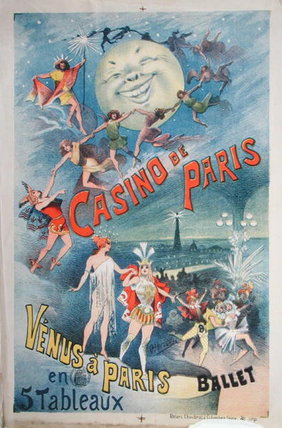

Bijgewerkt in november 2026 · gerangschikt op basis van onze populariteitsscore (zoekopdrachten, bezoeken en bestellingen per kunstwerk) · 12 werken van Alfred Choubrac in onze catalogus
Kortom
Poster Advertising The Revue is het schilderij van Alfred Choubrac dat de meeste aandacht trekt. Daarna gaat de blik naar The King Is Bored en Poster Casino de Trouville by Choubrac. Van de 12 werken van Alfred Choubrac in onze catalogus zijn dit de 12 bekendste, elk een uniek origineel gepresenteerd met het jaar, het museum en de reden waarom het blijft voortbestaan.


De vier onderwerpen die het meest voorkomen in deze originelen, elk met zijn mooiste voorbeeld.
Poster Advertising The Revue. The King Is Bored en Poster Casino de Trouville by Choubrac volgen.
Poster Advertising The Revue, The King Is Bored, Poster Casino de Trouville by Choubrac, Duclerc Poster, Poster For The 'international Exhibition Of Vienna, Poster Advertising Wagner's 'lohengrin', Poster baleinine, Post Ahoy Ahoy It will open follies of Théatre Marigny Choubrac, Poster Folie Bergère Danse de la serpentine en Advertising poster of Cycles Humbert. De bovenstaande ranglijst vermeldt het jaar en het museum van elk werk.
Onze catalogus bevat 12 werken van Alfred Choubrac.
In the heart of Montmartre, amidst the swirling creative energies of late 19th-century Paris, Alfred Choubrac was born into a world destined for artistic revolution. His journey began not merely as an individual pursuit but as part of a shared lineage of talent; alongside his elder brother, Léon Choubrac, Alfred was immersed in a family tradition where art was both a vocation and a way of life. This early immersion provided the foundation for a career that would eventually help define the visual language of the Belle Époque. Under the rigorous tutelage of masters such as Charles Doërr and Isidore Pils at the prestigious École des Beaux-Arts, Choubrac mastered the classical principles of painting, draughtsmanship, and composition. Yet, while his training was rooted in the timeless discipline of the academy, his spirit was drawn toward the burgeoning, electric atmosphere of the modern street.
As the 1870s unfolded, a seismic shift occurred in the way art met the public. The advent of chromolithography—a technique capable of producing breathtakingly vibrant colors and intricate details—offered a new canvas for the artist: the urban landscape itself. Choubrac, alongside his brother, became a pioneer of this medium, moving away from the solitary gallery space to embrace the democratic reach of the poster. Influenced by the legendary Jules Chéret, often hailed as the father of the modern poster, the Choubrac brothers applied sophisticated typographic and graphic techniques to transform advertisements into works of high art. They did not merely announce a product or a performance; they captured a mood, an elegance, and a sense of movement that resonated with the pulse of Parisian nightlife.
The true brilliance of Alfred Choubrac lay in his ability to synthesize classical mastery with the rapid-fire demands of commercial design. The era was marked by significant legislative shifts, such as the 1881 lifting of restrictions on bill-posting, which turned the streets of Paris into an open-air museum. As the Paris City Council began renting municipal spaces for advertising in 1884, Choubrac’s work proliferated across the city, decorating walls with dashing imagery and bold, clear colors. His collaboration with prominent printing houses like F. Appel and G. Massias allowed him to push the boundaries of what was possible in print, creating a visual spectacle that mirrored the optimism and cultural dynamism of his age.
Through his work, Choubrac helped establish the Ateliers Choubrac, one of Paris's first true graphic design agencies. This studio served as an incubator for innovation, where the boundaries between fine art and commercial illustration blurred. His posters were more than mere announcements; they were windows into the glamour of the era, advertising everything from theatrical productions to the grand spectacles of Wagnerian opera. The technical precision he inherited from his classical training allowed him to navigate the complexities of color layering in lithography, ensuring that each print possessed a luminous quality that could command attention even amidst the chaotic bustle of a crowded boulevard.
Though the life of Alfred Choubrac was relatively brief, ending in 1902, his impact on the trajectory of graphic design remains profound. He belonged to a generation of artists who understood that art could be both ephemeral and eternal. While a poster might be torn down by wind or replaced by a newer advertisement, the aesthetic revolution he helped lead changed the way humanity perceives visual communication. His work embodies the very essence of the Belle Époque—a period characterized by a thirst for beauty, a celebration of leisure, and an unshakeable belief in progress.
Today, when we look upon the vibrant textures and spirited compositions of his surviving works, we see more than just historical artifacts. We see the birth of modern advertising and the elevation of the everyday into the extraordinary. Alfred Choubrac remains a vital figure for anyone seeking to understand the soul of Paris at the turn of the century, reminding us that even in the most commercial of endeavors, there is room for profound artistic truth and enduring elegance.


