Geometric abstraction is a form of abstract art based on the use of geometric forms sometimes, though not always, placed in non-illusionistic space and combined into non-objective (non-representational) compositions. Although the genre was popularize...
The human impulse to organize chaos into recognizable patterns is as old as civilization itself. Long before the avant-garde movements of the twentieth century sought to dismantle the figure, geometry was already a silent language used to bridge the gap between the earthly and the divine. In Islamic art, for instance, the intricate repetition of polygons served a profound purpose, connecting scientific precision with spiritual devotion through architectural motifs that spanned centuries. These patterns were never merely decorative; they were mathematical meditations on infinity.
This ancient preoccupation with structured repetition finds a modern echo in the works of the early abstractionists. Where the ancient artisan used geometry to honor a higher power, artists like Piet Mondrian sought a universal harmony through the reduction of the world to its most basic elements. In his Composition with Blue 1, we see this lineage continued, not through complex ornamentation, and yet through a disciplined arrangement of lines and color that achieves a similar sense of cosmic order. The grid becomes a modern altar, stripped of religious iconography but retaining a profound, quiet stability.
The Structural Seed: Cézanne’s Geometric Primitives and the Path to Abstraction
Introduction There’s a quiet intensity that clings to Paul Cézanne's work, an almost palpable sense of searching—a relentless pursuit of capturing the essence of light and form. To assemble a ‘Top 25’ is, in itself, a somewhat reductive act; it feels...
To understand the radical shifts of the twentieth century, one must look back to the deliberate slowing of the gaze practiced by Paul Cézanne. He did not seek to paint a landscape as a mere collection of trees and sky, but rather as a study in volume and weight. By treating the natural world as a series of cylinders, spheres, and cones, he began to peel away the superficiality of light to reveal the underlying architecture of reality. His landscapes were investigations into how objects occupy space, a pursuit that fundamentally altered the trajectory of modern vision.
This structural curiosity provided the essential groundwork for the geometric abstractionists who followed. The transition from Cézanne’s heavy, textured forms to the pure, non-objective compositions of the mid-century was not a rupture, but an evolution. One can trace a direct line from his method of dissecting Mont Sainte-Victoire to the way artists like Friedrich Vordemberge-Gildewart utilized architectural principles to construct entirely new, non-representational worlds. The seed of the abstract grid was planted in the very soil of Post-Impressionist form.
Mathematical Precision: The Logic of Polygons in Pure Composition
--- title: Shape - Wikipedia url: https://en.wikipedia.org/wiki/Shape hostname: wikipedia.org sitename: Wikimedia Foundation, Inc. date: 2003-01-15 --- # Shape A **shape** is a [graphical representation](https://en.wikipedia.org/wiki/Graphics) of an ...
There is a particular intellectual rigor found in art that embraces the mathematical. When an artist moves away from the recognizable, they enter a realm where the properties of a shape—the 90-degree angles of a square or the equilateral symmetry of a triangle—become the primary narrative. This approach rejects the illusion of depth in favor of the truth of the picture plane. It is a pursuit of purity, where the tension between a rectangle and a circle is as emotionally resonant as any human drama.
This logic was famously championed by figures such as Max Bill, who believed that art could be developed through mathematical thinking. In the realm of geometric sculpture, this manifests in works like Georges Vantongerloo’s Construction in the Sphere, where the physical properties of the shape dictate the movement of the piece. The precision of the polygon is not a limitation but a liberation, allowing the artist to explore spatial relationships that are untethered from the whims of nature and anchored instead in the certainty of geometry.
Chromatic Structure: Defining Space Without Illusion
Exploring the Simplicity of Geometric Harmony This artwork exemplifies the beauty of minimalism through its precise arrangement of geometric forms. Its clean, structured composition invites viewers to appreciate the elegance of basic shapes and the p...
Color in geometric abstraction does not function as a way to mimic the hue of a leaf or the blue of a summer sky; rather, it acts as a structural component. In the hands of a master, a single block of color can create weight, while a lighter tone can suggest recession. This is particularly evident in the minimalist tradition, where a solitary blue square can serve as a visual anchor for an entire composition, providing a point of focus that prevents the eye from wandering aimlessly across the grid.
This use of color finds its historical counterpart in the way the Impressionists used light to modulate form, though with much less reliance on recognizable subject matter. While Monet used color to capture the fleeting atmosphere of a cathedral or a haystack, the geometric abstractionist uses it to define the very boundaries of the canvas. The goal is no longer to represent light hitting an object, but to use color itself as a source of light and stability within a non-illusionistic space.
Dimensionality and Form: Translating the Grid into Sculpture
The Architecture of Light: A Modern Reimagining of Post-Impressionist Form In the contemporary masterpiece Geometric Equilibrium in Ochre and Slate: A Study of Suspended Form , artist Alice Marchand orchestrates a breathtaking dialogue between the ri...
The transition from the two-dimensional plane to three-dimensional form represents one of the most challenging leaps in abstract practice. The grid, which provides such clarity on canvas, must suddenly contend with gravity, shadow, and physical occupation of space. This requires a profound understanding of how a line can become an edge, and how a flat surface can become a face. It is a translation of logic from the cerebral to the tactile.
We see this tension explored beautifully in contemporary works like Alice Marchand’s Geometric Equilibrium in Ochre and Slate. Here, the artist reimagines the Post-Impressionist fascination with volume by presenting cubes that seem to drift through an atmospheric void. The work captures the essence of a three-dimensional object caught in a moment of weightlessness, bridging the gap between the solid geometry of the past and a more fluid, modern sensibility. It reminds us that even the most rigid forms can possess a sense of organic movement.
The Permanence of Pattern: Finding Equilibrium in Modern Collections
A Window into Argentine Abstract Expressionism: Exploring MACBA’s Legacy Buenos Aires' Museum of Contemporary Art (MACBA) stands as a testament to Argentina’s artistic evolution, born from the ambitious vision of the Aldo Rubino Foundation and anchor...
For the collector, the appeal of geometric abstraction often lies in its ability to provide a sense of sanctuary. In an era characterized by digital fragmentation and visual noise, the structured clarity of a well-composed abstract work offers a moment of profound stillness. These pieces do not demand attention through spectacle; they command it through balance. They offer a window into a world where order is not forced, but discovered within the relationship between shape and void.
This search for equilibrium is a constant in the history of art, from the ancient mosaics to the most recent acquisitions in institutions like the MACBA in Buenos Aires. Whether through the heavy impasto of a neo-abstract work or the clean lines of a minimalist print, the underlying desire remains the same: to find a sense of permanence. As we curate our spaces with these works, we are not merely decorating walls; we are inviting a piece of that universal order into our daily lives, creating an environment of lasting intellectual and emotional resonance.
Journey through the revolutionary world of Paul Cézanne. Explore 25 iconic Post-Impressionist masterpieces, from textured landscapes to geometric still lifes. Find inspiration for your collection with museum-quality art reproductions. Discover all masterpieces on OriginalUniqueArt.com.
Discover the profound connection between abstract geometry and human emotion. Explore how shapes like circles and squares reflect your true personality through an expert psychological lens, perfect for the discerning art collector seeking deeper meaning in their curated collection.
Explore the captivating history of geometric abstraction in art, from ancient roots to contemporary masters. Expert insights for collectors & enthusiasts. Discover key artists, movements & investment potential.
OStudio-assistentOnline · reageert binnen een minuut
Hoi! Ik kan je helpen bij het kiezen van een kunstwerk, het volgen van een bestelling of het beantwoorden van vragen over de garantie. Waarmee kan ik je van dienst zijn?

 Geometric abstraction
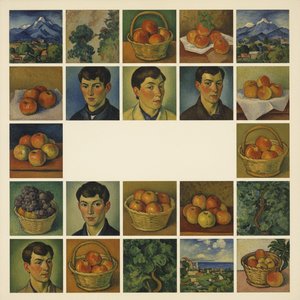 Cézanne's Masterpieces: 25 Iconic Artworks to Transform Your Space
 Composition with Blue 1
 Geometric Equilibrium in Ochre and Slate: A Study of Suspended Form
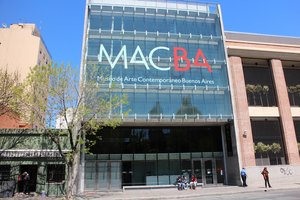 MACBA - Museum of Contemporary Art in Buenos Aires


