The Codex as Conduit: An Introduction to Literary Icon and Image To encounter a book within a painting is rarely to witness a mere object of utility. Instead, the volume often functions as a portal, a signifier that directs the viewer toward truths r...
To encounter a book within a painting is rarely to witness a mere object of utility. The volume often functions as a portal, a signifier that directs the viewer toward truths residing beneath the surface of the visible world. In the history of fine art, the book has served as a stable anchor for complex ideas, providing a physical weight to the ephemeral nature of thought. When an artist places a closed tome upon a table or an open manuscript within a landscape, they are not simply documenting a library; they nonetheless invite a reading of the unseen.
This tradition finds its roots in the ancient symbolon, a Greek object broken into two halves to verify an alliance between parties. Just as these shards required reassembly to reveal their meaning, the symbols found within art require a certain intellectual reconstruction by the observer. The book acts as the medium for this reconnection, bridging the gap between the literal object and the abstract concept it represents. It is a vessel of recognition, much like the fragments of an ancient pact.
Scriptural Gravity: Netherlandish Devotion and Contemporary Iconography
Early Netherlandish painting is the body of work by artists active in the Burgundian and Habsburg Netherlands during the 15th- and 16th-century Northern Renaissance period, once known as the Flemish Primitives. It flourished especially in the cities ...
The gravity of the written word is perhaps most profoundly felt in the Early Netherlandish tradition. In these 15th-century works, the book was often a central protagonist in religious narratives, its presence imbuing small portraits and devotional scenes with an air of profound sanctity. Painters such as Jan van Eyck or Rogier van der Weyden did not rely on grand gestures; rather, they utilized the meticulous detail of a prayer book or a liturgical text to ground the divine within the domestic.
This historical reverence for the text finds a contemporary echo in the way modern artists utilize iconography to communicate spiritual or philosophical depth. Where the Flemish masters used the physical presence of a manuscript to signal piety, later movements like Symbolism sought to clothe the Ideal in a perceptible form. The intention remains remarkably consistent: to use a recognizable, tangible object to point toward an archetypal truth that defies simple description.
Vanitas and the Fading Page: Intellectual Ambition vs. Mortal Decay
A Memento Mori in Miniature: The Silent Echoes of Jan Davidsz. de Heem In the quiet corners of the Dutch Golden Age, there existed a profound fascination with the fleeting nature of existence, a concept known as Vanitas . Within this intimate 5 x 3os...
To gaze upon a 17th-century Vanitas painting is to enter into a silent, profound dialogue with time itself. This specific genre of still life, which flourished during the Dutch Golden Age, functions as a visual sermon on the fleeting nature of human existence. Within these compositions, scattered books often whisper of lost knowledge, positioned in tension with more stark reminders of mortality, such as the skull.
The arrangement of items is a deliberate dialogue between the temporal and the eternal. The books, representing human intellect and the accumulation of worldly wisdom, contrast sharply with the presence of death, which represents the end of all earthly pursuits. This preoccupation with the passage of time finds its most poignant expression in the way light catches the edge of a page, only to be swallowed by the shadows of an inevitable decay. It is a meditation on the futility of earthly pursuits and the certainty of what remains when the ink has faded.
Tactile Narratives: The Alchemy of Paper, Texture, and Form
The Rhythms of Nature and Paper: The Art of Karen Viola Born on March 28, 1965, in White Plains, New York, Karen Viola —often recognized by her creative moniker, Karen Tuttle—has cultivated a practice that breathes life into the static medium of the ...
Beyond the printed word, the physical materiality of the book offers a landscape for sculptural innovation. For artists like Karen Tuttle, the practice breathes life into the static medium, utilizing the rhythmic potential of paper to mirror living ecosystems. Her work rejects the traditional, flat page in favor of kinetic book art, where hand-dyed Japanese mulberry papers and even the fragile architecture of eggshells create environments to be explored rather than merely read.
This focus on texture finds a parallel in the meticulous printmaking traditions of artists like Susan Allix. Her approach treats every page as a canvas for intricate visual storytelling, utilizing letterpress, linoleum cuts, and woodcuts to create a palpable physical presence. The indentation of the press and the grain of the wood contribute to a mood that is both nostalgic and deeply sensory. In these hands, the book is transformed from a repository of text into a three-dimensional, tactile narrative.
The Personal Archive: Books as Vessels of Memory and Identity
Artist Xiu Zhen Yin is also extremely sensitive to her surroundings and has long focused on the relationship between personal experience, memory and the era in which she lives. She is particularly adept at taking objects that are perfectly ordinary i...
In contemporary practice, the book has evolved into a medium for exploring the relationship between personal experience, memory, and the era in which we live. The artist Xiu-Zhen Yin, for instance, utilizes second-hand clothes within her Books series to represent the original owners of these materials. By using objects that are perfectly ordinary yet imbued with personal meaning, she uses the book as a creative material to showcase the traces of individuals left behind in the current era.
This use of the book as an archive mirrors the way we use literature to deepen themes and capture emotion. Just as authors use motifs to create meaningful patterns, these visual artists use the physical remnants of the past to construct new identities. The book becomes a site of intersection where the private item meets the public history, allowing us to navigate the complex layers of our own collective memory.
At OriginalUniqueArt.com, we appreciate this profound depth of meaning in every brushstroke. Whether you are seeking a hand-painted oil reproduction of a Dutch Vanitas or a custom commission that explores your own personal iconography, our artists bring academic excellence to every canvas. We invite you to explore our collection and discover the enduring power of the symbolic image.
Immerse yourself in the profound emotion of Rogier van der Weyden. Explore 25 iconic Early Netherlandish masterpieces, from intricate textures to divine pathos. Find museum-quality art reproductions and timeless decor inspiration. Discover all masterpieces on OriginalUniqueArt.com.
Immerse yourself in the elegance of Sir Anthony van Dyck. Explore 25 iconic Baroque masterpieces, from royal portraits to refined Flemish classics. Find inspiration for museum-quality art reproductions and luxury decor. Discover all masterpieces on OriginalUniqueArt.com.
Immerse yourself in the elegance of Sir Anthony van Dyck. Explore 25 iconic Baroque masterpieces, from royal portraits to Flemish classics. Find inspiration for museum-quality art reproductions and timeless decor. Discover all masterpieces on OriginalUniqueArt.com.
OStudio-assistentOnline · reageert binnen een minuut
Hoi! Ik kan je helpen bij het kiezen van een kunstwerk, het volgen van een bestelling of het beantwoorden van vragen over de garantie. Waarmee kan ik je van dienst zijn?

 The Written Image: Decoding Literary Symbolism within the Fine Art Canon
 Early Netherlandish painting
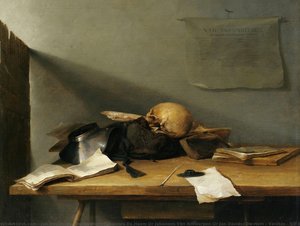 Vanitas - Sill life with books and Skull
 Karen Tuttle
 Books No.5, Books No.6, Books No.11, Books No.12, Books No.18, Books No.19