Introduction: The Enduring Appeal of Melancholy
Melancholy, a state often conflated with simple sadness, possesses a far more complex and enduring allure. It’s a feeling that has permeated artistic expression for centuries, resonating deeply within the human psyche. Unlike fleeting grief or temporary despair, melancholy hints at something deeper—a profound awareness of life's transience, an acceptance of imperfection, and a unique capacity for empathy born from shared vulnerability. From the Renaissance masters to the Romantic visionaries, artists have consistently turned to this potent emotion, not as an end in itself, but as a catalyst for creativity, introspection, and ultimately, beauty. The enduring presence of melancholy in art isn’t merely a reflection of human suffering; it's a testament to our ability to find meaning within it.
Renaissance Roots: Defining Melancholy Through Art & Philosophy
The formal exploration of melancholy as an artistic theme can be traced back to the Renaissance, where it wasn’t solely considered a psychological state but also a humoral disposition—an imbalance of black bile, according to ancient medical theory. This association with physicality lent a certain gravitas to the emotion, elevating it beyond simple sorrow. Artists like Albrecht Dürer, in his iconic engraving Melencolia I (1514), visually embodied this concept. The winged figure surrounded by tools of geometry and architecture isn’t simply *sad*; she represents the frustration of intellectual pursuit, the limitations of human understanding, and the inherent difficulty of achieving perfect knowledge. Philosophers like Marsilio Ficino further shaped the understanding of melancholy, linking it to divine inspiration and creative genius. This notion—that a certain degree of suffering was necessary for profound artistic insight—became deeply ingrained in the art world’s ethos. The duty of any serious art historian is to discover their many stories and then turn these explorations into meaningful narratives.
Romanticism's Embrace of Sorrow: Nature, Emotion, and the Sublime
Mourning, melancholy, monuments lost, monuments found. The duty of any serious art historian is to discover their many stories and then turn these explorations, ...
The Romantic movement, emerging in the late 18th and early 19th centuries, wholeheartedly embraced melancholy. Rejecting the Enlightenment’s emphasis on reason and order, Romantics prioritized emotion, intuition, and the power of individual experience. Nature became a central focus—not as a pristine paradise, but as a vast, awe-inspiring force capable of evoking both joy *and* profound sadness. Caspar David Friedrich's Wanderer above the Sea of Fog (1818) perfectly encapsulates this sensibility. The lone figure gazing out at the misty landscape isn’t merely enjoying a scenic view; he is confronting his own insignificance in the face of nature’s immensity, grappling with existential questions and experiencing a sublime blend of wonder and trepidation. This fascination with the subjective experience—the internal world of feelings and emotions—led to a proliferation of artworks exploring themes of longing, isolation, and the beauty of decay. The movement's illustration of the Middle Ages was also central in debates, with allegations that Romanticist portrayals often overlooked the downsides of medieval life.
Goya’s Dark Visions: Exploring Psychological Turmoil in Paint
Francisco Goya took the exploration of melancholy to a darker, more unsettling realm. While initially working as a court painter, Goya gradually shifted towards depicting the horrors of war, social injustice, and the irrationality of human behavior. His Disasters of War series (1810-1820) is a harrowing testament to the brutality of conflict, but even his portraits reveal a profound sense of unease. In Dona Teresa Sureda (1805), for example, the subject’s gaze is both captivating and unsettling—a hint of vulnerability beneath a stoic facade. Later in life, Goya’s “Black Paintings,” created directly on the walls of his own home, plunged even deeper into psychological turmoil. These intensely personal works, devoid of any pretense or social constraint, offer a raw and unflinching portrayal of despair, madness, and the darker aspects of the human condition. Goya's masterful use of chiaroscuro—the dramatic contrast between light and shadow—further amplifies the emotional intensity of his work, creating an atmosphere of profound psychological depth.
Pre-Raphaelite Yearning: Rossetti and the Aestheticization of Grief
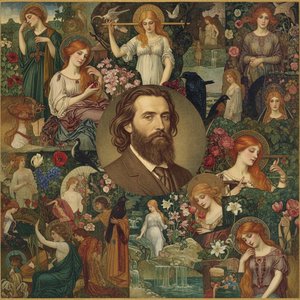
The Pre-Raphaelites, reacting against what they perceived as the artificiality of academic art, sought inspiration in the medieval world and early Renaissance masters. Dante Gabriel Rossetti’s work is particularly notable for its exploration of melancholy, often intertwined with themes of love, loss, and female beauty. The Lady of Pity (1875) exemplifies this sensibility—a haunting depiction of a woman gazing out at a sorrowful scene. Rossetti's use of rich colors, intricate details, and symbolic imagery creates an atmosphere of dreamlike melancholy. The painting isn’t simply about sadness; it’s about the *beauty* of grief, the allure of longing, and the power of idealized femininity. Small oil paintings by artists like Sir William Nicholson, such as Album Copies of Old Masters and other Paintings (no.10), showcase loose brushwork & emotive expression, capturing intimate moments of sorrowful contemplation. The Pre-Raphaelites elevated melancholy to an aesthetic ideal, exploring the emotional depths of human experience with unparalleled sensitivity.
Beyond Sadness: The Creative Power of Melancholy – A Lasting Legacy
Melancholy continues to resonate in contemporary art, demonstrating its enduring power as a source of inspiration. It’s not merely about depicting sadness; it's about acknowledging the complexities of life—the beauty and the pain, the joy and the sorrow—and finding meaning within that duality. The artists discussed here, from Dürer to Goya and Rossetti, remind us that melancholy can be a catalyst for creativity, introspection, and ultimately, a deeper understanding of ourselves and the world around us. At OriginalUniqueArt, we strive to make these masterpieces accessible, allowing you to experience the emotional power of art firsthand. Explore our collection of reproductions—from iconic paintings by Goya to haunting Pre-Raphaelite works—and discover the timeless beauty that lies within the echoes of sorrow. Whether seeking a statement piece for your home or a thoughtful gift, OriginalUniqueArt offers museum-quality prints and handmade oil paintings to suit every taste and budget.