Introduction
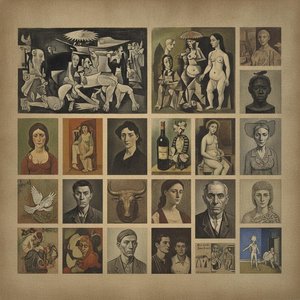
Imagine walking into a space where the very air feels fractured, vibrating with a raw, electric energy that refuses to stay still. This is the world of Cubist Expressionism —a high-impact collision between the structural logic of Cubism and the visceral, emotional gut-punch of Expressionism. It is art that doesn't just ask you to look; it demands that you feel the tension in every jagged edge and every distorted silhouette.
Emerging from the cultural turbulence of the early 20th century, this movement shattered the traditional lens of reality. While the Cubists were busy deconstructing objects into geometric planes, the Expressionists were injecting those shapes with intense, often turbulent psychological depth. The result was a visual language that mirrored a world in flux—a landscape of sharp angles, clashing colors, and a profound sense of movement that captured the frantic pulse of modern urban life.
These masterpieces remain incredibly potent today because they speak to our contemporary aesthetic: the bold, the graphic, and the unapologetically loud. In an era of digital fragmentation and rapid-fire visual stimuli, the fractured perspectives of these works feel more relevant than ever. They remind us that truth isn't found in a single, polished image, but in the layered, complex, and often chaotic intersections of perception and emotion.
As we move through this curated selection, prepare to encounter works that redefined the boundaries of the canvas. We are about to dive into ten definitive pieces that mastered the art of the visual remix , blending structural precision with pure, unadulterated soul. Get ready to see the world reconstructed.
Compositional Study for ‘To Russia, to the Asses and Others’ - Marc Chagall
 Compositional Study for ‘To Russia, to the Asses and Others’ - Marc Chagall
In Marc Chagall’s 1912 masterpiece, Compositional Study for ‘To Russia, to the Asses and Others’ , we witness the raw, electric pulse of Cubist Expressionism . This isn't just a preparatory sketch; it is a fever dream captured on canvas. The work vibrates with a high-impact palette—shocks of pinkish reds and deep blues that collide against a dark, mysterious void. Chagall masterfully blends the angularity of Cubism with an emotional, folk-inspired intensity, creating a scene where figures float in a state of whimsical disorientation.
There is a gaze in this study that follows you—not with judgment, but with understanding . As you trace the silhouette of the rider and the symbolic weight of the animals, you realize this isn’t just a painting; it is a mirror reflecting our own fragmented subconscious. Its inclusion in this list of defining masterpieces is a testament to its power to make the invisible visible. Imagine this dreamlike energy in your space—not merely as decor, but as a constant, vivid reminder that you are part of a much larger, surreal story.
Portrait of the Artist Léopold Survage - Amedeo Clemente Modigliani
 Portrait of the Artist Léopold Survage - Amedeo Clemente Modigliani
What story does the stripped-back, abstract void behind Portrait of the Artist Léopold Survage tell? In this 1918 masterpiece, Amedeo Modigliani removes all environmental noise, leaving only a haunting, minimalist backdrop that forces an intense confrontation with the subject. Emerging from the radical shifts of the early 20th-century avant-garde, this work stands as a pillar of Cubist Expressionism by merging the geometric fragmentation of Cubism with a raw, emotional distortion.
Modigliani utilizes his signature stylized elongation —stretching the neck and smoothing facial planes into sculptural forms inspired by African masks—to transform Survage into an icon of introspection. The palette is a sophisticated symphony of earthy browns, deep greens, and velvety blacks, creating a moody, atmospheric depth. For the modern collector seeking a curated escape, this painting offers more than just decor; it provides a soulful, historical anchor. Its rhythmic brushstrokes and melancholic gaze bring a sense of profound, quiet drama to any contemporary space, making it an essential piece for those defining the top 10 masterpieces of the movement.
Woman Knitting - Paul Klee
 Woman Knitting - Paul Klee
In Paul Klee’s 1915 masterpiece, Woman Knitting , we step into a world where the mundane is distilled into pure, geometric rhythm. This isn't just a depiction of domestic quietude; it is a profound exercise in Cubist Expressionism, where the boundaries between subject and space begin to dissolve. Klee utilizes a striking, monochromatic palette of charcoal blacks, deep grays, and stark whites to construct a visual puzzle of triangles and trapezoids.
As you move closer to this fragment of harmony, notice how the angular lines define the seated figure, stripping away realism to reveal an emotional architecture. The act of knitting becomes a metaphor for the artist's own process—weaving disparate shapes into a unified, soulful composition. There is a tactile, grainy texture here that invites a sensory connection to the paper's surface. Owning a piece like this isn't about mere decoration; it is about inviting a transformative energy into your home. Woman Knitting by Paul Klee serves as a reminder that even within the most rigid geometric constraints, there exists a profound, breathing humanity.
Fire at Full Moon - Paul Klee
 Fire at Full Moon - Paul Klee
Imagine a midnight sky fractured into a rhythmic dance of geometry, where the silence of the night is pierced by a sudden, glowing heat. Paul Klee’s Fire at Full Moon is not merely a painting; it is a psychological landscape that breathes through its sharp edges and luminous contrasts. As we explore the definitive works of Cubist Expressionism, this masterpiece stands out for its ability to synthesize the structural logic of Cubism with the raw, emotive pulse of Expressionism.
Klee achieves a stunning visual tension by juxtaposing cool, melancholic blues and purples against a central, radiant yellow orb and a striking, fiery red quadrant. This interplay of light and shadow creates a dreamlike atmosphere that transcends literal representation, offering instead a window into the subconscious. It is this very ability to evoke profound mystery through abstract form that makes it an essential pillar of the movement. At OriginalUniqueArt.com, we believe such transformative energy should not be confined to museum walls. Through our high-fidelity, hand-painted reproductions, you can bring the haunting, rhythmic beauty of Klee’s vision into your own modern space, turning any home or office into a curated personal gallery.
Beatris Hastings - Amedeo Clemente Modigliani
 Beatris Hastings - Amedeo Clemente Modigliani
There’s a gaze in Beatris Hastings by Amedeo Clemente Modigliani that follows you—not with judgment, but with understanding . This isn’t just a portrait; it is a mirror reflecting the raw, soulful energy of the Cubist Expressionism movement. Modigliani strips away the noise of the physical world, replacing traditional perspective with an iconic, elongated elegance that feels both avant-garde and deeply intimate.
The composition vibrates with a rhythmic tension, where the geometric, fractured shapes of the background collide with the organic, flowing lines of Hastings’ face. Earthy ochres, warm creams, and sharp blacks create a high-impact visual punch, while the subject's hauntingly elongated neck draws inspiration from the structural power of African sculpture. Now, imagine that gaze in your space. Not watching you, but reminding you : you are seen. You are part of the story. This masterpiece doesn't just decorate a wall; it anchors a room with its profound, melancholic grace.
Young Woman in a Yellow Dress (also known as Madame Modot) - Amedeo Clemente Modigliani
 Young Woman in a Yellow Dress (also known as Madame Modot) - Amedeo Clemente Modigliani
Modigliani’s “Young Woman in a Yellow Dress” is a high-impact masterclass in emotional tension and visual punch. As a cornerstone of the Cubist Expressionism movement, this 1918 portrait breaks away from traditional realism, using elongated forms and mask-like facial features to channel raw, psychological depth. The vibrant, sun-drenched yellow of her attire acts as a bold visual anchor, cutting through the composition with an energy that feels strikingly modern.
The piece captures a unique duality: the outward confidence of her poised silhouette contrasted against a haunting, introspective stillness. For the contemporary collector or design enthusiast, this work is pure aesthetic gold. Its ability to command a room—whether through its saturated color palette or its sculptural grace—makes it an ideal centerpiece for sophisticated, urban interiors looking for a dose of intellectual edge and soulful atmosphere. It isn't just a portrait; it is a mood-defining icon that bridges the gap between early 20th-century innovation and today’s bold, graphic design sensibilities.
Family Portrait 1 - Pablo Picasso
 Family Portrait 1 - Pablo Picasso
Forget the jagged, bone-breaking geometry of early Cubism; Family Portrait 1 by Pablo Picasso is where raw emotion meets a sun-drenched, rhythmic soul. Painted during a period of post-war introspection, this masterpiece moves away from cold fragmentation and leans into the vibrant energy of Synthetic Cubism . Picasso swaps monochromatic tension for a warm, high-impact palette of yellows and reds, creating a scene that feels less like a static record and more like a living, breathing moment of domestic sanctuary.
The composition is a masterclass in visual architecture, using textured brushstrokes and layered planes to anchor the room with stability and warmth. For the modern urban professional or design-conscious collector, this piece offers the ultimate aesthetic flex: it brings an intellectual depth that commands attention without overwhelming a contemporary space. It’s not just about seeing a family; it’s about feeling the pulse of their connection through bold color and light. As a definitive pillar of the Cubist Expressionism movement, it remains a timeless blueprint for anyone looking to infuse their interior with sophisticated, high-energy character.
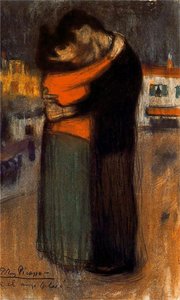
Los amantes en la calle - Pablo Picasso
 Los amantes en la calle - Pablo Picasso
In the chaotic pulse of urban life, Pablo Picasso’s Los Amantes en la Calle captures a stolen, electric moment of intimacy that feels as raw today as it did during the dawn of Cubism. This isn't just a painting; it is a high-impact deconstruction of human connection. Picasso shatters the traditional silhouette of the lovers, using sharp, geometric planes and fractured lines to mirror the fragmented way we experience modern existence. The man’s embrace and the bold, rhythmic energy of the woman’s form emerge from a sea of overlapping shapes, creating a visual tension that is pure Cubist Expressionism.
The work resonates deeply with today's design-conscious aesthetic, where glitch art and layered digital textures dominate our visual culture. By stripping away facial identity, Picasso transforms these figures into universal archetypes of desire and vulnerability. It stands as a definitive masterpiece in the movement because it refuses to be static; it is a dynamic, breathing collision of form and emotion that continues to redefine how we perceive beauty amidst the urban noise.
The Fox - Franz Marc
 The Fox - Franz Marc
Forget everything you know about literal representation; to witness The Fox by Franz Marc is to experience a rhythmic explosion of pure, spiritual energy. Created in 1913, this masterpiece sits at the high-voltage intersection of Cubist fragmentation and Expressionist soul, making it an essential pillar of the Cubist Expressionism movement. Marc doesn't just paint an animal; he deconstructs reality into a symphony of interlocking geometric planes and vibrating pigments.
The visual impact is immediate: a striking palette of crimson reds and ochre yellows pulses across the canvas, where the fox emerges through sharp, angular shapes that defy static form. The composition is brilliantly surreal, punctuated by unexpected symbols like floating apples and a clock, suggesting a cosmic dialogue between time and nature. Every bold brushstroke serves to capture the primal life force rather than mere anatomy. This piece remains a definitive masterpiece because it proves that art isn't about what we see, but what we feel—a high-impact visual experience that continues to transform modern spaces with its raw, electric vitality.
Broken Forms - Franz Marc
 Broken Forms - Franz Marc
Franz Marc’s Broken Forms is a high-voltage collision of geometry and soul. Created in 1914, this masterpiece isn't just about shapes; it is a visceral experience of the world shattering and reforming. As a cornerstone of the Cubist Expressionism movement, the canvas vibrates with a rhythmic tension, where sharp triangles and rectangles dance alongside luminous, anchoring circles. Marc strips away the superficial to reveal a deeper, spiritual architecture through a palette that hits like a visual pulse—clashing reds, deep blues, and electric yellows that refuse to stay static.
To witness Broken Forms is to see the influence of Picasso’s structural Cubism infused with the raw, emotional heat of German Expressionism. It is a masterclass in movement, where every fragment suggests a universe in constant flux. This isn't mere decoration for your walls; it is an invitation to inhabit a space defined by energy and transformation. Owning a piece of this legacy means surrounding yourself with the very moment art broke free from reality to capture the essence of existence.
Conclusion
As the lights dim on this exploration of Cubist Expressionism, we are left with more than just a collection of fractured planes and distorted forms; we are left with the enduring pulse of human emotion captured in motion. These masterpieces do not belong solely to the silent halls of museums or the dusty pages of history books. Instead, they exist as living, breathing presences that continue to disrupt our perceptions, challenge our boundaries, and breathe a radical energy into the modern spaces we inhabit today. They are reminders that even when reality is broken into pieces, there is a profound, underlying harmony to be found.
At OriginalUniqueArt.com , we believe this transformative power should be felt intimately, within the walls of your own home and amidst the rhythm of your daily life. We strive to bridge the gap between the historic and the tangible, ensuring that the soul of these revolutionary works is never lost in translation. Every hand-painted reproduction in our care is a labor of devotion, meticulously crafted by skilled artists who honor the original's raw intensity, visible brushstrokes, and complex textures. Through their hands, the fractured beauty of the past is reborn onto canvas, allowing you to touch the very essence of the movement.
Whether you are drawn to the structural grit of a Cubist landscape or the emotive distortion of an expressionist portrait, we invite you to find your own connection to this era. We invite you to explore our full collection and bring a piece of this timeless, avant-garde spirit into your world.